
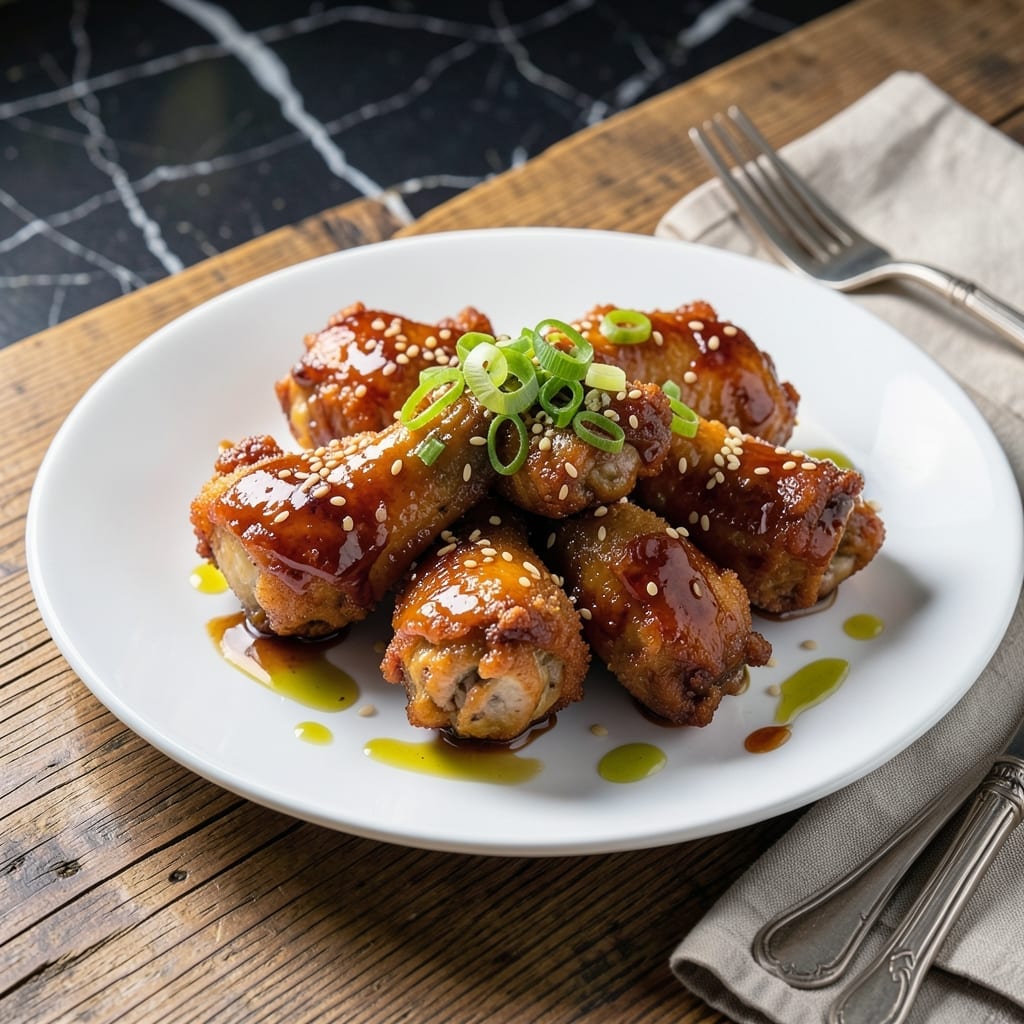
Korean fried chicken reaches new heights with this sweet and spicy yangnyeom glaze that’s become a global favorite. The double-frying technique creates an ultra-crispy exterior that holds up to the sticky sauce.
This version stays true to the traditional method while adapting for home kitchens. The sauce balances heat, sweetness, and tang perfectly, coating each piece in a glossy, finger-licking layer.
You’ll achieve that signature crunch followed by tender meat, with every bite delivering complex flavors. The glaze caramelizes slightly during the final toss, creating an irresistible sheen.
Serve immediately for the best texture contrast. This dish delivers restaurant-quality results with careful attention to detail.
Ingredients for Yangnyeom Chicken
Crispy double-fried chicken meets a glossy, finger-licking sweet and spicy glaze. Every bite delivers that signature crunch.
| Ingredient | Amount | Notes |
|---|---|---|
| Chicken Thighs 🍗 | 2 lb | Boneless, skin-on, cut into bite-sized pieces |
| Cornstarch 🌾 | ½ cup | For ultra-crispy coating |
| All-Purpose Flour 🌾 | ½ cup | Balances cornstarch texture |
| Baking Powder 🧂 | 1 tsp | Enhances crispiness |
| Salt 🧂 | 1 tsp | Kosher or sea salt preferred |
| Black Pepper 🌶️ | ½ tsp | Freshly ground for best flavor |
| Vegetable Oil 🫒 | 4 cups | For frying, high smoke point |
| Gochujang 🌶️ | ⅓ cup | Korean red pepper paste, essential for heat |
| Honey 🍯 | ⅓ cup | Balances spice with sweetness |
| Soy Sauce 🫒 | ¼ cup | Low-sodium preferred for balance |
| Rice Vinegar 🍚 | 2 tbsp | Adds necessary tang |
| Minced Garlic 🧄 | 3 cloves | Freshly minced for aroma |
| Grated Ginger 🌿 | 1 tbsp | Freshly grated for zing |
| Sesame Oil 🫒 | 1 tbsp | Toasted for depth of flavor |
| Toasted Sesame Seeds 🌾 | 2 tbsp | Garnish for crunch and aroma |
| Green Onions 🧅 | 3 whole | Thinly sliced for fresh finish |
The chicken is everything here. Thighs are non-negotiable—they stay juicy through double-frying while skin-on pieces deliver maximum crunch. Look for bone-in, skin-on and debone yourself for best texture, or grab pre-cut from H Mart or other Asian markets. The cornstarch and baking powder combo is the secret to that shatteringly crisp crust that holds up to the sauce.
No gochujang? Sriracha plus a spoon of miso paste gets you in the ballpark (not ideal, but works). Out of honey? Maple syrup or agave at a 1:1 ratio. For the soy sauce, tamari is a gluten-free swap. Rice vinegar can be apple cider vinegar in a pinch, but it’s slightly sharper. The ginger and garlic must be fresh—no powdered substitutes for this.
Fry in batches so the oil stays hot—crowding kills crispiness. The glaze can be made 2 days ahead and refrigerated. Leftovers? They won’t be as crispy, but reheat in a 400°F oven for 10 minutes to revive. Best eaten fresh, though.
Why You’ll Love This Recipe
- One Pan Wonder: I just toss the chicken thighs in cornstarch and flour, then bake—no fancy steps, no mess.
- Sweet & Spicy Kick: That sticky, glossy yangnyeom sauce clings to every crispy bite. Honestly, I could eat it by the spoonful.
- Crowd Pleaser: It’s the only dish my picky nephew and spice-loving brother both beg me to make.
- Budget Stretch: Chicken thighs stay cheap, and this recipe turns them into something restaurant-worthy. Leftovers? Even better the next day.
Step-by-Step Instructions for Yangnyeom Chicken
Master the technique for achieving perfectly crispy chicken with a glossy, finger-licking glaze every time.
Step 1: Prepare and Coat the Chicken
Begin by patting the 2 lb Chicken Thighs completely dry with paper towels. This ensures the coating adheres properly and creates maximum crispiness. Cut the thighs into bite-sized pieces if not already prepared.
In a large bowl, whisk together the 0.5 cup Cornstarch, 0.5 cup All-Purpose Flour, 1 tsp Baking Powder, 1 tsp Salt, and 0.5 tsp Black Pepper. The baking powder creates micro-bubbles in the coating, giving it that signature light, airy crunch. Toss the chicken in this mixture until every piece is evenly coated and no floury patches remain.
Step 2: Fry to Golden Perfection
Heat the 4 cups Vegetable Oil in a heavy-bottomed pot or Dutch oven to 350°F. Use a deep-fry thermometer for accuracy—oil that’s too cool will make the chicken greasy, while oil that’s too hot will burn the outside before the inside cooks through.
Working in batches to avoid crowding the pot, carefully lower the coated chicken into the hot oil. Fry for 6-8 minutes, turning occasionally, until the pieces are golden brown and the internal temperature reaches 165°F. The coating should be crisp and audibly crunchy when tapped. Transfer the fried chicken to a wire rack set over a baking sheet to drain excess oil.
Step 3: Make the Yangnyeom Glaze
In a saucepan over medium heat, combine the 0.33 cup Gochujang, 0.33 cup Honey, 0.25 cup Soy Sauce, 2 tbsp Rice Vinegar, 3 cloves Minced Garlic, and 1 tbsp Grated Ginger. Stir well to combine and bring to a gentle simmer.
Reduce the heat to medium-low and let the mixture simmer for 3-4 minutes, stirring frequently, until it thickens slightly and becomes glossy. The glaze should coat the back of a spoon but still be pourable. Remove from heat and stir in the 1 tbsp Sesame Oil for added depth of flavor.
Step 4: Coat and Garnish
Place the fried chicken in a large bowl and pour about three-quarters of the warm glaze over it. Using a spatula, gently toss the chicken until every piece is evenly coated with the sticky, sweet-spicy glaze. The glaze should cling to the crispy coating, creating a beautiful sheen.
Transfer the glazed chicken to a serving platter and drizzle with the remaining glaze. Immediately sprinkle with the 2 tbsp Toasted Sesame Seeds and thinly sliced 3 whole Green Onions for a fresh finish and visual contrast. Serve while hot and crispy, with any extra glaze on the side for dipping.
Pro Tips For Making Yangnyeom Chicken
- Double Fry the Chicken: Fry the chicken at 325°F first until cooked through, then crank the heat to 375°F for a second fry to get that ultra-crispy coating yangnyeom sauce clings to.
- Chill the Coated Chicken: After dredging in the cornstarch-flour mix, let the chicken rest in the fridge for 15 minutes—this keeps the coating from sliding off into the oil.
- Skip the Overcrowding: I learned this the hard way: fry in small batches or the temperature drops, leaving you with soggy, greasy chicken instead of that shatter-crisp texture.
- Dry the Thighs Well: Pat the chicken thighs completely dry with paper towels before coating, or the batter won’t stick properly and you’ll end up with bare spots.
Best Sauces and Condiments for This yangnyeom chicken
Classic Yangnyeom Glaze
The recipe’s built-in sauce is already perfect, but I love making extra for dipping. The gochujang base gives that signature Korean heat balanced by honey and soy sauce. Simmer it longer for a thicker consistency that clings to each crispy piece. 🔥
Creamy Sriracha Mayo
Mix ½ cup mayonnaise with 2 tbsp sriracha and 1 tsp rice vinegar for a cooling contrast to the spicy-sweet chicken. The tang cuts through the richness while adding another layer of flavor. I always keep Kewpie mayo on hand for this.
Pickled Vegetables
Quick-pickled cucumbers or daikon radish add refreshing crunch. Thinly slice 1 cup vegetables, toss with ¼ cup rice vinegar, 1 tbsp sugar, and ½ tsp salt. Let sit for 30 minutes before serving.
Spicy Garlic Dipping Oil
Combine ¼ cup soy sauce, 1 tbsp sesame oil, 1 minced garlic clove, 1 tsp gochugaru, and 1 tsp sugar. Heat gently until sugar dissolves. This adds a punchy, savory element that enhances the chicken’s flavors. ✨
Cheese Dust
For a modern Korean twist, mix ¼ cup grated Parmesan with 1 tbsp powdered sugar and ½ tsp gochugaru. Sprinkle lightly over the finished dish. The salty-sweet-spicy combo is addictive—I first tried this at a Seoul food stall.
Nutrition Facts
Frequently Asked Questions
Can I use chicken breast instead of thighs?
Thighs are ideal for their juiciness, but you can use breast. Brine it first in ¼ cup salt and 4 cups water for 30 minutes to prevent dryness. The texture won’t be as rich, but it’ll still be crispy.
How do I make the sauce less spicy?
Reduce the gochujang to ¼ cup and add 1 tbsp ketchup or 1 tbsp brown sugar for sweetness. For mild heat, replace half the gochujang with 1 tbsp tomato paste. Balance is key!
Why is my coating not crispy?
Oil temperature is likely too low. Use a thermometer to maintain 350°F. Also, avoid overcrowding the pot—fry in small batches. Drain on a rack, not paper towels, to keep it crunchy.
Can I bake instead of frying?
Yes! Toss coated chicken in 1 tbsp oil and bake at 425°F for 20-25 minutes, flipping halfway. It won’t be as crispy, but it’s a healthier option. Finish under the broiler for extra crunch.

- Jollof Rice Sauce Recipe: West African Tomato and Spice Infusion - September 25, 2026
- Japanese Rice Soup Recipe: Umami-Rich Comfort in a Bowl - September 25, 2026
- Homemade Cream Of Rice Recipe: Silk-Smooth Breakfast in Minutes - September 25, 2026