
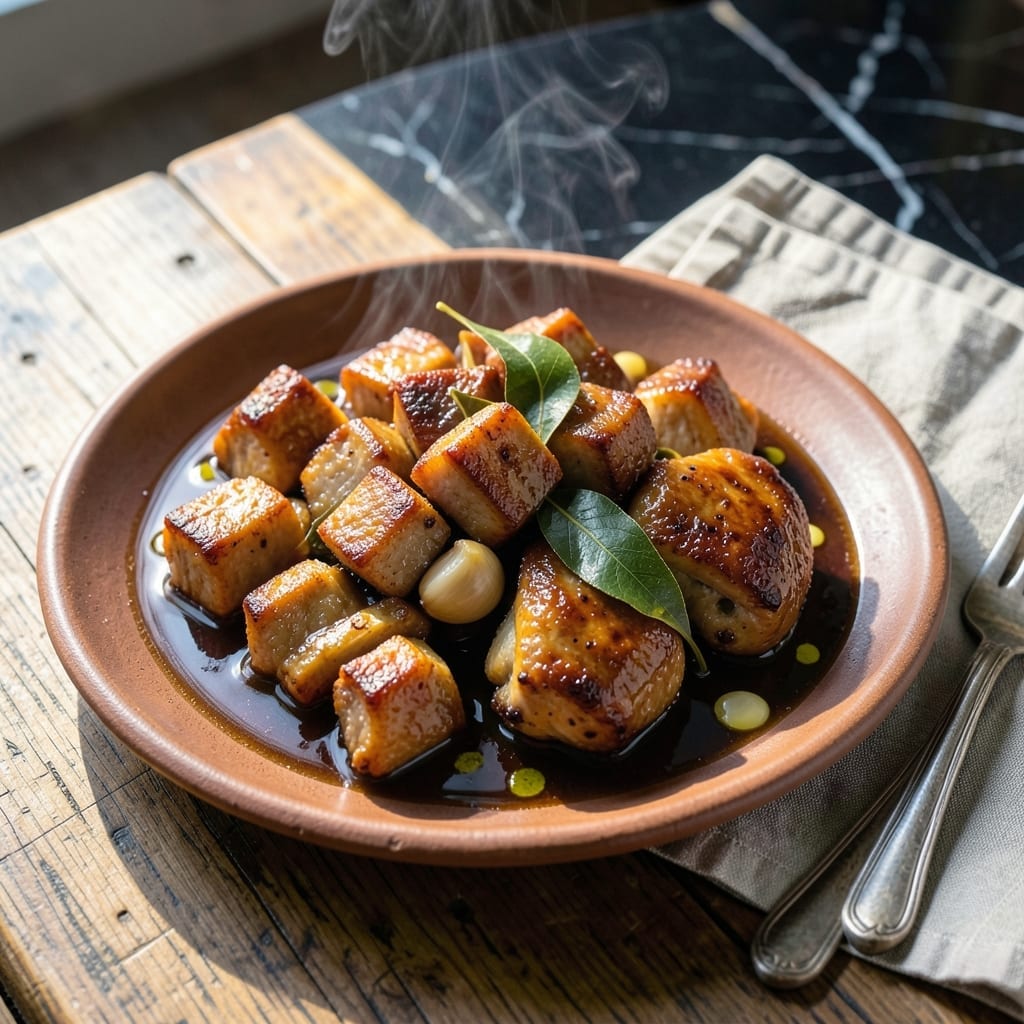
This Filipino adobo combines pork and chicken in a tangy-savory sauce that defines comfort food at its finest.
The secret lies in the balance of vinegar, soy sauce, and garlic, simmered until the meats absorb every bold flavor. Traditional techniques ensure tender, fall-off-the-bone results with a rich, slightly tangy finish.
What emerges is a hearty stew with layers of umami from both proteins, each bite delivering that signature adobo taste. The sauce reduces to a glossy consistency that clings perfectly to the meat and rice.
Serve it over steamed rice to soak up every last drop of this classic dish.
Ingredients for Adobong Pork and Chicken
Pork belly and chicken thighs form the hearty base for this Filipino classic.
| Ingredient | Amount | Notes |
|---|---|---|
| Pork Belly 🥓 | 1 ½ lb | Cut into 1-inch cubes |
| Chicken Thighs 🍗 | 1 ½ lb | Boneless, skin-on preferred |
| Soy Sauce 🫒 | ¾ cup | Use Filipino silverwan brand |
| White Vinegar 🍶 | ¾ cup | Or cane vinegar for authenticity |
| Garlic Cloves 🧄 | 10 cloves | Peeled and smashed |
| Bay Leaves 🍃 | 5 pieces | Dried or fresh |
| Black Peppercorns 🌶️ | 1 tbsp | Whole, lightly crushed |
| Brown Sugar 🫙 | 2 tbsp | Optional for balance |
| Water 💧 | 1 cup | For simmering liquid |
| Cooking Oil 🫒 | 2 tbsp | Neutral oil like vegetable |
| Salt 🧂 | 1 tsp | Adjust to taste |
The meats are non-negotiable here. Pork belly gives that unctuous richness, while chicken thighs stay juicy through the long simmer. Look for skin-on thighs at your butcher or Asian markets for the best results. The soy sauce should be Filipino—Silverwan or Datu Puti are the gold standard. Vinegar is just as critical; cane vinegar is traditional, but white vinegar works in a pinch.
No pork belly? Pork shoulder is a decent substitute but lacks the fat cap. Chicken breast can replace thighs, though it’ll be drier. The vinegar-to-soy ratio is sacred—equal parts by volume. For a sweeter take, coconut aminos can replace soy sauce. Bay leaves are key; dried work fine, but fresh have a brighter aroma if you can find them.
This tastes even better the next day. Store in the fridge for up to 5 days or freeze for 3 months. The fat will solidify when cold—just reheat gently to melt it back into the sauce.
Why You’ll Love This Recipe
- One Pot Meal: I love that I can brown the pork belly and chicken thighs in the same pot, then let them simmer in the soy-vinegar-garlic mix without dirtying extra dishes.
- Tangy Garlic Punch: The combo of white vinegar and crushed garlic cloves gives that sharp, savory kick adobo is famous for—honestly, it’s the flavor I crave most.
- Weeknight Lifesaver: Between us, this is my go-to when I need dinner ready fast, and it reheats beautifully for lunches.
- Budget Stretcher: Pork belly and chicken thighs are affordable cuts, and a little goes a long way with the bold soy-vinegar sauce.
Step-by-Step Instructions for Adobo-Style Pork and Chicken
Master this classic Filipino technique for a perfectly balanced tangy and savory stew.
Step 1: Sear the Pork Belly and Chicken Thighs
Heat the 2 tbsp cooking oil in a large pot over medium-high heat. Add the 1.5 lb pork belly cubes and sear for 5-6 minutes until golden brown on all sides. This step builds a flavorful foundation and renders some fat.
Remove the pork and set aside. In the same pot, add the 1.5 lb chicken thighs and sear for 4-5 minutes per side until deeply browned. Transfer to the plate with the pork, leaving the rendered fat in the pot for maximum flavor.
Step 2: Sauté Aromatics and Toast Spices
In the same pot, add the 10 cloves garlic cloves and sauté for 1-2 minutes until lightly golden and fragrant. Be careful not to burn the garlic, as it will turn bitter.
Stir in the 5 pieces bay leaves and 1 tbsp black peppercorns, toasting them for 30 seconds to release their essential oils. This simple step enhances the depth of flavor in your stew significantly.
Step 3: Build the Adobo Sauce and Simmer
Pour in the 0.75 cup soy sauce, 0.75 cup white vinegar, 1 cup water, 2 tbsp brown sugar, and 1 tsp salt. Stir well to combine and dissolve the sugar. Return the seared pork and chicken to the pot along with any accumulated juices.
Bring the mixture to a boil, then reduce heat to medium-low. Cover and let it simmer for 40-45 minutes, stirring occasionally. This slow cooking process allows the meat to become fork-tender while absorbing all the bold flavors.
Step 4: Reduce and Concentrate the Flavors
After the initial simmer, remove the lid and increase heat to medium. Continue cooking for 10-15 minutes until the sauce has reduced and thickened slightly. You want it to cling to the meat but still have a saucy consistency.
The sauce should be glossy and rich, with the pork and chicken fully coated. Taste and adjust seasoning if needed, though the balance of salty, tangy, and slightly sweet should be just right from the measured ingredients.
Discard the bay leaves before serving. The black peppercorns will have softened and can be left in for texture or removed if preferred.
Pro Tips For Making Adobong Pork And Chicken
- Brown the Meat First: I learned this the hard way—searing the pork belly and chicken thighs in the pot before adding liquids gives the adobo that rich, caramelized depth. Skip this and you’ll miss out on the layered flavor that makes the dish.
- Balance the Vinegar: My grandmother swore by this, and she was right: always use slightly less vinegar than soy sauce (about 1:1.25 ratio) to avoid that harsh, puckering taste. The acid mellows as it cooks, so start conservative.
- Don’t Stir Too Soon: After adding the vinegar, resist the urge to stir for at least 2-3 minutes—letting it sit undisturbed prevents the meat from turning pale and watery. I used to rush this and wondered why my adobo looked dull.
- Use Pork Belly Skin-On: Sounds weird, but it works: leaving the skin on the pork belly adds a silky texture and extra richness to the sauce. Trim it only if you must, but the dish is noticeably better when you don’t.
Make-Ahead Tips for This adobong pork and chicken
Overnight Prep
I always prep the meats the night before—cut 1.5 lb pork belly and 1.5 lb chicken thighs into uniform pieces and store in separate containers. This saves 20 minutes the next day and lets flavors start developing in the fridge. 💡
Marinate Ahead
Combine the 0.75 cup soy sauce, 0.75 cup vinegar, and 10 smashed garlic cloves in a bowl. Add the meats, cover, and refrigerate for up to 12 hours. This jumpstarts the tangy-savory infusion.
Partial Cooking
Sear the meats and start the simmer, then cool and refrigerate the pot. The next day, just reheat and finish reducing the sauce. The flavors deepen overnight, and you’ll shave 30 minutes off the total cook time.
Freezer-Friendly Batches
This stew freezes beautifully for up to 3 months. Cool completely, then portion into quart-sized freezer bags for easy storage. Thaw in the fridge overnight before reheating.
Reheating Tips
Gently reheat on the stovetop over low heat with a splash of water to prevent sticking. Microwave works too—cover and use 50% power in 1-minute intervals, stirring between each. ❄️
Sauce Consistency
If the sauce thickens too much in storage, stir in ¼ cup water while reheating. The starch from the meats will help it re-emulsify into that perfect glossy texture.
Nutrition Facts
Frequently Asked Questions
Can I use chicken breast instead of thighs?
You can, but thighs stay juicier during the 40-45 minute simmer. Breast may dry out—add it later or reduce cooking time to 25-30 minutes to prevent toughness.
Why do I need to sear the meat first?
Searing builds a flavor base and renders fat from the pork belly. This creates a richer sauce and prevents a greasy texture in the final dish.
How do I fix adobo that’s too sour?
Balance the tang by adding 1-2 tbsp brown sugar or a pinch of baking soda. Simmer for 5-10 minutes to mellow the vinegar sharpness.
Can I cook this in a slow cooker?
Yes! Sear the meats first, then transfer to the slow cooker with all ingredients. Cook on low for 6-7 hours or high for 3-4 hours.

- Jollof Rice Sauce Recipe: West African Tomato and Spice Infusion - September 25, 2026
- Japanese Rice Soup Recipe: Umami-Rich Comfort in a Bowl - September 25, 2026
- Homemade Cream Of Rice Recipe: Silk-Smooth Breakfast in Minutes - September 25, 2026