
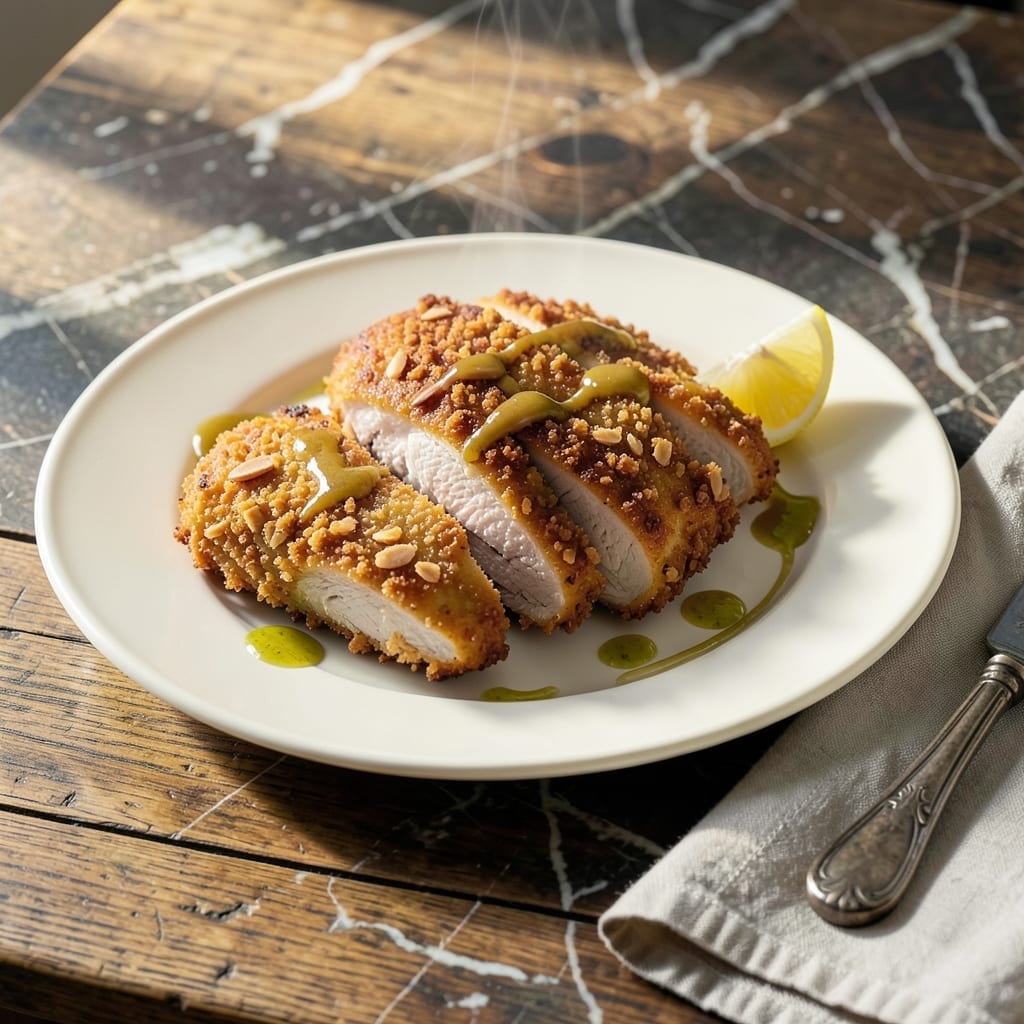
There’s something special about crunchy nut-coated chicken that elevates a simple weeknight meal into something memorable. This method transforms ordinary cutlets into golden, crispy perfection with minimal effort.
The almond breading creates a texture that’s both delicate and satisfyingly crunchy, while the chicken stays tender and juicy inside. It’s a straightforward process that delivers restaurant-quality results at home.
You’ll end up with evenly cooked, golden-brown cutlets that hold their coating beautifully. The nutty flavor of almonds adds depth without overpowering the dish.
Serve with a fresh salad or roasted vegetables for a complete, well-rounded meal. Here’s how to make it perfectly every time.
Ingredients for Almond Breaded Chicken
Elevate weeknight chicken with almond flour and panko for that perfect crunchy coating.
| Ingredient | Amount | Notes |
|---|---|---|
| Chicken Breast Cutlets 🍗 | 1 ½ lb | Boneless, skinless, pounded to 1/4-inch thickness |
| Almond Flour 🌰 | 1 ½ cups | Finely ground for even coating |
| All-Purpose Flour 🌾 | ½ cup | For initial dredging layer |
| Large Eggs 🥚 | 2 whole | Beaten for binding breading |
| Panko Breadcrumbs 🍞 | 1 cup | For extra crispy texture |
| Dijon Mustard 🟡 | 2 tbsp | For tangy depth in coating |
| Garlic Powder 🧄 | 1 tsp | For seasoning the breading |
| Onion Powder 🧅 | 1 tsp | For savory balance in coating |
| Paprika 🌶️ | 1 tsp | Smoked or sweet for color |
| Salt 🧂 | 1 tsp | Diamond Crystal kosher preferred |
| Black Pepper 🌶️ | ½ tsp | Freshly ground for best flavor |
| Extra-Virgin Olive Oil 🫒 | ½ cup | For pan-frying to golden perfection |
| Unsalted Butter 🧈 | 2 tbsp | Optional for richer frying medium |
The chicken cutlets must be uniformly thin for even cooking. Professional kitchens use 1/4-inch thickness—achieve this by pounding between plastic wrap. Almond flour from Bob’s Red Mill delivers consistent texture. For panko, Kikkoman or store brands work equally well. The Dijon mustard should be smooth, not whole-grain, for proper adhesion of the breading.
Substitute hazelnut flour for almond if preferred, though the flavor profile will differ. No panko? Standard breadcrumbs work but reduce the crunch. Half the amount of cayenne can replace paprika for heat. For gluten-free, use cornstarch instead of all-purpose flour. The eggs can be replaced with aquafaba (3 tbsp per egg) for binding, though texture may vary slightly.
Store raw breaded cutlets on a rack in the fridge for up to 12 hours before cooking. Cooked chicken keeps for 3-4 days refrigerated in an airtight container. The breading loses crispness when stored, so reheat in a 375°F oven for 10-12 minutes to restore texture. Freezing cooked cutlets is not recommended due to texture degradation.
Why You’ll Love This Recipe
- One Pan Wonder: That almond flour and panko combo means I can bread and bake everything on a single sheet pan—minimal mess, maximum flavor.
- Nutty Crunch: The almond flour adds this warm, buttery richness that pairs perfectly with the crispy panko crust.
- Weeknight Hero: Honestly, it’s my go-to for busy Tuesdays—ready in 30 minutes flat and the kids actually eat it.
- Leftover Magic: Cold leftovers? Still amazing. I’ll be real: I sneaked a piece straight from the fridge last night.
Step-by-Step Instructions for Almond Breaded Chicken
Master the technique for achieving a perfectly crispy, nutty coating that stays put during cooking.
Step 1: Prepare the Breading Station
Set up three shallow dishes in a row. In the first, combine the 0.5 cup all-purpose flour with the 1 tsp salt, 1 tsp garlic powder, 1 tsp onion powder, and 1 tsp paprika. This seasoned flour base ensures every bite is flavorful.
In the second dish, whisk the 2 whole large eggs with the 2 tbsp Dijon mustard until fully combined. The mustard adds tang and helps the breading adhere. Place the 1.5 cups almond flour and 1 cup panko breadcrumbs in the third dish, mixing lightly to create a textured coating.
Step 2: Dredge and Coat the Chicken Cutlets
Pat the 1.5 lb chicken breast cutlets dry with paper towels to ensure the breading sticks. Dredge each piece in the seasoned flour, shaking off excess. This initial layer creates a foundation for the egg wash to cling to.
Next, dip the floured cutlets into the egg mixture, allowing any excess to drip off. Immediately press each piece into the almond flour and panko mixture, turning to coat evenly. Apply gentle pressure to embed the crumbs into the egg wash for maximum adhesion.
Step 3: Rest the Breaded Cutlets
Place the breaded cutlets on a wire rack set over a baking sheet. This setup allows air to circulate underneath, preventing the coating from becoming soggy. Let them rest for 10 minutes to set the breading.
This resting period is crucial—it helps the coating dry slightly, which prevents it from falling off during frying. Meanwhile, the 0.5 cup extra-virgin olive oil and 2 tbsp unsalted butter can be heating in your pan.
Step 4: Pan-Fry to Golden Perfection
Heat the 0.5 cup extra-virgin olive oil and 2 tbsp unsalted butter in a large skillet over medium heat until the butter melts and the mixture shimmers. Carefully add the breaded cutlets, working in batches if necessary to avoid crowding the pan.
Fry for 4-5 minutes per side until the coating is deep golden brown and crisp. The internal temperature should reach 165°F. Avoid moving the cutlets too soon—let them develop a crust before flipping to maintain the breading’s integrity.
Step 5: Drain and Serve Immediately
Transfer the cooked cutlets to a paper towel-lined plate to drain any excess oil. The breading should be uniformly crisp with a rich, nutty aroma. Sprinkle with additional black pepper if desired.
Serve immediately while hot. The contrast of the crunchy almond-panko crust with the tender chicken inside is best enjoyed fresh. Pair with a simple lemon wedge or a light salad to balance the richness.
Pro Tips For Making Almond Breaded Chicken
- Pound the Cutlets: Use a meat mallet to even out the chicken to ½-inch thickness—I learned this the hard way after too many dry, overcooked edges. Uniform pieces guarantee even cooking and a perfect crust every time.
- Toast the Panko: Lightly toast the panko in a dry pan for 2-3 minutes before mixing with almond flour. Sounds weird, but it works: this keeps the breading crispy longer and adds a deeper flavor.
- Double Dredge: Dip each cutlet in flour, egg, then panko-almond mix, then repeat the egg and crumb step. I skip this when I’m lazy, but the dish is noticeably better when I don’t—the coating clings better and stays put.
- Rest Before Frying: Let the breaded cutlets rest for 10 minutes on a wire rack before frying. My grandmother swore by this, and she was right: it helps the coating set so it doesn’t slide off in the pan.
Pro Cooking Tips for This Recipe
Perfect Breading Adhesion
Pat the cutlets completely dry before dredging—any moisture creates a barrier between chicken and flour. I use paper towels and press firmly to absorb all juices. This step is non-negotiable for that restaurant-quality crust that stays put. 💡
Ideal Oil Temperature
Use a thermometer to maintain 350-375°F oil temperature. Too cool and the breading absorbs oil, too hot and almonds burn before chicken cooks. I test with a wooden chopstick—bubbles should form immediately when inserted.
Even Cutlet Thickness
Pound cutlets to an exact ¼-inch thickness using a meat mallet. Place chicken between plastic wrap to prevent tearing. Uniform thickness ensures even cooking and prevents dry, overdone edges while centers finish.
Rest Before Frying
Let breaded cutlets rest 10 minutes on a wire rack. This dries the surface slightly so coating crisps instead of steams. I set mine near the stove so they’re ready when oil reaches temperature.
Pan Capacity
Fry in batches with 1 inch between cutlets to avoid crowding. Overcrowding drops oil temperature, causing soggy breading. Use a 12-inch skillet for 4 cutlets at a time with ½ cup oil. 🔥
Finishing Touch
Transfer to a wire rack after frying—not paper towels—to maintain crispness. The rack allows air circulation, preventing steam from softening the crust. I sprinkle with flaky sea salt while still hot for extra flavor pop.
Nutrition Facts
Frequently Asked Questions
Can I use whole almonds instead of almond flour?
No, whole almonds won’t create the right texture. You can pulse sliced almonds in a food processor to make your own flour, but ensure it’s finely ground for even coating. Store-bought almond flour works best for consistent results.
Why did my breading fall off during frying?
This usually happens if the chicken wasn’t dry before dredging or if it didn’t rest after breading. Pat cutlets thoroughly and let them sit for 10 minutes on a rack before frying to set the coating.
Can I bake this instead of pan-frying?
Yes! Bake at 400°F for 15-20 minutes, flipping halfway. Use a wire rack on a baking sheet for even crisping. The texture will be slightly less crispy than pan-frying but still delicious.
How do I keep the chicken moist?
Don’t overcook! Use a meat thermometer and remove from heat when the internal temperature reaches 165°F. Pounding cutlets to an even ¼-inch thickness ensures they cook uniformly.

- Jollof Rice Sauce Recipe: West African Tomato and Spice Infusion - September 25, 2026
- Japanese Rice Soup Recipe: Umami-Rich Comfort in a Bowl - September 25, 2026
- Homemade Cream Of Rice Recipe: Silk-Smooth Breakfast in Minutes - September 25, 2026