
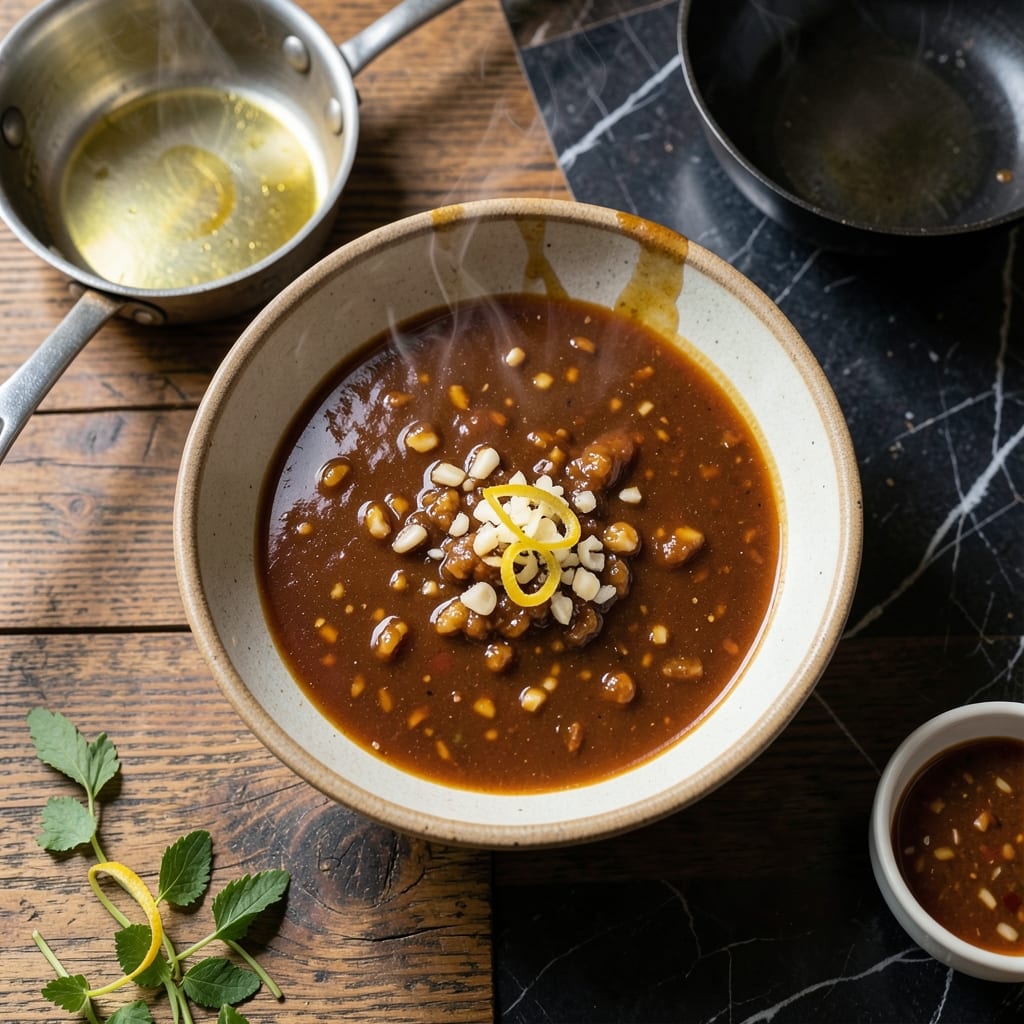
This sauce transforms simple rice bowls into restaurant-quality meals with its deep umami flavor and silky texture. I developed it to add complexity without overwhelming the main ingredients.
With just a few pantry staples and 5 minutes of prep, you’ll have a versatile drizzle that enhances any protein or vegetable. Store in the fridge for up to 2 weeks for easy meal prep.
Ingredients for Asian Rice Bowl Sauce
Nine ingredients. One sauce. Restaurant-quality flavor at home in minutes.
| Ingredient | Amount | Notes |
|---|---|---|
| Soy Sauce 🫕 | ½ cup | Low-sodium preferred for balance |
| Rice Vinegar 🍶 | ¼ cup | Unseasoned for clean acidity |
| Sesame Oil 🫒 | 1 tbsp | Toasted for nutty depth |
| Honey 🍯 | 3 tbsp | Substitute agave if needed |
| Fresh Ginger Root 🌿 | 1 tbsp | Finely grated, peeled |
| Garlic Cloves 🧄 | 3 cloves | Minced for even distribution |
| Sriracha Sauce 🌶️ | 1 tbsp | Adjust for desired heat level |
| Toasted Sesame Seeds 🌰 | 1 tbsp | For garnish and texture |
| Green Onions 🧅 | 2 whole | Thinly sliced for freshness |
The soy sauce is the backbone here. Kikkoman low-sodium is my go-to (available at any Walmart or Target), but any brand works if you taste as you go. Rice vinegar should be unseasoned—Marukan is a solid pick. The sesame oil? Kadoya is the gold standard for that deep, toasty flavor. Don’t skip the fresh ginger—it adds that bright, zingy note that dried just can’t replicate.
No honey? Agave or maple syrup works at a 1:1 swap. Want more heat? Double the sriracha or add a pinch of red pepper flakes. If you’re out of rice vinegar, apple cider vinegar in a pinch (though it’s slightly fruitier). Fresh ginger not on hand? Ground ginger at one-fourth the amount gets you close, but it’s not quite the same.
This keeps for up to 2 weeks in the fridge in a sealed jar. The flavors actually deepen after a day or two. If you want to make a bigger batch, it freezes for 3 months—just thaw and give it a good shake before using.
Why You’ll Love This Recipe
- 5-Minute Mix: I just dump everything in a bowl, whisk, and done—no cooking required.
- Sweet-Savory Balance: The honey and ginger play off the soy sauce in a way that makes me want to drink it straight.
- Meal Prep Hero: Drizzle it on Monday’s rice, Tuesday’s tofu, or Thursday’s salad. Honestly, it never gets old.
- Pantry Staples: Soy sauce, vinegar, sesame oil—stuff I already have, so it’s cheap and no last-minute grocery runs.
Step-by-Step Instructions for Asian Rice Bowl Sauce
Here’s the method. Simple, flavor-packed, and ready in minutes.
Step 1: Bloom Aromatics in Sesame Oil
Heat the 1 tbsp Sesame Oil in a small saucepan over medium heat until it shimmers. Add the 3 cloves Garlic Cloves and 1 tbsp Fresh Ginger Root, stirring constantly for 30-45 seconds until fragrant.
You’ll know it’s ready when the garlic turns pale gold and the ginger releases its spicy aroma. Don’t let it brown—burnt garlic turns bitter. Remove from heat immediately if it starts to darken too quickly.
Step 2: Combine Liquid Base and Sweeteners
After removing from heat, add the 0.5 cup Soy Sauce, 0.25 cup Rice Vinegar, and 3 tbsp Honey to the saucepan. The residual heat will help the honey dissolve smoothly into the mixture.
Whisk vigorously for 1-2 minutes until the honey fully incorporates. The sauce should look glossy and uniform, with no visible separation. If the honey resists, return the pan to low heat for 30 seconds, then whisk again.
Step 3: Add Sriracha for Heat
Stir in the 1 tbsp Sriracha Sauce and return the saucepan to low heat. Simmer gently for 2-3 minutes, stirring occasionally. This step mellows the raw edge of the sriracha while letting its heat infuse the entire mixture.
Watch for small bubbles at the edges—that’s the sign it’s simmering properly. Don’t let it boil vigorously, or the vinegar will evaporate too quickly and throw off the balance. The sauce should thicken slightly but remain pourable.
Step 4: Finish and Garnish
Remove from heat and let the sauce cool to room temperature, about 10-15 minutes. As it cools, it will thicken further and the flavors will meld together beautifully.
Once cooled, stir in the 1 tbsp Toasted Sesame Seeds and half of the 2 whole Green Onions, finely sliced. Reserve the remaining green onions for garnishing individual bowls later. The sesame seeds add a nutty crunch, while the green onions bring freshness.
Taste and adjust seasoning if needed, though the balance of salty, sweet, tangy, and spicy should be spot-on. Transfer to a jar or bowl for serving.
Pro Tips For Making Asian Rice Bowl Sauce
- Grate Ginger Fine: Use a microplane for the fresh ginger—it releases more juice and blends smoothly into the sauce. I learned this the hard way after chewing on fibrous bits in my first few attempts.
- Warm the Honey: Microwave the honey for 10-15 seconds before mixing—it combines effortlessly with the cold soy sauce and vinegar. Sounds small, but it saves a ton of stirring.
- Balance the Vinegar: Taste before adding all the rice vinegar; some brands are sharper than others. I was skeptical until I tried it, but adjusting to taste actually changes the outcome.
- Toast the Sesame Oil: Heat the sesame oil gently in the pan for 30 seconds before adding other ingredients—it deepens the nutty flavor. Skip the high heat though, or it’ll turn bitter.
Pro Cooking Tips for This Dish
Heat Control
Never let your sesame oil reach its smoke point—keep it at medium heat max. I use my All-Clad saucepan for even heat distribution. Burnt oil creates bitter flavors that ruin the sauce’s balance.
Aromatics Timing
Your garlic and ginger need just 30-45 seconds to bloom. Watch for pale gold color and fragrant aroma. Overcooking here is the #1 mistake I see—I pull mine off heat the second it starts to brown.
Honey Integration
Whisk vigorously when adding honey to prevent clumping. If it resists, return to low heat for 30 seconds only. The residual warmth from blooming aromatics usually does the trick without extra heat.
Simmering Sriracha
Gentle simmering for 2-3 minutes mellows sriracha’s harshness while keeping its heat. Look for tiny bubbles at the edges. Vigorous boiling evaporates vinegar too fast, throwing off the sauce’s tangy balance. 🔥
I always taste after this step—sometimes I add ½ tsp more honey if the heat overpowers the other flavors.
Cooling and Thickening
Let it cool 10-15 minutes before adding sesame seeds. The sauce thickens naturally as it cools. Rushing this step can make your seeds sink to the bottom.
Nutrition Facts
Frequently Asked Questions
Can I make this ahead of time?
It keeps for up to 2 weeks in an airtight container in the fridge. The flavors deepen after a day or two.
What if I don’t have rice vinegar?
Apple cider vinegar works in a pinch, though it adds slight fruitiness. Use the same ¼ cup amount. Avoid balsamic—it’ll overpower the dish.
How do I adjust the heat level?
For more spice, add ½ tsp extra sriracha. For milder sauce, reduce to ½ tbsp or omit entirely. Taste and tweak to your preference.
Can I freeze leftover sauce?
Yes! Freeze in a sealed jar for up to 3 months. Thaw overnight in the fridge and give it a good stir before using.

- Gambia Jollof Rice Recipe: West African One-Pot Spice Fusion - October 5, 2026
- Cream of Wild Rice Soup Recipe Minnesota: Northwoods Creaminess With Foraged Grains - October 5, 2026
- Frozen Cauliflower Fried Rice Recipe: Quick Low-Carb Wok Magic - October 5, 2026