
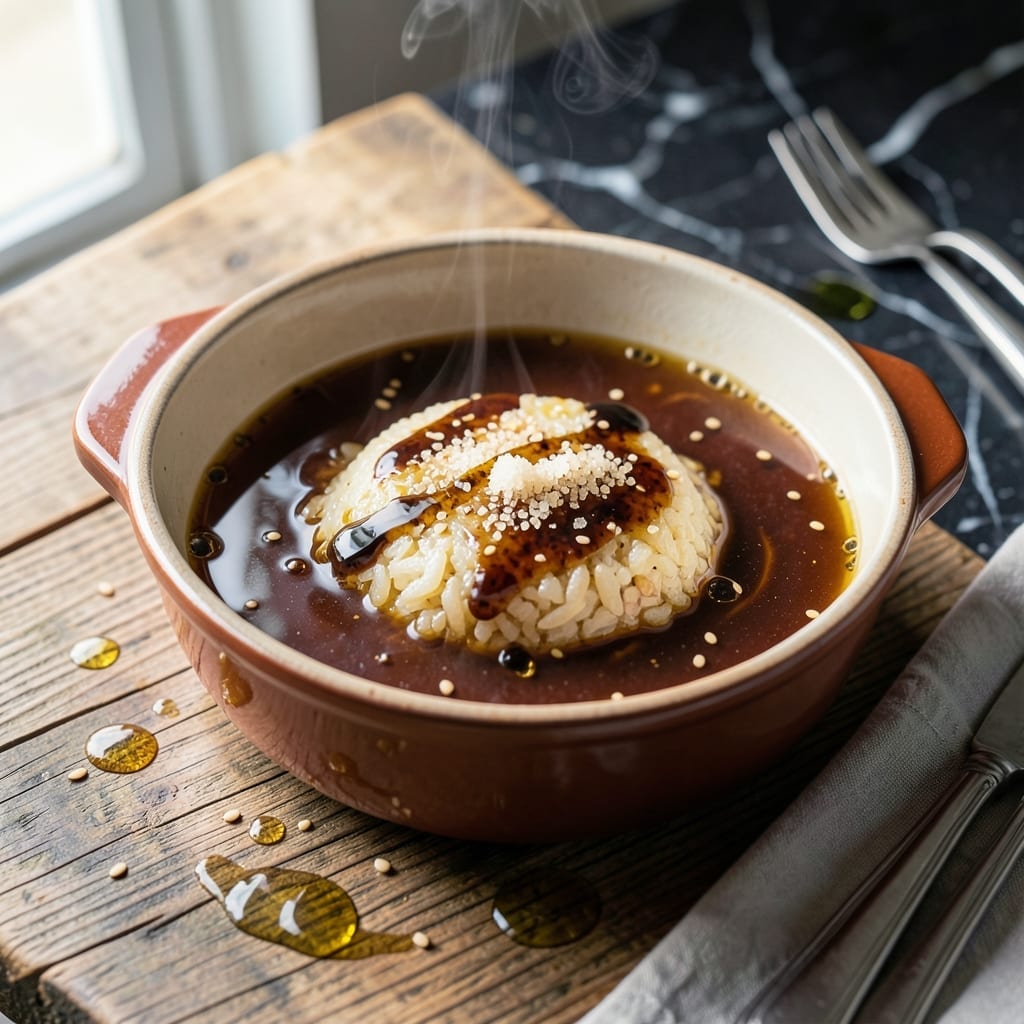
This sauce transforms basic rice into a restaurant-quality Japanese fried rice with minimal effort. The balance of sweet, salty, and umami flavors creates depth that’s hard to achieve with store-bought alternatives.
With just 5 ingredients and 5 minutes of prep, you can make a batch that keeps in the fridge for up to two weeks. Soy sauce forms the base, while mirin and sake add complexity that elevates every bite.
The result is a versatile drizzle that works with any protein or vegetable combination. It absorbs perfectly into rice, ensuring every grain carries bold flavor without being soggy.
Make a double batch and use it for stir-fries, marinades, or dipping sauces. This recipe delivers consistent, authentic taste every time.
Ingredients for Japanese Fried Rice Sauce
Five ingredients create this authentic Japanese sauce with balanced sweet, salty, and umami depth.
| Ingredient | Amount | Notes |
|---|---|---|
| Soy Sauce 💧 | ½ cup | Low-sodium for controlled saltiness |
| Mirin 🍶 | ¼ cup | Sweet rice wine essential |
| Sake 🍶 | ¼ cup | Dry variety preferred |
| Granulated Sugar 🍚 | 1 tbsp | Balances salty umami |
| Toasted Sesame Oil 🫒 | 1 tsp | Adds nutty depth |
The soy sauce is your foundation—Kikkoman or Yamasa are reliable brands at most grocers. For the mirin and sake, Asian markets will have the best selection, but Trader Joe’s carries solid options too (look for Hon-Mirin, not aji-mirin). Sake labeled as ‘dry’ works best here, avoiding any sweetness that could throw off the balance.
No sake on hand? Dry sherry at a 1:1 ratio works in a pinch. Out of mirin? 1 tbsp sugar plus 1 tbsp water per 2 tbsp mirin mimics the sweetness. The sesame oil should be toasted—light sesame oil lacks the depth. For a gluten-free version, swap soy sauce for tamari at the same amount.
This keeps beautifully in the fridge for 2 weeks in a sealed jar. Give it a quick shake before using as the sugar may settle. For longer storage, freeze in ice cube trays for up to 3 months—perfect for single-serving portions.
Why You’ll Love This Recipe
- 5-Minute Mix: I just whisk soy sauce, mirin, sake, sugar, and sesame oil together—no cooking required, no fuss.
- Umami Bomb: The combo of mirin’s sweetness and soy’s saltiness hits that perfect savory note every time.
- Meal Prep Hero: I make a big batch on Sunday and drizzle it over rice all week—breakfast, lunch, or midnight snack.
- Pantry Staples: Everything’s already in my cupboard, so I’m never stuck without a flavor boost (yes, even on a Tuesday night).
Step-by-Step Instructions for Japanese Fried Rice Sauce
This simple process combines all ingredients into a balanced, versatile sauce with authentic flavor.
Step 1: Combine the Liquid Components
In a small saucepan, pour in the 0.5 cup soy sauce, 0.25 cup mirin, and 0.25 cup sake. These three liquids form the foundation of your sauce, each contributing distinct umami, sweetness, and depth.
I prefer using a heavy-bottomed pan to prevent hot spots that could cause uneven heating. The mirin’s natural sugars will begin to dissolve as the mixture warms, creating a glossy base. Stir gently to integrate without creating bubbles.
Step 2: Dissolve and Integrate the Sugar
Add the 1 tbsp granulated sugar to the saucepan. The sugar serves as the balancing element, rounding out the saltiness of the soy sauce while enhancing the natural sweetness of the mirin.
Heat the mixture over medium-low heat, stirring constantly until the sugar completely dissolves. You’ll notice the liquid becomes slightly more viscous as the sugar incorporates—this should take 2-3 minutes. Avoid higher heat, which could cause the sugars to caramelize prematurely.
Step 3: Simmer for Flavor Concentration
Once the sugar has fully dissolved, reduce the heat to maintain a gentle simmer. Allow the sauce to cook for 4-5 minutes until it reduces by about one-quarter and develops a deeper color.
The simmering process intensifies the flavors while allowing the alcohol in the sake and mirin to cook off. Watch for small bubbles breaking the surface evenly across the pan. The sauce should coat the back of a spoon but still flow freely.
Step 4: Finish with Toasted Sesame Oil
Remove the saucepan from heat and let it cool for 1 minute. This brief rest prevents the 1 tsp toasted sesame oil from losing its delicate aroma when added to the hot liquid.
Stir in the sesame oil until fully incorporated. The oil’s nutty, toasted notes will rise to the surface, creating a fragrant top layer. This final addition transforms the sauce from good to exceptional, adding complexity that defines authentic Japanese flavor profiles.
The finished sauce should have a glossy appearance with a rich, balanced taste—salty, sweet, and umami-forward with a subtle sesame finish. Transfer to a jar and let cool completely before using.
Pro Tips For Making Japanese Fried Rice Sauce
- Bloom the Aromatics: Toast the sesame oil in the pan for 10-15 seconds before adding other sauce ingredients—this wake-up call for the oil’s flavor makes a real difference in depth.
- Dissolve the Sugar: Mix the granulated sugar with the mirin and sake first, then heat gently until fully dissolved; I learned this the hard way after ending up with gritty sauce.
- Skip the Over-Reduction: Reduce the sauce just until it coats the back of a spoon—any further and the soy sauce will turn bitter, ruining the balance.
- Use Fresh Mirin: Old mirin loses its sweetness and complexity, so check the bottle’s date; sounds picky, but stale mirin makes the sauce taste flat.
Creative Variations of This japanese fried rice sauce
Spicy Kick Variation
Add 1 tbsp sriracha or 1 tsp chili garlic sauce to the finished sauce for heat lovers. I prefer the latter for its garlicky depth. This creates a perfect balance of spice with the existing umami profile. 🌶️
Sweet Glaze Twist
Increase the sugar to 2 tbsp and add 1 tbsp honey for a sweeter version. This works beautifully when pairing with grilled meats or as a glaze for roasted vegetables.
Simmer for an extra 2 minutes to thicken slightly. The result coats rice grains perfectly without being cloying.
Citrus Infusion
Stir in 1 tbsp fresh yuzu juice or zest from 1 lime after removing from heat. The citrus brightens the sauce’s depth—ideal for seafood fried rice or summer dishes.
Yuzu can be found at Japanese markets or online. Lime zest works as a more accessible alternative.
Umami Boost
Add 1 tsp fish sauce or 1 tbsp oyster sauce for extra complexity. I recommend Red Boat fish sauce for its clean, pure flavor. This deepens the sauce’s savory notes significantly. 💡
Ginger Garlic Fusion
Infuse the sauce with 1 tsp grated ginger and 1 minced garlic clove during the simmer. Strain before adding sesame oil for a smooth texture.
This version pairs especially well with chicken or tofu fried rice. The aromatics add freshness without overpowering.
Nutrition Facts
Frequently Asked Questions
Can I substitute rice vinegar for mirin?
Rice vinegar lacks mirin’s sweetness, but you can mix 1 tbsp rice vinegar with 1 tsp sugar as a 1:1 replacement. The flavor won’t be identical, but it provides the necessary acidity and sweetness.
How long does homemade sauce keep?
Stored in an airtight container in the fridge, it stays fresh for up to 2 weeks. For longer storage, freeze in ice cube trays for 3 months. Always shake before using as ingredients may settle.
Why add sake to the sauce?
Sake adds depth and complexity while helping mellow the saltiness of soy sauce. The alcohol cooks off during simmering, leaving behind a rich, rounded flavor that’s essential to authentic taste.
Can I make this gluten-free?
Yes! Simply swap regular soy sauce for tamari at the same ratio. Tamari is naturally gluten-free and provides a similar umami profile without compromising flavor.

- Gambia Jollof Rice Recipe: West African One-Pot Spice Fusion - October 5, 2026
- Cream of Wild Rice Soup Recipe Minnesota: Northwoods Creaminess With Foraged Grains - October 5, 2026
- Frozen Cauliflower Fried Rice Recipe: Quick Low-Carb Wok Magic - October 5, 2026