
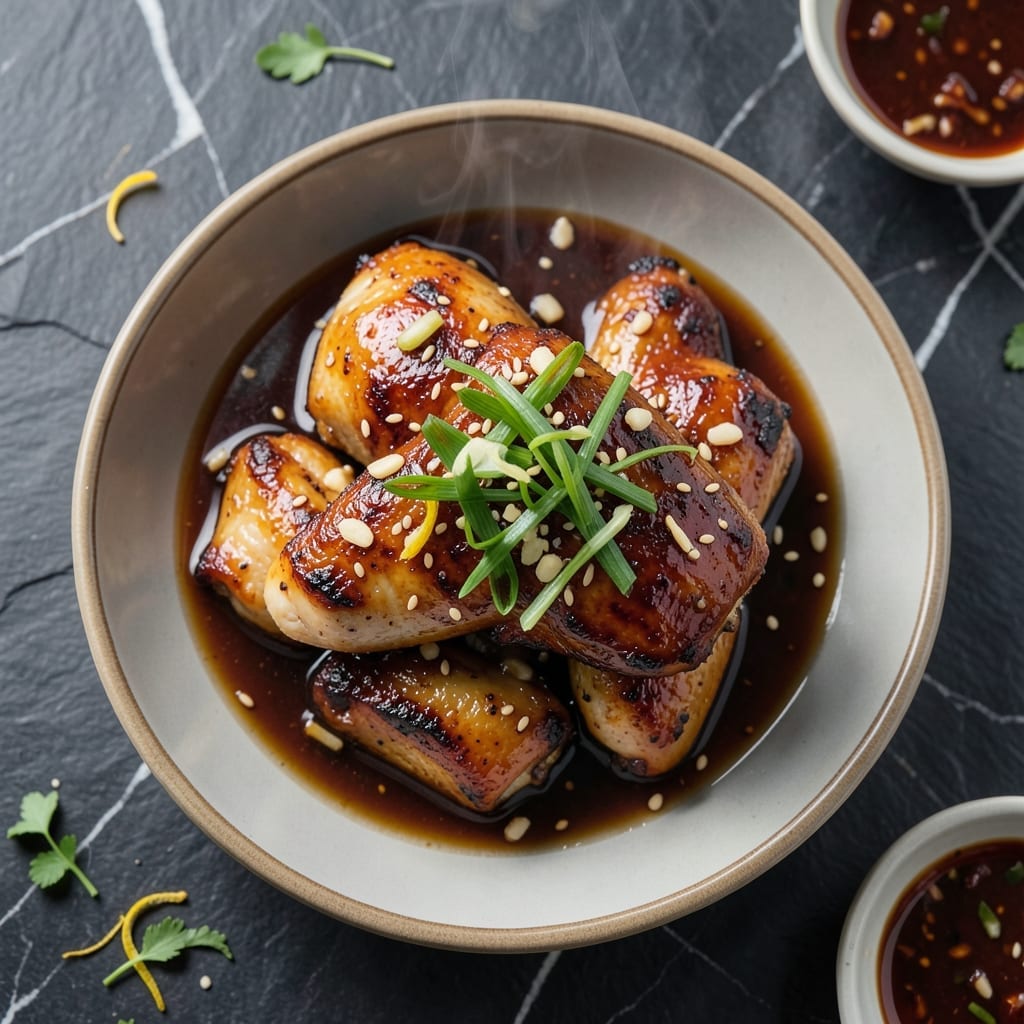
I’ve found that rice vinegar adds the perfect bright finish to savory dishes, balancing richness with a gentle tang. This recipe uses it as the secret ingredient to elevate every bite.
The vinegar is incorporated at the end of cooking, preserving its crisp acidity without overpowering the dish. It enhances the natural flavors of the ingredients, creating a harmonious balance.
You’ll notice how it cuts through heavier components, adding depth and complexity. The result is a dish that tastes thoughtfully seasoned and perfectly rounded.
This method ensures the vinegar’s subtle brightness shines through, making it a key element of the final flavor profile.
Ingredients for Recipe with Rice Vinegar
Balanced flavors start with these thoughtful ingredients for a dish that shines with every bite.
| Ingredient | Amount | Notes |
|---|---|---|
| Boneless Chicken Thighs 🍗 | 1 ½ lb | Skin-on for extra flavor |
| Rice Vinegar 🍚 | ¼ cup | Unseasoned variety preferred |
| Soy Sauce 🥢 | ¼ cup | Low-sodium if preferred |
| Honey 🍯 | 2 tbsp | Balances acidity in dish |
| Fresh Ginger Root 🌿 | 1 tbsp | Peeled and minced finely |
| Garlic Cloves 🧄 | 4 cloves | Minced for maximum flavor |
| Sesame Oil 🫒 | 1 tbsp | Toasted for depth of flavor |
| Red Bell Pepper 🌶️ | 1 whole | Thinly sliced into strips |
| Green Onions 🧅 | 4 whole | Sliced for garnish and flavor |
| Cornstarch 🌾 | 1 tbsp | For thickening the sauce |
| Vegetable Oil 💧 | 2 tbsp | Neutral flavor for cooking |
| Sesame Seeds 🌰 | 1 tsp | Toasted for garnish |
| Kosher Salt 🧂 | ½ tsp | Adjust to taste preference |
| Ground Black Pepper 🌶️ | ¼ tsp | Freshly ground recommended |
The rice vinegar is non-negotiable for that signature brightness. Kikkoman or Marukan are reliable brands—avoid the seasoned variety, as it contains added sugar and salt. For the chicken, thighs stay juicier than breasts, and skin-on adds a layer of richness. Look for organic, free-range at Whole Foods or your local butcher for optimal quality. Fresh ginger and garlic are essential—they form the aromatic base that makes the vinegar pop.
No rice vinegar? Apple cider vinegar at half the amount works in a pinch, though the flavor profile shifts slightly. For a gluten-free version, tamari replaces soy sauce seamlessly. Honey can be swapped for maple syrup or agave if vegan adjustments are needed. The cornstarch slurry is key for that glossy finish—mix it with cold water before adding. If you’re missing sesame oil, a neutral oil plus a dash of toasted sesame seeds can mimic the nutty depth.
Leftovers keep beautifully for 4-5 days in the fridge, and the flavors meld even more. Freeze for up to 3 months in airtight containers. Reheat gently to preserve the vinegar’s bright finish—microwaving can dull its edge. Always add fresh toppings like green onions and sesame seeds just before serving for that restaurant-quality presentation.
Why You’ll Love This Recipe
- I’ll be real: this comes together faster than takeout, and my kids actually finish their plates.
- One Pan Wonder: I toss everything in a skillet and let the soy, honey, and rice vinegar do the work—minimal cleanup, maximum flavor.
- Sweet-Tangy Magic: The rice vinegar and honey balance each other so well, it’s like the chicken gets a glossy, finger-licking glaze.
- Weeknight Lifesaver: I’ll be real: this comes together faster than takeout, and my kids actually finish their plates.
Instructions
Master the technique for balanced flavors and restaurant-quality results with this method.
Step 1: Marinate the Chicken with Aromatics
In a large bowl, whisk together the 0.25 cup rice vinegar, 0.25 cup soy sauce, 2 tbsp honey, minced 1 tbsp fresh ginger root, and minced 4 cloves garlic cloves until the honey fully dissolves. This creates a vibrant marinade that tenderizes while adding depth.
Add the 1.5 lb boneless chicken thighs to the marinade, ensuring each piece is fully coated. Cover and refrigerate for at least 30 minutes (or up to 4 hours for maximum flavor penetration). The acidity in the marinade will begin breaking down proteins, making the chicken more tender.
Step 2: Sear the Chicken and Vegetables
Heat the 2 tbsp vegetable oil in a large skillet over medium-high heat until it shimmers. Remove the chicken from the marinade (reserve the marinade) and pat it dry with paper towels. Sear the chicken for 4-5 minutes per side until golden brown and nearly cooked through. Transfer to a plate.
In the same skillet, add the sliced 1 whole red bell pepper and cook for 3-4 minutes until slightly softened but still crisp. Remove from heat and set aside with the chicken. The residual marinade will be used to create the sauce, so don’t discard it.
Step 3: Create the Glaze and Finish Cooking
Pour the reserved marinade into the skillet and bring to a simmer over medium heat. In a small bowl, mix the 1 tbsp cornstarch with 1 tbsp water to create a slurry. Slowly whisk the slurry into the simmering marinade and cook for 2-3 minutes until the sauce thickens to a glossy consistency.
Return the chicken and red bell pepper to the skillet, coating everything in the sauce. Drizzle the 1 tbsp sesame oil over the top and cook for an additional 2 minutes to allow the flavors to meld. The sauce should cling to the chicken and vegetables with a beautiful sheen.
Step 4: Garnish and Serve
Transfer the chicken and red bell pepper to a serving platter. Sprinkle with the sliced 4 whole green onions, 1 tsp sesame seeds, 0.5 tsp kosher salt, and 0.25 tsp ground black pepper. The green onions add freshness while the sesame seeds provide a nutty crunch.
Serve immediately while hot, with any remaining sauce spooned over the top. The dish should have a perfect balance of tangy, sweet, and savory notes, with the chicken juicy and the vegetables tender-crisp. This serves 4 generously.
Pro Tips For Making Recipe With Rice Vinegar
- Sear Chicken First: Get a good crust on those thighs in a hot pan before adding liquids—I learned this the hard way after making gray, boiled-tasting chicken too many times.
- Bloom the Ginger: Cook the grated ginger in a little oil for 30 seconds before adding liquids. It mellows the bite and fills the kitchen with that warm, spicy aroma.
- Balance the Vinegar: Rice vinegar can be sharp, so start with 2 tablespoons, taste, and add more only if needed—I ruined a batch once by dumping it all in at once.
- Reduce the Sauce: After simmering, let the soy-honey-vinegar mix reduce for 3-4 minutes until it coats the back of a spoon. It thickens the glaze just enough without turning it to candy.
Essential Equipment for This Dish
Quality Skillet
A heavy-bottomed 12-inch skillet is essential for even heat distribution. I use my Lodge cast iron because it retains heat beautifully and develops a natural non-stick surface over time. It handles the searing and sauce-making in one pan seamlessly.
Mixing Bowls
Have a large mixing bowl ready for the marinade—glass or stainless steel won’t absorb odors. A small bowl for the cornstarch slurry is also key. I keep a set of Pyrex bowls in various sizes for exactly this purpose.
Sharp Knife
A chef’s knife makes quick work of the ginger, garlic, and bell pepper prep. I invested in a Wüsthof 8-inch and it’s been a game-changer for precision. Dull knives slip more often, so keep it sharp for safety.
Whisk
Use a balloon whisk to emulsify the marinade ingredients thoroughly. This ensures the honey blends completely with the vinegar and soy sauce. A silicone whisk works too and won’t scratch your cookware.
Measuring Tools
Accurate measurements matter, especially for the rice vinegar and cornstarch. I rely on OXO measuring cups and spoons for consistency. Eyeballing can throw off the balance of flavors in this dish.
Also keep a measuring spoon set handy for the smaller quantities like sesame oil and ginger. 💡
Nutrition Facts
Frequently Asked Questions
Can I use a different type of vinegar?
Apple cider vinegar works in a pinch, but use half the amount. The milder flavor of rice vinegar is ideal for this balance.
How long should I marinate the chicken?
Marinate for at least 30 minutes, or up to 4 hours for deeper flavor. Longer marinating won’t harm the texture.
What if my sauce doesn’t thicken?
Simmer longer or mix another 1 tsp cornstarch with 1 tsp water and whisk in. The glossy finish is key.
Can I make this gluten-free?
Yes! Simply swap soy sauce for tamari. All other ingredients are naturally gluten-free.

- Gambia Jollof Rice Recipe: West African One-Pot Spice Fusion - October 5, 2026
- Cream of Wild Rice Soup Recipe Minnesota: Northwoods Creaminess With Foraged Grains - October 5, 2026
- Frozen Cauliflower Fried Rice Recipe: Quick Low-Carb Wok Magic - October 5, 2026