
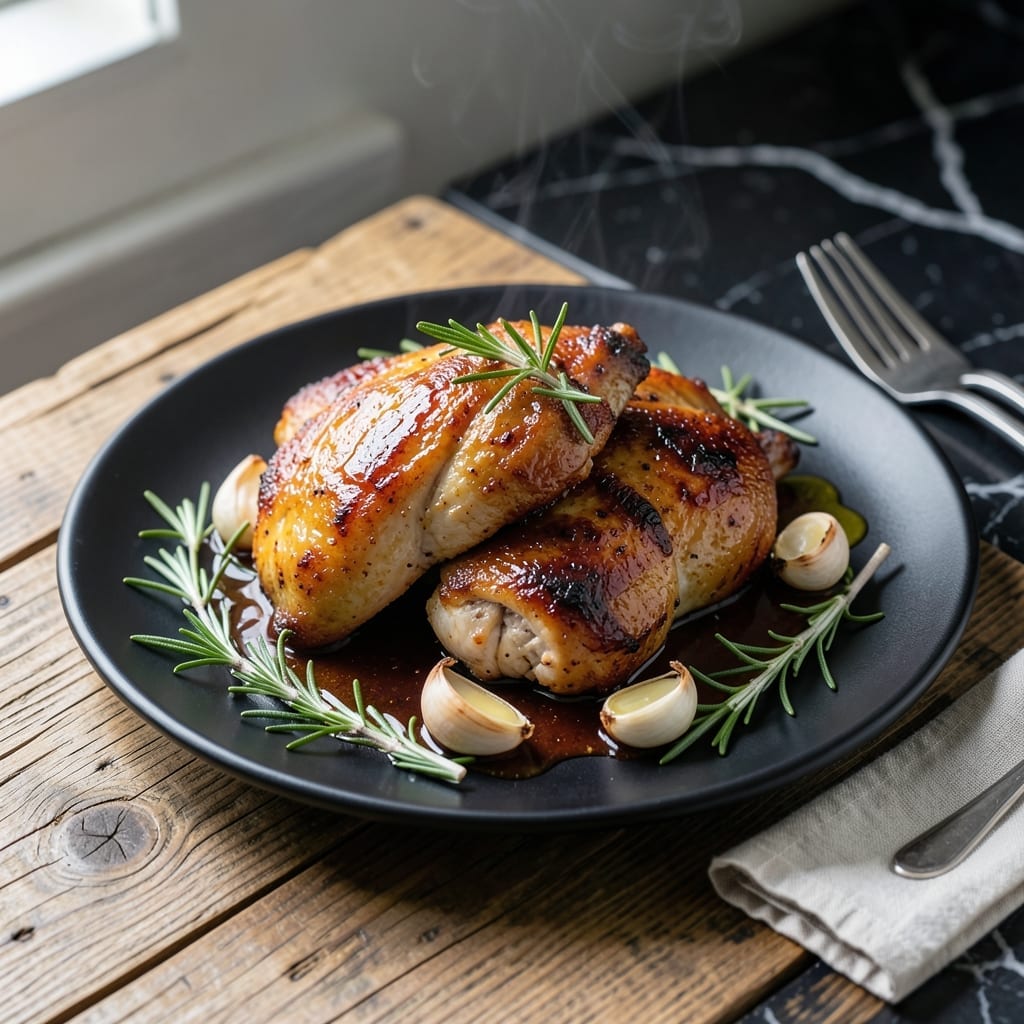
This baked chicken recipe transforms simple ingredients into a restaurant-quality dish with minimal effort. The balsamic glaze caramelizes in the oven, creating a sticky, tangy coating that balances sweetness with depth.
I developed this method to ensure juicy, tender chicken every time. The key is searing the thighs first to lock in moisture, then letting the oven finish the work. A quick reduction of the pan juices intensifies the glaze flavor.
You’ll end up with perfectly glazed chicken that’s juicy inside with a glossy, slightly crisp exterior. The balsamic reduction clings to each piece, making every bite burst with rich, complex flavor.
Serve with roasted vegetables or mashed potatoes to soak up the extra sauce. This dish proves that simple techniques can yield extraordinary results.
Ingredients for Baked Balsamic Chicken
Restaurant-quality results start with chicken, vinegar, and a handful of aromatics for depth.
| Ingredient | Amount | Notes |
|---|---|---|
| Bone-In Chicken Thighs 🍗 | 2 lb | Skin-on, trimmed of excess fat |
| Balsamic Vinegar 🍷 | ¾ cup | Aged, high-quality for depth |
| Honey 🍯 | 3 tbsp | Raw or pure for sweetness |
| Olive Oil 🫒 | 2 tbsp | Extra-virgin for searing |
| Garlic Cloves 🧄 | 4 cloves | Minced for aromatic base |
| Fresh Rosemary Sprigs 🌿 | 2 whole | Stems removed, finely chopped |
| Fresh Thyme Sprigs 🍃 | 4 whole | Leaves stripped from stems |
| Dijon Mustard 🟡 | 1 tbsp | Smooth, not whole grain |
| Salt 🧂 | 1 ½ tsp | Diamond Crystal kosher preferred |
| Black Pepper 🌶️ | 1 tsp | Freshly cracked for best flavor |
| Chicken Stock 🥫 | ½ cup | Low-sodium preferred for reduction |
| Unsalted Butter 🧈 | 2 tbsp | For finishing the glaze |
The chicken thighs are non-negotiable—bone-in, skin-on for maximum flavor and juiciness. Source from Whole Foods or a trusted butcher for the best quality, or grab Perdue at most supermarkets. The balsamic vinegar should be aged at least 12 years (look for Colavita or Filippi Berio brands) to get that complex, syrupy reduction. Fresh herbs are a must here; dried won’t deliver the same bright, aromatic punch.
No honey? Maple syrup or agave work in a pinch, though the flavor profile shifts slightly. Swap the fresh herbs for 1 tsp each dried rosemary and thyme if necessary. For a tangier glaze, add 1 tbsp apple cider vinegar. If you’re avoiding alcohol, balsamic vinegar substitutes are limited, but a mix of red wine vinegar and a touch of brown sugar can mimic the depth.
The glaze can be made 2 days ahead and stored in the fridge—reheat gently before using. Leftovers keep for 4-5 days in an airtight container. The chicken reheats well, though the skin loses some crispness. Not freezer-friendly due to the glaze texture.
Why You’ll Love This Recipe
- One Pan Wonder: I just toss the chicken thighs with olive oil, garlic, and the balsamic-honey mix, then let the oven do the work.
- Sweet-Tangy Magic: The balsamic vinegar and honey caramelize into this glossy, finger-licking glaze on the chicken.
- Weeknight Hero: I throw it together on busy evenings and it still feels special enough for company.
- Leftovers Win: Honestly, it tastes even better the next day—cold or reheated, the flavors just deepen.
Step-by-Step Instructions for Baked Balsamic Chicken
Master the technique for perfectly glazed chicken with crispy skin and tender meat.
Step 1: Season and Sear the Chicken Thighs
Pat the 2 lb Bone-In Chicken Thighs completely dry with paper towels to ensure maximum browning. Season both sides aggressively with the 1.5 tsp Salt and 1 tsp Black Pepper—the skin should look almost white from the salt.
Heat the 2 tbsp Olive Oil in a large oven-safe skillet over medium-high heat until shimmering. Add the chicken thighs skin-side down and sear undisturbed for 5-6 minutes until the skin is deep golden brown and releases easily from the pan. Flip and sear the other side for 3 minutes.
Step 2: Build the Balsamic Glaze
While the chicken sears, finely chop the leaves from the 2 whole Fresh Rosemary Sprigs and strip the leaves from the 4 whole Fresh Thyme Sprigs. Mince the 4 cloves Garlic Cloves.
Remove the chicken from the skillet and set aside. Reduce heat to medium and add the minced garlic, rosemary, and thyme to the rendered fat. Sauté for 30 seconds until fragrant. Stir in the 1 tbsp Dijon Mustard, then pour in the 0.75 cup Balsamic Vinegar and 3 tbsp Honey.
Add the 0.5 cup Chicken Stock and scrape up any browned bits from the bottom. Simmer for 3-4 minutes until the mixture reduces by about half and becomes syrupy.
Step 3: Finish with Butter and Bake
Return the chicken to the skillet, nestling the thighs into the glaze. Add the 2 tbsp Unsalted Butter and swirl until melted. The sauce should now have a glossy, thick consistency that coats the back of a spoon.
Transfer the skillet to a preheated 375°F oven. Bake uncovered for 15-20 minutes, basting the chicken with the glaze halfway through, until the internal temperature reaches 175°F and the sauce has reduced to a sticky, caramelized coating.
Step 4: Rest and Serve
Remove the skillet from the oven and let the chicken rest in the sauce for 5 minutes. This allows the juices to redistribute and the glaze to thicken further.
Spoon the thickened balsamic glaze over the chicken before serving. The skin should be crisp and mahogany-colored, with the sauce clinging to every piece. The meat will be fall-off-the-bone tender with a perfect balance of sweet and tangy flavors.
Pro Tips For Making Baked Balsamic Chicken
- Sear the Thighs First: I learned this the hard way—skipping the stovetop sear leaves you with pale, flabby skin. Two minutes per side in a hot pan locks in flavor and gives that glossy, caramelized finish the balsamic glaze clings to.
- Reduce the Glaze: After pulling the chicken out, simmer the leftover balsamic-honey mixture for 3-4 minutes until it thickens to syrup. Sounds like extra work, but it turns a thin sauce into a sticky, restaurant-worthy coating.
- Skip the Skin Trimming: Bone-in, skin-on thighs stay juicier and the fat renders into the glaze, adding depth. I used to trim it off for “health”—big mistake.
- Use Aged Balsamic: That cheap vinegar from the back of the cabinet won’t cut it. Aged balsamic (even a mid-range one) has the sweetness and complexity to balance the honey without tasting harsh.
Pro Cooking Tips for This Dish
Perfect Searing Technique
Pat the chicken completely dry with paper towels—this is non-negotiable for crispy skin. Season aggressively with salt until the skin looks white. Use an oven-safe skillet like Lodge cast iron for even heat distribution. 🌡️
Glaze Reduction Timing
Let the balsamic mixture reduce by half before adding the chicken back in. This takes about 3-4 minutes over medium heat. Watch for a syrupy consistency that coats the back of a spoon—that’s your cue.
Oven Temperature Control
Bake at 375°F for even cooking and optimal glaze caramelization. I check the internal temp at 175°F for thigh meat—this ensures juiciness while rendering the fat perfectly. Baste halfway through for maximum flavor coating.
Butter Finishing Touch
Add 2 tbsp unsalted butter at the end for a glossy, rich finish. Swirl until melted and emulsified into the glaze. This small step makes the sauce cling beautifully to the chicken.
Resting Essentials
Let the chicken rest in the sauce for 5 minutes after baking. This allows juices to redistribute and the glaze to thicken further. The skin will stay crisp while the meat stays tender.
Pan Selection Matters
Use a 12-inch skillet to give the chicken thighs space to sear properly without steaming. Avoid non-stick pans for this recipe—you want those browned bits for flavor development. 💡
Nutrition Facts
Frequently Asked Questions
Can I use boneless chicken thighs?
Yes, but bone-in thighs stay juicier and add more flavor. If using boneless, reduce baking time to 12-15 minutes and check for 165°F internal temp. They may dry out faster.
How do I prevent the glaze from burning?
Keep heat at medium when reducing the balsamic mixture. If it thickens too fast, lower heat and add 1-2 tbsp water. Baste chicken halfway through baking for even coating.
What if my glaze is too thin?
Simmer uncovered for 1-2 more minutes before serving. For a quick fix, mix 1 tsp cornstarch with 1 tbsp cold water, stir into glaze, and heat until thickened.
Can I make this ahead?
Prepare the glaze up to 2 days ahead and refrigerate. Cook chicken the day of serving. Leftovers keep 4-5 days but lose skin crispness.

- Rice Mix Recipe: Fluffy Grains With Customizable Flavor Boost - September 25, 2026
- Soupy Rice Recipe: Broth-Soaked Grains With Rustic Depth - September 25, 2026
- Rice Paper Pancakes Recipe: Crispy Vietnamese Breakfast Delight - September 25, 2026