
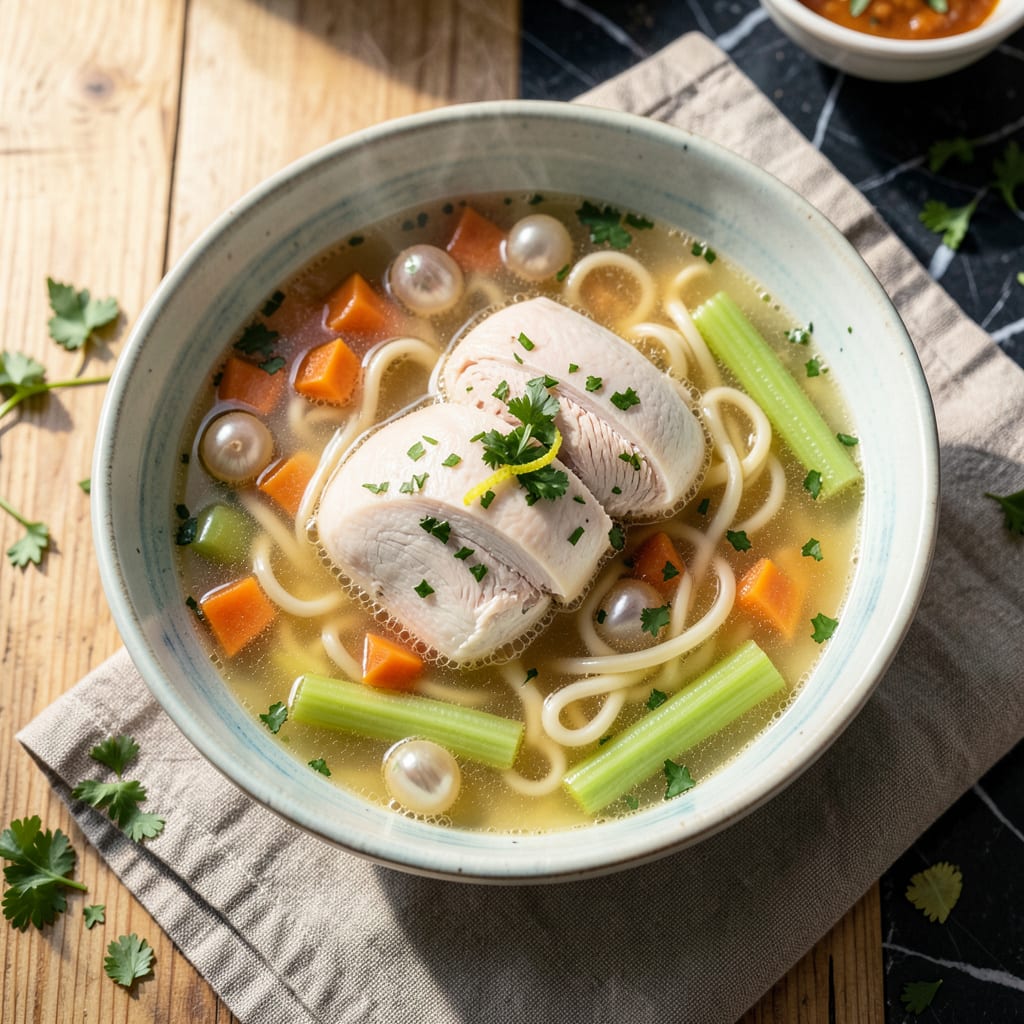
Yes, you can safely cook raw chicken directly in soup as long as it reaches an internal temperature of 165°F (74°C) for at least 15 seconds. Use a meat thermometer to verify doneness, and avoid cross-contamination by handling raw chicken properly before adding it to the broth.
This method actually creates some of the most flavorful broths because the chicken releases its juices and collagen directly into the liquid as it cooks. 🔥 I prefer using bone-in pieces for extra depth, but boneless thighs work beautifully too—they stay tender even with longer simmering. The key is maintaining a gentle simmer rather than a rolling boil, which can make the meat tough. Always remove the chicken once it’s done to avoid overcooking while you finish the soup.
💡 In This Article
- How Raw Chicken Cooks Safely in Soup Broth
- Step-by-Step Guide for Adding Raw Chicken to Soup
How Raw Chicken Cooks Safely in Soup Broth
When you cook chicken in liquid, the heat transfer happens differently than in dry methods like baking or grilling. Water conducts heat about 25 times more efficiently than air, which means the chicken cooks more evenly and gently. This prevents the outer layers from drying out before the center reaches safe temperatures.
The USDA confirms that poultry reaches 165°F (74°C) faster in liquid because the surrounding broth maintains a consistent temperature around all surfaces of the meat. 🔥
The magic happens at the cellular level. As the chicken heats, its muscle proteins (actin and myosin) begin to denature and coagulate. In dry heat, this process can squeeze out moisture, but in broth, the liquid environment actually helps retain juices.
Collagen in connective tissues breaks down into gelatin between 160-180°F (71-82°C), enriching your soup with body and mouthfeel. A gentle simmer (180-200°F/82-93°C) is ideal—boiling can make proteins contract too quickly, resulting in tough, rubbery meat. ✨
Time becomes your ally with this method. While a 165°F internal temperature is the safety threshold, maintaining that temperature for slightly longer (like 5-10 minutes) ensures even doneness throughout thicker pieces. Bone-in chicken may take 25-30 minutes to cook through in simmering broth, while boneless pieces typically need 15-20 minutes.
The broth’s temperature stays more stable than oven air, giving you better control over the cooking process. 💫
Here’s what most home cooks miss: the broth itself becomes a flavor conductor. As the chicken cooks, it releases myoglobin (the protein that gives meat its color) and water-soluble compounds like inosine monophosphate (IMP), which enhances umami. This is why chicken cooked in broth tastes richer than chicken cooked separately and added later.
The liquid also dilutes any potential “raw” flavors from the chicken, resulting in a cleaner-tasting final dish. 🌟
For food safety, the USDA’s time-temperature tables show that chicken can be safely cooked at lower temperatures if held for longer periods. For example, 150°F (66°C) for 3.6 minutes achieves the same bacterial reduction as 165°F for 15 seconds.
However, maintaining precise low-temperature control at home is tricky, which is why 165°F remains the standard recommendation for most kitchens. Always use a thermometer to verify—color alone isn’t a reliable indicator of doneness. ⚡
Consider the cut size too—1-inch cubes cook through in about 8-12 minutes at a simmer, while whole breasts may need 20-25 minutes. The broth’s starting temperature matters: adding chicken to already-hot broth (180°F+) reduces the time in the “danger zone” (between 40-140°F) where bacteria thrive.
This is why bringing your broth to a simmer before adding raw chicken is both a flavor and safety best practice. 💛

- Jollof Rice Sauce Recipe: West African Tomato and Spice Infusion - September 25, 2026
- Japanese Rice Soup Recipe: Umami-Rich Comfort in a Bowl - September 25, 2026
- Homemade Cream Of Rice Recipe: Silk-Smooth Breakfast in Minutes - September 25, 2026