
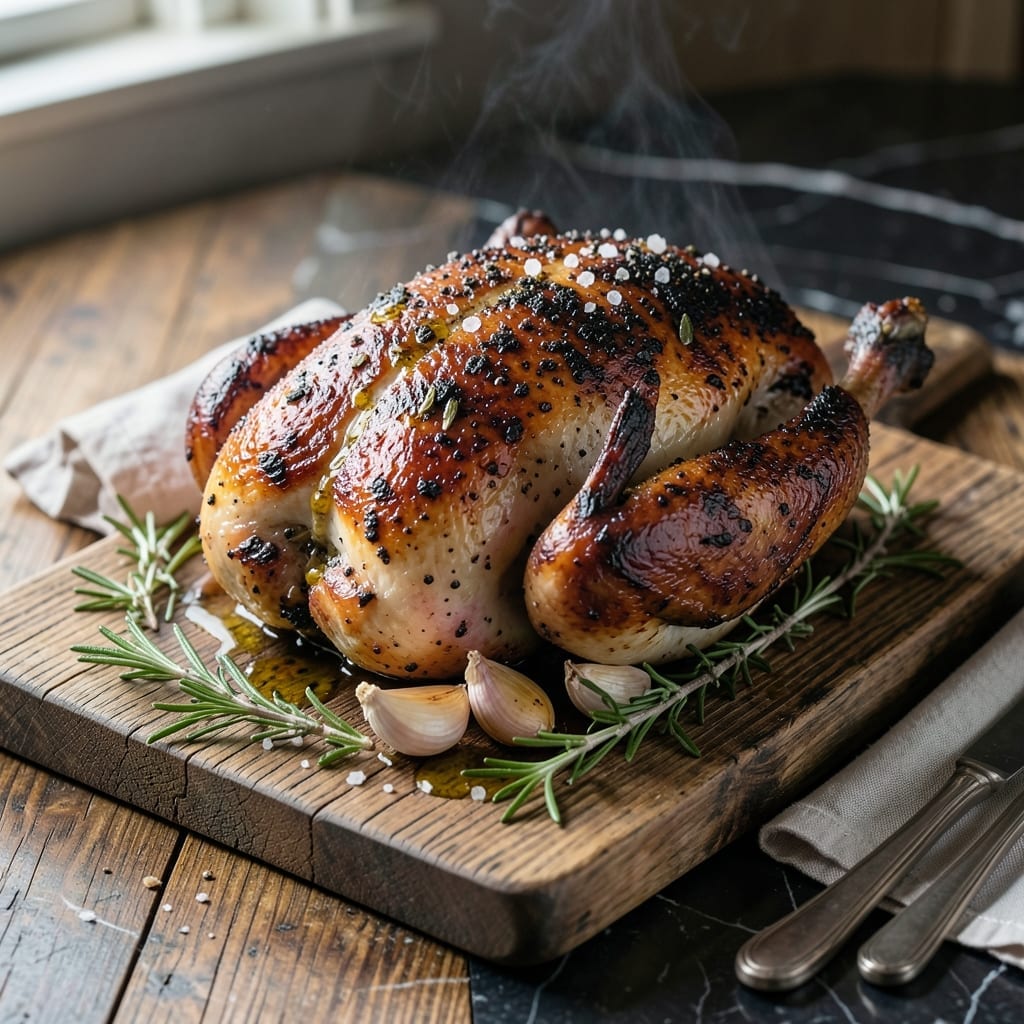
There’s nothing quite like the smoky depth and juicy meat of charcoal-roasted chicken. This method transforms a simple bird into a centerpiece worthy of any dinner table.
The key is controlling the heat and using the right wood for that signature flavor. I’ve perfected this technique to ensure the skin crisps beautifully while the meat stays tender and moist.
With a few basic seasonings and a little patience, you’ll achieve results that rival any backyard pitmaster. The charcoal imparts a rich, aromatic quality that gas or electric grills simply can’t match.
Serve it with your favorite sides, and prepare for compliments. This is the kind of meal that turns a regular night into something special.
Ingredients for Charcoal Roasted Chicken
Simple ingredients, dramatic results. The chicken does the talking here.
| Ingredient | Amount | Notes |
|---|---|---|
| Whole Chicken 🍗 | 3 ½ lb | Fresh, giblets removed, patted dry |
| Kosher Salt 🧂 | 2 tbsp | Diamond Crystal preferred for even seasoning |
| Freshly Ground Black Pepper 🌶️ | 1 tbsp | Coarse grind for texture |
| Garlic Cloves 🧄 | 6 cloves | Smashed, unpeeled |
| Fresh Rosemary 🌿 | 4 sprigs | Stems intact for infusion |
| Fresh Thyme 🍃 | 4 sprigs | Stems intact for infusion |
| Lemon 🍋 | 1 whole | Halved for cavity |
| Onion 🧅 | 1 whole | Quartered for cavity |
| Olive Oil 🫒 | 2 tbsp | Extra-virgin for basting |
| Charcoal Briquettes ⚫ | 50 pieces | Natural lump charcoal preferred |
| Hardwood Chunks 🪵 | 4 pieces | Hickory or apple wood for smoke |
| Unsalted Butter 🧈 | 4 tbsp | Melted for basting |
The chicken is the star—go for air-chilled, free-range if you can find it (the skin crisps better). I grab mine from Whole Foods or a local butcher when I want to splurge, but Costco’s organic rotisserie-ready birds work great for a weeknight. Look for plump, moist skin—avoid anything that looks dry or shriveled. Size matters too: aim for 3-4 lbs for even cooking without drying out.
No fresh herbs? Dried at one-third the amount works, but fresh really shines here. Out of hardwood? Charcoal with a handful of wood chips in a foil pouch will still give you that smoky depth. Don’t have time to truss? Tie the legs together with kitchen twine—keeps it compact and even. The butter can be swapped for olive oil if that’s your preference, but butter adds a richness that’s hard to beat.
Leftovers keep 3-4 days in the fridge—shred for sandwiches or toss into salads. The roasted garlic and herbs? Squeeze the cloves onto crusty bread for an instant snack. Charcoal and unused wood? Store in a dry place for next time.
Why You’ll Love This Recipe
- One Pan Magic: I toss the chicken with salt, pepper, garlic, and rosemary, then let the charcoal do the rest—hardly any cleanup.
- Smoky Depth: That charcoal kiss turns simple ingredients into something crave-worthy, with garlic and rosemary in every bite.
- Feeds the Week: Roast it Sunday, and I’ve got lunches or quick dinners ready—shreds perfectly for salads or tacos.
- Budget Hero: A whole chicken is cheap, and this method stretches it further with leftovers that taste even better the next day.
Step-by-Step Instructions for Charcoal Roasted Chicken
Here’s how to nail that smoky, juicy perfection over live charcoal.
Step 1: Season and Prepare the Chicken
Pat the 3.5 lb whole chicken completely dry inside and out with paper towels. This isn’t just about cleanliness—it’s the foundation for crispy skin. Season the cavity and exterior aggressively with all of the 2 tbsp kosher salt and 1 tbsp freshly ground black pepper.
Stuff the cavity with the 6 cloves garlic cloves (smashed but unpeeled), 4 sprigs fresh rosemary, 4 sprigs fresh thyme, 1 whole lemon (halved), and 1 whole onion (quartered). This aromatic base infuses the meat from within as it roasts.
Step 2: Set Up the Charcoal for Indirect Heat
Arrange the 50 pieces charcoal briquettes in a two-zone fire: pile them on one side of your grill for direct heat, leaving the other side empty. Add the 4 pieces hardwood chunks to the coals for smoke. You want medium heat—350-375°F—where you can hold your hand about 5 inches above the grate for 4-5 seconds.
Place the cooking grate on and let it preheat for 5 minutes. The goal is to create an indirect cooking environment where the chicken roasts through gentle, even heat rather than direct flame.
Step 3: Roast with Smoke and Baste
Place the chicken breast-side up on the cool side of the grill, as far from the coals as possible. Cover with the lid, leaving the vents partially open to maintain temperature. Roast for 45 minutes undisturbed—this allows the skin to start crisping and the smoke to penetrate deeply.
After 45 minutes, baste the chicken with the 2 tbsp olive oil and 4 tbsp unsalted butter (melted together). I use a silicone brush for even coverage. Continue roasting, basting every 15 minutes, until the internal temperature in the thickest part of the thigh reaches 165°F.
Step 4: Rest and Serve
Transfer the chicken to a cutting board and let it rest uncovered for 15 minutes. This is non-negotiable for juicy meat—the resting period allows the muscle fibers to relax and redistribute the juices throughout the bird.
Carve against the grain into serving pieces. The skin should be deep amber with smoky aromas, and the meat should glisten with moisture. Each bite should deliver that perfect balance of crispy exterior and tender, smoky interior that only charcoal can provide.
Pro Tips For Making Charcoal Roasted Chicken
- Dry the Chicken: Pat the whole chicken completely dry with paper towels before seasoning—this guarantees crispy skin instead of steamed, soggy results.
- Use Room-Temp Garlic: Let the garlic cloves sit at room temperature for 15-20 minutes after crushing to activate their flavor before stuffing them into the chicken.
- Avoid Overcrowding Coals: I learned this the hard way—spread the charcoal in a single layer with space between pieces to prevent flare-ups that can burn the rosemary and pepper coating.
- Rest Before Carving: Give the chicken a solid 10-15 minutes under foil after roasting—it keeps the juices from running all over your cutting board.
Flavor Customization for charcoal roasted chicken
Herb Variations
Swap the rosemary and thyme for fresh sage and oregano to give your bird an earthier, more rustic profile. I love adding 3-4 sprigs of sage and 2 sprigs of oregano for a Mediterranean twist that pairs wonderfully with roasted potatoes.
Spice Rub Upgrade
For a bolder flavor, mix 1 tbsp smoked paprika, 1 tsp cumin, and ½ tsp cayenne with your salt and pepper. This creates a warm, slightly spicy crust that complements the smoky charcoal. 🔥
Citrus Zing
Add orange slices and lime halves to the cavity alongside the lemon for a brighter, more complex citrus note. The combination of orange, lime, and lemon creates a vibrant aroma that infuses the meat beautifully.
Butter Infusions
Melt your butter with 2 minced garlic cloves and 1 tbsp chopped parsley for basting. This simple upgrade adds layers of flavor to the skin. I also love stirring in 1 tsp lemon zest for extra brightness.
Wood Smoke Choices
Experiment with different hardwoods for unique smoke profiles. Hickory gives a strong, bacon-like smoke, while apple wood offers a sweeter, fruitier note. For a milder touch, try cherry wood—it’s my go-to for a subtle, aromatic smoke. ✨
Sweet and Spicy Glaze
During the last 15 minutes of cooking, brush the chicken with a mix of ¼ cup honey and 1 tbsp sriracha. This creates a sticky, sweet-spicy glaze that caramelizes beautifully over the charcoal heat.
Nutrition Facts
Frequently Asked Questions
How do I maintain consistent heat?
Use a two-zone fire with coals on one side. Add 10-12 briquettes every 45 minutes to maintain 350-375°F. Keep vents partially open to control airflow.
Can I use a gas grill instead?
Yes, but you’ll miss the smoky depth. Add wood chips in a smoke box to mimic charcoal flavor. Set burners for indirect heat at 375°F and follow the same timing.
Why is my chicken skin not crispy?
Pat the chicken completely dry before seasoning. Ensure the grill is hot enough and avoid opening the lid too often. Baste with butter during the last 30 minutes for extra crispiness.
How do I know when it’s done?
Use a meat thermometer. The thickest part of the thigh should reach 165°F. Juices should run clear, and the leg should move easily in its socket.

- Jollof Rice Sauce Recipe: West African Tomato and Spice Infusion - September 25, 2026
- Japanese Rice Soup Recipe: Umami-Rich Comfort in a Bowl - September 25, 2026
- Homemade Cream Of Rice Recipe: Silk-Smooth Breakfast in Minutes - September 25, 2026