
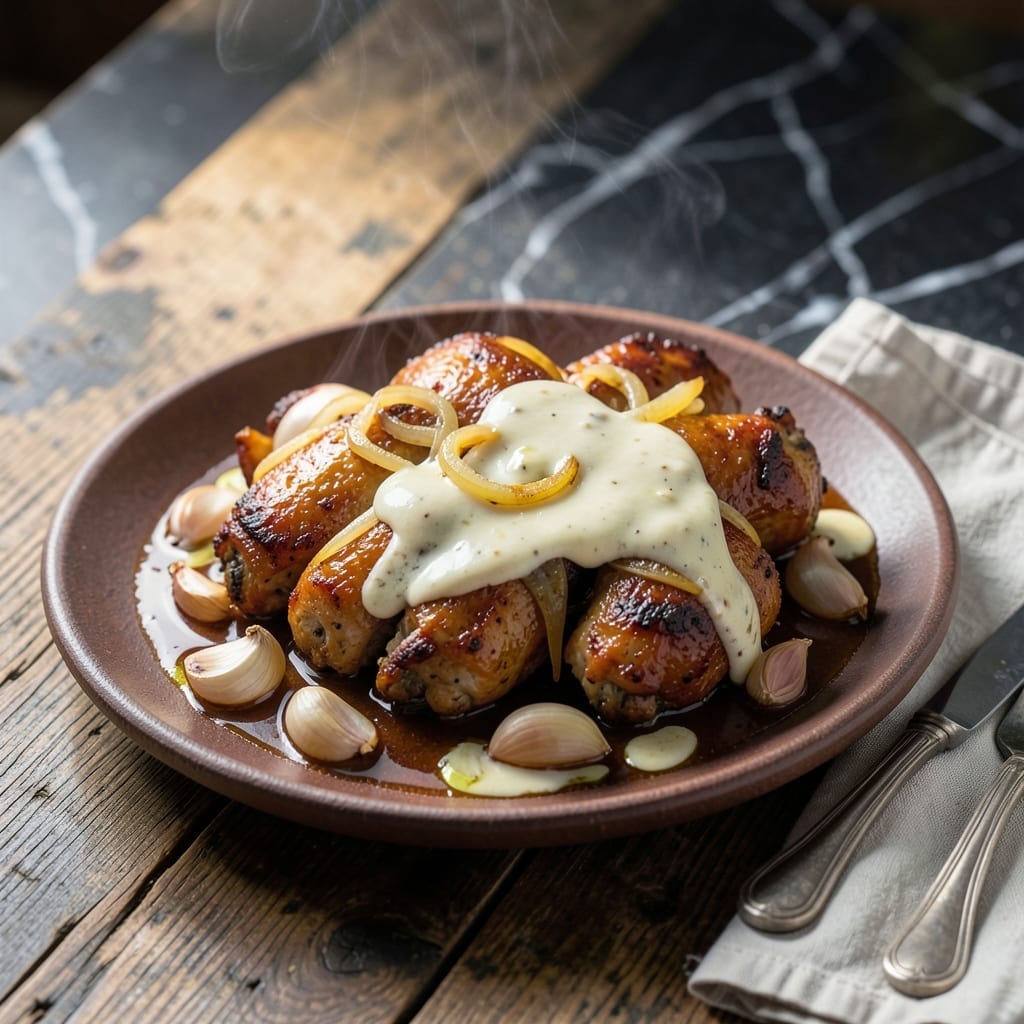
This Filipino classic transforms simple chicken into a deeply flavorful dish with its signature tangy-savory profile.
The secret lies in the balance of vinegar, soy sauce, and garlic, simmered until the meat falls off the bone. Coconut milk adds a rich, creamy depth that makes this version stand out.
You’ll achieve tender chicken in a sauce that’s bold, slightly tangy, and perfectly thickened. It’s a foolproof method that delivers restaurant-quality results at home.
Serve with steamed rice to soak up every last bit of the flavorful sauce. Here’s how to make it perfectly every time.
Ingredients for Chicken Adobe
Rich coconut vinegar and soy sauce transform chicken into a Filipino masterpiece with bold flavors.
| Ingredient | Amount | Notes |
|---|---|---|
| Chicken Thighs 🍗 | 2 lb | Boneless, skin-on preferred |
| Coconut Vinegar 💧 | ¾ cup | White or apple cider vinegar substitute |
| Soy Sauce 🫒 | ½ cup | Low-sodium if preferred |
| Garlic Cloves 🧄 | 8 cloves | Minced for maximum flavor |
| Coconut Milk 🥥 | 1 can | Full-fat for creaminess |
| Yellow Onion 🧅 | 1 whole | Thinly sliced |
| Bay Leaves 🌿 | 3 pieces | Dried, for aroma |
| Black Peppercorns 🌶️ | 1 tsp | Freshly cracked preferred |
| Brown Sugar 🍚 | 1 tbsp | Optional for balance |
| Vegetable Oil 🫒 | 2 tbsp | For sautéing aromatics |
| Green Chili Peppers 🌶️ | 2 whole | Sliced, seeds removed |
| Salt 🧂 | 1 tsp | Adjust to taste |
The chicken thighs are non-negotiable here—bone-in, skin-on gives the best texture and flavor, but boneless works in a pinch. Look for fresh, plump thighs at your butcher or Whole Foods. Coconut vinegar is key for authenticity, but white vinegar plus a splash of coconut milk can mimic it. The soy sauce should be Filipino brands like Silver Swan or Datu Puti if you can find them.
No coconut vinegar? Apple cider vinegar with 1 tbsp coconut milk gets you close. Out of coconut milk? Heavy cream at half the amount (though less authentic). The green chilies can be jalapeños or serranos—adjust heat to taste. Brown sugar can be swapped for honey or palm sugar. Missing bay leaves? Skip them, but add a pinch of thyme.
Leftovers keep 4-5 days in the fridge—flavors actually deepen overnight. Freezes beautifully for 3 months. Reheat gently to avoid curdling the coconut milk. Serve with steamed rice (it’s mandatory for soaking up that sauce).
Why You’ll Love This Recipe
- One Pot Wonder: I just toss the chicken thighs, garlic, and sauce in a pan and let it work its magic.
- Umami Bomb: The coconut vinegar and soy sauce create this deep, tangy-savory flavor that’s ridiculously good.
- Weeknight Hero: Honestly, it’s my go-to for busy evenings—ready before the kids start asking for snacks.
- Stretches Further: Leftovers taste even better the next day, and it’s cheap to make with simple pantry staples.
Step-by-Step Instructions for Chicken Adobe
This traditional method builds deep, tangy flavor with minimal effort.
Step 1: Sear the Chicken Thighs
Heat the 2 tbsp vegetable oil in a large pot over medium-high heat. Pat the 2 lb chicken thighs dry with paper towels and season lightly with the 1 tsp salt. Brown the chicken for 4-5 minutes per side until the skin is deep golden brown and crispy.
Remove the chicken and set aside. The fond left in the pot will form the flavor base for your stew. Don’t clean the pot—those browned bits are essential for building rich, complex flavor in the sauce.
Step 2: Sauté Aromatics Until Fragrant
In the same pot, add the 1 whole yellow onion (thinly sliced) and cook for 3-4 minutes until softened and translucent. Add the 8 cloves garlic cloves (minced) and cook for 30 seconds until fragrant but not browned.
Stir in the 2 whole green chili peppers (sliced) and cook for 1 minute. Then add the 3 pieces bay leaves and 1 tsp black peppercorns. This aromatic foundation will infuse the dish with authentic Filipino character.
Step 3: Build the Tangy Sauce Base
Pour in the 0.5 cup soy sauce and 0.75 cup coconut vinegar. Scrape the bottom of the pot to release all the browned bits. Simmer for 5 minutes until the liquid reduces slightly.
Add the 1 can coconut milk and 1 tbsp brown sugar. Stir until the sugar dissolves. The vinegar’s sharpness should mellow as it combines with the rich coconut milk, creating a balanced, tangy-sweet foundation.
Step 4: Simmer to Tender Perfection
Return the chicken to the pot, submerging it in the sauce. Reduce heat to medium-low and simmer uncovered for 35-40 minutes. Stir occasionally and spoon the sauce over the chicken to baste it.
You’ll know it’s done when the chicken is fork-tender and the sauce has thickened enough to coat the back of a spoon. The stew should have a glossy, rich appearance with the chicken easily pulling away from the bone.
Step 5: Adjust and Rest Before Serving
Taste and adjust seasoning if needed, though the soy sauce and vinegar typically provide sufficient saltiness. Remove the bay leaves and peppercorns before serving.
Let the stew rest for 5-10 minutes off the heat. This allows the flavors to meld together fully. Serve hot over steamed rice to soak up every bit of the delicious, tangy sauce.
Pro Tips For Making Chicken Adobe
- Brown the Thighs: Get a good sear on the chicken thighs first—skin-side down for 5-7 minutes on medium-high heat. I learned this the hard way when my adobo turned out pale and watery.
- Balance the Vinegar: Use equal parts coconut vinegar and soy sauce, about 1/2 cup each for 2 lbs of chicken. Sounds weird, but it works: too much vinegar makes it harsh, too little and the tang disappears.
- Skip the Boil: Simmer the coconut milk gently—never let it boil hard or it’ll separate. After burning two batches, I finally figured out that low and slow keeps it creamy.
- Rest Before Serving: Let the chicken sit in the sauce for 10 minutes off the heat. My grandmother swore by this, and she was right: the flavors sink in deeper.
Common Mistakes When Making Great chicken adobe
Overcrowding the Pot
Don’t cram all 2 lb chicken thighs into the pot at once. Crowding lowers the temperature, causing the meat to steam rather than sear. I cook in batches to get that deep golden brown crust on each piece. 🔥
Skipping the Sear
Browning the chicken builds a flavor foundation through the Maillard reaction. Without this step, your stew will taste flat. Always sear first, even if you’re short on time.
Boiling the Sauce
Vigorous boiling can cause coconut milk to curdle. Keep the heat at a gentle simmer, especially after adding the milk. A heavy-bottomed pot helps maintain even, controlled heat.
Under-seasoning
The soy sauce and vinegar are salty, but don’t skip the 1 tsp salt on the chicken. Seasoning in layers ensures every bite is flavorful. Taste and adjust at the end if needed.
Rushing the Simmer
This dish needs 35-40 minutes of simmering for the chicken to become fork-tender. Cutting the time short results in tough meat and thin sauce. Patience pays off here.
Stir occasionally and baste the chicken with the sauce to build layers of flavor. ✨
Nutrition Facts
Frequently Asked Questions
Can I use chicken breast instead of thighs?
You can, but thighs are ideal for their rich flavor and tenderness. If using breasts, reduce simmering time to 25-30 minutes to prevent dryness.
What if I don’t have coconut vinegar?
Substitute with white or apple cider vinegar. Add 1 tbsp coconut milk to mimic the coconut flavor. The tangy profile will still shine.
How do I prevent the coconut milk from curdling?
Keep heat at a gentle simmer, never a boil. Stir occasionally and use a heavy pot for even heat distribution.
Can I make this ahead of time?
Flavors deepen overnight. Store in the fridge for up to 5 days or freeze for 3 months.

- Jollof Rice Sauce Recipe: West African Tomato and Spice Infusion - September 25, 2026
- Japanese Rice Soup Recipe: Umami-Rich Comfort in a Bowl - September 25, 2026
- Homemade Cream Of Rice Recipe: Silk-Smooth Breakfast in Minutes - September 25, 2026