
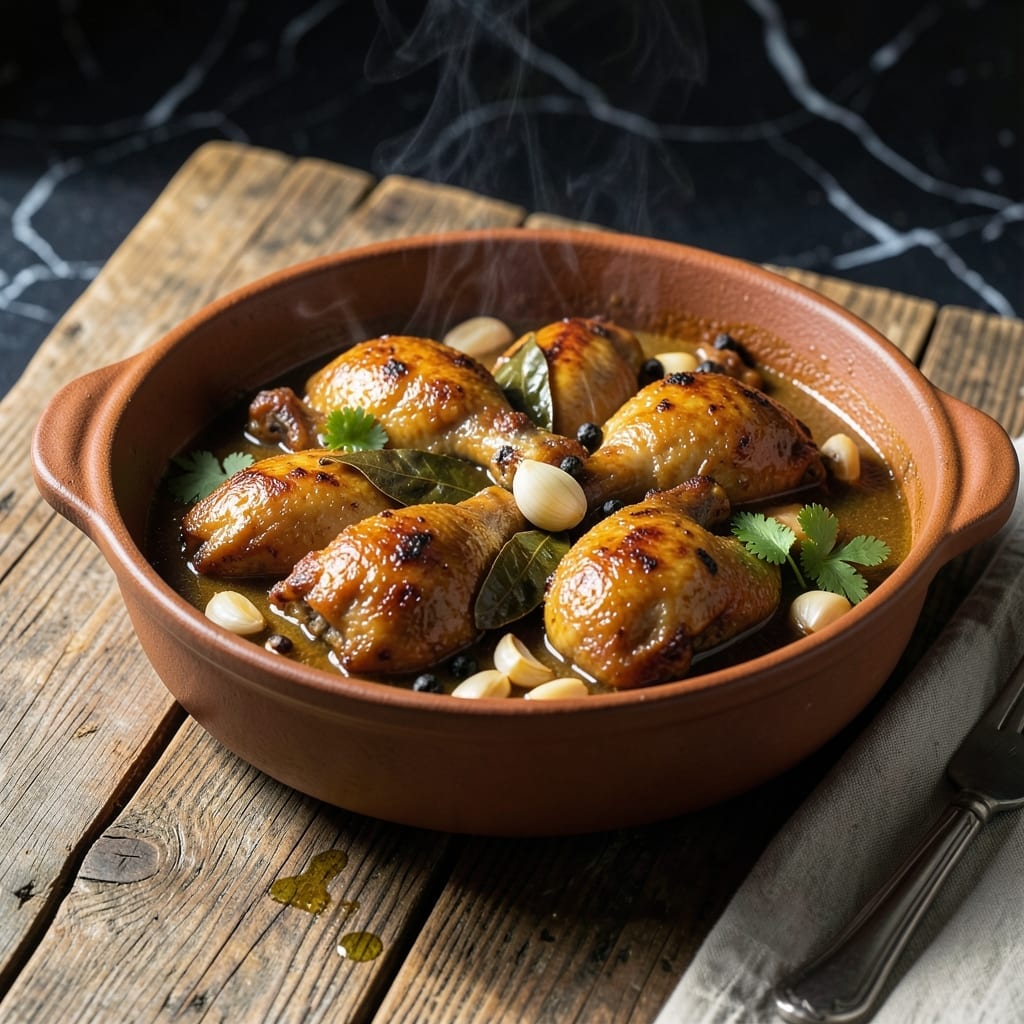
This Filipino classic delivers bold, tangy flavor with minimal effort. The vinegar-based braise transforms chicken into tender, fall-off-the-bone perfection while building layers of garlic depth.
I’ve tested this recipe in my Portland kitchen with thighs, drumsticks, and even wings—all yield restaurant-quality results. The key is balancing vinegar’s acidity with soy sauce’s saltiness during the slow simmer.
The dish develops its signature savory-sour sauce as it cooks, which reduces to a glossy glaze. Every piece absorbs the rich, garlicky liquid, making each bite intensely flavorful.
Serve with steamed rice to soak up every drop. This authentic method stays true to its Pinoy roots.
Ingredients for Chicken Adobo Recipe Pinoy
These bold, tangy ingredients create the signature Pinoy adobo every time.
| Ingredient | Amount | Notes |
|---|---|---|
| Chicken Thighs 🍗 | 2 ½ lb | Boneless, skin-on preferred |
| Soy Sauce 🫒 | ¾ cup | Use low-sodium for balance |
| White Vinegar 💧 | ¾ cup | Cane vinegar authentic option |
| Garlic Cloves 🧄 | 12 cloves | Peeled and smashed |
| Bay Leaves 🌿 | 3 pieces | Dried, whole leaves |
| Black Peppercorns 🌶️ | 1 tbsp | Lightly crushed |
| Brown Sugar 🍚 | 2 tbsp | Optional for sweetness |
| Olive Oil 🫒 | 2 tbsp | For searing chicken |
| Water 💧 | ½ cup | To adjust braising liquid |
| Green Onions 🧅 | 4 whole | Thinly sliced for garnish |
| Lime 🍋 | 1 whole | Juiced for finishing |
The chicken makes this dish. Thighs stay juicy through the long braise—Costco or New Seasons have great options in Portland. Look for skin-on for extra richness (you’ll render that fat for flavor). The soy sauce should be Filipino brands like Silver Swan or Datu Puti for authentic taste. Avoid Japanese soy—it’s sweeter and throws off the balance.
No white vinegar? Apple cider vinegar at a 1:1 ratio works, but the flavor shifts slightly sweeter. Out of bay leaves? One teaspoon dried thyme can substitute. The garlic is non-negotiable—this dish needs that full dozen cloves. If your vinegar is too harsh, a pinch of sugar (or the optional brown sugar) mellows it out. Don’t skip the peppercorns—they add subtle heat.
Adobo tastes even better the next day as flavors meld. Keeps 4-5 days refrigerated, freezes for 3 months. The sauce thickens as it cools—reheat gently with a splash of water. Always serve with steamed rice to soak up that glossy, garlicky glaze.
Why You’ll Love This Recipe
- One Pot Wonder: I toss everything in a single pan—chicken, soy sauce, vinegar, garlic—and let it simmer. Cleanup is a breeze.
- Tangy Perfection: The soy-vinegar combo with garlic hits that sweet-savory-tangy balance I crave every time.
- Feeds a Crowd: Between us, it’s my go-to for family dinners—cheap, filling, and everyone licks their plates clean.
- Better Next Day: Honestly, the flavors deepen overnight. I make extra just to savor the leftovers.
Step-by-Step Instructions for Chicken Adobo
This method delivers authentic Filipino flavor with a perfect balance of tangy and savory notes.
Step 1: Sear the Chicken Thighs
Heat the 2 tablespoons olive oil in a large, heavy pot over medium-high heat. Pat the 2.5 lb chicken thighs dry with paper towels to ensure proper browning. Season lightly with salt, though the soy sauce will add plenty of seasoning later.
Sear the chicken thighs in batches for 3-4 minutes per side until deep golden brown. Avoid crowding the pot—this causes the chicken to steam rather than sear. Transfer the seared chicken to a plate and set aside. The fond left in the pot will build the foundation of your sauce.
Step 2: Build the Aromatic Base
In the same pot, reduce heat to medium and add the 12 cloves garlic cloves, 3 pieces bay leaves, and 1 tablespoon black peppercorns. Sauté for 1-2 minutes until the garlic is lightly golden and fragrant. Be careful not to let the garlic burn, as it will turn bitter.
Add the 0.75 cup soy sauce and 0.75 cup white vinegar, then deglaze the pot by scraping up any browned bits with a wooden spoon. Let the mixture simmer for 3-4 minutes to meld the flavors. The vinegar’s sharpness will mellow as it cooks, creating that signature adobo tang.
Step 3: Braise the Chicken to Tenderness
Return the seared chicken thighs to the pot along with any accumulated juices. Add the 0.5 cup water and 2 tablespoons brown sugar. Stir to combine, ensuring the chicken is mostly submerged in the liquid.
Bring the mixture to a gentle simmer, then reduce heat to low. Cover and let it braise for 30-35 minutes, turning the chicken halfway through. The chicken is done when it’s tender and the internal temperature reaches 165°F. The sauce should thicken slightly and take on a rich, glossy appearance.
Step 4: Reduce the Sauce and Finish
Once the chicken is cooked, transfer it to a serving platter. Increase the heat to medium-high and let the sauce reduce for 5-7 minutes until it coats the back of a spoon. Taste and adjust seasoning if needed—though the soy sauce and vinegar should provide the right balance of salt and acidity.
Pour the reduced sauce over the chicken. Garnish with the 4 whole green onions, thinly sliced, and a squeeze of juice from the 1 whole lime for a bright, citrusy finish. Serve immediately with steamed rice to soak up every last bit of the flavorful sauce.
Pro Tips For Making Chicken Adobo Recipe Pinoy
- Simmer, Don’t Boil: Keep the heat low enough that the soy-vinegar sauce barely bubbles—I learned this the hard way after turning my first batch into a salty, over-reduced mess.
- Marinate 30 Minutes: Toss the chicken thighs in soy sauce, garlic, and vinegar for at least 30 minutes before cooking. Sounds like a small thing, but it actually changes the outcome.
- Skip the Lid: Resist the urge to cover the pan while simmering, or you’ll steam the chicken instead of letting it caramelize in that tangy sauce.
- Add Vinegar Late: Hold off on adding the white vinegar until the last 10 minutes of cooking—this keeps the acid from toughening the chicken before it’s fully tender.
Make-Ahead Tips for chicken adobo recipe pinoy
Marinate Overnight
For maximum flavor, combine the 2.5 lb chicken thighs, 0.75 cup soy sauce, 0.75 cup white vinegar, and 12 cloves garlic in a bowl. Let it sit in the fridge for 8-12 hours or overnight. This step is optional but makes a noticeable difference. 💡
Prep Ahead
You can prep all ingredients the night before—peel and smash the garlic, measure the 0.75 cup soy sauce and 0.75 cup white vinegar, and crush the 1 tablespoon black peppercorns. Store them in separate containers in the fridge for a stress-free cooking experience.
Partial Cooking
If you want to get a head start, sear the chicken and build the aromatic base, then refrigerate everything in the pot. The next day, simply bring it to a simmer and finish the braising process. This method saves about 10 minutes of active cooking time.
Sauce Prep
Mix the braising liquid the night before and store it in the fridge. The flavors will meld overnight, giving you a head start on that signature savory-sour taste. Just bring it to room temperature before adding the chicken.
Freezer-Friendly
This dish freezes beautifully for up to 3 months. Portion the cooked adobo into airtight containers, leaving 1 inch headspace for expansion. Thaw overnight in the fridge before reheating. ❄️
Reheating Tips
Reheat gently on the stovetop over low heat with a splash of water to prevent drying. Microwave works too—cover and heat in 1-minute intervals, stirring between each. The sauce will thicken as it reheats.
Nutrition Facts
Frequently Asked Questions
Can I use chicken breast instead of thighs?
Yes, but thighs stay juicier during the 30-35 minutes braise. Breast can dry out—reduce cooking time to 20-25 minutes and monitor closely.
Why does the sauce turn cloudy sometimes?
That’s vinegar reacting with soy sauce proteins. It’s normal and doesn’t affect flavor. For clearer sauce, avoid boiling too vigorously during reduction.
What if my adobo tastes too sour?
Balance it with a touch of brown sugar or 1 tablespoon honey. Stir well and taste—this mellows the vinegar’s sharpness.
Can I make this in a slow cooker?
Sear chicken first, then cook on low for 4-5 hours. Add vinegar last to prevent overcooking the meat.

- Jollof Rice Sauce Recipe: West African Tomato and Spice Infusion - September 25, 2026
- Japanese Rice Soup Recipe: Umami-Rich Comfort in a Bowl - September 25, 2026
- Homemade Cream Of Rice Recipe: Silk-Smooth Breakfast in Minutes - September 25, 2026