
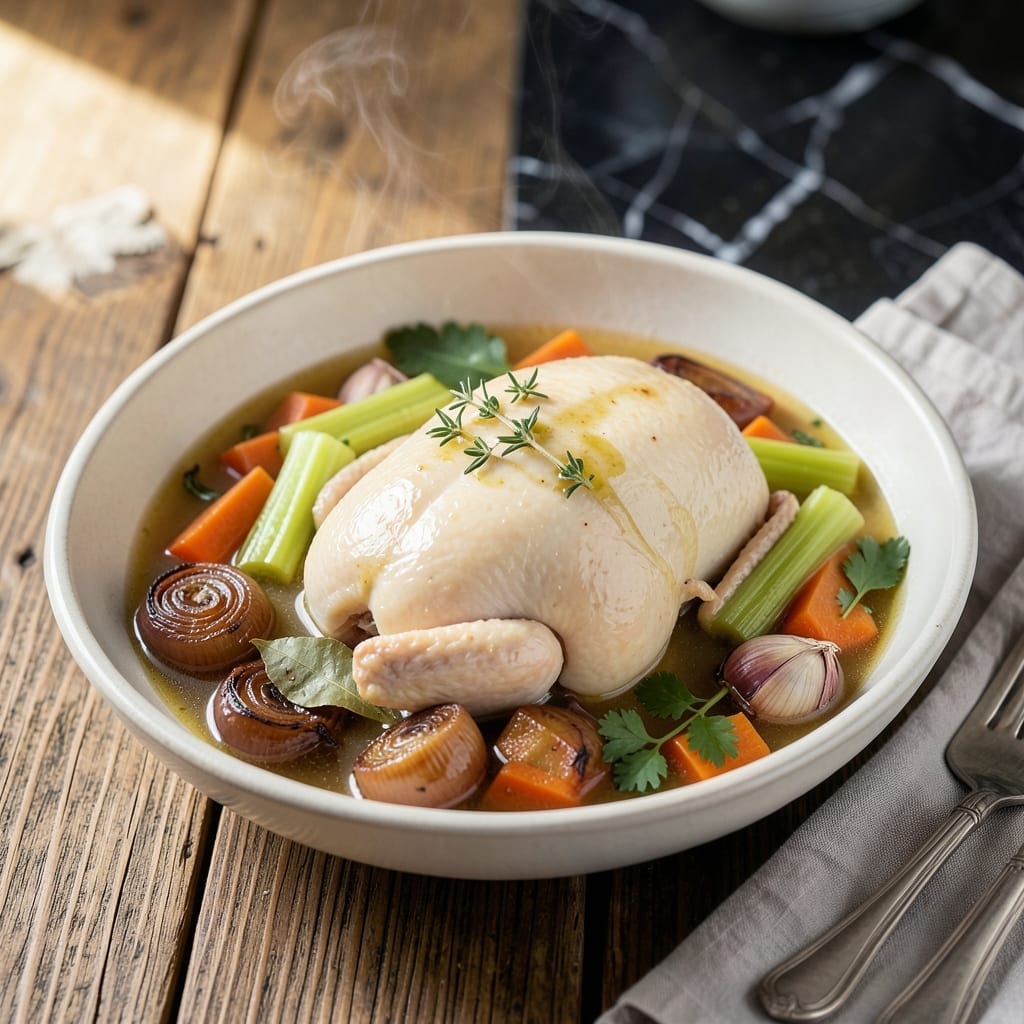
There’s nothing like the depth of flavor you get from homemade chicken broth made with a whole chicken. This proven technique extracts maximum richness from bones, vegetables, and aromatics without any shortcuts.
The process is straightforward yet precise: simmering a whole chicken with classic mirepoix and herbs for 4-6 hours creates a golden, rich liquid that forms the foundation of countless dishes. Every spoonful delivers clean, pure chicken flavor.
What emerges is a flavorful stock that’s far superior to anything from a can or carton. The aroma alone will convince you to never buy pre-made again. This recipe yields about 8-10 cups of liquid gold.
Use it as a base for soups, sauces, or simply sip it as a nourishing drink. Here’s how to make it properly.
Ingredients for Chicken Broth Recipe Whole Chicken
Whole chicken plus vegetables and herbs make this rich, golden homemade broth from scratch.
| Ingredient | Amount | Notes |
|---|---|---|
| Whole Chicken 🍗 | 1 whole | About 4-5 lb, giblets removed |
| Cold Water 💧 | 12 cups | Enough to cover chicken by 2 inches |
| Yellow Onions 🧅 | 2 whole | Quartered, skin on for color |
| Carrots 🥕 | 3 whole | Cut into large chunks |
| Celery Stalks 🌿 | 3 whole | Cut into large chunks |
| Garlic Cloves 🧄 | 6 cloves | Smashed, unpeeled |
| Bay Leaves 🍃 | 2 pieces | Dried, whole |
| Fresh Thyme Sprigs 🌿 | 5 pieces | Or 1 tsp dried thyme |
| Fresh Parsley Stems 🌿 | 1 bunch | About 10 stems, leaves reserved |
| Black Peppercorns 🌶️ | 1 tbsp | Whole, not ground |
| Kosher Salt 🧂 | 1 tsp | Adjust to taste at end |
| White Wine Vinegar 🍷 | 2 tbsp | Or apple cider vinegar |
The whole chicken is non-negotiable here. Look for a 4-5 lb bird with good color and no off odors—organic or free-range if your budget allows. The bones are where the collagen lives, and that’s what gives your broth that silky, rich mouthfeel. Most grocery stores carry them fresh, but Costco often has the best price for organic. Don’t remove the skin—it adds body to the stock.
No whole chicken? Use 4-5 lbs of chicken backs, necks, and wings—they’re packed with gelatin. Missing a mirepoix veggie? Leek greens or parsnips work great as swaps. Out of fresh herbs? Dried thyme at one-third the amount works, but skip dried parsley—it tastes like dust. The vinegar brightens everything; lemon juice can pinch-hit in a bind.
Broth keeps 5 days refrigerated in airtight containers, or 6 months frozen. Skim the fat after chilling for clearer stock (or leave it for extra richness). Strain and portion into containers for easy use in soups, sauces, or sipping straight from the mug.
Why You’ll Love This Recipe
- One Pot Simplicity: I just dump the whole chicken, veggies, and cold water in a pot and let it simmer—no fancy prep required.
- Rich, Deep Flavor: The slow simmer pulls every bit of goodness from the chicken and veggies into the broth. Honestly, it tastes like liquid gold.
- Meal Prep MVP: I make a big batch on Sunday and use it all week for soups, risotto, or just sipping when I need a cozy pick-me-up.
- Budget Stretcher: One whole chicken gives me broth and cooked meat for other meals. Between us, it’s like getting two dinners for the price of one.
Step-by-Step Instructions for Chicken Broth Whole Chicken
This method ensures a rich, deeply flavored stock with minimal hands-on time.
Step 1: Prepare the Chicken and Aromatics
Pat the whole chicken dry with paper towels and remove any remaining giblets. Place it in a large stockpot. I find keeping the skin on adds richness to the final broth, but you can remove it if you prefer a clearer stock.
Roughly chop the yellow onions, carrots, and celery stalks into large chunks. There’s no need for precision here—large pieces are easier to strain out later. Add these to the pot along with the garlic cloves, leaving their skins on for a deeper, more rustic flavor.
Step 2: Add Remaining Ingredients and Cold Water
Place the bay leaves, fresh thyme sprigs, fresh parsley stems, black peppercorns, kosher salt, and white wine vinegar into the pot. The vinegar helps extract minerals from the bones, creating a more nutrient-dense broth.
Pour in the 12 cups cold water, ensuring the chicken and vegetables are fully submerged. I start with cold water because it allows for a slower, more controlled extraction of flavors and gelatin from the chicken as the water heats.
Step 3: Simmer Gently for Maximum Flavor Extraction
Place the pot over medium-high heat and bring to a boil. Once boiling, reduce the heat to low to maintain a gentle simmer. Skim off any foam or impurities that rise to the surface during the first 20-30 minutes—this keeps your broth clear.
Partially cover the pot and let it simmer for 3-4 hours. The key here is patience. A low, steady simmer ensures the chicken releases its collagen slowly, resulting in a broth that’s rich in gelatin and deeply flavorful. You’ll notice the liquid turning a golden amber color as the hours pass.
Step 4: Strain and Cool the Broth
After simmering, use a slotted spoon to remove the chicken and large vegetable pieces. I like to pick the chicken meat off the bones for other uses—it’s perfectly cooked and flavorful. Discard the solids or compost them.
Pour the remaining liquid through a fine-mesh strainer into a large bowl or another pot to remove any small bits. Let the broth cool to room temperature, then refrigerate it uncovered for 1-2 hours to allow the fat to solidify on the surface for easy removal.
Step 5: Store and Use Your Homemade Broth
Once cooled, skim off and discard the solidified fat. Taste and adjust the seasoning with additional kosher salt if needed. Transfer the broth to airtight containers and store it in the refrigerator for up to 5 days or freeze it for up to 3 months.
This broth is incredibly versatile—use it as a base for soups, sauces, or risottos. The rich, balanced flavor will elevate any dish you add it to. For the best results, use it within a week for the freshest taste.
Pro Tips For Making Chicken Broth Recipe Whole Chicken
- Start Cold: Always begin with cold water—it draws impurities out of the chicken slowly, giving you a clearer, cleaner broth. I learned this the hard way after a few murky batches.
- Skip the Skin: Remove the skin from the chicken before simmering, or you’ll end up skimming off a greasy layer for hours. Sounds tedious, but it saves time in the long run.
- Simmer, Don’t Boil: Keep the heat low enough that tiny bubbles just barely break the surface—boiling makes the broth cloudy and can toughen the meat. My grandmother swore by this, and she was right.
- Add Acid Last: If you’re using vinegar or lemon to extract more collagen, add it in the last 30 minutes. I was skeptical until I tried it, but it prevents the chicken from turning mushy too soon.
Best Sauces and Condiments for This Recipe
Classic Dumpling Sauce
This broth makes incredible chicken and dumplings. Simmer 2 cups broth with 1 tbsp butter and 1 tbsp flour to create a light gravy. Drop in biscuit-style dumplings and cook covered for 15-20 minutes. The gelatin in the broth thickens it beautifully. 💛
Asian-Inspired Dipping
Reduce 4 cups broth by half with 2 tbsp soy sauce, 1 tbsp ginger, and 3 garlic cloves. Strain and use as a dipping sauce for potstickers or steamed buns. I add 1 tsp sesame oil at the end for depth.
French Pan Sauce
Deglaze a skillet with 1 cup broth after cooking chicken or pork. Add 2 tbsp Dijon mustard and ¼ cup heavy cream for a quick pan sauce. The natural gelatin gives it a silky texture without cornstarch.
Risotto Base
Use warm broth instead of water when making risotto—add it ½ cup at a time to the rice. The rich flavor means you’ll need less cheese and butter. I find Arborio rice absorbs about 4-5 cups broth per pound.
Soup Enhancer
Boost canned soups by replacing water with this broth. For tomato soup, use a 1:1 ratio with the canned product. The chicken flavor adds complexity without overpowering. It’s my secret for restaurant-quality soups at home.
Gravy Foundation
For turkey or chicken gravy, whisk ¼ cup broth into your pan drippings. Thicken with a cornstarch slurry if needed. The homemade broth makes gravy taste richer than versions made with store-bought stock. 🔥
Nutrition Facts
Frequently Asked Questions
Can I use a cooked rotisserie chicken instead?
Yes, but use 2-3 carcasses for equivalent flavor. The bones are already cooked, so simmer for only 2-3 hours to avoid bitterness. You’ll get less gelatin than from raw bones.
Why do I need to start with cold water?
Cold water slowly draws out collagen and flavor as it heats. Starting hot can make proteins seize up, trapping flavors inside the meat. This method ensures a richer, more gelatinous result.
How can I make my broth clearer?
For crystal-clear broth, avoid boiling vigorously. Skim foam regularly and strain through a cheesecloth-lined sieve. Chilling and removing fat also improves clarity.
Can I add more vegetables for extra flavor?
Stick to the classic mirepoix ratio. Too many veggies can make broth bitter or cloudy. If adding others, use 1-2 cups total of extras like mushrooms or leeks.

- Jollof Rice Sauce Recipe: West African Tomato and Spice Infusion - September 25, 2026
- Japanese Rice Soup Recipe: Umami-Rich Comfort in a Bowl - September 25, 2026
- Homemade Cream Of Rice Recipe: Silk-Smooth Breakfast in Minutes - September 25, 2026