
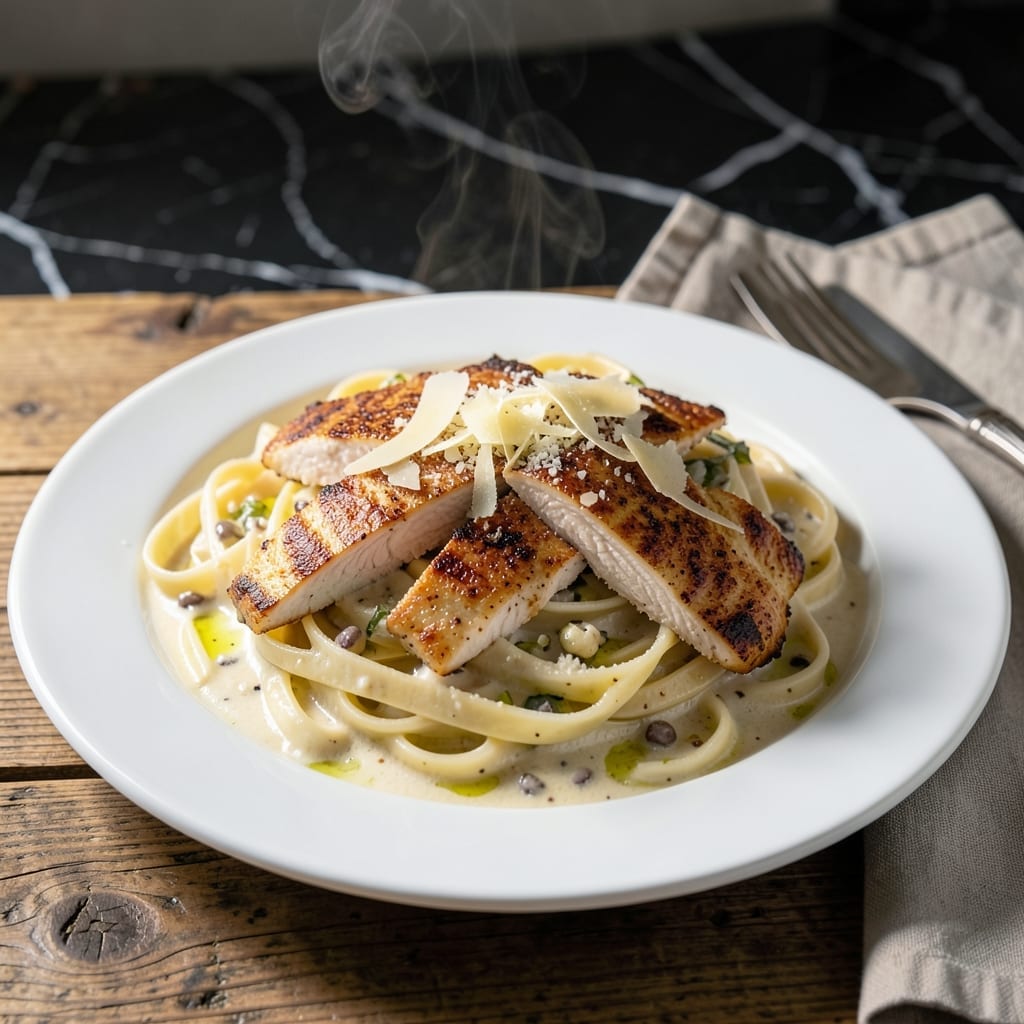
This dish brings together tender chicken, al dente pasta, and a creamy parmesan sauce that coats every bite perfectly. The combination of flavors creates a satisfying meal that’s both hearty and comforting.
I developed this recipe to simplify the classic Caesar experience without sacrificing richness. The sauce comes together quickly while the pasta cooks, making it efficient for busy weeknights. Every component complements the others beautifully.
The chicken stays juicy, the noodles absorb the sauce, and the parmesan adds that signature depth. It’s a complete dish that feels indulgent yet balanced, with textures that keep each bite interesting.
Serve it warm for the best experience. The flavors meld together perfectly when fresh from the pan.
Ingredients for Chicken Caesar Pasta
Tender chicken, al dente pasta, and creamy Parmesan sauce come together in this satisfying dish.
| Ingredient | Amount | Notes |
|---|---|---|
| Chicken Breast 🍗 | 1 ½ lb | Boneless, skinless, cut into strips |
| Fettuccine Pasta 🍝 | 12 oz | Or any long pasta shape |
| Parmesan Cheese 🧀 | 1 ½ cups | Freshly grated from wedge |
| Heavy Cream 🥛 | 1 ½ cups | Full-fat for richness |
| Garlic Cloves 🧄 | 4 cloves | Minced finely for sauce |
| Anchovy Fillets 🐟 | 6 pieces | Or 1 tbsp anchovy paste |
| Dijon Mustard 🟡 | 2 tbsp | Smooth, not whole grain |
| Lemon Juice 🍋 | 3 tbsp | Freshly squeezed preferred |
| Extra-Virgin Olive Oil 🫒 | ¼ cup | For searing chicken |
| Romaine Lettuce 🥬 | 1 whole | Chopped, for garnish |
| Salt 🧂 | 1 ½ tsp | Diamond Crystal kosher salt |
| Black Pepper 🌶️ | 1 tsp | Freshly ground preferred |
| Worcestershire Sauce 💧 | 1 tbsp | Adds umami depth |
| Grated Pecorino Romano 🧀 | ½ cup | For finishing touch |
The chicken quality is paramount here. Boneless, skinless chicken breasts from Whole Foods or a trusted butcher offer superior texture. For the Parmesan, a wedge of Parmigiano-Reggiano is non-negotiable—pre-grated versions contain anti-caking agents that disrupt the sauce’s silkiness. The heavy cream should be full-fat; lower percentages yield a thin, unsatisfying coating.
No anchovies? Anchovy paste works at a 1:1 ratio, or fish sauce at half the amount (though texture differs). For a vegetarian twist, caper paste plus soy sauce mimics the umami. The Dijon mustard can be whole grain if preferred, but smooth integrates better. Meyer lemons add a subtle sweetness if available seasonally.
The sauce thickens as it cools—reheat gently with a splash of pasta water. Store leftovers airtight for up to 3 days; the pasta absorbs sauce over time. Freezing isn’t recommended—the cream separates. For best results, cook pasta al dente and finish in the sauce.
Why You’ll Love This Recipe
- I’ll be real: it tastes even better the next day. The flavors meld overnight, and the pasta soaks up every last bit of that garlicky sauce.
- One Pot Wonder: I love that this comes together in a single pan—just brown the chicken, toss in the pasta, and let the garlic and cream work their magic.
- Creamy Dreamy: The heavy cream and parmesan create this rich, velvety sauce that clings to every strand of fettuccine. Honestly, it’s the kind of dish I’d order at a restaurant.
- Weeknight Hero: Between us, this is my go-to for busy evenings. It’s fancy enough for company but unfussy enough for a Tuesday.
Step-by-Step Instructions for Chicken Caesar Pasta
Master this technique for restaurant-quality pasta with rich, velvety sauce and perfectly cooked chicken.
Step 1: Sear and Cook the Chicken Breast
Pat the 1.5 lb chicken breast strips dry with paper towels, then season both sides with 1 tsp black pepper and ½ tsp salt. Heat the 0.25 cup extra-virgin olive oil in a large skillet over medium-high heat until shimmering.
Add the chicken in a single layer and cook undisturbed for 4-5 minutes until the underside develops a golden-brown crust. Flip and cook another 3-4 minutes until the internal temperature reaches 165°F. The chicken should be opaque throughout with no pink remaining.
Transfer to a cutting board and let rest for 5 minutes before slicing into thin strips. This resting period allows the juices to redistribute, ensuring moist, tender meat in every bite.
Step 2: Prepare the Creamy Caesar Sauce Base
In the same skillet (with the flavorful fond from the chicken), reduce heat to medium. Add the 4 cloves minced garlic cloves and 6 pieces anchovy fillets, stirring constantly for 1-2 minutes until the anchovies dissolve completely into the oil.
Pour in the 1.5 cups heavy cream, 2 tbsp Dijon mustard, 3 tbsp lemon juice, and 1 tbsp Worcestershire sauce. Whisk vigorously to combine. The sauce will begin to thicken as it simmers—this should take about 3-4 minutes.
Stir in 1 cup of the parmesan cheese (reserving the rest for later) and continue cooking until the sauce is smooth and coats the back of a spoon. The cheese should melt completely without any graininess.
Step 3: Cook the Fettuccine Pasta Al Dente
Bring a large pot of salted water to a rolling boil. Add the 12 oz fettuccine pasta and cook according to package instructions for al dente, typically 8-10 minutes. Stir occasionally to prevent sticking.
Reserve 1 cup of pasta water before draining. The starchy water is essential for adjusting the sauce consistency later. Drain the pasta but do not rinse—you want that starch to help the sauce cling to every noodle.
Step 4: Combine and Finish the Dish
Add the cooked pasta to the skillet with the Caesar sauce. Toss gently to coat, adding reserved pasta water ¼ cup at a time until the sauce clings beautifully to the noodles. This usually takes 2-3 minutes of tossing over medium-low heat.
Fold in the sliced chicken and its accumulated juices. Sprinkle the remaining 0.5 cup parmesan cheese and the 0.5 cup grated Pecorino Romano over the top, tossing gently to incorporate. The cheese should melt into the sauce, creating a luxuriously creamy texture.
Taste and adjust seasoning with the remaining 1 tsp salt if needed. The sauce should be rich and tangy with a perfect balance of creamy and savory notes.
Step 5: Garnish and Serve Immediately
Transfer the pasta to a large serving bowl or individual plates. Top with the chopped romaine lettuce for freshness and a pop of color. The lettuce will wilt slightly from the heat of the pasta, adding a pleasant texture contrast.
Serve immediately while the pasta is hot and the sauce is at its creamiest. Each serving should have a generous portion of chicken, well-coated noodles, and a sprinkle of the lettuce garnish for that classic Caesar flavor profile.
Pro Tips For Making Chicken Caesar Pasta
- Pound the Chicken: I learned this the hard way—pounding the chicken breast to an even ½-inch thickness guarantees it cooks through without drying out. No more chewy edges while the center stays raw.
- Reserve Pasta Water: Before draining the fettuccine, scoop out ½ cup of that starchy water. It thickens the heavy cream sauce and helps it cling to the pasta like a pro.
- Skip Pre-Cut Garlic: Sounds weird, but it works: fresh minced garlic from whole cloves tastes brighter than the jarred stuff. Just 2 cloves, finely chopped, bloom in the pan for 30 seconds before adding cream.
- Grate Your Parmesan: Pre-shredded parmesan has anti-caking agents that make the sauce grainy. Grate a wedge yourself—about 1 cup—and it melts smoothly into the cream. Yes, it’s extra effort, but worth it.
Essential Equipment for This Dish
Large Skillet Essentials
I always use my 12-inch stainless steel skillet from All-Clad for this dish. The wide surface lets you sear chicken in a single layer without crowding, which is crucial for that golden-brown crust. A nonstick won’t develop the same fond for your sauce. 🔥
Heavy Pot Requirement
For pasta, you need a 5-6 quart pot to give the noodles room to move. I prefer enamel-coated cast iron like Le Creuset for even heat distribution. Fill it at least ¾ full with water to prevent temperature drops when adding pasta.
Quality Cheese Grater
A microplane grater is non-negotiable for the parmesan. It creates those fine, meltable shreds that blend seamlessly into your sauce. I’ve tried box graters, but they leave the texture too coarse. The difference in sauce smoothness is noticeable.
Wooden Spoon Advantage
Use a wooden spoon for stirring your sauce—it won’t scratch your skillet and helps emulsify the ingredients. I keep one dedicated to my stainless steel cookware. The flat edge also helps scrape up all those flavorful browned bits.
Instant Read Thermometer
Don’t guess with your chicken. A digital instant-read thermometer ensures perfect 165°F every time. I use ThermoWorks’ ThermoPop for its accuracy and speed. It takes the uncertainty out of poultry cooking. 🌡️
Tongs for Chicken
Locking tongs are ideal for flipping chicken strips without piercing them. I prefer 12-inch ones for better control. They also help toss the pasta with the sauce without breaking the noodles.
Nutrition Facts
Frequently Asked Questions
Can I use chicken thighs instead of breasts?
Yes, boneless thighs work well and stay juicier. Cook them to 175°F for 5-6 minutes per side since they’re darker meat.
How do I make the sauce thicker?
Simmer the sauce longer before adding pasta, or stir in 1-2 tbsp of cornstarch mixed with cold water. The starchy pasta water also helps thicken it naturally.
What if I don’t have anchovies?
Substitute with 1 tbsp fish sauce or 1 tsp soy sauce for umami. Capers plus a pinch of salt can also work in a pinch.
Can this be made ahead?
Cook the chicken and sauce separately, then refrigerate for up to 2 days. Reheat gently with pasta water before combining with fresh pasta.

- Jollof Rice Sauce Recipe: West African Tomato and Spice Infusion - September 25, 2026
- Japanese Rice Soup Recipe: Umami-Rich Comfort in a Bowl - September 25, 2026
- Homemade Cream Of Rice Recipe: Silk-Smooth Breakfast in Minutes - September 25, 2026