
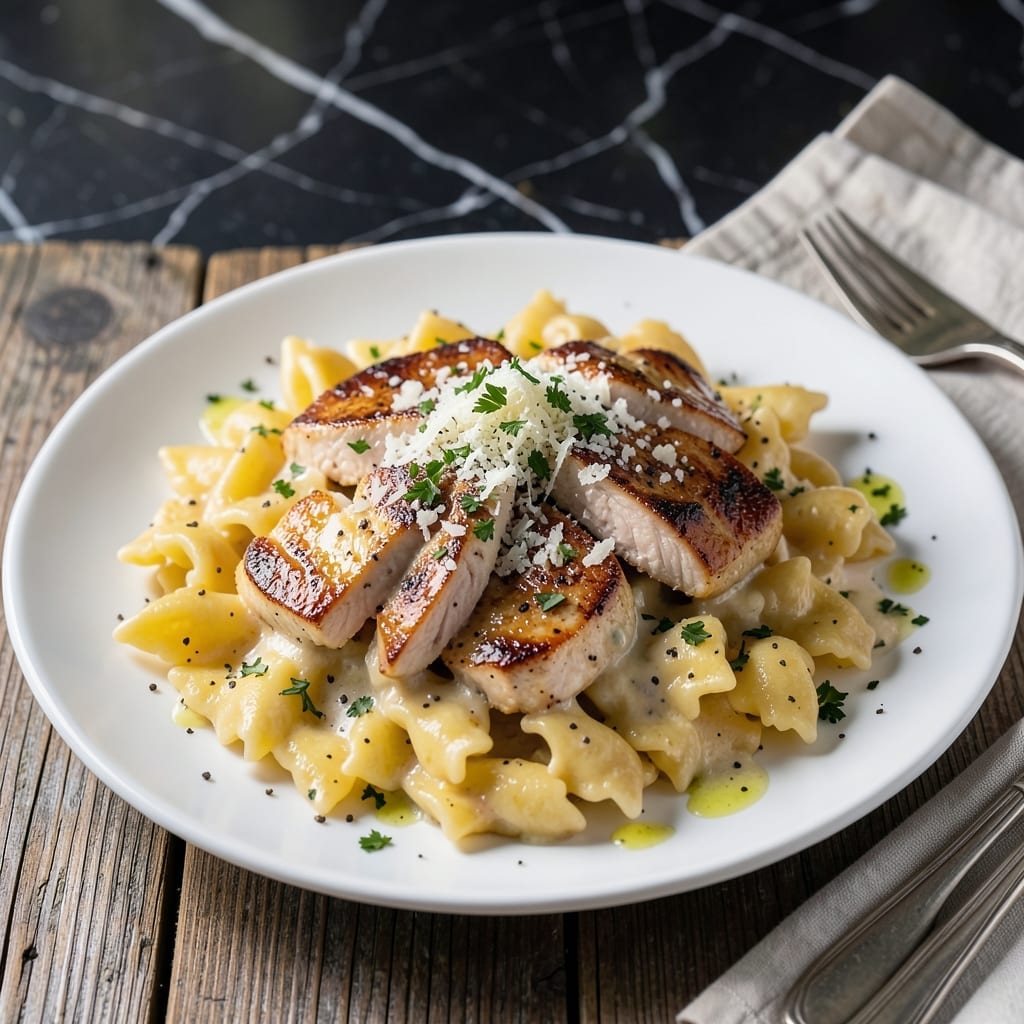
This chicken farfalle delivers creamy satisfaction in every bite, combining tender chicken with bowtie pasta in a velvety parmesan sauce. The dish comes together with simple ingredients and straightforward techniques that any home cook can master.
The sauce begins with a roux that transforms into a smooth, rich base when combined with milk and parmesan. I cook the chicken separately to ensure it stays juicy, then slice it into strips that pair perfectly with the pasta’s shape.
What emerges is a cohesive plate where each component complements the others. The farfalle’s folds capture the sauce beautifully, while the chicken adds heartiness to the creamy base.
Serve with a side of garlic bread or a simple green salad for a complete meal. The recipe scales easily for family dinners or intimate gatherings.
Ingredients for Chicken Farfalle
Quality ingredients create this velvety pasta dish with juicy chicken and rich parmesan sauce.
| Ingredient | Amount | Notes |
|---|---|---|
| Farfalle Pasta 🍝 | 12 oz | Bowtie shape, al dente |
| Boneless Skinless Chicken Breasts 🍗 | 1 ½ lb | Sliced into thin strips |
| Unsalted Butter 🧈 | 4 tbsp | For roux and chicken |
| All-Purpose Flour 🌾 | 3 tbsp | For roux thickening |
| Whole Milk 🥛 | 2 cups | Full-fat for creaminess |
| Parmesan Cheese 🧀 | 1 ½ cups | Freshly grated from wedge |
| Garlic Cloves 🧄 | 3 cloves | Minced for sauce |
| Onion 🧅 | ½ whole | Finely diced for base |
| Olive Oil 🫒 | 2 tbsp | For cooking chicken |
| Salt 🧂 | 1 ½ tsp | Divided, Diamond Crystal preferred |
| Black Pepper 🌶️ | ½ tsp | Freshly ground for depth |
| Dried Thyme 🌿 | ½ tsp | For aromatic base |
| Dried Oregano 🍃 | ½ tsp | Mediterranean notes essential |
| Nutmeg 🌰 | ¼ tsp | Freshly grated for warmth |
The chicken quality is non-negotiable here. Boneless, skinless breasts from Whole Foods or Costco offer consistent tenderness. Look for even thickness—pound thicker areas to 1/2-inch for uniform cooking. For the Parmesan, Parmigiano-Reggiano is the gold standard; BelGioioso offers excellent domestic wedges at most grocers. The farfalle should be bronze-die extruded for optimal sauce adhesion.
Substitutions require care to maintain the creamy integrity. Half-and-half can replace milk for extra richness, though whole milk is preferred. Chicken thighs work if you prefer dark meat—just trim visible fat first. For a gluten-free version, use cornstarch at half the amount of flour. The dried herbs can be swapped for fresh at a 1:3 ratio (1 part dried to 3 parts fresh).
Store the Parmesan wedge wrapped in parchment, then foil, for up to 3 months. The cooked dish keeps 4-5 days refrigerated in airtight containers. Reheat gently with a splash of milk to restore the sauce’s velvety texture. The uncooked chicken can be frozen for 9 months if properly packaged.
Why You’ll Love This Recipe
- One Pot Wonder: I love that I can cook the farfalle and chicken together in one pan—less cleanup, more time to relax.
- Creamy Dreamy: The butter, flour, and milk make a velvety sauce that clings to every twist of farfalle.
- Weeknight Hero: Honestly, this is my go-to for busy evenings when I need something filling yet unfussy.
- Budget Friendly: Boneless chicken breasts stretch far, and farfalle is cheap—feeds my family without breaking the bank.
Step-by-Step Instructions for Chicken Farfalle
Master the technique for tender chicken and velvety sauce that clings perfectly to each bowtie.
Step 1: Cook Pasta Al Dente
Bring a large pot of salted water to a rolling boil. Add the 12 oz Farfalle Pasta and cook according to package instructions until 1 minute shy of al dente. You want the pasta slightly undercooked as it will finish in the sauce later.
Reserve ½ cup of pasta water before draining. This starchy liquid is essential for adjusting the sauce consistency. Drain the pasta but do not rinse—you need that surface starch to help the sauce adhere properly to each piece.
Step 2: Sear and Cook the Chicken
While the pasta cooks, slice the 1.5 lb Boneless Skinless Chicken Breasts into thin strips. Season with ½ tsp Salt, ½ tsp Black Pepper, ½ tsp Dried Thyme, and ½ tsp Dried Oregano. Heat the 2 tbsp Olive Oil in a large skillet over medium-high heat.
Add the chicken in a single layer and cook for 4-5 minutes until golden brown and cooked through. The chicken should release easily from the pan when it’s ready to flip. Transfer to a plate and set aside, leaving any browned bits in the skillet for flavor.
Step 3: Create the Creamy Parmesan Sauce
In the same skillet, melt the 4 tbsp Unsalted Butter over medium heat. Add the finely diced 0.5 whole Onion and cook for 3-4 minutes until softened and translucent. Stir in the minced 3 cloves Garlic Cloves and cook for 30 seconds until fragrant.
Sprinkle the 3 tbsp All-Purpose Flour over the onion mixture and stir constantly for 1-2 minutes to cook out the raw flour taste. Gradually whisk in the 2 cups Whole Milk, ensuring no lumps form. Bring to a simmer and cook for 2-3 minutes until the sauce begins to thicken.
Step 4: Finish with Cheese and Combine
Reduce heat to low and stir in the 1.5 cups Parmesan Cheese and ¼ tsp Nutmeg. Continue stirring until the cheese melts completely and the sauce is smooth. Taste and adjust seasoning with the remaining 1 tsp Salt if needed.
Add the cooked farfalle and chicken to the skillet, tossing gently to coat everything in the sauce. If the sauce is too thick, add reserved pasta water 1 tablespoon at a time until it reaches the perfect creamy consistency. The sauce should cling beautifully to each piece of pasta and chicken.
Serve immediately while hot, with extra Parmesan if desired. The dish should have a glossy, velvety sauce that coats every bowtie perfectly.
Pro Tips For Making Chicken Farfalle
- Pound the Chicken: I learned this the hard way—pound the chicken breasts to an even ½-inch thickness so they cook through without drying out before the sauce is ready.
- Salt the Pasta Water: Use more salt than you think, about 1-2 tablespoons per gallon of water—this is your only chance to season the farfalle properly.
- Warm the Milk: After burning three batches, I finally figured out that slowly warming the milk before adding it to the butter-flour roux prevents lumps in the sauce.
- Reserve Pasta Water: Before draining, scoop out ½ cup of starchy pasta water—it helps loosen the sauce and makes it cling to the farfalle like magic.
Common Mistakes When Making chicken farfalle
Overcooking the Pasta
Cooking pasta beyond al dente is the most common mistake. Farfalle continues cooking in the hot sauce, so drain it 1 minute early. I always taste-test a piece—it should have a slight bite. Mushy pasta ruins the dish’s texture. 💡
Skipping the Roux
Rushing the sauce by adding milk directly to melted butter creates a thin, broken sauce. The 3 tbsp flour must cook with butter for 1-2 minutes to form a proper roux. This base is what gives the sauce its velvety consistency.
Dry Chicken Strips
Overcrowding the pan steams the chicken instead of searing it. Cook in batches if needed, giving each strip ½ inch of space. Also, don’t skip slicing into uniform ¼-inch thick strips—this ensures even cooking and juicy results.
Lumpy Sauce
Adding cold milk to hot roux causes clumping. Temper the milk by whisking in ¼ cup at a time while constantly stirring. I use a flat whisk for this—it reaches the pan’s edges better than a balloon whisk.
Forgetting Pasta Water
Discarding all the pasta water is a missed opportunity. That starchy liquid is your secret weapon for adjusting sauce consistency. Always reserve at least ½ cup before draining. A splash can transform a thick sauce into a creamy masterpiece.
Underseasoning
Parmesan is salty, but it’s not enough on its own. Taste the sauce before adding pasta and adjust with the remaining 1 tsp salt. I also add a pinch of the ¼ tsp nutmeg for warmth that balances the dish beautifully.
Nutrition Facts
Frequently Asked Questions
Can I use chicken thighs instead of breasts?
Yes, boneless, skinless thighs work well. Trim visible fat first and slice into ¼-inch strips for even cooking. They’ll add richer flavor and stay juicier than breasts.
How do I prevent the sauce from curdling?
Keep the heat at medium or low when adding milk. Temper the milk by whisking in ¼ cup at a time while stirring constantly. This prevents sudden temperature changes that cause curdling.
What’s the best way to store leftovers?
Transfer to an airtight container and refrigerate for up to 4-5 days. Reheat gently with a splash of milk to restore creaminess. Avoid freezing as it can separate the sauce.
Can I make this gluten-free?
Yes! Substitute the flour with 1.5 tbsp cornstarch and use gluten-free farfalle. The cooking method remains the same, but check pasta package for adjusted cooking times.

- Jollof Rice Sauce Recipe: West African Tomato and Spice Infusion - September 25, 2026
- Japanese Rice Soup Recipe: Umami-Rich Comfort in a Bowl - September 25, 2026
- Homemade Cream Of Rice Recipe: Silk-Smooth Breakfast in Minutes - September 25, 2026