
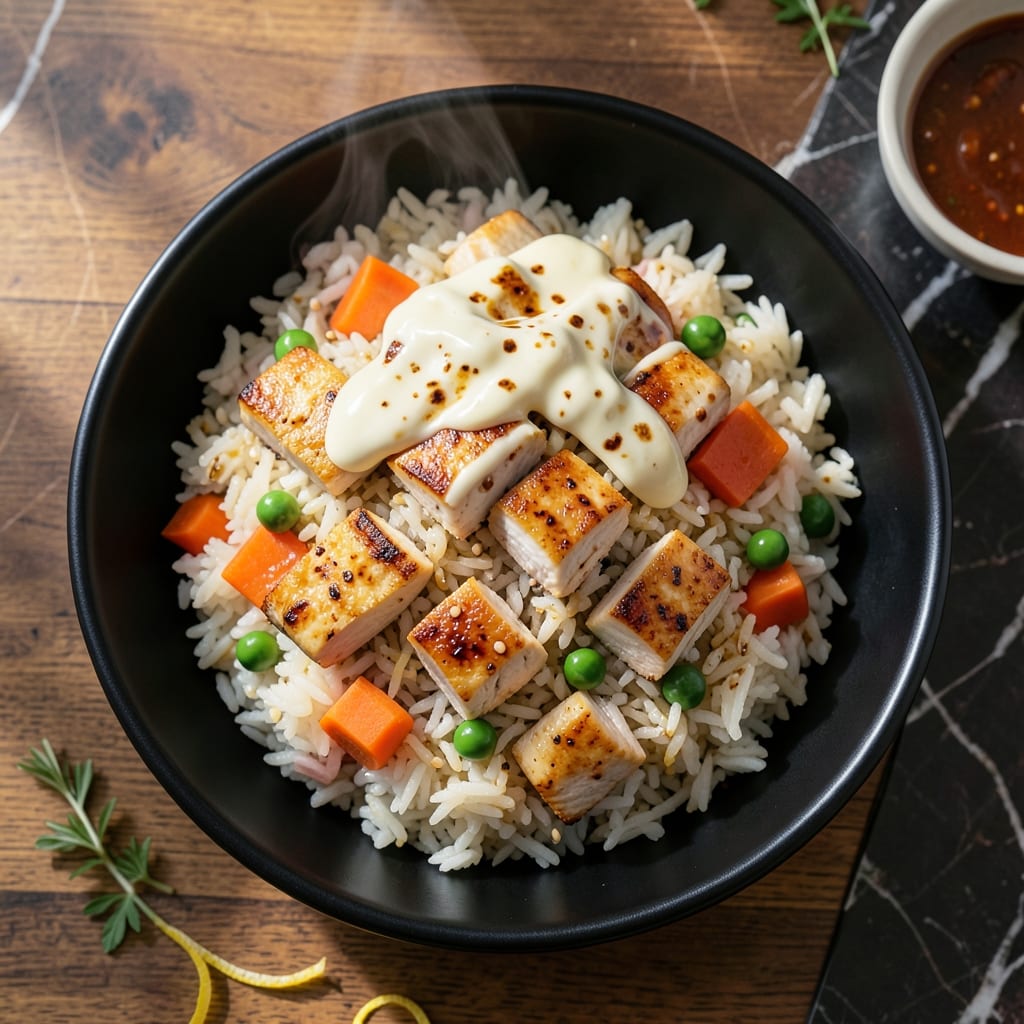
This dish brings the true taste of a bustling Asian street market to your kitchen. The authentic aroma comes from the careful layering of flavors, with sesame oil playing the starring role.
I learned this method from my grandmother’s handwritten notes, where she insisted on high heat and quick cooking. Every grain of rice absorbs the rich, nutty essence of the oil while staying perfectly separate.
The result is a plate of fried rice with that signature wok hei—smoky, savory, and deeply satisfying. The chicken stays tender, the vegetables retain their bite, and the sesame oil ties it all together.
No shortcuts here, just proven technique and respect for tradition. This is how fried rice is meant to be made.
Ingredients for Chicken Fried Rice Recipe Sesame Oil
Pantry staples meet authentic Asian flavors. Nothing exotic, just good stuff.
| Ingredient | Amount | Notes |
|---|---|---|
| Cooked White Rice 🍚 | 4 cups | Day-old, chilled preferred |
| Boneless Chicken Breast 🍗 | 1 lb | Cut into small cubes |
| Sesame Oil 🫒 | 2 tbsp | Toasted variety for aroma |
| Soy Sauce 💧 | 3 tbsp | Low-sodium preferred |
| Frozen Peas and Carrots 🥕 | 1 cup | Thawed, drained |
| Large Eggs 🥚 | 2 whole | Lightly beaten |
| Green Onions 🧅 | ½ cup | Thinly sliced, white and green parts |
| Garlic Cloves 🧄 | 3 cloves | Minced finely |
| Neutral Cooking Oil 🫒 | 2 tbsp | Vegetable or canola |
| Salt 🧂 | ½ tsp | Adjust to taste |
| Ground White Pepper 🌶️ | ¼ tsp | For authentic flavor |
| Shaoxing Wine 🍶 | 2 tbsp | Optional but recommended |
The sesame oil is non-negotiable here. Kadoya or Kadokawa brands are what you’ll find at most Asian grocery stores—look for the toasted variety, not the light kind. Day-old rice is key (fresh gets mushy). I always make extra rice the night before just for this. The chicken? Thighs stay juicier than breasts if you want to swap, but either works.
No Shaoxing wine? Dry sherry works in a pinch, or skip it entirely. Frozen veggies are fine (that’s what my grandma used). Fresh peas and diced carrots if you’re feeling fancy. Low-sodium soy sauce lets you control the salt. Want more depth? A dash of oyster sauce (even though it’s not traditional for this version) adds umami.
Leftovers keep for 3-4 days in the fridge, but honestly it’s best fresh. The sesame oil smell fades after reheating, so eat it hot. Freeze for up to 3 months if you must, but texture changes slightly (rice gets a touch softer).
Why You’ll Love This Recipe
- One Pan Meal: I love that everything—chicken, rice, veggies—cooks together in one skillet, so cleanup is a breeze.
- Umami Bomb: That sesame oil and soy sauce combo gives it a rich, nutty depth that’s honestly addictive.
- Weeknight Hero: Between us, this is my go-to when I need dinner fast but still crave restaurant-quality flavor.
- Budget Stretcher: A little chicken breast and frozen veggies go a long way, feeding my family without breaking the bank.
Step-by-Step Instructions for Chicken Fried Rice with Sesame Oil
Here’s the authentic method that delivers that classic wok-seared aroma every time.
Step 1: Prep and Marinate the Chicken
Cut the boneless chicken breast into small cubes—about ½-inch pieces works perfectly. In a bowl, combine the chicken with 1 tbsp soy sauce, 1 tbsp shaoxing wine, ¼ tsp salt, and ⅛ tsp ground white pepper. Mix well and let it marinate for 10-15 minutes.
This marinade step is crucial for authentic flavor. The shaoxing wine tenderizes the meat while the soy sauce adds depth. Don’t skip the resting time—it allows the flavors to penetrate and the salt to work its magic on the protein.
Step 2: Scramble the Eggs and Cook the Chicken
Heat 1 tbsp neutral cooking oil in a wok or large skillet over high heat until shimmering. Pour in the lightly beaten large eggs and scramble quickly until just set but still slightly soft—about 1-2 minutes. Remove the eggs and set aside.
In the same pan, add the remaining 1 tbsp neutral cooking oil and increase heat to maximum. Add the marinated chicken cubes in a single layer. Let them sear undisturbed for 1-2 minutes until the edges turn white and opaque. Stir-fry for another 1-2 minutes until cooked through. Remove and set aside with the eggs.
Step 3: Stir-Fry the Aromatics and Vegetables
Add the minced garlic cloves to the hot pan and stir for 10-15 seconds until fragrant—don’t let it burn. Immediately add the thawed frozen peas and carrots. Stir-fry for 2-3 minutes until the vegetables are tender but still vibrant in color.
This is where the authentic wok hei (breath of the wok) develops. The high heat and quick cooking preserve the vegetables’ texture and color while building layers of flavor. Keep everything moving constantly with a spatula to prevent burning.
Step 4: Combine Everything with Rice and Finish
Add the chilled cooked white rice to the pan, breaking up any clumps with your spatula. Drizzle the remaining 2 tbsp soy sauce and 2 tbsp sesame oil over the rice. Stir-fry for 2-3 minutes until the rice is heated through and starts to crisp slightly.
Return the chicken and eggs to the pan. Add the remaining 1 tbsp shaoxing wine, ¼ tsp salt, and ⅛ tsp ground white pepper. Toss everything together for 1-2 minutes until well combined and heated through. The rice should be slightly crispy with a glossy sheen from the sesame oil.
Remove from heat and stir in ½ cup green onions. Taste and adjust seasoning if needed. The final dish should have that signature nutty aroma from the sesame oil with each grain of rice coated in flavor.
Pro Tips For Making Chicken Fried Rice Recipe Sesame Oil
- Chill the Rice: Use day-old, cold rice straight from the fridge—fresh rice turns to mush in the wok. I learned this the hard way after making gummy fried rice twice.
- Velocity Matters: Crank the heat to high and keep everything moving. After burning three batches, I finally figured out that fried rice needs that aggressive stir to cook fast without scorching.
- Dice Small, Cook Fast: Cut the chicken into tiny, even pieces so it cooks through in under 2 minutes. My grandmother swore by this, and she was right: bigger chunks make the veggies soggy.
- Sesame Last: Drizzle the sesame oil at the very end—heat destroys its flavor. Sounds weird, but it works: the aroma stays bright and nutty instead of bitter.
Common Mistakes When Making This Recipe
Using Fresh Rice
Freshly cooked rice turns mushy when stir-fried. I learned this the hard way—my first attempts were a gummy disaster. Always use day-old, chilled rice that’s had time to dry out in the fridge. 💡
Low Heat Cooking
High heat is essential for that authentic wok hei flavor. If your pan isn’t hot enough, you’ll end up with steamed rice instead of that coveted seared aroma. Crank your burner to maximum and keep the ingredients moving constantly.
Overcrowding the Pan
Trying to cook everything at once lowers the pan temperature and creates steam. Cook in batches: chicken first, then eggs, then vegetables. This ensures each ingredient gets the proper sear. I use a 14-inch wok for best results.
Skipping the Marinade
The 10-15 minute chicken marinade in soy sauce and shaoxing wine is non-negotiable. It tenderizes the meat and infuses flavor. I’ve tried skipping it to save time, and the difference is noticeable—dry, bland chicken every time.
Wrong Sesame Oil
Using light sesame oil instead of toasted sesame oil misses the point entirely. The toasted variety has that deep, nutty aroma that defines this dish. Look for Kadoya brand at your local Asian market. 🫒
Over-Stirring the Eggs
Scrambled eggs in fried rice should be soft and slightly runny when you remove them. Overcooking turns them rubbery. Pull them out when they’re just set—they’ll finish cooking when added back to the hot pan later.
Nutrition Facts
Frequently Asked Questions
Can I make this without a wok?
A large skillet works fine, but use maximum heat and cook in batches. The wide surface area of a wok helps, but isn’t required. A 12-inch skillet is the minimum size for good results.
Why does my rice get mushy?
Always use day-old, chilled rice. Fresh rice contains too much moisture and turns to mush when stir-fried. Spread cooked rice on a tray to cool quickly if you’re in a hurry.
Can I use other proteins?
Shrimp, pork, or tofu all work well. For shrimp, cook just until pink (2-3 minutes). For pork, slice thinly and marinate like the chicken. Adjust cooking times accordingly.
How do I store leftovers?
Keep in an airtight container in the fridge for up to 4 days. Reheat in a skillet over medium-high heat with a splash of water to restore moisture. Avoid microwaving.

- Jollof Rice Sauce Recipe: West African Tomato and Spice Infusion - September 25, 2026
- Japanese Rice Soup Recipe: Umami-Rich Comfort in a Bowl - September 25, 2026
- Homemade Cream Of Rice Recipe: Silk-Smooth Breakfast in Minutes - September 25, 2026