
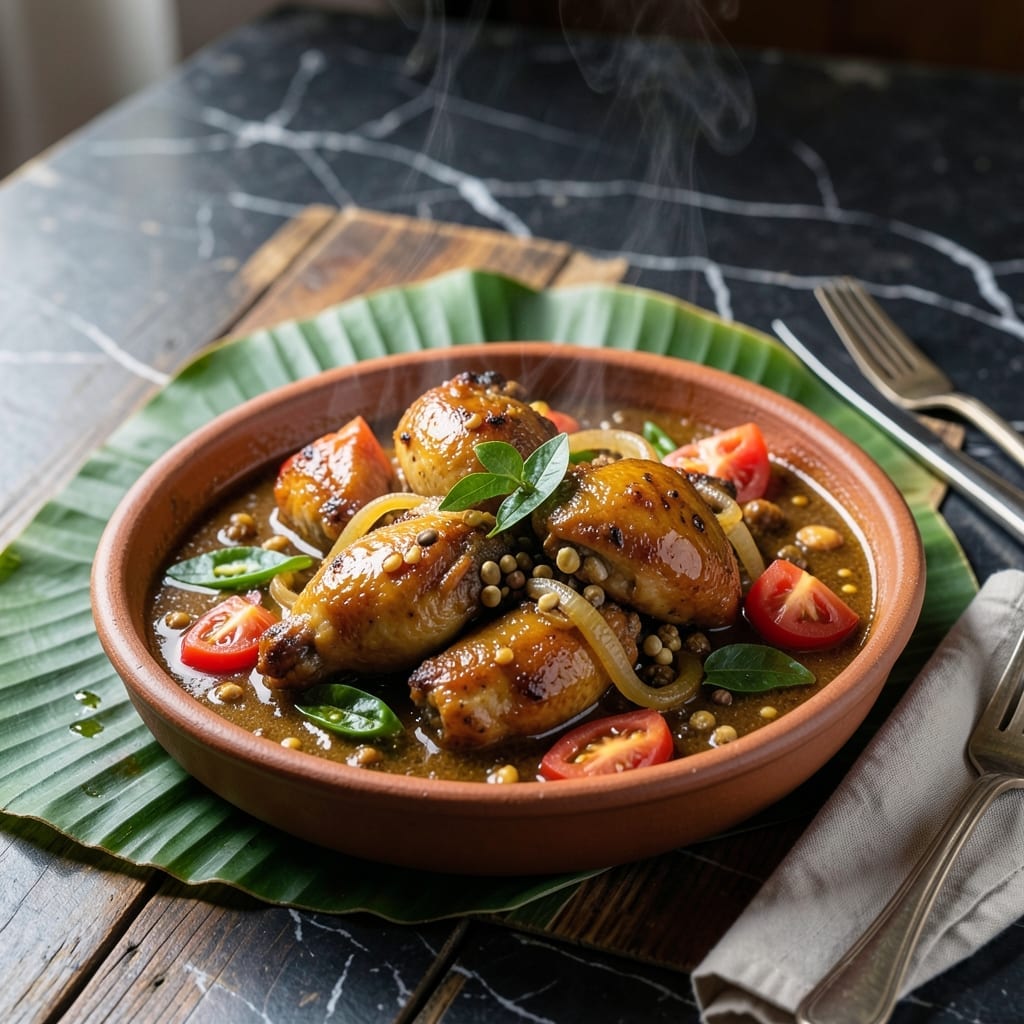
This Tamil-style chicken kulambu delivers the perfect balance of tangy tamarind and aromatic spices that define South Indian cuisine. The dish transforms simple ingredients into a deeply flavorful curry.
I developed this recipe after testing multiple versions to capture authentic taste while keeping the method straightforward. The tamarind creates a bright acidity that cuts through the richness of the chicken.
What emerges is a curry with layers of flavor—earthy spices, tangy tamarind, and tender chicken in every bite. The aroma while cooking will transport you straight to a Tamil kitchen.
Serve hot with steamed rice or fluffy idlis for a complete meal. This is the kind of dish that improves with time as the flavors meld together.
Ingredients for Chicken Kulambu Recipe Tamil
Simple pantry staples and fresh aromatics create this vibrant South Indian curry with layers of flavor.
| Ingredient | Amount | Notes |
|---|---|---|
| Chicken Thighs 🍗 | 1 ½ lb | Boneless, skinless, cut into pieces |
| Tamarind Paste 🍋 | 2 tbsp | Seedless, dissolved in warm water |
| Onion 🧅 | 1 whole | Large, finely chopped |
| Tomatoes 🍅 | 2 whole | Medium, chopped |
| Garlic Cloves 🧄 | 6 cloves | Minced for depth of flavor |
| Fresh Ginger 🌿 | 1 tbsp | Grated or minced |
| Green Chili Peppers 🌶️ | 2 whole | Slit lengthwise for heat |
| Curry Leaves 🍃 | 10 pieces | Fresh preferred, dried acceptable |
| Mustard Seeds 🌿 | 1 tsp | For tempering |
| Cumin Seeds 🌿 | 1 tsp | Lightly crushed |
| Turmeric Powder 🌶️ | ½ tsp | For color and earthiness |
| Red Chili Powder 🌶️ | 1 tsp | Adjust for spice preference |
| Coriander Powder 🌿 | 1 tbsp | Ground from whole seeds |
| Coconut Milk 🥥 | ½ cup | Full-fat for creaminess |
| Vegetable Oil 🫒 | 3 tbsp | Neutral flavor for cooking |
| Salt 🧂 | 1 tsp | Adjust to taste |
The chicken is the foundation—thighs stay juicy where breasts can dry out. Look for bone-in or boneless, but skinless is key for the sauce to cling. For authentic flavor, Indian grocery stores carry tamarind paste in blocks or jars. Patel Brothers or local South Asian markets are goldmines for curry leaves and fresh ingredients. Don’t skip the tempering step—mustard and cumin seeds bloom in hot oil to release their aroma.
No tamarind paste? Lime juice with a bit of jaggery mimics the tangy-sweet balance. Fresh ginger-garlic paste from the store works in a pinch (use 1.5 tbsp for both). Coconut milk can be light, but full-fat adds richness. If green chilies are too hot, swap in a bell pepper for color without the heat. The tomatoes should be ripe but firm—canned works too.
This curry tastes even better the next day (24 hours is ideal) as the tamarind mellows and the spices deepen. Store in an airtight container in the fridge for up to 4 days. Freezes beautifully for 3 months—just thaw and reheat gently.
Why You’ll Love This Recipe
- One Pot Wonder: I toss everything in a single pot—chicken thighs, tamarind, and those fragrant garlic cloves—and let it simmer while I set the table.
- Tangy Depth: The tamarind paste with carrots and tomatoes gives that perfect sweet-sour kick I crave with steamed rice.
- Feeds the Gang: I make a big batch for Sunday lunch, and it’s just as good reheated for Monday’s dinner.
- Budget Friendly: Chicken thighs stay juicy and cost half what breasts do, and a little tamarind paste goes a long way.
Step-by-Step Instructions for Chicken Kulambu
This traditional method ensures a perfectly balanced tangy curry with authentic South Indian flavors.
Step 1: Temper the Spices and Aromatics
Heat the 3 tbsp Vegetable Oil in a heavy-bottomed pot over medium heat. Add the 1 tsp Mustard Seeds and let them sizzle for 30 seconds until they pop and release their aroma. Immediately add the 1 tsp Cumin Seeds, 10 pieces Curry Leaves, and 2 whole Green Chili Peppers.
Sauté for 1 minute until the curry leaves become crisp and the chili peppers blister slightly. This tempering process releases the essential oils from the spices, creating the foundation of flavor for your creation. Watch closely to prevent burning—reduced heat if the seeds start to darken too quickly.
Step 2: Build the Base with Onion and Spices
Add the 1 whole Onion and cook for 5-6 minutes until it turns translucent and lightly golden. Stir in the 1 tbsp Fresh Ginger and 6 cloves Garlic Cloves, cooking for another 2 minutes until the raw aroma disappears.
Sprinkle in the 0.5 tsp Turmeric Powder, 1 tsp Red Chili Powder, and 1 tbsp Coriander Powder. Stir constantly for 1 minute to toast the spices—this deepens their flavors and prevents a raw taste in the final dish. The mixture should look fragrant and slightly darkened in color.
Step 3: Incorporate Tomatoes and Tamarind
Add the 2 whole Tomatoes and cook for 4-5 minutes until they soften and break down into a thick paste. Pour in the 2 tbsp Tamarind Paste dissolved in warm water, stirring well to combine. Let this simmer for 3 minutes until the mixture thickens slightly and the tamarind’s tangy aroma fills your kitchen.
The tomatoes should lose their raw texture completely, and the tamarind will create a glossy, thick base. If the mixture seems too dry, add a splash of water to maintain a sauce-like consistency. Taste and adjust the 1 tsp Salt at this stage.
Step 4: Cook the Chicken to Perfection
Add the 1.5 lb Chicken Thighs to the pot, stirring to coat each piece evenly with the spiced tamarind mixture. Pour in ½ cup of water, cover, and simmer over medium-low heat for 20-25 minutes.
Check that the chicken is fully cooked by ensuring it reaches an internal temperature of 165°F and the meat pulls away from the bone easily. The sauce should thicken as the chicken cooks, but if it reduces too much, add a little more water to maintain the desired consistency.
Step 5: Finish with Coconut Milk
Stir in the 0.5 cup Coconut Milk and simmer uncovered for 5 minutes on low heat. This final step mellows the tanginess of the tamarind and adds a creamy richness to the curry. The oil should start to separate slightly at the edges, indicating the dish is ready.
Taste one last time and adjust the salt if needed. The balance of tangy, spicy, and creamy should be harmonious, with the chicken tender and infused with the bold flavors of the spices. Serve hot with steamed rice or flatbread.
Pro Tips For Making Chicken Kulambu Recipe Tamil
- Sear the Thighs First: Brown the chicken thighs well in hot oil before adding anything else—I learned this the hard way when my kulambu tasted flat because I skipped this step.
- Soak the Tamarind: Mix the tamarind paste with warm water and let it sit for 10 minutes, then strain it. Sounds tedious, but it removes those annoying fibers that ruin the texture.
- Cook Onions Slow: Let the onions caramelize to a deep golden brown over medium heat—rushing this makes the kulambu taste raw and harsh.
- Add Tomatoes Late: Toss in the tomatoes only after the onions are fully cooked; adding them too early turns the dish watery and dulls the flavor.
Troubleshooting Perfect Results
Too Tangy?
If your curry tastes overly sour, stir in an additional ¼ cup Coconut Milk or 1 tsp jaggery to balance the tamarind’s acidity. I’ve found this simple fix saves the dish every time. The coconut milk’s creaminess mellows the sharpness beautifully. 💡
Sauce Too Thin
For a thicker consistency, simmer uncovered for an extra 5-7 minutes on medium-low heat. If you’re in a hurry, mix 1 tsp cornstarch with water and stir in, cooking until thickened. Watch closely to prevent sticking.
Spices Overpowering
When the heat or earthiness feels too intense, add ½ cup warm water and let it simmer for 10 minutes. This dilutes the spices while allowing flavors to meld. I learned this trick from my Tamil neighbor in Cincinnati.
Chicken Not Tender
If the meat is tough, it likely needs more cooking time. Return the pot to low heat, add ¼ cup water, and cook covered for another 10-15 minutes. Thighs should pull apart easily when done. 🍗
Bitter Tamarind
Some tamarind pastes can be bitter. If you detect this, add 1 tsp honey or ½ tsp sugar to counterbalance. Stir well and taste before adjusting further. The sweetness should complement, not overpower.
Curry Leaves Burnt
If the leaves darken too quickly, they’ve released their bitterness. Remove them and start fresh with new leaves over medium heat. Lower the temperature next time to medium-low for better control.
Nutrition Facts
Frequently Asked Questions
Can I use chicken breast instead of thighs?
Yes, but thighs stay juicier. If using breast, reduce cooking time to 15-18 minutes to prevent dryness.
How do I adjust the spice level?
Reduce or omit green chilies for mild heat. For extra spice, add ½ tsp cayenne with other powders.
What if I don’t have tamarind paste?
Substitute 2 tbsp lime juice plus 1 tsp brown sugar for similar tangy-sweet balance.
How long does it keep in the fridge?
Stores well for 4 days refrigerated. Flavor improves after 24 hours as spices meld.

- Jollof Rice Sauce Recipe: West African Tomato and Spice Infusion - September 25, 2026
- Japanese Rice Soup Recipe: Umami-Rich Comfort in a Bowl - September 25, 2026
- Homemade Cream Of Rice Recipe: Silk-Smooth Breakfast in Minutes - September 25, 2026