
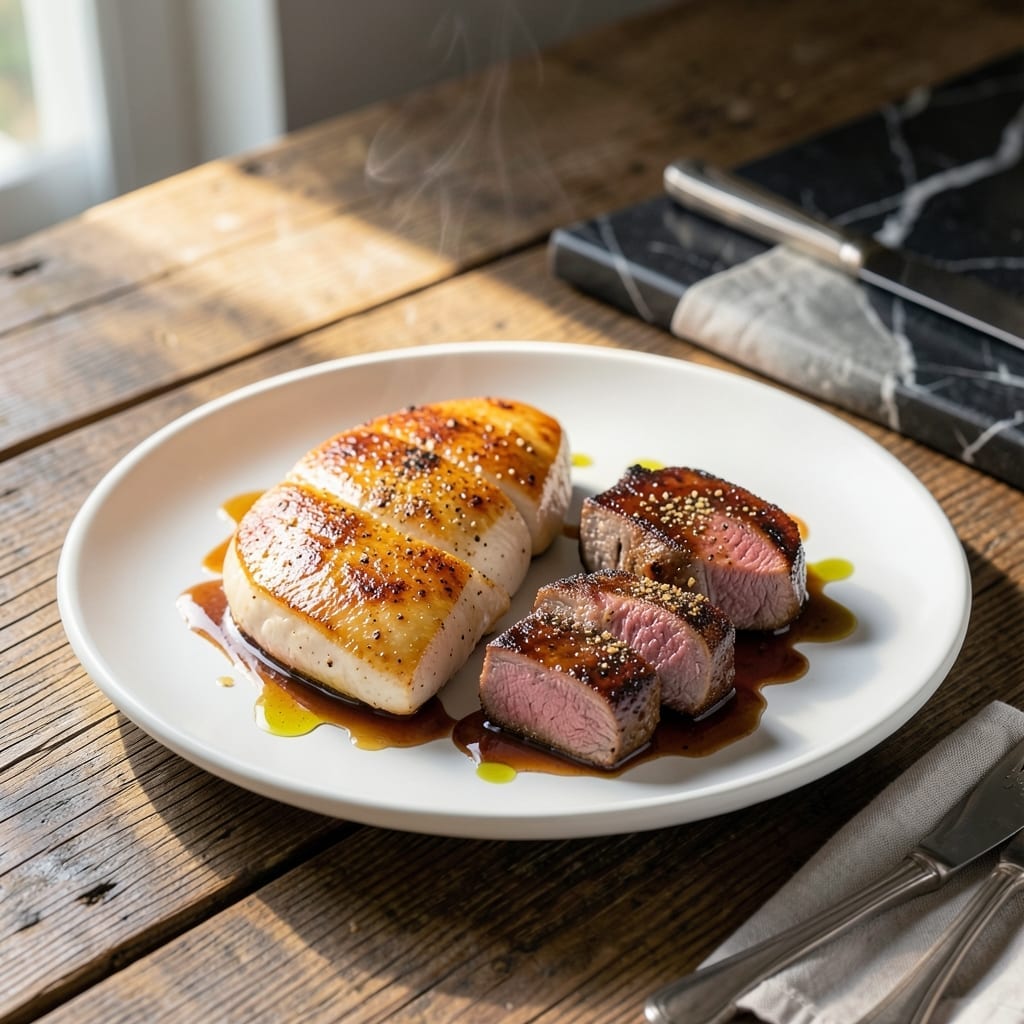
This one-pan dish combines the best of both proteins for a hearty, satisfying meal. The chicken stays juicy while the pork develops a rich, caramelized crust.
I’ve perfected the timing so both meats finish cooking simultaneously, eliminating the guesswork. A simple seasoning blend enhances their natural flavors without overpowering.
The result is a balanced, protein-packed main that pairs beautifully with roasted vegetables or mashed potatoes. The pan juices create a light, flavorful sauce to drizzle over everything.
Cleanup is minimal, and the leftovers reheat wonderfully. This is the kind of dish that makes weeknight dinners feel special.
Ingredients for Chicken Pork
Two proteins, one pan, and a handful of pantry staples for a dinner that feels fancy.
| Ingredient | Amount | Notes |
|---|---|---|
| Boneless Skinless Chicken Breasts 🍗 | 1 ½ lb | Pounded to even thickness |
| Pork Tenderloin 🥩 | 1 ½ lb | Trimmed of excess fat |
| Kosher Salt 🧂 | 1 ½ tsp | Divided for seasoning |
| Black Pepper 🌶️ | 1 tsp | Freshly ground preferred |
| Garlic Powder 🧄 | 1 tsp | For depth of flavor |
| Smoked Paprika 🌶️ | 1 tsp | Adds subtle smokiness |
| Dried Thyme 🌿 | ½ tsp | Complements both meats |
| Olive Oil 🫒 | 2 tbsp | Divided for searing |
| Unsalted Butter 🧈 | 2 tbsp | For basting and sauce |
| Fresh Rosemary Sprigs 🌿 | 2 whole | Optional for garnish |
| Chicken Stock 🥣 | ½ cup | Low-sodium preferred |
| Dijon Mustard 🟡 | 1 tbsp | For pan sauce |
| Honey 🍯 | 1 tsp | Balances acidity in sauce |
The pork tenderloin is the star here—look for a piece around 1.5 lb at Whole Foods or Costco (they usually have them pre-trimmed). Chicken breasts should be similar in size so they cook evenly. I always grab Diamond Crystal kosher salt for seasoning—it’s the right texture for a good crust. Don’t skip the smoked paprika; it’s what gives that caramelized edge its depth (and it’s cheap at any grocery store).
No pork tenderloin? Pork chops work too, but they’ll cook faster—pull them out when they hit 145°F. Out of chicken breasts? Thighs stay juicier, though they won’t caramelize as nicely. The chicken stock can be swapped for vegetable broth if that’s what you’ve got. And if you’re out of Dijon, regular mustard plus a pinch of sugar gets you close enough.
Leftovers keep 4-5 days in the fridge and actually taste better the next day. Freezes for 3 months too. Reheat gently in a skillet with a splash of stock to keep it from drying out. The pan sauce? It’ll thicken as it cools—just loosen with water when reheating.
Why You’ll Love This Recipe
- One Pan Meal: I love that I can sear both chicken and pork tenderloin together on a single sheet pan—minimal cleanup, maximum flavor.
- Garlicky Perfection: The garlic powder puts this over the top, giving both meats that warm, savory depth I crave every time.
- Weeknight Hero: Between us, this is my go-to for busy evenings when I need something hearty but unfussy.
- Leftovers Win: Honestly, it tastes even better the next day—perfect for lunch or a quick dinner round two.
Step-by-Step Instructions for Chicken and Pork in One Pan
Here’s the method that brings both proteins together with maximum flavor and minimal cleanup.
Step 1: Prep and Season Both Proteins
Pat the boneless skinless chicken breasts dry and pound them to an even ¾-inch thickness using a meat mallet. This ensures even cooking throughout. Trim the pork tenderloin of any excess fat and silver skin, then cut it into 1-inch thick medallions.
In a small bowl, combine 1 tsp kosher salt, ½ tsp black pepper, 1 tsp garlic powder, 1 tsp smoked paprika, and ½ tsp dried thyme. Rub this seasoning blend all over both the chicken breasts and pork tenderloin medallions, pressing it in firmly so it adheres well.
Step 2: Sear the Chicken and Pork
Heat 1 tbsp olive oil in a large, heavy skillet over medium-high heat until it shimmers. Add the chicken breasts and sear for 5-6 minutes per side until they develop a golden-brown crust and reach an internal temperature of 160°F. Remove the chicken to a plate and tent with foil.
In the same skillet, add the remaining 1 tbsp olive oil and the pork medallions. Sear for 3-4 minutes per side until they’re golden brown and reach an internal temperature of 145°F. Transfer the pork to the plate with the chicken, leaving the rendered juices in the pan.
Step 3: Create the Pan Sauce
Reduce the heat to medium and add 2 tbsp unsalted butter to the skillet. Once melted, pour in ½ cup chicken stock, scraping up any browned bits from the bottom of the pan with a wooden spoon. These fond bits are packed with flavor and will dissolve into your sauce.
Stir in 1 tbsp Dijon mustard and 1 tsp honey, then simmer for 3-4 minutes until the sauce reduces slightly and develops a glossy sheen. Taste and adjust seasoning with the remaining ½ tsp kosher salt and ½ tsp black pepper if needed.
Step 4: Finish and Serve
Return both the chicken and pork to the skillet with the sauce, along with any accumulated juices. Add the 2 whole fresh rosemary sprigs for garnish if using. Spoon the sauce over the meats and let them warm through for 1-2 minutes.
Discard the rosemary sprigs before serving. The sauce should coat the back of a spoon and have a balanced sweet-tangy flavor from the honey and mustard. Serve immediately, dividing the chicken and pork evenly among plates with a generous spoonful of sauce over each serving.
Pro Tips For Making Chicken Pork
- Pound the Chicken: Boneless skinless chicken breasts cook more evenly when pounded to an even ½-inch thickness—I learned this the hard way after too many dry, rubbery bites.
- Rest the Pork: Give the pork tenderloin a solid 10 minutes under foil after cooking; it stays juicy and slices cleaner (yes, even if you’re hungry).
- Season Twice: Hit both the chicken and pork with kosher salt and garlic powder before cooking, then again lightly after—sounds like overkill, but it actually changes the outcome.
- Skip the Crowding: Cook the chicken and pork in separate batches if using the same pan; crowding steams the meat instead of browning it, and nobody wants that.
Essential Equipment for chicken pork
Heavy Skillet
Invest in a 12-inch cast iron skillet—I swear by Lodge for even heat distribution. It retains heat beautifully, ensuring both proteins sear properly without hot spots. The weight helps create that perfect crust on the chicken and pork. 🔥
Meat Mallet
A flat-sided meat mallet is essential for pounding chicken to an even ¾-inch thickness. I use the OXO Good Grips model. This guarantees even cooking, so no part dries out while waiting for thicker sections to finish.
Instant-Read Thermometer
Never guess doneness again—my ThermoWorks ThermoPop gives accurate readings in 3-4 seconds. Pull chicken at 160°F and pork at 145°F for perfect results every time. It’s the easiest way to avoid overcooking.
Wooden Spoon
Use a wooden spoon to scrape up those precious browned bits in the pan for your sauce. It won’t scratch your skillet and helps incorporate all that flavor into your pan sauce. I keep a dedicated spoon just for this purpose.
Tongs
A good pair of 12-inch locking tongs gives you control when flipping both chicken and pork. I prefer OXO’s spring-loaded design for comfort. They’re sturdy enough to handle pork medallions without tearing the meat.
Sauce Whisk
For that silky pan sauce, a small silicone whisk helps emulsify the butter and stock. It’s heat-resistant and gets into the pan’s corners better than a regular whisk. The sauce comes together faster with less effort.
Nutrition Facts
Frequently Asked Questions
Can I use bone-in chicken instead?
Yes, but adjust cooking time. Bone-in pieces need 8-10 minutes per side at medium-high heat. Use a thermometer to confirm 165°F internally. The bone adds flavor but may make slicing trickier.
Why sear the meats separately?
It prevents overcrowding the pan, which steams instead of sears. Pork cooks faster than chicken, so starting them together risks uneven doneness. Separate searing ensures both get a perfect crust.
How do I keep the sauce from breaking?
Low and slow is key. Keep heat at medium and whisk constantly when adding butter. If it separates, remove from heat and whisk vigorously—it’ll come back together.

- Jollof Rice Sauce Recipe: West African Tomato and Spice Infusion - September 25, 2026
- Japanese Rice Soup Recipe: Umami-Rich Comfort in a Bowl - September 25, 2026
- Homemade Cream Of Rice Recipe: Silk-Smooth Breakfast in Minutes - September 25, 2026