
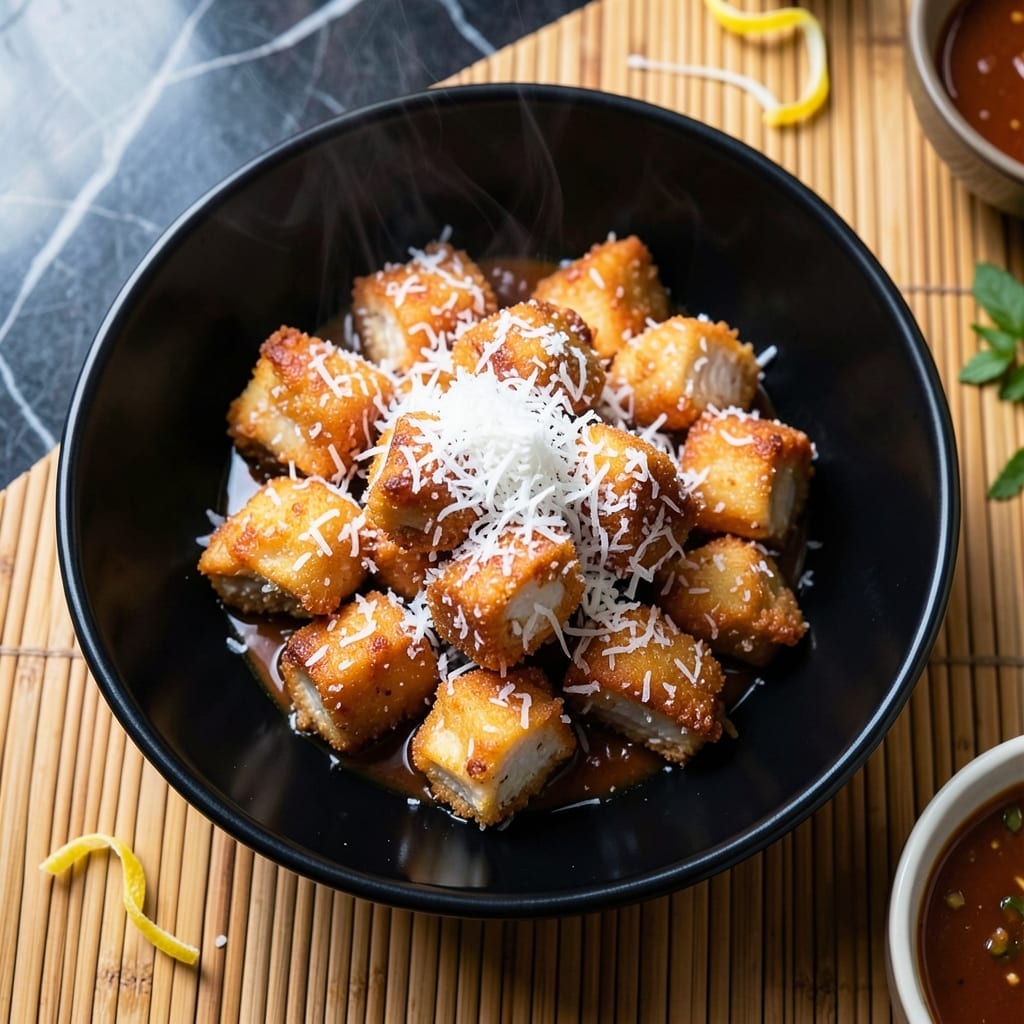
This recipe transforms chicken into a crispy, tropical masterpiece with just a few key ingredients. The combination of coconut and Chinese flavors creates something truly special.
I developed this method to ensure the coating stays perfectly crispy while keeping the chicken juicy inside. The secret is in the double-frying technique that locks in moisture and flavor.
You’ll love how the sweet coconut complements the savory Chinese seasoning. Each bite delivers a satisfying crunch followed by tender meat and aromatic spices.
Ready in under an hour, this dish brings restaurant-quality results to your home kitchen with minimal effort and maximum flavor.
Ingredients for Chinese Coconut Chicken
Tropical crunch meets savory Chinese seasoning with these carefully selected ingredients.
| Ingredient | Amount | Notes |
|---|---|---|
| Boneless Skinless Chicken Thighs 🍗 | 1 ½ lb | Cut into bite-sized pieces |
| Shredded Coconut 🥥 | 1 ½ cups | Sweetened or unsweetened |
| All-Purpose Flour 🌾 | ¾ cup | For initial dredging |
| Cornstarch 🌾 | ½ cup | Creates extra crispiness |
| Large Eggs 🥚 | 2 whole | Beaten for binding |
| Soy Sauce 🫒 | 3 tbsp | Low-sodium preferred |
| Oyster Sauce 🫒 | 2 tbsp | Or vegetarian oyster sauce |
| Five-Spice Powder 🌶️ | 1 tsp | Key Chinese seasoning |
| Garlic Cloves 🧄 | 4 cloves | Minced finely |
| Fresh Ginger 🌿 | 1 tbsp | Peeled and grated |
| Green Onions 🧅 | 4 whole | Thinly sliced for garnish |
| Neutral Oil 🫒 | 2 cups | For deep frying |
| Salt 🧂 | 1 tsp | Kosher or sea salt |
| White Pepper 🌶️ | ½ tsp | Ground, for authentic flavor |
| Rice Vinegar 🫒 | 1 tbsp | Balances the richness |
The chicken quality is paramount. Boneless skinless thighs stay juicier than breasts during frying. Look for air-chilled thighs at Whole Foods or Trader Joe’s—they have better texture and flavor. The shredded coconut should be unsweetened if you prefer balance, though sweetened works for a dessert-like twist. Cornstarch is non-negotiable for that signature crispiness.
No oyster sauce? Hoisin sauce or extra soy sauce can substitute, though the flavor profile changes slightly. Missing five-spice powder? Combine cinnamon, cloves, fennel, star anise, and pepper in equal parts. The egg wash can use aquafaba for a vegan adaptation. Always use fresh ginger and garlic—jarred versions lack punch (don’t skip this part).
Fry in batches to avoid crowding—this keeps the oil hot and the coating crisp. Store leftovers in the fridge for up to 3 days, though they’re best eaten fresh. Reheat in the oven at 375°F to restore some crispiness. Never microwave, or the coating will turn soggy.
Why You’ll Love This Recipe
- Finger Food Heaven: I love that these crispy coconut-coated thighs are easy to pick up and eat—no forks needed.
- Sweet-Savory Crunch: That first bite of juicy chicken with the toasted coconut crust is ridiculously good.
- Weeknight Rescue: Between us, this comes together faster than takeout on busy evenings.
- Budget Stretcher: Boneless thighs stay tender and cost less than breasts, so I make a big batch for leftovers.
Step-by-Step Instructions for Chinese Coconut Chicken
Master the technique for achieving that irresistibly crispy coating with a tender, flavorful interior.
Step 1: Prepare and Marinate the Chicken
Cut the 1.5 lb boneless skinless chicken thighs into 1-inch pieces. I find that uniform sizing ensures even cooking and consistent crispiness. Place the chicken in a bowl and add the 3 tbsp soy sauce, 2 tbsp oyster sauce, 1 tsp salt, 0.5 tsp white pepper, and 1 tbsp rice vinegar.
Mix well to coat every piece evenly. The rice vinegar tenderizes the meat while balancing the richness of the coconut and sauces. Let the chicken marinate for 15-20 minutes at room temperature—this step infuses flavor and ensures the meat stays juicy during frying.
Step 2: Create the Crispy Coating
In a shallow dish, combine the 0.75 cup all-purpose flour and 0.5 cup cornstarch. The cornstarch is the secret to that ultra-crispy texture. In a separate bowl, beat the 2 whole large eggs until smooth.
Dredge each piece of marinated chicken in the flour mixture, pressing gently to adhere. Shake off any excess, then dip into the beaten eggs. Finally, press each piece into the 1.5 cups shredded coconut, ensuring a thick, even coat. This triple-dredging process guarantees a shatteringly crisp exterior.
Step 3: Fry to Golden Perfection
Heat the 2 cups neutral oil in a deep, heavy-bottomed pot to 350°F. Use a thermometer for accuracy—oil that’s too cool will make the chicken greasy, while oil that’s too hot will burn the coconut before the chicken cooks through.
Working in batches to avoid crowding, carefully lower the coated chicken into the hot oil. Fry for 4-5 minutes, turning occasionally, until the coconut is deep golden brown and the chicken is cooked through. The internal temperature should reach 165°F.
Step 4: Infuse with Aroma and Serve
While the chicken fries, finely mince the 4 cloves garlic cloves and grate the 1 tbsp fresh ginger. In a small pan, heat 1 tbsp of the frying oil over medium heat and sauté the garlic and ginger with the 1 tsp five-spice powder for 30 seconds until fragrant. This aromatized oil will elevate the dish.
Drizzle the hot aromatized oil over the fried chicken and toss gently to coat. Garnish with thinly sliced 4 whole green onions for a fresh contrast. Serve immediately while the coating is at its crispiest—the coconut should crackle with each bite.
Pro Tips For Making Chinese Coconut Chicken
- Pre-toast the Coconut: Lightly toast the shredded coconut in a dry pan for 2-3 minutes before coating—it deepens the flavor and prevents soggy breading.
- Cut Evenly: Slice chicken thighs into 1-inch pieces so they cook at the same rate; uneven bits always mean some dry, some underdone.
- Double Dredge: Dip in flour, then egg, then coconut, then repeat the egg and coconut for a thicker, crunchier crust that actually stays put.
- Use Thighs, Not Breasts: I learned this the hard way—chicken thighs stay juicy even when fried twice, while breasts turn dry and stringy.
Pro Cooking Tips for Perfect Results
Double-Fry for Crispiness
I always do a double-fry for maximum crunch. First, fry at 325°F for 3 minutes to cook the chicken through. Then, increase oil to 375°F and fry again for 1-2 minutes until golden. This method ensures the coating stays crispy longer. 🔥
Oil Temperature Control
Use a candy thermometer clipped to the pot—350°F is ideal. If the oil smokes, it’s too hot. If the coconut browns too quickly, lower the heat. I prefer peanut oil for its high smoke point and neutral flavor.
Even Coating Trick
Press the coconut firmly into the chicken after the egg dip. For extra adherence, sprinkle a little cornstarch on the coconut before frying. This creates a better bond and prevents the coating from falling off during frying.
Aromatized Oil Boost
Heat 1 tbsp oil with 1 tsp five-spice powder, minced garlic, and grated ginger for 30 seconds. Drizzle this fragrant oil over the finished chicken to amplify the Chinese flavors.
Batch Frying Strategy
Fry in small batches to avoid oil temperature drops. Overcrowding causes the coating to absorb oil and become soggy. I use a slotted spoon to remove pieces, letting excess oil drip back into the pot.
Rest Before Serving
Let the chicken rest on a wire rack for 2-3 minutes after frying. This allows the coating to set and prevents steam from making it soggy. Serve immediately for the best texture. ✨
Nutrition Facts
Frequently Asked Questions
Can I use chicken breast instead of thighs?
Yes, but thighs stay juicier. If using breast, reduce frying time to 3-4 minutes to prevent dryness. Brining the chicken first helps maintain moisture.
How do I keep the coconut from burning?
Maintain oil at 350°F and fry in small batches. Unsweetened coconut browns slower than sweetened. Watch closely after 3 minutes.
What’s the best way to reheat leftovers?
Use an oven at 375°F for 8-10 minutes. This restores crispiness better than microwaving, which makes the coating soggy.
Can I bake instead of fry?
Bake at 400°F for 15-20 minutes, flipping halfway. The texture won’t be as crispy, but it’s a healthier option. Use a wire rack for air circulation.

- Jollof Rice Sauce Recipe: West African Tomato and Spice Infusion - September 25, 2026
- Japanese Rice Soup Recipe: Umami-Rich Comfort in a Bowl - September 25, 2026
- Homemade Cream Of Rice Recipe: Silk-Smooth Breakfast in Minutes - September 25, 2026