
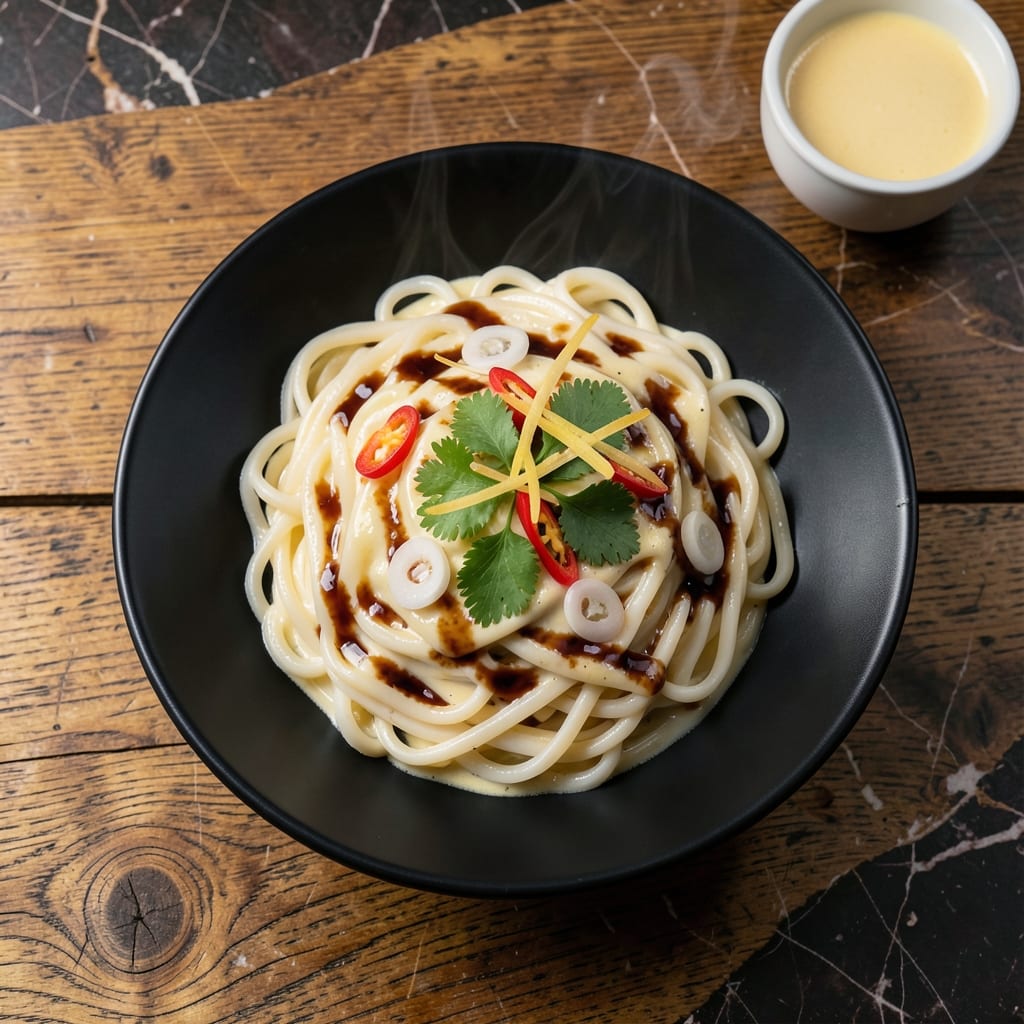
This recipe transforms simple rice noodles into a silk-smooth, velvety dish that comes together in minutes. The secret lies in the sauce—a perfect balance of rich coconut milk and aromatic spices that coat every strand beautifully.
I developed this method to ensure the noodles stay creamy without becoming mushy. A quick soak softens the rice noodles just enough, while the sauce thickens to cling perfectly as it simmers. The result is a dish that feels indulgent yet light.
You’ll love how the noodles absorb the sauce’s depth of flavor, creating a harmonious bite every time. The dish is ready faster than takeout, with a texture that’s impossible to resist.
Serve it hot, garnished with fresh herbs for contrast. This works as a main or side with equal success.
Ingredients for Creamy Rice Noodles
Flat rice noodles and coconut milk form the creamy base of this velvety dish.
| Ingredient | Amount | Notes |
|---|---|---|
| Rice Noodles 🍜 | 8 oz | Flat, medium-width preferred |
| Coconut Milk 🥥 | 1 can | Full-fat for creaminess |
| Vegetable Broth 🥣 | 2 cups | Low-sodium preferred |
| Garlic Cloves 🧄 | 4 cloves | Minced finely |
| Fresh Ginger 🌿 | 1 tbsp | Peeled and grated |
| Soy Sauce 🫕 | 3 tbsp | Low-sodium or tamari |
| Brown Sugar 🟤 | 1 tbsp | Light or dark |
| Lime Juice 🍈 | 2 tbsp | Freshly squeezed |
| Red Curry Paste 🌶️ | 1 tbsp | Thai-style preferred |
| Fresh Cilantro 🌿 | ½ cup | Chopped for garnish |
| Green Onions 🧅 | ¼ cup | Thinly sliced |
| Cornstarch 🌾 | 1 tbsp | Mixed with 1 tbsp water |
| Salt 🧂 | ½ tsp | To taste |
| Black Pepper 🌶️ | ¼ tsp | Freshly ground |
The coconut milk is non-negotiable for that silk-smooth texture. Full-fat cans from Thai Kitchen or Chaokoh give the best results, but any unsweetened variety works. The rice noodles should be flat and medium-width—check Asian markets for authentic brands like Three Ladies. Avoid thin vermicelli; they’ll overcook. Fresh ginger and garlic are worth the effort over powdered versions (the aroma is unbeatable).
Out of coconut milk? Cashew cream can substitute in a pinch, though the flavor changes slightly. No red curry paste? Yellow curry paste at half the amount works, or skip it entirely and add turmeric for color. For gluten-free, tamari instead of soy sauce. Brown sugar can be swapped for coconut sugar (one-to-one ratio). The cornstarch slurry is key for thickening—don’t skip it.
Noodles soak up sauce fast, so serve immediately. Leftovers keep 3-4 days in the fridge but lose some silkiness. Reheat gently with a splash of water or broth. The cilantro and green onions are best fresh, so add them just before serving. Sauce can be prepped 1 day ahead—store separately and reheat before combining.
Why You’ll Love This Recipe
- One Pot Wonder: I just toss everything in a single pan—noodles, coconut milk, broth—and let it simmer while I set the table.
- Rich Comfort: The coconut milk and ginger create this velvety sauce that clings to every strand of rice noodle.
- Meal Prep Hero: Honestly, it tastes even better the next day after the flavors meld overnight.
- Budget Friendly: Rice noodles and pantry staples stretch this into two meals for my family of four.
Step-by-Step Instructions for Creamy Rice Noodles
This method delivers on the promise of silk-smooth noodles with rich, velvety sauce every time.
Step 1: Soak the Rice Noodles
Place the 8 oz rice noodles in a large bowl and cover completely with hot tap water. I always use a plate to weigh them down so they stay submerged. Let them soak for 8-10 minutes until pliable but still slightly firm.
Don’t oversoak or they’ll turn mushy—you want them to finish cooking in the sauce to absorb all those flavors. Drain and rinse with cold water to stop the cooking process, then set aside. This prep step is crucial for achieving the perfect al dente texture in your final dish.
Step 2: Build the Creamy Sauce Base
In a large saucepan, combine the 1 can coconut milk, 2 cups vegetable broth, 1 tbsp red curry paste, 1 tbsp brown sugar, 3 tbsp soy sauce, 1 tbsp fresh ginger, and 4 cloves garlic cloves. Whisk until the curry paste is fully dissolved.
Bring to a gentle simmer over medium heat and cook for 5 minutes, stirring occasionally. You’ll see the sauce thicken slightly and the aromatics infuse their flavors. Watch for small bubbles at the edges—this tells you it’s at the right temperature without boiling.
Step 3: Thicken and Finish the Sauce
In a small bowl, mix the 1 tbsp cornstarch with 1 tbsp water to create a slurry. Slowly pour this into the simmering sauce while whisking constantly. Continue cooking for 2-3 minutes until the sauce coats the back of a spoon.
Stir in the 2 tbsp lime juice, 0.5 tsp salt, and 0.25 tsp black pepper. Taste and adjust seasoning if needed. The sauce should now have a luxurious, velvety consistency that will cling beautifully to your noodles.
Step 4: Combine and Serve
Add the drained rice noodles to the sauce and toss gently with tongs. Cook for 2-3 minutes until the noodles are fully tender and have absorbed some of the sauce. The noodles will plump up and become translucent when done.
Remove from heat and stir in 0.25 cup green onions. Divide among bowls and garnish with 0.5 cup fresh cilantro. The cilantro adds a fresh, bright contrast to the rich, creamy sauce, while the green onions provide a subtle crunch and mild onion flavor that ties everything together perfectly.
Pro Tips For Making Creamy Rice Noodles
- Soak the Noodles: Cover rice noodles in warm water for 8-10 minutes before cooking—I learned this the hard way after ending up with gummy, unevenly cooked strands more times than I care to admit.
- Bloom the Aromatics: Cook the minced garlic and grated ginger in a splash of coconut milk (not oil) for 30 seconds until fragrant—this pulls out their sweetness without burning.
- Skip the Boil: Steer clear of boiling the noodles in broth; simmer them gently instead to prevent them from turning to mush before they absorb the creamy coconut flavor.
- Use Full-Fat Coconut: Sounds obvious, but light coconut milk just won’t cut it here—full-fat is the thing that matters most for that rich, velvety sauce that clings to the noodles.
Health Benefits of creamy rice noodles
Rich in Healthy Fats
The coconut milk in this dish provides medium-chain triglycerides that your body metabolizes quickly for energy. A single serving delivers about 15 grams of healthy fats that support brain function and heart health. I always use full-fat for that perfect velvety texture. 💪
Plant-Based Protein
While rice noodles aren’t protein powerhouses, they offer 2-3 grams of plant protein per serving. The dish becomes more balanced when you add tofu or edamame. The vegetable broth contributes amino acids that complement the noodles beautifully.
Digestive Benefits
Rice noodles are naturally gluten-free and easier to digest than wheat-based pasta. The ginger and garlic in the sauce aid digestion and have anti-inflammatory properties. I notice I feel lighter after eating this compared to heavy cream sauces.
Vitamin-Rich Ingredients
The lime juice provides a healthy dose of vitamin C, while the cilantro and green onions add vitamins A and K. Together, they boost your immune system and support healthy vision. Fresh herbs always make a nutritional difference.
Low in Saturated Fat
Despite its creamy texture, this dish contains minimal saturated fat. The coconut milk’s fat profile is actually heart-healthy when consumed in moderation. I’ve found this to be a satisfying yet lighter alternative to dairy-based creamy dishes. ✨
Energy-Boosting Carbs
Rice noodles provide complex carbohydrates that give you sustained energy. A serving offers about 45 grams of carbs that digest slowly, helping maintain stable blood sugar levels. Perfect for when you need long-lasting fuel.
Nutrition Facts
Frequently Asked Questions
Can I use regular pasta instead of rice noodles?
Rice noodles have a unique texture that absorbs the creamy sauce best. Regular pasta can work but may not soak up flavors as well. For best results, stick with flat, medium-width rice noodles.
How do I prevent the sauce from being too thin?
The cornstarch slurry is key. Mix 1 tbsp cornstarch with 1 tbsp water and stir into the simmering sauce. Cook for 2-3 minutes until thickened. Never skip this step!
Can I make this ahead of time?
Prepare the sauce 1 day ahead and store separately. Cook noodles fresh when ready to serve, as they absorb sauce and lose texture when stored. Reheat sauce gently before combining.
What if I don’t have coconut milk?
Cashew cream makes a great substitute, though the flavor will differ slightly. Use the same amount and add a pinch of sugar to balance. Avoid dairy milk—it can curdle.

- Rice Pudding Recipe With Eggs and Milk: Old-Fashioned Custard-Style Comfort - September 30, 2026
- Rice Noodle Sauce Recipe: Bold Umami Depth for Authentic Stir-Fry - September 30, 2026
- Rice Pilaf Recipe: Fragrant Basmati With Toasted Vermicelli - September 30, 2026