
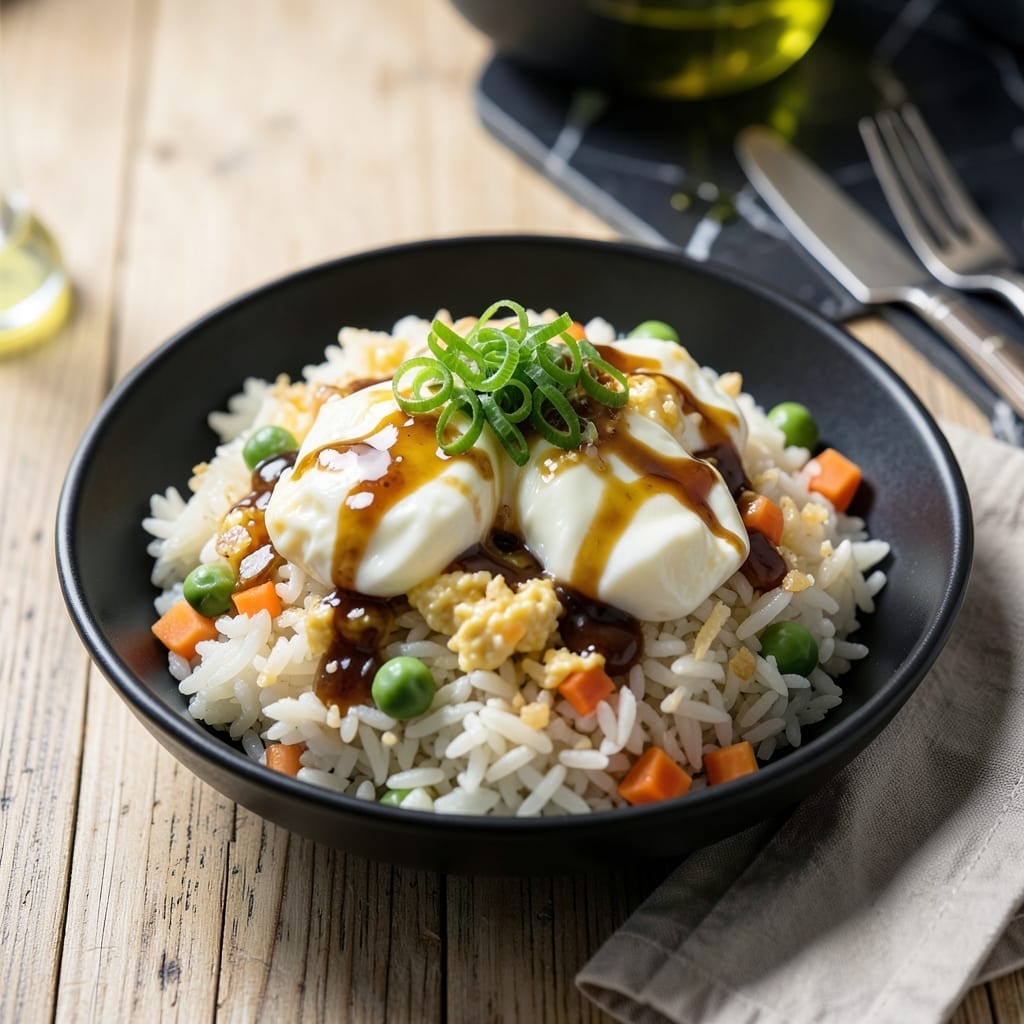
This savory breakfast dish transforms leftover rice into a quick, protein-packed meal that’s ready in minutes. The secret lies in using day-old rice for that perfect, non-sticky texture.
With just a few simple ingredients and a hot pan, you’ll create a dish with fluffy eggs, golden bits, and a satisfying depth of flavor. Ideal for busy mornings when time is limited.
Ingredients for Eggy Rice
Day-old rice and a few pantry staples make this savory bowl come alive.
| Ingredient | Amount | Notes |
|---|---|---|
| Cooked White Rice 🍚 | 4 cups | Day-old, chilled overnight |
| Large Eggs 🥚 | 4 whole | Beaten until frothy |
| Green Onions 🧅 | 3 whole | Thinly sliced, green parts only |
| Vegetable Oil 🫒 | 2 tbsp | Neutral flavor preferred |
| Soy Sauce 🥫 | 2 tbsp | Low-sodium for control |
| Sesame Oil 🫒 | 1 tsp | Toasted, for finishing |
| Garlic Cloves 🧄 | 2 cloves | Minced finely |
| Fresh Ginger 🌿 | 1 tsp | Grated or minced |
| Salt 🧂 | ½ tsp | Or to taste |
| White Pepper 🌶️ | ¼ tsp | Ground, for authentic flavor |
| Frozen Peas 🌱 | ½ cup | Thawed, optional add-in |
| Carrot 🥕 | 1 whole | Small dice, optional add-in |
The rice is non-negotiable—day-old, cold rice is what gives you that perfect, separate texture (fresh rice turns to mush). Most Asian grocery stores carry jasmine rice, which is ideal, but any long-grain white works. For soy sauce, Kikkoman or Pearl River Bridge are reliable brands. Green onions add freshness, so grab a bunch with crisp, dark green tops.
No white pepper? Black pepper works fine, though white is traditional for color. Swap frozen peas for diced bell peppers or corn. Out of sesame oil? Skip it, but add a pinch of sugar to balance. For extra protein, stir in diced char siu or Spam (if you’re into that). The ginger can be powdered at one-quarter the amount, but fresh is better.
This keeps 3-4 days in the fridge, though it’s best fresh. Reheat in a dry pan to revive the texture. Leftovers taste great cold too—pack it for lunch (worth the extra minute).
Why You’ll Love This Recipe
- One Pan Wonder: I just dump rice, beaten eggs, and green onions in a hot oiled pan, stir in soy sauce, and it’s done in minutes.
- That Soy Sauce Magic: The salty depth of the soy sauce turns plain rice and eggs into something crave-worthy, with those little crispy bits at the bottom.
- Leftover Hero: I toss in yesterday’s cold rice and it actually tastes better—no waste, no extra cooking.
- Budget Dinner: Five ingredients, most of which I already have, and it feeds my family for pennies.
Step-by-Step Instructions for Eggy Rice
Here’s the method. Straightforward, tested, works every time.
Step 1: Prepare the Aromatics and Vegetables
Finely mince the 2 cloves garlic cloves and grate the 1 tsp fresh ginger. Thinly slice the 3 whole green onions, using only the green parts. If using the optional vegetables, small dice the 1 whole carrot and thaw the 0.5 cup frozen peas.
This prep work ensures everything cooks quickly and evenly. The garlic and ginger form the flavor base, while the green onions add a fresh finish. Having all ingredients ready before cooking prevents burning and guarantees smooth execution.
Step 2: Scramble the Eggs with Rice
Heat 1 tbsp vegetable oil in a large skillet or wok over medium-high heat. Add the 4 whole large eggs (beaten until frothy) and scramble gently until just set but still slightly runny. Immediately add the 4 cups cooked white rice, breaking up any clumps with a spatula.
Cook for 2-3 minutes, stirring constantly, until the rice is fully coated with egg and heated through. The rice should be separate and slightly glossy from the egg. This step creates the signature texture of this dish.
Step 3: Incorporate Aromatics and Seasonings
Push the egg and rice mixture to one side of the pan. Add the remaining 1 tbsp vegetable oil to the empty side, then add the minced garlic cloves and grated fresh ginger. Stir-fry for 30 seconds until fragrant.
Mix the aromatics into the rice, then add the 2 tbsp soy sauce, 0.5 tsp salt, and 0.25 tsp white pepper. Stir well to distribute the seasonings evenly. The soy sauce should coat each grain of rice with a light golden color.
Step 4: Finish with Vegetables and Final Touches
Add the diced carrot and frozen peas (if using) to the pan. Cook for an additional 2-3 minutes until the vegetables are tender. The carrots should be slightly crisp but cooked through, and the peas should be bright green and warmed.
Remove from heat and drizzle with 1 tsp sesame oil. Stir to combine, then taste and adjust seasoning if needed. The sesame oil adds a nutty aroma that completes the dish.
Garnish with the sliced green onions and serve immediately. Each bite should have distinct grains of rice, tender vegetables, and the rich flavor of egg and soy.
Pro Tips For Making Eggy Rice
- Use Cold Rice: I learned this the hard way—freshly cooked rice turns mushy. Always use day-old, cold rice from the fridge to get those distinct, fluffy grains that actually stay separate. —
- Heat Oil First: About 2 tablespoons of oil in a wok or skillet, then let it get shimmering hot before adding eggs. Sounds simple, but it’s the only way to avoid soggy, sad scrambled bits. —
- Scramble Eggs Fast: Crank the heat to medium-high and keep those eggs moving with a spatula. After burning three batches, I finally figured out that slow cooking just makes them rubbery in this dish. —
- Finish with Fresh Onions: Add the green onions right at the end, just before serving. My grandmother swore by this, and she was right: it keeps them bright and crisp, not wilted and sad.
Regional Styles of These Flavors
Chinese Cantones式
In Cantonese homes, this dish often includes char siu pork or Chinese sausage for extra richness. The rice is cooked with light soy sauce and dark soy sauce for color depth. I love the smoky sweetness these additions bring. 🗺️
Yangzhou Style
Yangzhou fried rice is the fanciest version, loaded with shrimp, diced ham, and barbari green peas. The eggs are scrambled in thin sheets, then cut into ribbons. This restaurant-style version feels special for weekend brunches.
Taiwanese Night Market
Street vendors in Taiwan often add squid or small octopus pieces for a seafood twist. The rice gets a final drizzle of oyster sauce and chili sauce for that addictive sweet-spicy kick. I first tried this at Shilin Night Market.
Thai Adaptation
Thai versions incorporate fish sauce instead of soy sauce, plus Thai basil and chili flakes. The eggs are cooked in a thin omelet, then sliced into strips. This creates a bright, herbaceous flavor profile. 🌶️
Japanese Omurice
Japan’s take wraps the eggy rice in a soft, crepe-like egg shell. They use ketchup as a key seasoning, which gives it a sweet-tangy flavor. I was surprised by how delicious this fusion version tastes.
Filipino Silog Style
Filipino garlic fried rice (sinangag) pairs with a fried egg on top. The rice gets its golden color from annatto oil. This hearty breakfast is often served with tapa (cured beef) or longganisa sausage.
Nutrition Facts
Frequently Asked Questions
Can I use freshly cooked rice?
Day-old rice works best because it’s drier and less sticky. Fresh rice can turn mushy when stir-fried. If you must use fresh, spread it on a tray and refrigerate for 30 minutes to remove excess moisture.
How do I prevent the eggs from getting rubbery?
Scramble them just until set but still slightly runny before adding rice. This ensures they stay soft and fluffy. Cooking too long over high heat makes them tough.
Can I add other proteins?
Try diced char siu, shrimp, or even leftover chicken. Cook proteins first, set aside, then mix back in at the end to avoid overcooking.
What if my dish is bland?
Adjust seasoning with more soy sauce or a pinch of salt. For depth, add a dash of oyster sauce or a sprinkle of white pepper before serving.

- Rice Pudding Recipe With Eggs and Milk: Old-Fashioned Custard-Style Comfort - September 30, 2026
- Rice Noodle Sauce Recipe: Bold Umami Depth for Authentic Stir-Fry - September 30, 2026
- Rice Pilaf Recipe: Fragrant Basmati With Toasted Vermicelli - September 30, 2026