
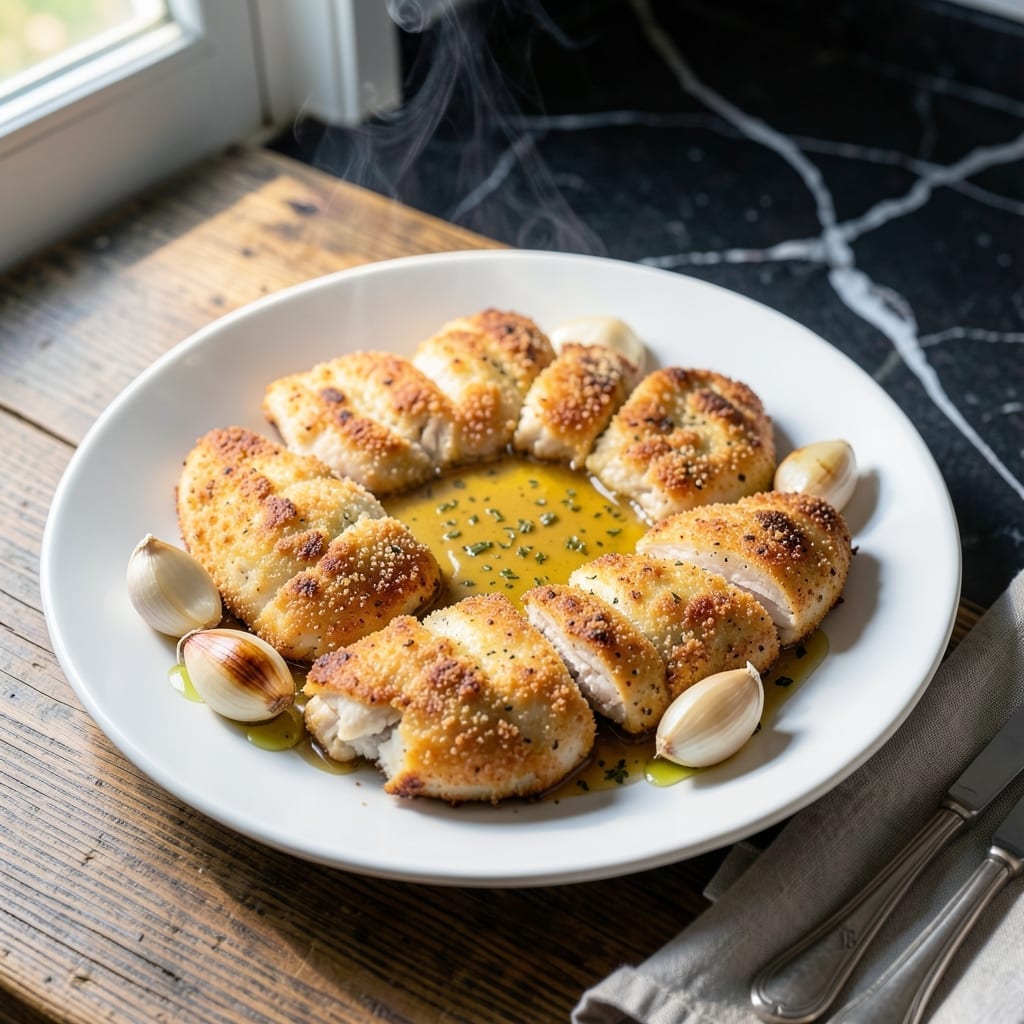
This family-friendly chicken dish simplifies weeknight cooking without sacrificing flavor. A 30-minute preparation transforms everyday ingredients into a satisfying meal everyone will love.
The recipe relies on a one-pan method, ensuring easy cleanup while delivering tender, juicy chicken with a golden finish. Simple seasonings enhance the natural taste without overpowering.
What sets this apart is its adaptability. Serve with rice, pasta, or vegetables to suit any preference. Each bite delivers comfort and warmth, making it a reliable go-to.
Perfect for busy evenings, this dish proves that delicious meals don’t require hours in the kitchen.
Ingredients for Family Chicken
Everyday ingredients transform into this comforting weeknight meal with ease.
| Ingredient | Amount | Notes |
|---|---|---|
| Boneless, Skinless Chicken Breasts 🍗 | 1 ½ lb | Pounded to even thickness |
| All-Purpose Flour 🌾 | ½ cup | For light dredging |
| Olive Oil 🫒 | 3 tbsp | Divided for cooking |
| Unsalted Butter 🧈 | 2 tbsp | For richness in sauce |
| Garlic Cloves 🧄 | 4 cloves | Minced finely |
| Chicken Broth 🥣 | ¾ cup | Low-sodium preferred |
| Heavy Cream 🥛 | ½ cup | Full-fat for creaminess |
| Dijon Mustard 🟡 | 1 tbsp | For tangy depth |
| Fresh Thyme Leaves 🌿 | 1 tbsp | Stems removed |
| Fresh Rosemary 🌿 | 1 tbsp | Chopped finely |
| Kosher Salt 🧂 | 1 tsp | Diamond Crystal preferred |
| Freshly Ground Black Pepper 🌶️ | ½ tsp | For finishing |
| Lemon Zest 🍋 | 1 tsp | For brightness |
The chicken quality is non-negotiable for optimal texture and flavor. Air-chilled, organic breasts from Whole Foods or Costco yield the most consistent results, though standard supermarket options work if properly pounded to even thickness. The herbs must be fresh—dried simply won’t deliver the same aromatic impact. For the broth, low-sodium allows better control over seasoning levels.
No fresh thyme or rosemary? Dried at one-third the quantity may substitute, though fresh is strongly preferred. The heavy cream can be replaced with whole milk for a lighter version (texture will be slightly thinner). For a dairy-free approach, full-fat coconut milk works surprisingly well. The Dijon mustard is flexible—whole grain mustard adds pleasant texture, while regular yellow mustard offers milder flavor.
Prepared chicken keeps beautifully in the refrigerator for 3-4 days or can be frozen for up to 3 months. Reheat gently in a skillet with a splash of broth to maintain moisture. The fresh herbs are best added just before serving to preserve their vibrant color and flavor.
Why You’ll Love This Recipe
- One Pan Wonder: I love that everything cooks in a single skillet—chicken, garlic, butter, and oil. No piles of dishes to wash afterward.
- Garlic Butter Magic: The combo of butter, olive oil, and fresh garlic cloves makes the chicken so juicy and flavorful. Honestly, it’s the kind of taste that has everyone asking for seconds.
- Weeknight Hero: Between us, this is my go-to for busy evenings. It’s quick enough for a Tuesday but impressive enough for weekend company.
- Budget Stretcher: Boneless chicken breasts and pantry staples like flour and garlic mean I can feed my family without breaking the bank. Leftovers? They disappear fast.
Step-by-Step Instructions for Family Chicken
Here’s the method that delivers tender, flavorful chicken with minimal effort and maximum payoff.
Step 1: Pound and Season the Chicken
Place the 1.5 lb boneless, skinless chicken breasts between two sheets of plastic wrap. I use a meat mallet to pound them to an even ½-inch thickness—this ensures even cooking and prevents dry, overdone edges. Uniform thickness means every piece finishes at the same time.
Season both sides with the 1 tsp kosher salt and ½ tsp freshly ground black pepper. The salt should adhere well to the slightly moist surface. I always press the seasoning in gently with my fingers to make sure it sticks. This simple step builds a flavor foundation that carries through the entire dish.
Step 2: Dredge and Sear for Golden Crust
Lightly dredge the chicken in the ½ cup all-purpose flour, shaking off any excess. The flour creates a delicate coating that will crisp up beautifully when seared. Too much flour will make the coating gummy, so err on the lighter side.
Heat 2 tbsp olive oil in a large skillet over medium-high heat until shimmering. Add the chicken and cook for 4-5 minutes per side until golden brown and just cooked through. Don’t move the pieces around—let them develop that crispy, flavorful crust. When they release easily from the pan, you’ll know they’re ready to flip.
Step 3: Build the Creamy Herb Sauce
Remove the chicken from the skillet and set aside. In the same pan, add the remaining 1 tbsp olive oil and the 2 tbsp unsalted butter. When the butter foams, add the 4 cloves minced garlic, 1 tbsp fresh thyme leaves, and 1 tbsp chopped rosemary. Sauté for 30-45 seconds until fragrant but not browned.
Pour in the ¾ cup chicken broth, scraping up all the browned bits from the bottom of the pan. These fond bits are packed with flavor. Stir in the 1 tbsp Dijon mustard and ½ cup heavy cream, then add the 1 tsp lemon zest. Simmer for 2-3 minutes until the sauce thickens slightly and coats the back of a spoon.
Step 4: Finish and Serve
Return the chicken to the skillet with the sauce. Spoon the sauce over the chicken and let it simmer for 1-2 minutes to heat through and allow the flavors to meld. The chicken should be fully coated in the creamy, herb-infused sauce.
This dish comes together quickly, making it perfect for busy weeknights. The sauce should be rich and velvety, with bright herb notes and a subtle tang from the mustard and lemon. Serve immediately while hot, with the sauce spooned generously over each piece of chicken. The creamy sauce pairs beautifully with rice, pasta, or crusty bread.
Pro Tips For Making Family Chicken
- Pound the Breasts: Use a rolling pin to even out the thickness of the chicken breasts to ½ inch—this guarantees they cook through at the same rate without drying out.
- Season the Flour: Mix a good pinch of salt and pepper into the flour before dredging; it sticks better than seasoning the chicken directly and gives every bite flavor.
- Skip the Crowding: Fry in batches with at least an inch between pieces, or the temperature drops and you’ll end up with soggy, steamed chicken instead of a crisp crust.
- Butter the Garlic: After removing the chicken, toss the minced garlic into the butter and olive oil for 30 seconds—just until fragrant—to infuse the pan sauce without burning it.
Troubleshooting This Dish
Sauce Too Thin
If your sauce isn’t thickening, it likely needs more reduction time. Uncover the pan and let it simmer at medium heat for an additional 3-5 minutes. I often add a slurry of 1 tsp cornstarch mixed with 1 tsp water to speed up the process. Stir constantly to prevent scorching. 💡
Chicken Overcooks
Overcooked chicken usually happens when pieces aren’t uniform thickness. Always pound to ½-inch thickness before cooking. If using thicker cuts, reduce heat to medium and cook for 6-7 minutes per side. Use a meat thermometer—165°F internal temperature is your target.
Sauce Separates
If your cream sauce breaks, it’s often due to high heat. Remove from heat immediately and whisk vigorously. For stubborn separation, slowly whisk in 1-2 tbsp cold heavy cream to bring it back together. I keep my burner at medium-low when making cream sauces to prevent this. 🔥
Bland Flavor
Taste as you go! If the sauce seems flat, add a pinch more kosher salt or a squeeze of lemon juice. The Dijon mustard provides depth, so ensure you’re using the full 1 tbsp. Fresh herbs make a huge difference—don’t skip the thyme and rosemary.
Sticking Chicken
Chicken sticks when the pan isn’t hot enough or you move it too soon. Heat the olive oil until it shimmers, then wait 30 seconds more before adding chicken. Let it sear undisturbed for at least 4 minutes before attempting to flip. A well-seasoned cast iron skillet works best.
Sauce Too Salty
If you’ve over-salted, stir in ¼ cup additional chicken broth or a splash of heavy cream. The low-sodium broth in the original recipe helps prevent this. Balance with a pinch of lemon zest to brighten the flavors without adding more salt.
Nutrition Facts
Frequently Asked Questions
Can I use chicken thighs instead of breasts?
Boneless, skinless thighs work wonderfully and often stay juicier. Reduce searing time to 3-4 minutes per side since they cook faster. The sauce pairs especially well with the richer flavor of dark meat.
How do I make this gluten-free?
Swap the all-purpose flour for cornstarch or a gluten-free flour blend. Use 1:1 ratio for dredging. Ensure your chicken broth and Dijon mustard are certified gluten-free, as some brands contain additives.
Can I prep this ahead of time?
Pound and season the chicken up to 24 hours ahead, storing it covered in the fridge. Cook the sauce just before serving for the freshest flavor. The complete dish reheats well in a skillet with a splash of broth.
What sides pair best with this?
Simple sides let the creamy sauce shine. Try mashed potatoes, steamed green beans, or crusty bread for dipping. A light salad with lemon vinaigrette balances the richness perfectly.

- Jollof Rice Sauce Recipe: West African Tomato and Spice Infusion - September 25, 2026
- Japanese Rice Soup Recipe: Umami-Rich Comfort in a Bowl - September 25, 2026
- Homemade Cream Of Rice Recipe: Silk-Smooth Breakfast in Minutes - September 25, 2026