
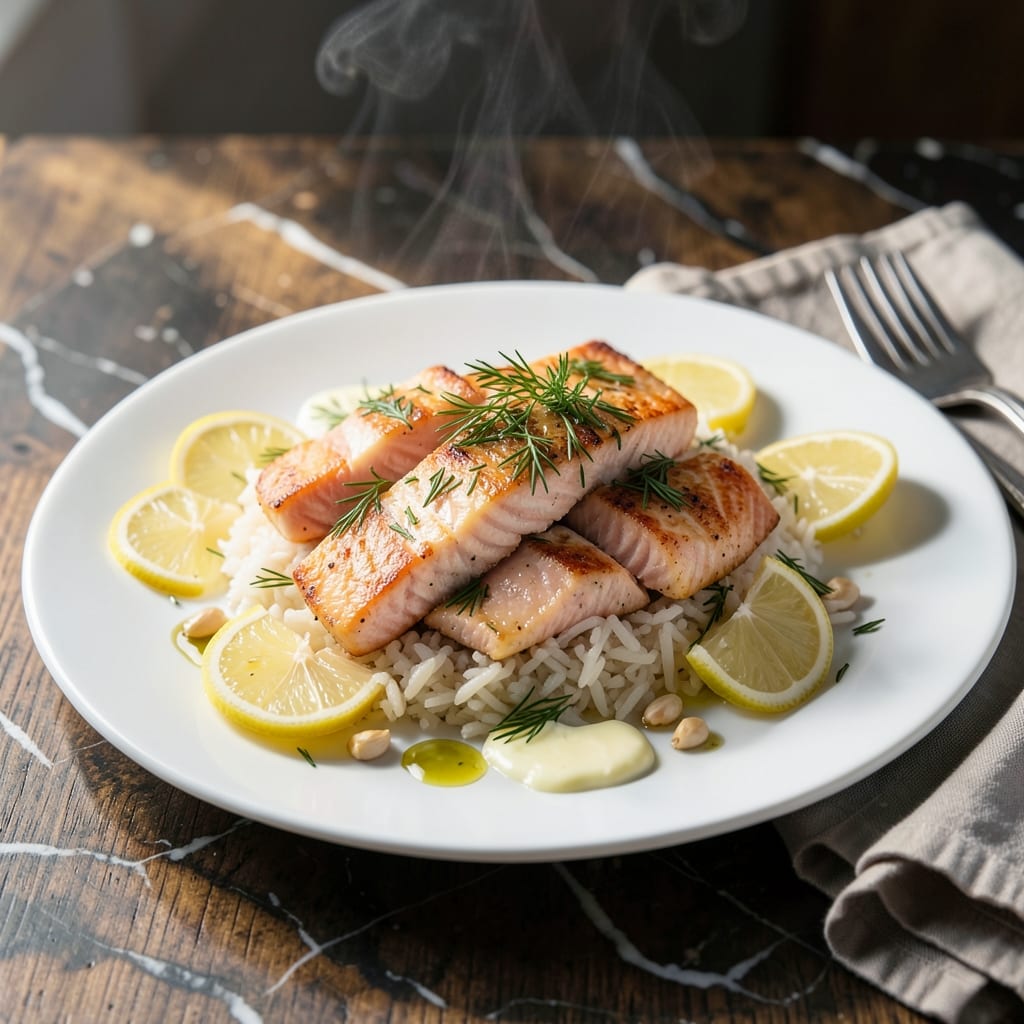
This recipe pairs tender flaked salmon with perfectly cooked rice for a balanced, elegant meal. The salmon stays moist while developing a delicate texture that melts in your mouth.
Simple ingredients and precise timing ensure the fish flakes easily and the rice absorbs rich, buttery flavors. The result is a dish that feels special but requires minimal effort.
Ingredients for Flaked Salmon and Rice
Elegant yet approachable ingredients for a perfectly balanced seafood and grain dish.
| Ingredient | Amount | Notes |
|---|---|---|
| Salmon Fillets 🐟 | 1 ½ lb | Skin-on, wild-caught preferred |
| Long-Grain White Rice 🍚 | 1 ½ cups | Rinsed until water runs clear |
| Unsalted Butter 🧈 | 4 tbsp | Divided for cooking and finishing |
| Fresh Lemon 🍋 | 1 whole | Zested and juiced |
| Garlic Cloves 🧄 | 3 cloves | Minced finely |
| Fresh Dill 🌿 | ¼ cup | Chopped, plus extra for garnish |
| Chicken or Vegetable Stock 🥣 | 2 cups | Low-sodium preferred |
| Shallot 🧅 | 1 whole | Finely diced |
| Dry White Wine 🍷 | ½ cup | Optional for deglazing |
| Olive Oil 🫒 | 1 tbsp | For cooking salmon |
| Kosher Salt 🧂 | 1 tsp | Plus more to taste |
| Ground Black Pepper 🌶️ | ½ tsp | Freshly ground preferred |
The salmon is the centerpiece here. Wild-caught fillets (sockeye or coho) deliver the best texture and flavor, though farmed Atlantic works in a pinch. Look for skin-on fillets at Whole Foods or your local fishmonger—the skin helps hold the fish together while cooking. Freshness is key: the flesh should be vibrant, not dull, and smell clean, like the ocean (not fishy). If buying frozen, thaw it overnight in the fridge.
Short on time? Pre-cooked rice from the grocery hot bar works, though freshly made absorbs the buttery flavors better. No white wine? Substitute extra stock plus a splash of lemon juice. Out of dill? Fresh parsley or tarragon can stand in, though the flavor profile shifts slightly. The butter is non-negotiable for that rich finish—use European-style if you want an even more luxurious result.
Leftovers keep well for 2-3 days in the fridge, though the salmon is best served immediately. Rice can be made ahead and reheated with a splash of water to restore moisture. The dish doesn’t freeze well—salmon texture degrades—but the rice portion alone freezes for up to 1 month.
Why You’ll Love This Recipe
- One Pan Wonder: I toss the salmon and rice together with garlic butter and lemon—minimal dishes, maximum flavor.
- Buttery Garlic Zing: The salmon soaks up that garlic butter and lemon like a dream, every bite rich and bright.
- Weeknight Hero: Honestly, it’s my Tuesday night lifesaver—fancy enough for guests but unfussy for solo dinners.
- Leftovers Win: The rice keeps the flaked salmon moist, so tomorrow’s lunch tastes just as good.
Step-by-Step Instructions for Flaked Salmon and Rice
Here’s the method I use to achieve perfectly tender salmon with rich, buttery rice.
Step 1: Cook the Rice in Aromatic Broth
In a medium pot, melt 2 tbsp Unsalted Butter over medium heat. Add the Shallot and cook for 2-3 minutes until translucent and fragrant. Stir in 3 cloves Garlic Cloves and cook for 30 seconds until just golden.
Add the 1.5 cups Long-Grain White Rice, 2 cups Chicken or Vegetable Stock, 1 tsp Kosher Salt, and 0.5 tsp Ground Black Pepper to the pot. Bring to a boil, then reduce heat to low, cover, and simmer for 15-18 minutes until the liquid is absorbed and the rice is tender. Fluff with a fork and set aside, covered.
Step 2: Sear the Salmon to Flaky Perfection
Pat the 1.5 lb Salmon Fillets dry with paper towels and season lightly with Kosher Salt and Ground Black Pepper. Heat the 1 tbsp Olive Oil in a large skillet over medium-high heat until shimmering.
Add the salmon skin-side up and cook undisturbed for 4-5 minutes until the bottom is golden brown and crisp. Carefully flip and cook for another 3-4 minutes until the fish flakes easily with a fork. Transfer to a plate and break into large flakes.
Step 3: Deglaze and Infuse with Bright Flavors
In the same skillet, reduce heat to medium and add the 0.5 cup Dry White Wine. Scrape up any browned bits from the bottom of the pan and let the wine reduce by half, about 2-3 minutes.
Stir in the remaining 2 tbsp Unsalted Butter, the zest and juice of the Fresh Lemon, and the 0.25 cup Fresh Dill. Cook for 1 minute until the butter melts and the sauce becomes fragrant. Taste and adjust seasoning if needed.
Step 4: Combine and Serve Immediately
Gently fold the flaked salmon into the cooked rice, drizzling the pan sauce over the top. Toss lightly to combine, ensuring the salmon stays in large, tender pieces. The rice should be glossy with the buttery, lemon-dill sauce coating each grain.
Divide among plates and garnish with additional Fresh Dill. Serve immediately while the salmon is still warm and the rice retains its creamy texture. Each bite should deliver tender salmon, buttery rice, and a bright, herbaceous finish.
Pro Tips For Making Flaked Salmon And Rice
- Skin-Side Down First: Always cook the salmon skin-side down first in a hot pan with 1 tablespoon butter—this guarantees crispy skin and prevents sticking. I learned this the hard way after peeling half the fillet off the pan.
- Rinse the Rice: Give the long-grain white rice a quick rinse before cooking to remove excess starch, or you’ll end up with a gummy, clumped mess instead of light, separate grains.
- Pull Salmon Early: Take the salmon off the heat when it’s still slightly translucent in the center—it’ll finish cooking while resting, and you’ll avoid dry, overdone fish.
- Zest Before Juicing: Grate the lemon zest first before cutting it open for juice—this saves time and gives you that bright, aromatic oil from the peel that makes the dish pop.
Common Mistakes When Making Perfect Results
Overcooking the Salmon
Salmon continues cooking even after you remove it from heat, so pull it off when it’s just opaque. I use a 140-145°F internal temperature as my guide. Overcooked salmon turns dry and loses its delicate flake, ruining the dish’s texture. 🔥
Skipping the Rice Rinse
Unrinsed rice releases excess starch, making your grains gummy instead of light and separate. I rinse my long-grain white rice until the water runs completely clear. This small step ensures each grain stays distinct and absorbs the buttery sauce evenly.
Crowding the Pan
When searing salmon, give each fillet space—at least 2 inches apart—so steam doesn’t build up. Crowding causes the fish to steam rather than sear, resulting in pale, soggy skin instead of that crisp golden crust we want.
Ignoring the Rest
Let your cooked rice rest off heat for 5-10 minutes before combining with salmon. This allows the grains to firm up slightly and absorb any remaining liquid. Skipping this step often leads to mushy rice that can’t hold its shape.
Under-seasoning the Fish
Salmon needs more salt than you might think to bring out its natural sweetness. I season my fillets with at least ½ tsp Kosher Salt per pound before cooking. Don’t be shy—the buttery sauce and rice will balance the seasoning perfectly.
Using Cold Ingredients
Bring your salmon to room temperature for 15-20 minutes before cooking for even cooking throughout. Cold fish seizes up when it hits the hot pan, leading to uneven doneness and that dreaded rubbery texture.
Nutrition Facts
Frequently Asked Questions
How do I know when the salmon is ready to flake?
Check for doneness when the internal temp reaches 140-145°F. The flesh should separate easily with a fork and appear opaque. Remove from heat immediately to prevent overcooking.
Can I use brown rice instead?
Yes, but adjust the cooking time to 40-45 minutes and use 2.5 cups liquid per 1 cup rice. Brown rice has a nuttier flavor and firmer texture that pairs well with the salmon.
What if my salmon sticks to the pan?
Ensure the pan is very hot and the fillets are dry before adding. Use a non-stick or well-seasoned cast iron skillet and avoid moving the fish for the first 4-5 minutes of cooking.
How long will leftovers keep?
Store in an airtight container in the fridge for up to 2-3 days. Reheat gently on the stove with a splash of water to maintain moisture.

- Ground Beef Rice and Beans Recipe: Slow-Simmered Savory Harmony - October 17, 2026
- Guyanese Fried Rice Recipe: Caribbean Spice With Wok-Charred Aromatics - October 17, 2026
- Hakka Thunder Tea Rice Recipe: Wok-Charred Herbal Infusion - October 17, 2026