
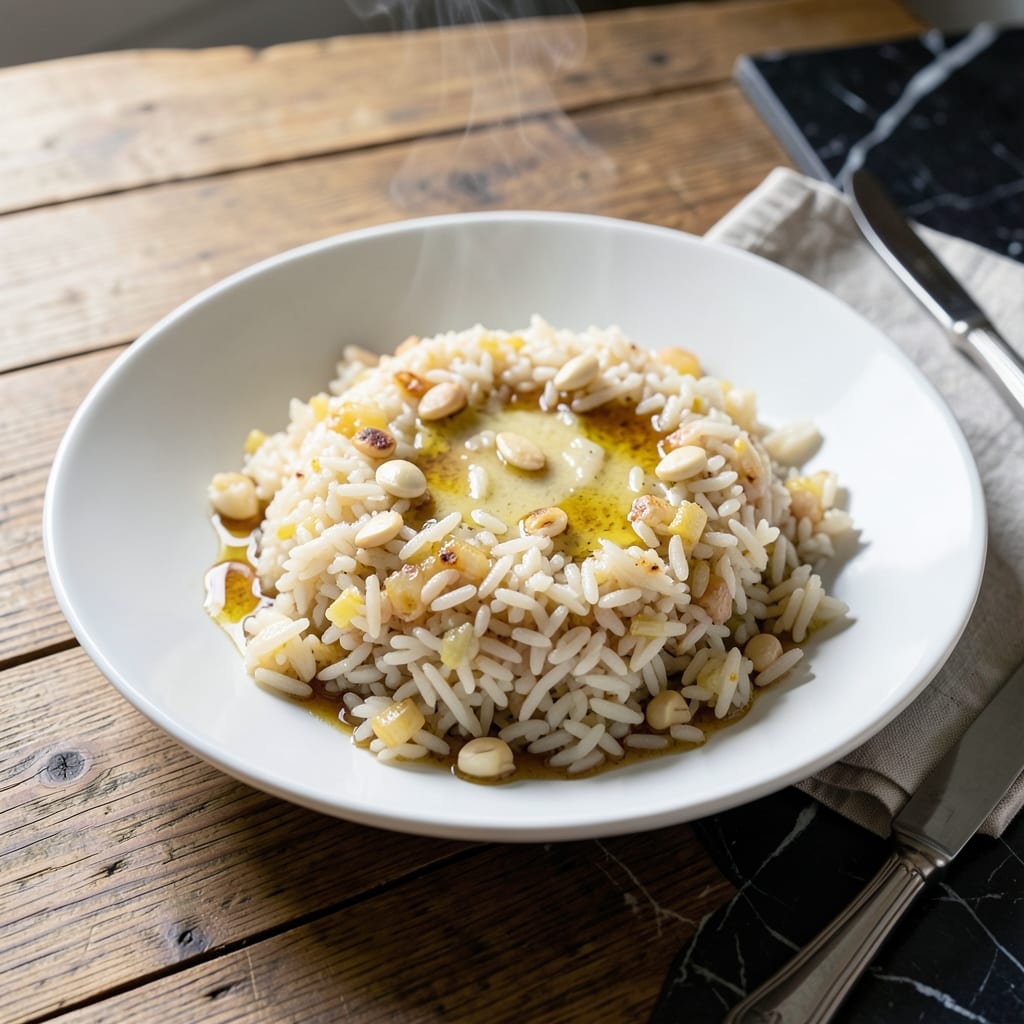
This classic French rice pilaf delivers light, fluffy grains with a delicate aromatic quality that elevates any meal. The technique is simple but precise: toasting the rice first brings out its nutty depth before adding the liquid.
What you get is a side dish with perfectly separated grains, each infused with subtle savory notes. It pairs beautifully with roasted meats or stands elegantly on its own as a vegetarian option.
Ingredients for French Rice Pilaf
Light, fluffy rice with aromatic depth requires just these pantry staples and fresh herbs.
| Ingredient | Amount | Notes |
|---|---|---|
| Long-Grain White Rice 🍚 | 1 ½ cups | Rinsed until water runs clear |
| Unsalted Butter 🧈 | 3 tbsp | Divided for toasting and finishing |
| Yellow Onion 🧅 | 1 whole | Finely diced for even cooking |
| Garlic Cloves 🧄 | 2 cloves | Minced for aromatic base |
| Chicken Stock 🥣 | 3 cups | Vegetable stock for vegetarian |
| Dry White Wine 🍷 | ½ cup | Sauvignon Blanc or Pinot Grigio |
| Bay Leaf 🌿 | 1 whole | Dried, removed before serving |
| Fresh Thyme Sprigs 🌿 | 2 sprigs | Or 1 tsp dried thyme |
| Kosher Salt 🧂 | 1 tsp | Divided to taste |
| Ground Black Pepper 🌶️ | ½ tsp | Freshly cracked preferred |
| Fresh Parsley 🌿 | 2 tbsp | Chopped, for garnish |
| Lemon Zest 🍋 | 1 tsp | Optional, for brightness |
The rice quality matters here—long-grain white rice like Basmati or Jasmine gives you those separate, fluffy grains. Lundberg or Carolina brands are reliable. For the stock, homemade is ideal but Better Than Bouillon makes a solid vegetarian option. The white wine adds acidity; any dry variety works. Don’t skip toasting the rice—it’s what gives that nutty depth mentioned in the intro.
No white wine? Substitute with additional stock plus 1 tbsp lemon juice. Fresh thyme can be dried at one-third the amount. For a richer finish, swap butter for olive oil (though the flavor changes slightly). If you’re making this vegetarian, vegetable stock replaces chicken stock 1:1. The parsley garnish is optional but adds a fresh pop of color.
Store leftover pilaf in an airtight container—it keeps 4-5 days in the fridge. Reheat with a splash of water to restore moisture. Freezes well for up to 3 months. The butter can be kept at room temp for a week, but for longer storage, refrigerate it.
Why You’ll Love This Recipe
- One Pot Wonder: I love that this comes together in a single saucepan—just sauté the onion and garlic in butter, add rice and stock, then let it simmer.
- Rich and Savory: The chicken stock and butter give it a depth of flavor that makes it taste far fancier than the effort involved.
- Meal Prep Star: Honestly, it reheats beautifully, so I make a big batch on Sunday and pair it with different proteins all week.
- Budget Friendly: Long-grain rice and a few pantry staples stretch into a hearty side that feels special without the price tag.
Step-by-Step Instructions for French Rice Pilaf
Here’s the method. Straightforward, tested, works every time.
Step 1: Toast the Rice in Butter
Melt 2 tbsp unsalted butter in a heavy-bottomed pot over medium heat. Add the 1.5 cups long-grain white rice and stir frequently for 2-3 minutes until the grains turn translucent and smell lightly nutty.
This toasting step is crucial—it enhances the rice’s natural flavor and prevents it from turning mushy during cooking. Watch carefully; you want the rice to glisten, not brown. The butter should foam but not brown.
Step 2: Sauté Aromatics Until Fragrant
Add the finely diced yellow onion to the pot and cook for 4-5 minutes until softened and just beginning to turn golden brown. Stir in the 2 minced garlic cloves, 1 whole bay leaf, and 2 sprigs fresh thyme, cooking for another 30 seconds until fragrant.
Don’t let the garlic burn—it should smell sweet and aromatic, not bitter. The onions should be translucent with slight caramelization at the edges. This builds the flavor foundation for your pilaf.
Step 3: Deglaze and Simmer
Pour in the 0.5 cup dry white wine and stir, scraping up any browned bits from the bottom of the pot. Let it simmer for 2 minutes until the liquid reduces by half. This deglazing step captures all the concentrated flavors.
Add the 3 cups chicken stock, 1 tsp kosher salt, and 0.5 tsp ground black pepper. Bring to a boil, then reduce heat to low, cover, and simmer for 18-20 minutes until the liquid is absorbed and the rice is tender.
Step 4: Rest and Finish
Remove the pot from heat and let it sit covered for 10 minutes. This resting period allows the rice to steam and become perfectly fluffy. Fluff with a fork, discarding the bay leaf and thyme sprigs.
Stir in the remaining 1 tbsp unsalted butter for extra richness. Taste and adjust seasoning if needed. The rice should be light, separate, and infused with aromatic flavor.
Step 5: Garnish and Serve
Transfer to a serving dish and garnish with 2 tbsp chopped fresh parsley and 1 tsp lemon zest. The parsley adds freshness while the lemon zest provides a bright finish.
Serve immediately while hot. Each grain should be distinct yet infused with the flavors of wine, herbs, and stock. The pilaf should be light, fragrant, and never sticky or clumped.
Pro Tips For Making French Rice Pilaf
- Toast the Rice: Cook the rice in butter for 2-3 minutes until it turns slightly translucent—this builds a nutty depth before adding liquid. I learned this the hard way when my pilaf tasted flat without it.
- Use Warm Stock: Pour in chicken stock that’s hot, not cold, to keep the cooking temperature steady. Cold stock can make the rice seize up and cook unevenly.
- Skip the Rinse: Don’t rinse the long-grain rice first—you want the starch to help create that light, slightly sticky texture that makes pilaf so satisfying.
- Rest Before Serving: Let the pilaf sit covered for 5-10 minutes off the heat after cooking. Sounds weird, but it works: the rice absorbs the last of the liquid and fluffs up perfectly.
Health Benefits of This french rice pilaf
Nutrient-Rich Grains
This dish delivers complex carbohydrates from the long-grain rice, providing sustained energy. A 1-cup serving of cooked rice offers about 200 calories and 4g of protein, making it a filling yet light side dish. I love how it keeps me energized without feeling heavy. 💪
Heart-Healthy Fats
The unsalted butter adds richness while providing vitamin A and healthy fats. Using 3 tbsp total keeps the dish balanced, and the butter’s fat-soluble vitamins help your body absorb nutrients from the herbs and vegetables.
Herb-Packed Benefits
Thyme and parsley aren’t just for flavor—they’re packed with antioxidants. Thyme contains thymol, a compound with antibacterial properties, while parsley is rich in vitamin K and vitamin C. Just 2 tbsp parsley provides a meaningful nutrient boost.
Aromatic Aids Digestion
The garlic and onion in this creation support digestive health with their prebiotic fibers. Garlic also contains allicin, known for its immune-boosting properties. Cooking them gently preserves these benefits while enhancing the dish’s savory depth.
Low Sodium Control
By using homemade stock and controlling the 1 tsp kosher salt, you avoid excessive sodium found in processed sides. This makes the dish heart-friendly while still delivering bold, aromatic flavors that satisfy.
Vegetarian Flexibility
Swapping chicken stock for vegetable stock keeps all the health benefits while making it vegetarian. The white wine adds antioxidants like resveratrol, which supports heart health. A simple swap with big rewards. ✨
Nutrition Facts
Frequently Asked Questions
Why toast the rice first?
Toasting the rice in butter for 2-3 minutes enhances its nutty flavor and helps prevent mushiness. This step also creates a barrier that keeps grains separate during cooking.
Can I use brown rice instead?
Yes, but adjust the liquid to 3.5 cups stock and simmer for 40-45 minutes. The texture will be chewier, but the toasting step remains the same for maximum flavor.
How do I prevent sticky results?
Avoid stirring once the liquid is added. Use a heavy pot, keep heat at low, and let it rest covered for 10 minutes after cooking. Fluff with a fork, never a spoon.
What if I don’t have white wine?
Substitute with 0.5 cup stock plus 1 tbsp lemon juice. The acidity mimics the wine’s effect, balancing the dish’s richness.

- Fried Rice Mix Recipe: Customizable Pantry Staple for Quick Meals - October 6, 2026
- Fruit Loop Rice Crispy Treats Recipe: Colorful Crunch With Marshmallow Magic - October 6, 2026
- Erewhon Rice Balls Recipe: Copycat Crispy and Creamy Bites - October 6, 2026