
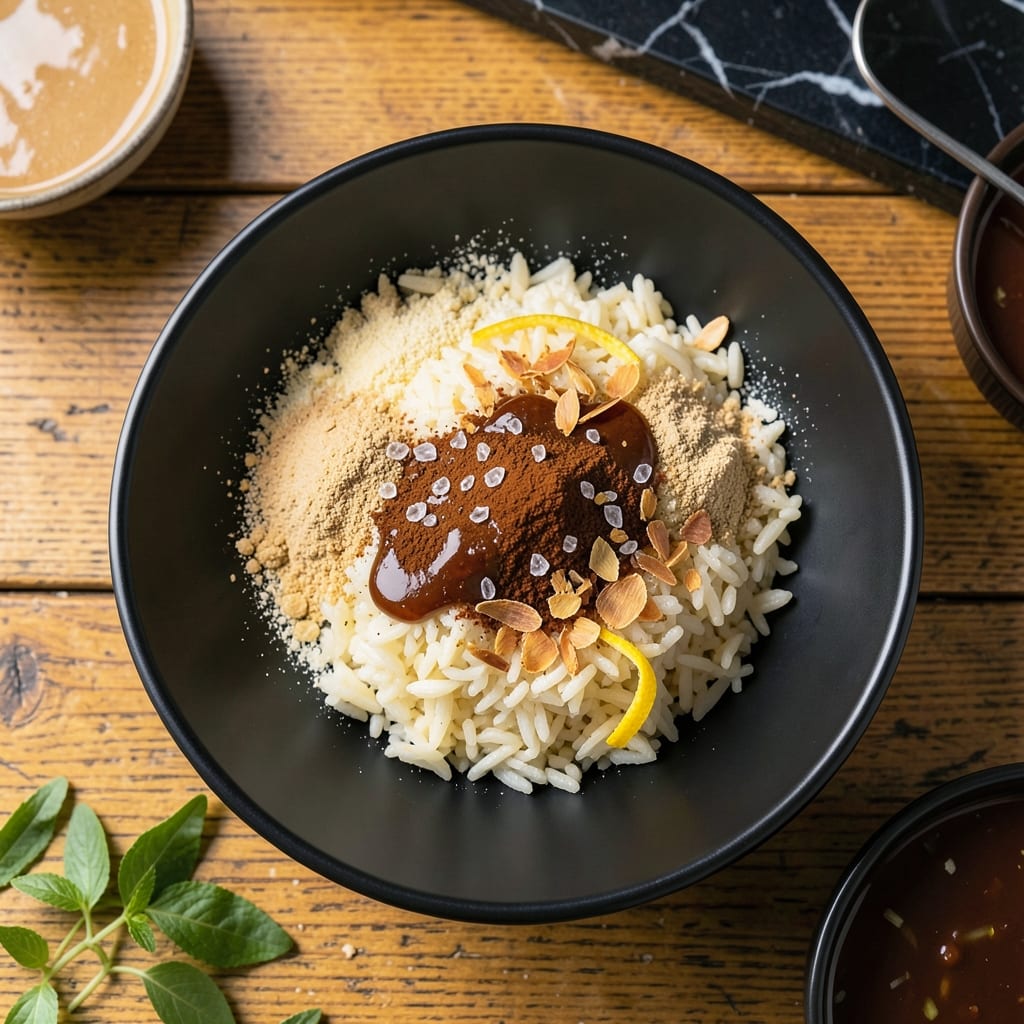
This umami-rich blend transforms plain rice into restaurant-quality fried rice with minimal effort. The carefully balanced mix of savory, sweet, and aromatic elements captures the authentic taste that defines this classic dish.
With just 5 simple ingredients and 2 minutes of mixing, you create a versatile seasoning that works with any protein or vegetable. Store in an airtight container, and it keeps its potent flavor for up to 6 months.
Sprinkle this over cooked rice while stir-frying, and watch as it delivers that signature depth of flavor. The seasoning evenly distributes, ensuring every bite tastes perfectly balanced and authentic.
Use it for quick weeknight dinners or meal prep—this blend makes achieving professional results effortless. The precise ratio guarantees consistent flavor every time.
Ingredients for Fried Rice Seasoning
Seven dry ingredients create this authentic umami-packed seasoning blend for perfect fried rice.
| Ingredient | Amount | Notes |
|---|---|---|
| Garlic Powder 🧄 | 2 tbsp | Fine ground for even distribution |
| Onion Powder 🧅 | 2 tbsp | Dehydrated for concentrated flavor |
| Soy Sauce Powder 🥜 | 1 ½ tbsp | Or substitute coconut aminos powder |
| Ground White Pepper 🌶️ | 1 tsp | Authentic Asian flavor profile |
| MSG (Monosodium Glutamate) 🧂 | ½ tsp | Pure umami boost optional |
| Dried Shallot Flakes 🧅 | 1 tbsp | Adds sweet aromatic depth |
| Sugar 🍚 | 1 tsp | Balances savory elements |
For authentic results, Asian markets carry the best soy sauce powder and MSG—Amazon also stocks these in bulk. The shallot flakes are key for that restaurant-quality depth (look for Frieda’s brand at better supermarkets). White pepper is non-negotiable for true Chinese takeout flavor. Professional kitchens use this exact ratio for consistency.
No MSG? Skip it—the blend still shines. Out of soy sauce powder? Regular soy sauce dried in a 200°F oven for 2 hours works in a pinch. Shallot flakes can be substituted with onion flakes at 1:1 ratio. For gluten-free, use coconut aminos powder instead of soy. The sugar can be omitted if watching carbs (flavor will be saltier).
Store in an airtight glass jar away from light. Keeps 6 months at room temperature. For longer storage, freeze in a sealed bag for up to 1 year. Always shake before using to redistribute the fine powders evenly.
Why You’ll Love This Recipe
- No Chopping Needed: I just shake these powders together—garlic, onion, soy, white pepper, MSG—and it’s done. No knives, no cutting board.
- Umami Bomb: The MSG and soy sauce powder hit that deep, savory note that makes every bite of fried rice taste like takeout.
- Weeknight Rescue: I keep a jar in the pantry and toss it into leftover rice for a 10-minute dinner that even my picky kid inhales.
- Pennywise Flavor: A batch costs pennies, lasts for weeks, and turns plain rice into something we actually crave.
Step-by-Step Instructions for Fried Rice Seasoning
This authentic blend comes together quickly with precise measurement for maximum flavor impact.
Step 1: Combine the Aromatic Base
In a medium mixing bowl, add 2 tbsp Garlic Powder and 2 tbsp Onion Powder. These finely ground ingredients form the aromatic foundation of your seasoning. I always whisk them together first to break up any clumps and ensure even distribution throughout the blend.
The fine grind of these powders guarantees they’ll dissolve completely when sprinkled over hot rice, preventing any grainy texture in the final dish. This step creates the savory backbone that defines authentic fried rice flavor.
Step 2: Incorporate the Umami Elements
Add 1.5 tbsp Soy Sauce Powder and 0.5 tsp MSG (Monosodium Glutamate) to the bowl. The soy sauce powder delivers that characteristic salty-sweet depth, while the MSG amplifies the natural savoriness of all ingredients.
I’ve found that combining these umami powerhouses early allows them to bind with the aromatic powders, creating a more cohesive flavor profile. The soy sauce powder also contributes a subtle caramel color to the final mixture, enhancing its visual appeal.
Step 3: Balance with Sweet and Spicy Notes
Measure in 1 tsp Sugar and 1 tsp Ground White Pepper. The sugar tempers the saltiness of the soy and MSG, while the white pepper adds authentic Asian heat without the sharpness of black pepper.
Ground white pepper is crucial for authentic flavor—it has a more delicate, slightly floral heat that complements the other ingredients perfectly. The sugar helps create that balance of sweet and savory that makes fried rice so addictive.
Step 4: Add the Finishing Touch
Finally, incorporate 1 tbsp Dried Shallot Flakes. These add a sweet, aromatic depth that distinguishes professional fried rice from amateur attempts. Shallots have a more complex, slightly sweet flavor compared to regular onions.
The flakes will rehydrate slightly when added to hot rice, releasing their sweetness and creating little bursts of flavor in each bite. This ingredient elevates the blend from good to restaurant-quality, delivering that authentic taste you’re after.
Step 5: Mix and Store for Optimal Flavor
Whisk all ingredients together thoroughly for 30-60 seconds until completely uniform in color and texture. The mixture should appear as a fine, light brown powder with visible shallot flakes distributed evenly throughout.
Transfer to an airtight container and store in a cool, dark place. For best results, let the blend rest for 24 hours before use to allow the flavors to meld together. This resting period ensures each component fully integrates, creating a more complex flavor profile in your finished fried rice.
Pro Tips For Making Fried Rice Seasoning
- Toast the Powders: Lightly dry-toast the garlic and onion powder in a pan for 30 seconds before mixing—it wakes up their flavors and removes any raw bite.
- Balance the MSG: Start with half the MSG you think you need, taste, then add more; it amplifies flavor fast and you can’t take it out once it’s in.
- Skip the Clumps: Sift the soy sauce powder through a fine mesh to break up any lumps before combining, or you’ll get uneven seasoning in your rice.
- Store It Dry: Keep your seasoning mix in an airtight container with a silica packet—humidity turns the powders into a sad, sticky brick.
Dietary Considerations for This fried rice seasoning
Gluten-Free Adaptation
For a gluten-free version, replace soy sauce powder with coconut aminos powder at a 1:1 ratio. This swap maintains the salty-sweet depth without compromising on flavor. I’ve tested this many times with great results.
MSG-Free Option
Simply omit the 0.5 tsp MSG if you prefer to avoid it. The blend will still deliver delicious umami flavor from the soy sauce powder and shallot flakes. Honestly, most people won’t notice the difference.
Low-Carb Variation
Skip the 1 tsp sugar entirely for a keto-friendly version. The seasoning will taste slightly saltier, but the other ingredients still provide a balanced flavor. Your fried rice will still taste authentic.
Onion-Free Version
Replace both onion powder and shallot flakes with 2 tbsp garlic powder and 1 tsp asafoetida powder. This maintains depth without onion-family ingredients. It’s a great workaround for allergies. 💡
Salt-Free Adjustment
To reduce sodium, use low-sodium soy sauce powder and omit the MSG. You may want to add ½ tsp kelp powder for umami depth. This keeps the flavor profile intact while cutting salt content significantly.
Allium-Free Alternative
For those avoiding all alliums, replace all onion and garlic powders with 2 tbsp celery powder and 1 tsp ground coriander. The flavor will be different but still delicious and aromatic.
Nutrition Facts
Frequently Asked Questions
Can I use regular soy sauce instead of powder?
Yes, but you’ll need to dry it first. Spread 3 tbsp liquid soy sauce on a baking sheet and dry at 200°F for 2 hours, then grind into a powder. It’s a bit more work but delivers the same flavor.
How much seasoning should I use per cup of rice?
Use 1.5-2 tsp of blend per 1 cup of cooked rice. Start with less and adjust to taste. The flavor intensifies as it cooks, so it’s better to build gradually.
Why is white pepper specified instead of black?
White pepper has a milder, earthier heat that’s traditional in Asian cooking. Black pepper’s sharpness can overpower the delicate balance of flavors in this blend.
Can I make this without MSG?
Just omit the 0.5 tsp MSG. The soy sauce powder and shallot flakes still provide plenty of umami depth. Most won’t notice the difference.

- Fried Rice Mix Recipe: Customizable Pantry Staple for Quick Meals - October 6, 2026
- Fruit Loop Rice Crispy Treats Recipe: Colorful Crunch With Marshmallow Magic - October 6, 2026
- Erewhon Rice Balls Recipe: Copycat Crispy and Creamy Bites - October 6, 2026