
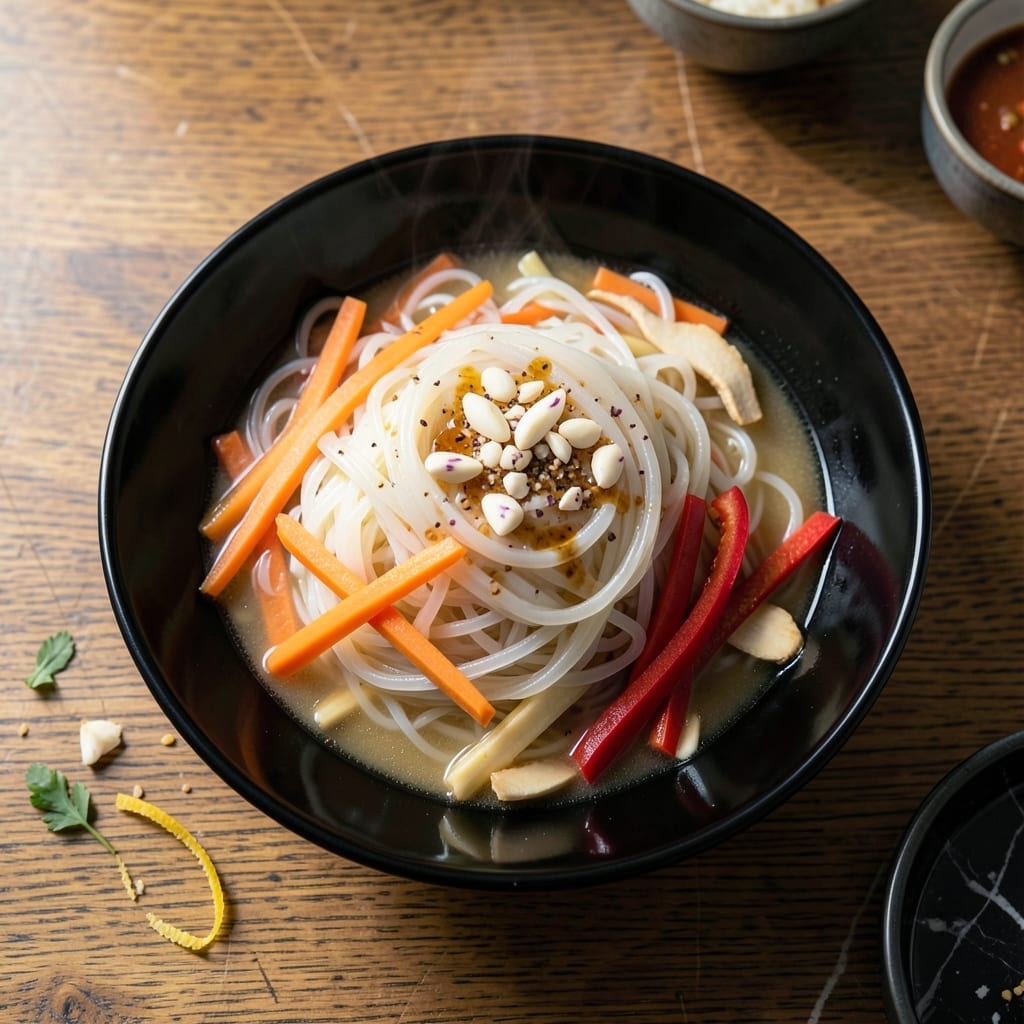
Rice vermicelli noodles form the perfect foundation for light, springy stir-fries that absorb flavors beautifully. This recipe transforms simple ingredients into a dish with authentic texture and versatility.
Whether served as a main or side, these noodles deliver restaurant-quality results with minimal effort. The key lies in proper soaking and quick cooking to maintain their delicate consistency.
Ingredients for Fresh Rice Vermicelli Noodles
These authentic ingredients create a delicate, flavor-absorbing vermicelli noodle base perfect for stir-fries.
| Ingredient | Amount | Notes |
|---|---|---|
| Rice Vermicelli Noodles 🍜 | 8 oz | Dry weight, thin variety |
| Vegetable Broth 🥫 | 4 cups | Low-sodium preferred for control |
| Garlic Cloves 🧄 | 5 cloves | Minced finely for even distribution |
| Fresh Ginger Root 🌿 | 1 whole | Peeled and julienned |
| Red Bell Pepper 🌶️ | 1 whole | Thinly sliced for texture |
| Carrots 🥕 | 2 whole | Julienned or matchstick cut |
| Snow Peas 🌱 | 1 cup | Trimmed, fresh or thawed frozen |
| Green Onions 🧅 | 4 whole | Thinly sliced on bias |
| Soy Sauce 🫒 | 3 tbsp | Use tamari for gluten-free option |
| Sesame Oil 🫒 | 1 tbsp | Toasted variety for depth |
| Rice Vinegar 💧 | 2 tbsp | Unseasoned for balance |
| Chili Garlic Sauce 🌶️ | 1 tbsp | Adjust to heat preference |
| Toasted Sesame Seeds 🌾 | 2 tbsp | For garnish and crunch |
| Cilantro 🌿 | ½ cup | Fresh leaves, roughly chopped |
| Lime 🍈 | 1 whole | Zested and juiced for brightness |
Rice vermicelli quality varies wildly. Look for brands like Annie Chun’s or Thai Kitchen—they’re widely available at Whole Foods or Asian markets and have the right texture. Avoid anything labeled as ‘rice sticks’ as they’re often thicker. The ginger and garlic should be fresh; pre-minced in jars lacks the vibrant punch needed here. For the vegetables, choose firm, crisp produce—flaccid bell peppers or carrots will ruin the dish.
No soy sauce? Coconut aminos work in a pinch, though the flavor profile shifts slightly. Out of sesame oil? Toasted peanut oil offers a similar depth. For heat, sriracha or gochujang can replace the chili garlic sauce—use half the amount and adjust. The snow peas can be swapped for snap peas or shredded cabbage. If cilantro tastes like soap to you, Thai basil makes a great substitute.
Store dry noodles in a cool, dark place—they’ll keep for 12-18 months. Once soaked, cook immediately; they’ll turn to mush if left sitting. The finished dish holds well for 2-3 days refrigerated, though the noodles may absorb more liquid. Freezing isn’t recommended as it alters the texture irrevocably.
Why You’ll Love This Recipe
- No Fuss Cooking: I just soak the noodles while the broth simmers—honestly, the hardest part is chopping the bell pepper.
- Ginger-Garlic Zing: Here’s what sold me—the fresh ginger and garlic turn the broth into something I could drink with a straw.
- Meal Prep Hero: I make a big batch on Sunday and it keeps beautifully for lunches all week.
- Pantry Stretch: Rice noodles and veggie broth are cheap, and a little ginger and garlic go a long way.
Step-by-Step Instructions for Fresh Rice Vermicelli Noodles
Master this technique for perfectly tender noodles with vibrant, crisp vegetables in every bite.
Step 1: Soak and Par-Cook the Rice Vermicelli Noodles
Place the 8 oz Rice Vermicelli Noodles in a large bowl and cover them completely with warm water. Soak for 5-7 minutes until the noodles are pliable but still slightly firm—they should bend without snapping.
Drain the noodles immediately and rinse under cold water to halt the cooking process. This par-cooking method ensures they won’t turn mushy during the final stir-fry. Set them aside while you prepare the remaining ingredients.
Step 2: Stir-Fry Aromatics and Vegetables
Heat the 1 tbsp Sesame Oil in a wok or large skillet over medium-high heat. Add the 5 cloves Garlic Cloves and 1 whole Fresh Ginger Root (peeled and julienned), stir-frying for 30 seconds until fragrant.
Add the 1 whole Red Bell Pepper (thinly sliced), 2 whole Carrots (julienned), and 1 cup Snow Peas. Stir-fry for 4-5 minutes until the vegetables are tender-crisp and the carrots begin to soften slightly. The bell pepper should retain a slight bite.
Step 3: Combine Noodles and Sauce
Add the drained 8 oz Rice Vermicelli Noodles to the wok along with the 4 cups Vegetable Broth, 3 tbsp Soy Sauce, 2 tbsp Rice Vinegar, and 1 tbsp Chili Garlic Sauce. Toss everything together gently but thoroughly to coat the noodles evenly.
Cook for 2-3 minutes, stirring frequently, until the noodles absorb most of the liquid and the sauce clings lightly to each strand. The noodles should be tender and springy, not gummy or dry.
Step 4: Finish with Fresh Garnishes
Remove the wok from heat and stir in the 4 whole Green Onions (thinly sliced). Transfer the noodles to a serving platter and sprinkle with the 2 tbsp Toasted Sesame Seeds, 0.5 cup Cilantro (roughly chopped), and a squeeze of 1 whole Lime (zested and juiced).
The lime’s acidity will brighten the dish, while the cilantro and sesame seeds add freshness and texture. Serve immediately while the noodles are hot and the vegetables retain their crispness.
Pro Tips For Making Fresh Rice Vermicelli Noodles
- Soak Noodles First: Cover rice vermicelli in warm water for 5-7 minutes before cooking—I learned this the hard way after ending up with hard, chewy noodles more than once.
- Bloom Aromatics: Cook minced garlic and grated ginger in a bit of oil for 30 seconds until fragrant, but pull them off before they brown or they’ll turn bitter.
- Use Hot Broth: Pouring boiling vegetable broth over the noodles instead of cold guarantees even cooking and prevents gummy clumps.
- Slice Peppers Thin: Cut the red bell pepper into thin strips so they soften quickly and don’t leave the noodles overcooked while you’re waiting.
Serving Suggestions for fresh rice vermicelli noodles
Plating for Impact
Use a large, shallow platter to showcase the vibrant colors of this dish. I arrange the noodles in a loose nest shape, then scatter the red bell pepper and carrots on top for visual contrast. The bright orange and red pop against the white noodles. 💛
Garnish Like a Pro
Sprinkle the toasted sesame seeds and cilantro just before serving—they lose freshness quickly. I like to add lime wedges on the side so guests can add extra brightness to their taste. The zested lime adds a final touch of color.
Family-Style Service
This dish works beautifully family-style. I serve it with small bowls for guests to help themselves, alongside extra chili garlic sauce and lime wedges. The communal presentation encourages sharing and conversation.
Pairing Suggestions
For drinks, I love serving this with jasmine tea or a crisp Riesling. The tea’s floral notes complement the ginger and garlic, while the wine’s acidity cuts through the richness. Both balance the dish perfectly.
Temperature Tips
Serve while the noodles are still hot—they absorb flavors best at this temperature. If making ahead, undercook slightly and reheat with a splash of vegetable broth to restore moisture. Never microwave more than 30 seconds at a time. 🔥
Final Touch
A final drizzle of sesame oil and a sprinkle of green onions right before serving adds that restaurant-quality finish. I always get compliments when I remember this simple step.
Nutrition Facts
Frequently Asked Questions
How do I prevent the noodles from sticking together?
Rinse them thoroughly after soaking and use 1 tbsp oil in the water. Stir occasionally during cooking.
Can I make this dish gluten-free?
Yes! Simply swap soy sauce for tamari or coconut aminos. All other ingredients are naturally gluten-free.
What’s the best way to reheat leftovers?
Add a splash of vegetable broth and warm in a skillet over medium heat for 2-3 minutes. Avoid microwaving.
Can I use frozen vegetables instead of fresh?
Yes, but thaw and drain them first to avoid excess moisture. Fresh is preferred for texture.

- Fried Rice Mix Recipe: Customizable Pantry Staple for Quick Meals - October 6, 2026
- Fruit Loop Rice Crispy Treats Recipe: Colorful Crunch With Marshmallow Magic - October 6, 2026
- Erewhon Rice Balls Recipe: Copycat Crispy and Creamy Bites - October 6, 2026