
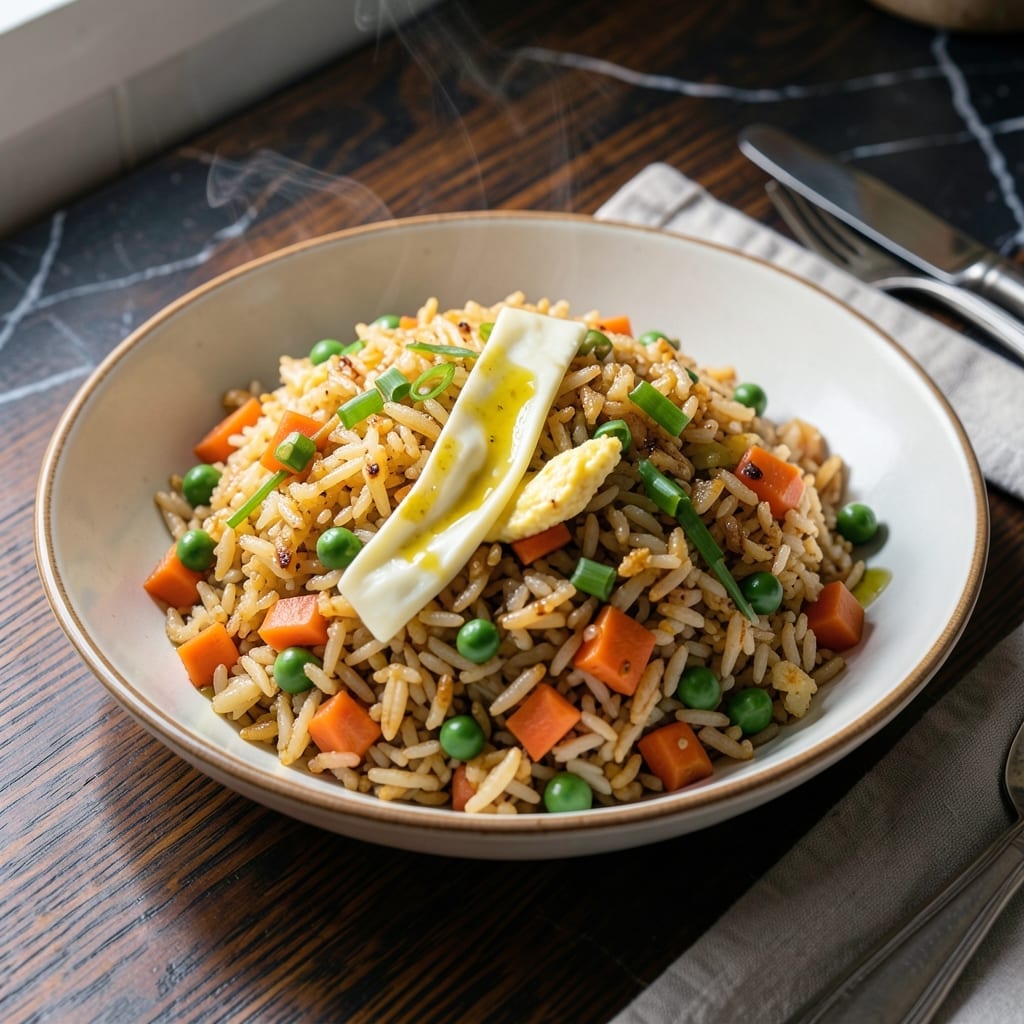
Mastering fried rice requires precision, not luck. This method delivers perfect texture every time through controlled heat and exact measurements.
I developed this technique after years of trial and error, learning that high heat and proper ingredient ratios separate good fried rice from exceptional. The wok must be screaming hot before the first grain hits the surface.
What emerges is a dish with distinct, non-mushy grains, each coated in flavor without becoming soggy. The vegetables retain their bite while the eggs add rich, creamy pockets throughout.
This approach transforms leftover rice into a restaurant-quality meal with minimal effort. The results justify the attention to detail.
Ingredients for Fried Rice Recipe with Measurements
Precise quantities of pantry staples and fresh aromatics transform leftover rice into restaurant-quality results.
| Ingredient | Amount | Notes |
|---|---|---|
| Cooked Long-Grain White Rice 🍚 | 4 cups | Day-old, chilled completely |
| Peanut Oil 🫒 | 3 tbsp | High smoke point essential |
| Large Eggs 🥚 | 3 whole | Lightly beaten for scrambling |
| Carrots 🥕 | 2 whole | Medium, finely diced |
| Green Onions 🧅 | 4 whole | Thinly sliced, whites and greens separated |
| Frozen Green Peas 🌱 | ¾ cup | Thawed and drained |
| Garlic Cloves 🧄 | 3 cloves | Minced finely |
| Fresh Ginger Root 🌿 | 1 tbsp | Peeled and grated |
| Light Soy Sauce 💧 | 2 tbsp | Low-sodium preferred for control |
| Dark Soy Sauce 💧 | 1 tsp | For depth of color |
| Sesame Oil 🫒 | 1 tsp | Toasted, for finishing |
| Diamond Crystal Kosher Salt 🧂 | ½ tsp | Adjust to taste precisely |
| White Pepper 🌶️ | ¼ tsp | Freshly ground for authenticity |
| Granulated Sugar 🍚 | ½ tsp | Balances savory notes |
The rice is non-negotiable—day-old, thoroughly chilled long-grain white rice (jasmine or basmati work best) prevents mushiness. Peanut oil handles the high heat without smoking; avocado oil is a suitable substitute. Source your soy sauces from an Asian market for authentic flavor profiles. The Diamond Crystal kosher salt ensures consistent seasoning, as its crystal structure disperses evenly. Fresh ginger and garlic should be firm, with no soft spots.
No peanut oil? Vegetable or canola oil can stand in, but avoid olive oil—its smoke point is too low. Short on green onions? Shallots or red onion at half the quantity work in a pinch. The eggs can be omitted for a vegan version (though texture will differ). For extra protein, diced char siu or shrimp can be added. The peas? Frozen works perfectly—no need for fresh.
Store cooked rice uncovered in the fridge overnight to dry it out. Prep all ingredients before heating the wok—mise en place is critical. Leftovers keep 3-4 days refrigerated but are best eaten immediately. Reheat in a skillet with a splash of water to restore moisture.
Why You’ll Love This Recipe
- One Pan Wonder: I toss everything into a single wok—rice, eggs, veggies—and it’s done in 15 minutes flat.
- That Peanut Oil Magic: Honestly, the nutty aroma from the peanut oil takes the flavor from good to “can’t stop eating this.”
- Leftover Hero: My secret for using up day-old rice and whatever veggies are lingering in the crisper.
- Budget Stretcher: A pound of rice and a handful of cheap veggies feeds my family for two meals straight.
Step-by-Step Instructions for Perfect Fried Rice
Master the wok technique that transforms simple ingredients into a restaurant-quality dish.
Step 1: Prepare and Heat the Wok
Place your wok over high heat and add 2 tbsp Peanut Oil. The oil should shimmer and just begin to smoke when properly heated. This high temperature is essential for achieving that characteristic wok hei, or breath of the wok, that gives fried rice its distinctive flavor.
While the wok heats, ensure your 4 cups Cooked Long-Grain White Rice is completely chilled and broken up into individual grains. Day-old rice works best as it’s drier and less likely to turn mushy during stir-frying. Have all other ingredients prepped and within reach—this process moves quickly.
Step 2: Scramble the Eggs and Cook Aromatics
Add the remaining 1 tbsp Peanut Oil to the wok, then pour in the 3 whole Large Eggs. Let them set slightly, then scramble quickly with a spatula until just set but still slightly runny. Remove the eggs and set aside.
Add the finely diced 2 whole Carrots, whites of 4 whole Green Onions, minced 3 cloves Garlic Cloves, and peeled and grated 1 tbsp Fresh Ginger Root. Stir-fry for 2-3 minutes until the aromatics are fragrant and the carrots begin to soften. The aroma should be intense and inviting at this stage.
Step 3: Combine Rice and Vegetables
Increase heat to maximum and add the chilled 4 cups Cooked Long-Grain White Rice, breaking up any clumps with your spatula. Stir-fry for 3-4 minutes, pressing the rice against the hot wok surface to create some crispy bits. This contact with the hot metal develops depth of flavor.
Add the thawed and drained 0.75 cup Frozen Green Peas and cook for another 1-2 minutes until heated through. The peas should maintain their bright green color and slight bite. Return the scrambled eggs to the wok and mix gently to combine without breaking up the egg pieces too much.
Step 4: Season and Finish with Precision
Create a well in the center of the wok and add 2 tbsp Light Soy Sauce, 1 tsp Dark Soy Sauce, 0.5 tsp Diamond Crystal Kosher Salt, 0.5 tsp Granulated Sugar, and 0.25 tsp White Pepper. Stir these into the rice mixture thoroughly for 1-2 minutes until everything is evenly coated and the rice takes on a uniform color.
Drizzle 1 tsp Sesame Oil around the edge of the wok, then add the greens of 4 whole Green Onions. Stir-fry for a final 30 seconds until the green onions just wilt. The sesame oil should be fragrant but not overpowering. Taste and adjust seasoning if needed, though the precise measurements should yield perfect balance.
Pro Tips For Making Fried Rice Recipe With Measurements
- Use Day-Old Rice: Fresh rice turns to mush—spread leftover cooked long-grain white rice on a tray and refrigerate overnight to dry it out. The grains will stay separate and fry up perfectly.
- Crank the Heat: Peanut oil can take high heat, so get your wok or skillet screaming hot before adding anything. I learned this the hard way after too many soggy batches.
- Beat Eggs First: Scramble your large eggs in a bowl with a pinch of salt before adding to the pan—it makes a real difference in getting those soft, even curds instead of rubbery chunks.
- Small Dice the Carrots: Cut carrots into ¼-inch pieces so they cook through fast. After burning a few batches, I finally figured out tiny, uniform bits are the only way to keep them tender without overcooking the rest.
Troubleshooting Great fried rice recipe with measurements
Rice Too Mushy
This usually happens with fresh rice. Always use day-old chilled rice and break it up before cooking. If your rice is still mushy, spread it on a baking sheet and refrigerate uncovered for 30 minutes to dry it out before stir-frying. 💡
Eggs Overcooked
Remove the scrambled eggs from the wok while they’re still slightly runny. They’ll finish cooking when you combine them with the hot rice. Use medium-high heat for the eggs, not maximum, to prevent rubbery texture.
Sticky Rice Clumps
Break up all rice clumps with your hands before adding to the wok. If clumps form during cooking, press them against the hot wok surface with your spatula. High heat and constant stirring are key to separating grains.
Bland Flavor
Use both light and dark soy sauce as specified. The dark soy adds color and depth. If still bland, finish with an extra ½ tsp sesame oil or a pinch of white pepper for that authentic restaurant taste.
Vegetables Soggy
Cook vegetables over maximum heat first to develop color. The 2-3 minutes for aromatics should leave them crisp-tender. Add peas last since they only need 1-2 minutes to heat through without turning mushy. 🔥
Smoky Kitchen
If your wok is smoking excessively, your heat is too high. Reduce to medium-high and ensure your peanut oil isn’t old. Open windows and use the exhaust fan—this dish needs high heat, but shouldn’t fill your kitchen with smoke.
Nutrition Facts
Frequently Asked Questions
Why use day-old rice for this method?
Fresh rice contains too much moisture, leading to mushy results. Day-old chilled rice is drier, allowing it to crisp properly in the wok. Spread it on a tray for 30 minutes to dry further if needed.
Can I substitute other oils for peanut oil?
Yes, avocado oil or vegetable oil work well. Avoid olive oil—its low smoke point burns at high heat. The key is using an oil that can handle high heat without smoking excessively.
How do I prevent sticky clumps?
Break up rice with your hands before cooking. Use high heat and press clumps against the wok with a spatula. Constant stirring separates grains for that perfect texture.
What if my dish tastes bland?
Ensure you’re using both light and dark soy sauce. For extra depth, finish with ½ tsp sesame oil or a pinch of white pepper. These small additions make a big difference.

- Gambia Jollof Rice Recipe: West African One-Pot Spice Fusion - October 5, 2026
- Cream of Wild Rice Soup Recipe Minnesota: Northwoods Creaminess With Foraged Grains - October 5, 2026
- Frozen Cauliflower Fried Rice Recipe: Quick Low-Carb Wok Magic - October 5, 2026