
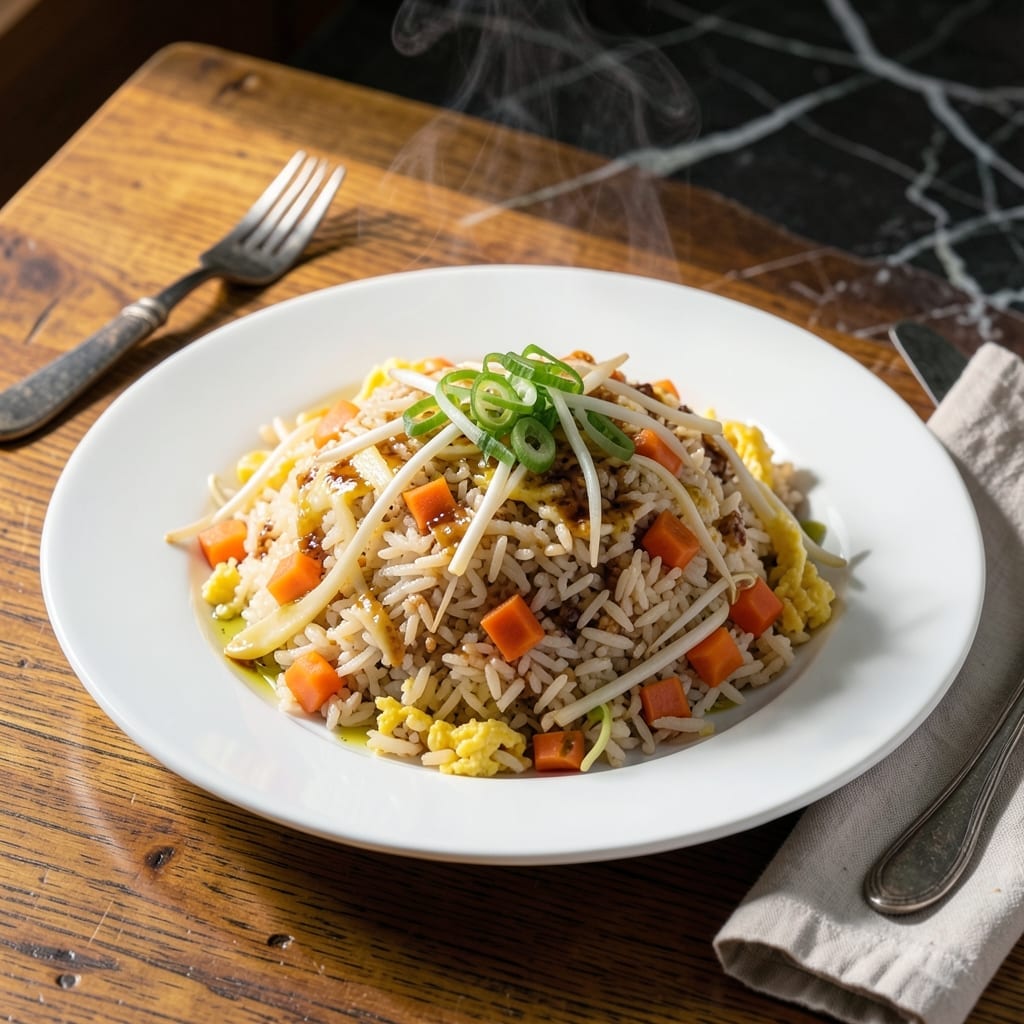
I’ve spent years trying to replicate that signature wok-seared flavor from Fuji Steakhouse at home. The secret lies in high heat and the perfect balance of soy sauce, sesame oil, and fresh ginger.
This version uses day-old rice, scrambled eggs, and a mix of charred vegetables like carrots, beansprouts, and scallions. The key is cooking everything quickly over high heat to achieve that restaurant-quality texture.
The result is a dish packed with umami depth, slightly crispy edges, and that smoky wok hei aroma. It’s the kind of fried rice that makes takeout obsolete.
Ready in 20 minutes, it transforms simple ingredients into something extraordinary. Here’s how to master it.
Ingredients for Fuji Steakhouse Fried Rice
High heat meets umami depth with charred vegetables and day-old rice for restaurant quality at home.
| Ingredient | Amount | Notes |
|---|---|---|
| Day-Old Cooked White Rice 🍚 | 4 cups | Cold, preferably overnight |
| Large Eggs 🥚 | 3 whole | Lightly beaten for scrambling |
| Carrots 🥕 | ¾ cup | Julienned or fine diced |
| Bean Sprouts 🌱 | 1 cup | Fresh, rinsed thoroughly |
| Scallions 🧅 | ½ cup | Thinly sliced, whites and greens separated |
| Soy Sauce 🫒 | 3 tbsp | Low-sodium preferred for control |
| Sesame Oil 🫒 | 2 tsp | Toasted variety for depth |
| Fresh Ginger 🌿 | 1 tbsp | Peeled and minced finely |
| Garlic Cloves 🧄 | 3 cloves | Minced for even distribution |
| Vegetable Oil 🫒 | 3 tbsp | High smoke point for wok searing |
| Green Peas 🌿 | ½ cup | Fresh or frozen, thawed |
| Kosher Salt 🧂 | ½ tsp | Adjust to taste at end |
| White Pepper 🌶️ | ¼ tsp | Traditional for authentic flavor |
The rice is critical here. Use day-old, cold rice—fresh rice turns to mush under high heat. Jasmine or long-grain white work best for that separate, slightly firm texture. For the vegetables, fresh bean sprouts and carrots are non-negotiable for the char; find them in the produce section of any Asian market or well-stocked grocery store. The ginger and garlic should be fresh—no pre-minced jars here.
No wok? A large, heavy skillet works nearly as well (cast iron is ideal). Substitute tamari for gluten-free, or coconut aminos for a different depth. If you’re missing bean sprouts, shredded cabbage adds a similar crunch. The sesame oil is the soul of this dish—don’t swap it out. Vegetable oil can be replaced with peanut or avocado oil if you prefer.
Cooked rice stores 4-5 days in the fridge—perfect for planning ahead. The finished dish keeps 3 days refrigerated but is best served immediately. Leftovers reheat well in a dry pan to revive that wok-seared texture. Always remember: high heat, quick cooking (worth the extra minute).
Why You’ll Love This Recipe
- One Pan Wonder: I toss in the day-old rice, eggs, and veggies, and it’s done in one skillet—minimal cleanup, maximum flavor.
- Restaurant Quality at Home: The scallions and bean sprouts give it that Fuji Steakhouse taste I crave, without the drive or the bill.
- Meal Prep Champion: I make a big batch on Sunday, and it reheats beautifully for lunches all week.
- Budget Stretcher: Honestly, it’s the best way to use up leftover rice and whatever veggies are lingering in the fridge.
Step-by-Step Instructions for Wok-Seared Fried Rice With Charred Vegetables
Achieve restaurant-quality texture and flavor with proper wok technique and precise timing.
Step 1: Prep and Par-Cook the Vegetables
Heat 1 tablespoon Vegetable Oil in a wok or large skillet over high heat until shimmering. Add the 0.75 cup Carrots and stir-fry for 2 minutes until the edges begin to char and soften slightly.
Add the 0.5 cup Green Peas and continue stir-frying for another 1-2 minutes until the peas turn bright green and the carrots develop light char marks. Transfer the vegetables to a bowl and set aside.
This par-cooking step ensures the vegetables retain texture when combined with the rice later. The high heat creates the characteristic charred flavor that defines steakhouse fried rice.
Step 2: Scramble the Eggs and Aromatics
In the same wok, add another 1 tablespoon Vegetable Oil and heat over medium-high heat. Pour in the 3 whole Large Eggs and scramble gently with a spatula until just set but still slightly runny in spots, about 45-60 seconds.
Push the eggs to one side of the wok and add the remaining 1 tablespoon Vegetable Oil to the empty space. Add the 1 tbsp Fresh Ginger and 3 cloves Garlic Cloves, stir-frying for 15-20 seconds until fragrant but not browned.
This layered approach builds depth of flavor while preventing the garlic from burning, which would introduce bitterness to the dish.
Step 3: Combine Rice and Vegetables
Add the 4 cups Day-Old Cooked White Rice to the wok, breaking up any clumps with your spatula. Stir-fry for 2-3 minutes until the rice is heated through and begins to develop light golden spots.
Return the par-cooked Carrots and Green Peas to the wok along with the 1 cup Bean Sprouts. Add the 3 tbsp Soy Sauce, 0.5 tsp Kosher Salt, and 0.25 tsp White Pepper, tossing everything together for 2 minutes until evenly coated.
The cold, day-old rice is crucial here—it fries up fluffy and separate rather than turning mushy, while absorbing the soy sauce evenly.
Step 4: Finish with Scallions and Sesame Oil
Remove the wok from heat and stir in the 0.5 cup Scallions (reserve some greens for garnish) and 2 tsp Sesame Oil. The residual heat will soften the scallions slightly while preserving their bright color and sharp bite.
Taste and adjust seasoning if needed, though the soy sauce and salt should provide sufficient flavor. The sesame oil adds a nutty aroma that ties all the components together authentically.
Serve immediately while hot, garnished with the reserved scallion greens. The final dish should have distinct charred bits, separate rice grains, and a glossy sheen from the sesame oil.
Pro Tips For Making Fuji Steakhouse Fried Rice
- Use Cold Rice: Day-old, refrigerated rice is non-negotiable—it’s drier, which means it’ll fry up fluffy instead of mushy. I learned this the hard way after ruining a batch with fresh rice.
- Prep Veggies Small: Dice the carrots and scallions into tiny, even pieces so they cook quickly and blend seamlessly into every bite. Sounds tedious, but it makes a real difference in texture.
- Skip the Crowded Pan: Overloading the wok or pan steams the rice instead of frying it. Work in batches if needed—your future crispy, golden grains are worth the extra minute.
- Scramble Eggs First: Push the scrambled eggs to one side of the pan before adding the rice and veggies. This keeps them soft and distinct instead of disappearing into the mix.
Flavor Customization for This Dish
Add Protein Power
For a heartier version, I love adding ½ lb shrimp or diced chicken breast. Cook the protein first in 1 tbsp Vegetable Oil over high heat for 2-3 minutes until just cooked, then set aside before starting the vegetables.
Spice It Up
If you enjoy heat, stir in 1 tsp sriracha with the soy sauce, or sprinkle ½ tsp red pepper flakes over the finished dish. A drizzle of chili oil just before serving adds depth and a beautiful sheen. 🌶️
Extra Veggie Boost
For more color and texture, toss in ½ cup diced bell peppers or ¼ cup corn kernels with the carrots. Broccoli florets work well too—just blanch them for 1 minute first to soften.
Umami Enhancements
For deeper flavor, add 1 tbsp oyster sauce with the soy sauce, or sprinkle 1 tsp fish sauce at the end. A pinch of MSG (¼ tsp) boosts savory notes without overpowering.
Herb Freshness
Fresh herbs brighten everything up. Stir in ¼ cup chopped cilantro or 2 tbsp Thai basil at the end. I also love a squeeze of lime juice for a zesty finish. 💫
Crunchy Topping
For texture contrast, top with 2 tbsp crushed peanuts or fried shallots. Sesame seeds add a subtle nutty crunch. These toppings keep the dish exciting bite after bite.
Nutrition Facts
Frequently Asked Questions
Why use day-old rice?
Cold rice has less moisture, so it fries up separate and fluffy instead of mushy. Fresh rice turns sticky and clumps together under high heat.
Can I add chicken or shrimp?
Cook ½ lb of diced chicken or shrimp first in 1 tbsp oil over high heat for 2-3 minutes, then set aside before starting the vegetables.
How do I get that smoky wok flavor at home?
Crank the heat to maximum and cook in small batches. A well-seasoned wok or cast iron skillet helps develop that signature char.
What if I don’t have a wok?
A large, heavy skillet works fine. Cast iron is ideal for retaining heat. Just be sure to use high heat and keep ingredients moving.

- Gambia Jollof Rice Recipe: West African One-Pot Spice Fusion - October 5, 2026
- Cream of Wild Rice Soup Recipe Minnesota: Northwoods Creaminess With Foraged Grains - October 5, 2026
- Frozen Cauliflower Fried Rice Recipe: Quick Low-Carb Wok Magic - October 5, 2026