
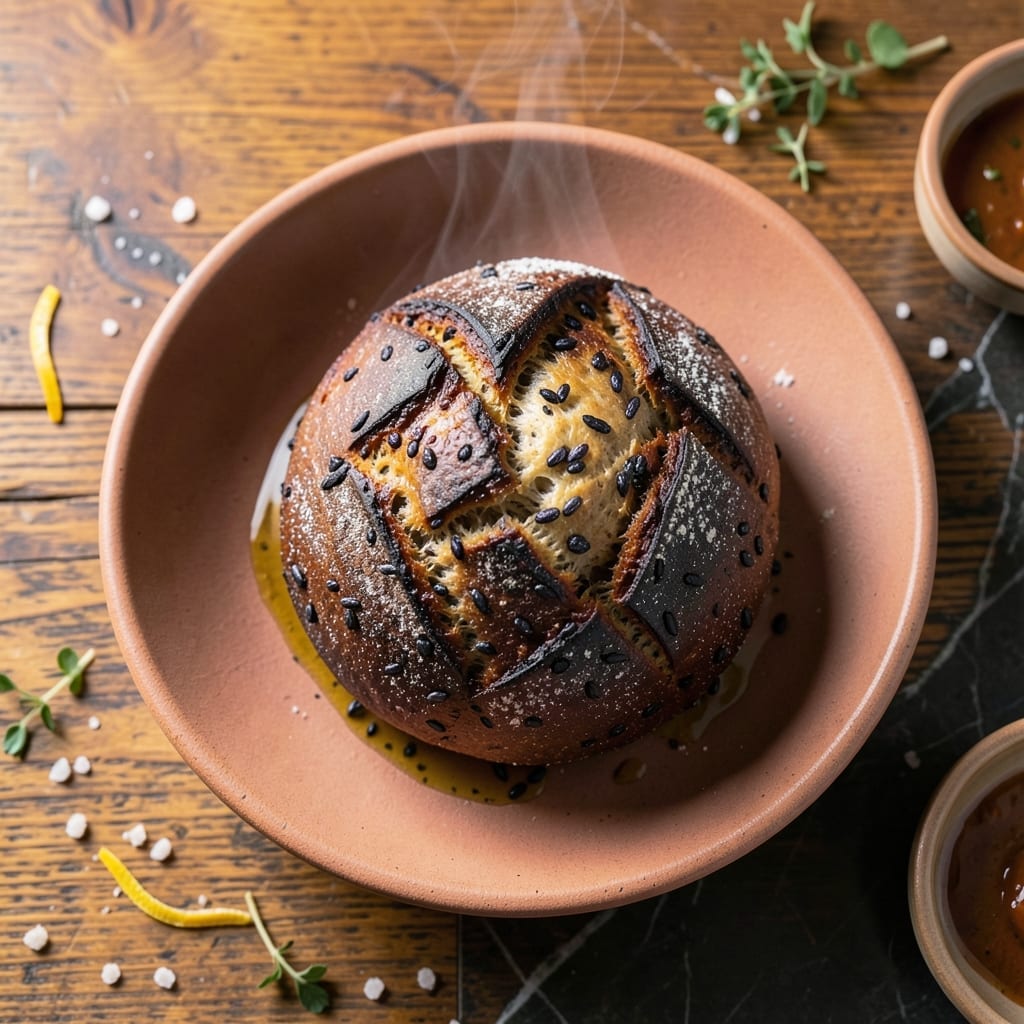
This artisan loaf transforms humble sourdough with the deep, earthy notes of forbidden rice. The result is a bread with a dark crust and a nutty, complex crumb that’s both visually striking and rich in flavor.
I developed this recipe after testing multiple fermentation methods to ensure the rice integrates seamlessly without compromising the sourdough’s structure. The forbidden rice adds subtle sweetness and a striking purple hue, making each slice as beautiful as it is delicious.
The process requires patience, with a long fermentation to develop depth of flavor, but the payoff is a loaf that’s as satisfying to make as it is to eat. The texture stays moist for days, with a chew that’s distinctly artisan.
Perfect for sandwiches or served warm with butter. Here’s how to bake it at home.
Ingredients for Forbidden Rice Sourdough
Transform humble sourdough with deep, earthy forbidden rice and a few pantry staples.
| Ingredient | Amount | Notes |
|---|---|---|
| Active Sourdough Starter 🍞 | ½ cup | Fed and bubbly, at peak |
| Bread Flour 🌾 | 4 cups | High-protein, unbleached preferred |
| Forbidden Black Rice 🍚 | ¾ cup | Cooked and cooled completely |
| Filtered Water 💧 | 1 ¾ cups | Room temperature, chlorine-free |
| Fine Sea Salt 🧂 | 2 tsp | Diamond Crystal preferred |
| Olive Oil 🫒 | 1 tbsp | For bowl and dough handling |
| Vital Wheat Gluten 🌾 | 1 tbsp | Optional, improves structure |
| Maple Syrup 🍁 | 1 tbsp | For subtle sweetness enhancement |
| Rice Vinegar 🍶 | 1 tsp | Balances acidity in starter |
| Cornmeal 🌽 | ¼ cup | For dusting proofing basket |
The forbidden rice is non-negotiable for that signature purple hue—look for it at Whole Foods or Asian markets. Brand-wise, Lotus Foods carries excellent quality. Use high-protein bread flour (King Arthur is reliable) for proper structure. The sourdough starter must be at peak activity—feed it 4-12 hours before mixing. Filtered water prevents chlorine from inhibiting fermentation.
No forbidden rice? Black rice or wild rice work at a 1:1 ratio, but expect less dramatic color. Out of bread flour? All-purpose plus 1 tbsp vital wheat gluten per cup substitute. Maple syrup can be swapped for agave at equal volume. The rice vinegar helps activate the starter—apple cider vinegar is an acceptable alternative.
The cooked rice keeps 5 days refrigerated before use. Dough ferments best at 75-80°F—find a warm spot or use a proofing box. Baked loaves stay fresh 3 days at room temperature, or freeze sliced for 1 month.
Why You’ll Love This Recipe
- One Bowl Wonder: I just mix the starter, flour, and cooked forbidden rice in one bowl—no fancy steps, just let the dough do its thing overnight.
- Deep, Earthy Crust: The black rice gives it this rich, nutty flavor that makes every slice taste like it came from a bakery.
- Feeds the Freezer: I bake two loaves at once and freeze one—it toasts up just as good weeks later, and my wallet thanks me.
- Weekend Project: Honestly, most of the work is waiting, so I can prep it Saturday morning and have fresh bread for Sunday brunch.
Step-by-Step Instructions for Forbidden Rice Sourdough
This method ensures a deeply flavored loaf with a dark, nutty profile and perfect crumb structure.
Step 1: Prepare the Forbidden Black Rice Soaker
Combine the 0.75 cup Forbidden Black Rice with 1 cup of the 1.75 cups Filtered Water in a small saucepan. Bring to a boil, then reduce to a simmer and cook for 30-35 minutes until the rice is tender and the water is absorbed.
Spread the cooked rice on a baking sheet to cool completely. This step develops the rice’s natural sweetness and ensures it won’t disrupt the dough’s hydration. The rice should be at room temperature before mixing into the dough.
While the rice cools, measure out the remaining 0.75 cup Filtered Water and bring it to room temperature. Cold water can shock the sourdough starter and slow fermentation.
Step 2: Mix and Autolyse the Dough
In a large mixing bowl, combine the 0.5 cup Active Sourdough Starter, all 4 cups Bread Flour, the remaining 0.75 cup Filtered Water, 1 tbsp Maple Syrup, and 1 tsp Rice Vinegar. Mix until no dry flour remains. The dough will be shaggy but fully hydrated.
Add the 1 tbsp Vital Wheat Gluten and the cooled 0.75 cup Forbidden Black Rice. Incorporate thoroughly—the gluten strengthens the dough to support the rice’s weight, while the rice adds flecks of deep purple throughout.
Cover the bowl and let the dough rest for 30 minutes. This autolyse period allows the flour to fully hydrate and the gluten to begin developing without kneading.
Step 3: Incorporate Salt and Olive Oil
After the autolyse, add the 2 tsp Fine Sea Salt and 1 tbsp Olive Oil to the dough. Use wet hands to stretch and fold the dough, ensuring the salt and oil are evenly distributed. The salt tightens the gluten network, while the oil adds extensibility for a better rise.
Perform a series of stretch-and-folds every 30 minutes for the next 2 hours. You’ll notice the dough becoming smoother and more elastic with each fold. This builds strength without overworking the gluten, which is especially important with the added weight of the rice.
Step 4: Bulk Ferment and Shape
After the stretch-and-folds, let the dough bulk ferment at room temperature for 4-6 hours, or until it has increased in volume by about 50%. The surface should appear bubbly and jiggly when gently shaken.
Turn the dough out onto a lightly floured surface and shape it into a tight boule. Place it seam-side up in a proofing basket dusted with 0.25 cup Cornmeal. The cornmeal prevents sticking and adds a subtle texture to the crust.
Cover and refrigerate the dough for 12-16 hours for cold proofing. This slow fermentation enhances the nutty, complex flavors of the forbidden rice and sourdough.
Step 5: Bake to Perfection
Preheat your oven to 475°F with a Dutch oven inside for 1 hour. Turn the cold dough onto a piece of parchment paper, score the top with a sharp blade, and carefully transfer it into the hot Dutch oven.
Bake covered for 20 minutes, then uncover and bake for another 25-30 minutes until the crust is deep brown and the internal temperature reaches 208-210°F. The forbidden rice will create a striking marbled effect in the crumb, with a rich, slightly sweet aroma.
Cool the loaf on a wire rack for at least 2 hours before slicing. This allows the crumb to set and the flavors to fully develop. The result is a visually stunning loaf with a crisp crust and a moist, flavorful interior.
Pro Tips For Making Forbidden Rice Sourdough
- Soak the Rice: Give the forbidden black rice a 4-hour soak before mixing—it softens the grains just enough to blend smoothly into the dough without turning the loaf an unappetizing gray.
- Check Starter Ripeness: Make sure your sourdough starter floats in water before using—if it sinks, it’s not active enough, and your loaf will be dense instead of light and airy.
- Adjust Hydration Slowly: The rice absorbs liquid differently than flour, so add the water in stages and let the dough rest 10 minutes between additions to avoid a sticky mess.
- Bake Until Deep Brown: Don’t pull it at the first sign of color—forbidden rice sourdough needs that extra 5-10 minutes at 425°F to fully set the crumb and develop its nutty flavor.
Perfect Pairings for These Flavors
Beverage Pairings
This bread’s nutty depth pairs beautifully with bold drinks. A dark roast coffee brings out the rice’s earthiness—I love Peet’s Major Dickason’s Blend. For tea lovers, try a pu-erh tea with its smoky notes. 🍺
Cheese and Charcuterie
Create a stunning board with aged cheddar and blue cheese to contrast the bread’s sweetness. Add prosciutto or soppressata for salty depth. I like to include dried figs for a touch of sweetness.
Soup Companions
A hearty butternut squash soup complements the bread’s nuttiness. For contrast, pair with a creamy tomato bisque. Both soak up the bread’s crumb perfectly without overpowering it.
Breakfast Ideas
Toast slices and top with almond butter and honey for a quick breakfast. The bread’s density holds up well to avocado and a sprinkle of flaky salt. I often add a fried egg for extra protein.
Dessert Pairings
Serve warm with vanilla ice cream and a drizzle of balsamic glaze for a sweet-savory treat. The bread’s subtle sweetness also pairs well with dark chocolate for a simple yet elegant dessert. 💛
Nutrition Facts
Frequently Asked Questions
What can I use if I don’t have forbidden rice?
Black rice or wild rice work as a 1:1 substitute. Expect less dramatic color but similar nutty flavor. Avoid white or brown rice as they lack the required texture and taste.
Why does the dough need a long fermentation?
The extended fermentation develops complex flavors and ensures the rice integrates smoothly. A cold proof of 12-16 hours enhances the bread’s depth and texture, creating that signature artisan crumb.
Can I skip the vital wheat gluten?
Yes, but it helps support the dough’s structure with the added rice weight. Without it, the loaf may be denser. For best results, use bread flour with high protein content.
How do I know when the loaf is fully baked?
Check for a deep brown crust and an internal temperature of 208-210°F. The bread should sound hollow when tapped on the bottom. Always cool for at least 2 hours before slicing.

- Gambia Jollof Rice Recipe: West African One-Pot Spice Fusion - October 5, 2026
- Cream of Wild Rice Soup Recipe Minnesota: Northwoods Creaminess With Foraged Grains - October 5, 2026
- Frozen Cauliflower Fried Rice Recipe: Quick Low-Carb Wok Magic - October 5, 2026