
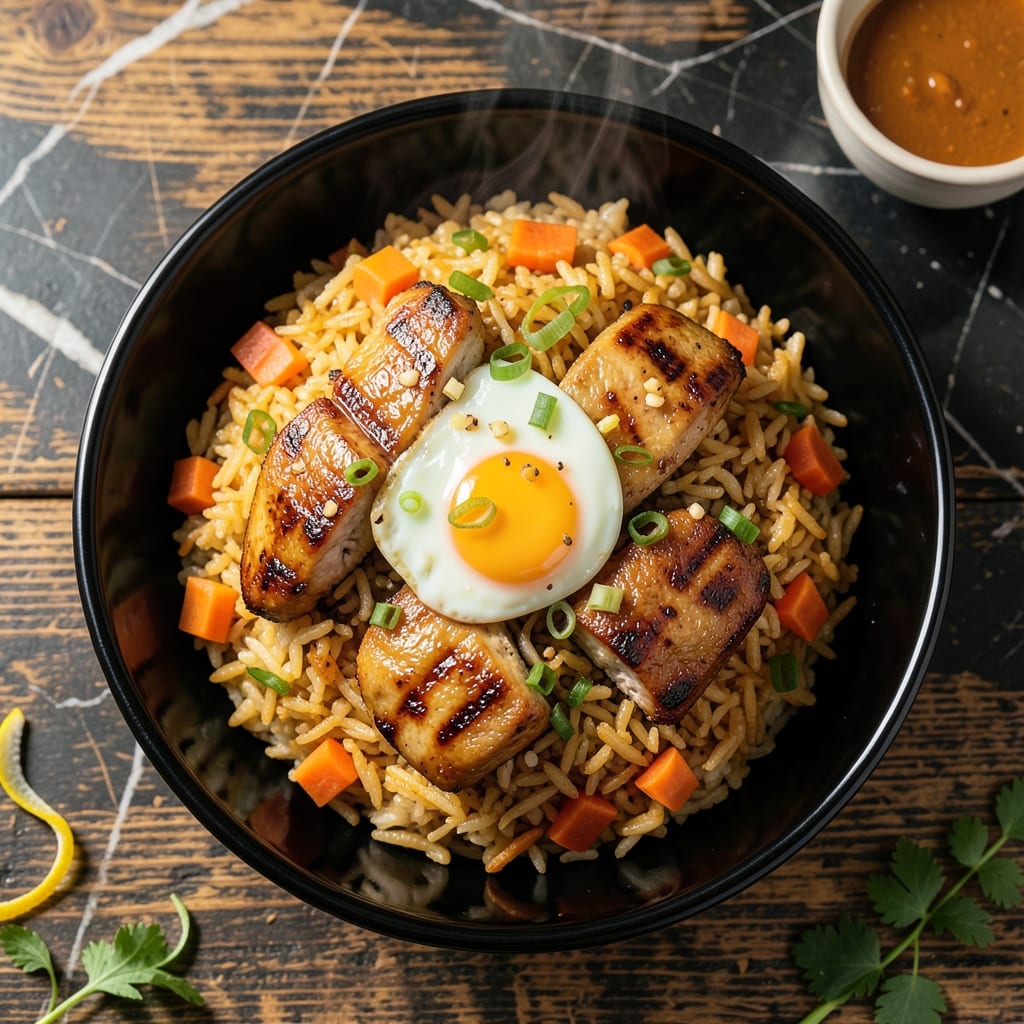
This street food revival brings restaurant-quality results to your home kitchen with a proven wok-searing technique.
The high-heat method delivers perfectly charred rice with bold flavors that capture authentic gazebo-style cooking. Simple ingredients transform into a dish that’s both satisfying and impressive.
Ingredients for Gazebo Fried Rice
High-heat wok cooking transforms everyday ingredients into something extraordinary with bold, charred flavors.
| Ingredient | Amount | Notes |
|---|---|---|
| Jasmine Rice 🍚 | 3 cups | Day-old, cooked and chilled |
| Boneless Chicken Thighs 🍗 | 1 lb | Cut into small uniform pieces |
| Large Eggs 🥚 | 3 whole | Lightly beaten for scrambling |
| Carrots 🥕 | 2 whole | Medium diced for even cooking |
| Green Onions 🧅 | 4 whole | Thinly sliced, whites and greens separated |
| Garlic Cloves 🧄 | 4 cloves | Minced finely for aromatics |
| Low-Sodium Soy Sauce 🫒 | 3 tbsp | Divided for layering flavor |
| Dark Soy Sauce 🫒 | 1 tbsp | For color and depth |
| Oyster Sauce 🫒 | 2 tbsp | Essential for authentic wok hei |
| Sesame Oil 🫒 | 1 tsp | Toasted, for finishing aroma |
| Neutral Cooking Oil 🫒 | 3 tbsp | High smoke point for wok searing |
| Frozen Green Peas 🌱 | ¾ cup | No need to thaw |
| White Pepper 🧂 | ½ tsp | Freshly ground for traditional flavor |
| Diamond Crystal Kosher Salt 🧂 | ½ tsp | Adjust to taste at finish |
The rice is critical—day-old jasmine from a trusted brand like Lundberg or Dynasty has the right texture to withstand high heat without turning mushy. For the chicken, thighs outperform breasts here; their higher fat content keeps the meat juicy during aggressive searing. Asian markets typically stock the best selection of both soy sauces and oyster sauce, which are non-negotiable for authentic flavor development.
No oyster sauce? Vegetarian oyster sauce works as a direct substitute. Swap chicken for shrimp or firm tofu if preferred—just pat tofu very dry first. Fresh ginger at half the amount of garlic adds another layer if you want complexity. The dark soy sauce is for color, so substitute regular soy plus a pinch of brown sugar if needed. Frozen peas are the exception to the fresh-rule here—they hold up perfectly.
Cooked rice keeps in the fridge for 3-4 days before using, making this ideal for leftovers. The finished dish holds well for 2-3 days refrigerated, though it’s best eaten immediately for that signature wok-seared texture. Reheat in a skillet with a splash of water to revive.
Why You’ll Love This Recipe
- One Pan Wonder: I love that everything—jasmine rice, chicken, veggies—cooks together in one skillet. No pile of dishes, just flavor.
- Crave-Worthy Bites: The chicken thighs stay juicy, the eggs add this creamy richness, and the green onions finish it with a fresh pop.
- My Go-To Weeknight: Honestly, it’s my Tuesday night hero—ready before the kids start asking what’s for dinner.
- Budget Stretcher: Feeds four for the cost of a takeout meal, and leftovers taste even better the next day.
Step-by-Step Instructions for Gazebo Fried Rice
Master the wok technique with these precise steps for authentic texture and flavor.
Step 1: Prep and Velvet the Chicken
Cut the 1 lb Boneless Chicken Thighs into ½-inch uniform pieces for even cooking. In a bowl, combine the chicken with 1 tbsp Low-Sodium Soy Sauce, 1 tbsp Oyster Sauce, and ½ tsp Diamond Crystal Kosher Salt. Mix well and let marinate for 10 minutes—this velveting step ensures tender, juicy meat.
Meanwhile, measure out the 0.75 cup Frozen Green Peas (no thawing needed) and medium dice the 2 whole Carrots. Keep these separate from the chicken to control cooking times. The peas will release moisture when added to the hot wok, so timing is crucial.
Step 2: Scramble Eggs and Cook Chicken Separately
Heat 1 tbsp Neutral Cooking Oil in a wok over high heat until shimmering. Pour in the 3 whole Large Eggs and scramble quickly with a spatula until just set but still slightly runny. Remove the eggs immediately—they’ll finish cooking later when combined with the rice.
Add another 1 tbsp Neutral Cooking Oil to the wok and increase heat to maximum. Spread the marinated chicken in a single layer and let sear undisturbed for 30 seconds. Stir-fry for 2-3 minutes until the chicken is opaque and lightly charred. Transfer to a plate, leaving the fond in the wok for flavor.
Step 3: Stir-Fry Aromatics and Vegetables
Add the remaining 1 tbsp Neutral Cooking Oil to the wok. Toss in the minced 4 cloves Garlic Cloves and the white parts of the 4 whole Green Onions. Stir-fry for 15-20 seconds until the garlic is fragrant but not browned—burnt garlic will impart bitterness.
Add the diced carrots and cook for 1 minute to soften slightly. Then add the frozen peas and stir-fry for another 30 seconds. The peas should turn bright green and warm through without losing their snap. Push everything to one side of the wok to make room for the rice.
Step 4: Combine and Season to Perfection
Increase heat to maximum and add the 3 cups Jasmine Rice, breaking up any clumps with your spatula. Distribute the chicken and eggs evenly throughout the rice. Drizzle the remaining 2 tbsp Low-Sodium Soy Sauce, 1 tbsp Dark Soy Sauce, and 1 tbsp Oyster Sauce over the mixture.
Stir-fry vigorously for 2-3 minutes until every grain of rice is coated and the mixture is steaming hot. The dark soy sauce will deepen the color, while the oyster sauce adds a glossy sheen. Finish with ½ tsp White Pepper and the green onion tops, tossing to incorporate.
Step 5: Finish with Sesame Oil and Rest
Remove the wok from heat and drizzle the 1 tsp Sesame Oil around the edges, then toss once more to distribute the aroma. The sesame oil’s fragrance should be immediately noticeable—this is the signature finishing touch.
Let the fried rice rest for 2 minutes before serving to allow the flavors to meld. The rice should have a slight smokiness from the wok hei, with each bite offering a balance of savory, umami, and aromatic depth. Serve hot, garnished with extra green onions if desired.
Pro Tips For Making Gazebo Fried Rice
- Chill the Rice: Use day-old jasmine rice straight from the fridge—dry, cold grains fry up separate and crisp instead of clumping. I learned this the hard way after making mushy fried rice with fresh, warm rice.
- Velvet the Chicken: Toss the boneless chicken thighs with 1 teaspoon cornstarch and a pinch of salt before cooking; it keeps them stupidly tender and prevents dry, chewy bits in the final dish.
- Skip the Overcrowding: Cook the eggs and chicken in batches if needed—cramming the wok cools it down and steams the food instead of searing it. After burning three batches, I finally figured out the importance of space.
- Prep Veggies Small: Dice the carrots and slice the green onions into thin, even pieces so they cook quickly and evenly. Sounds obvious, but I was skeptical until I tried it and noticed the difference in texture.
Dietary Considerations for gazebo fried rice
Gluten-Free Adaptation
Swap the soy sauces for tamari or a certified gluten-free soy sauce brand like San-J. Use gluten-free oyster sauce (I recommend Kikkoman’s version) to maintain authentic flavor. The rice itself is naturally gluten-free, so this is an easy modification. 💡
Vegetarian Option
Replace the chicken with 14 oz extra-firm tofu, pressed and cubed. Marinate it the same way for 15 minutes to absorb the flavors. For extra protein, add ½ cup shelled edamame with the peas. The tofu will develop a nice char in the wok.
Vegan Version
Use the vegetarian tofu swap above and replace the eggs with ¼ cup scrambled chickpea flour mixed with 2 tbsp water. Cook it separately in the wok first, then proceed with the recipe. The chickpea flour mimics egg texture surprisingly well.
Lower Sodium Choice
Reduce the soy sauces by half and boost umami with 1 tbsp fish sauce or 1 tsp mushroom powder. I often add ¼ tsp MSG (if you have it) to compensate for reduced sodium—it enhances natural flavors without the salt content. 💪
Shellfish Allergy Note
Omit the oyster sauce entirely and replace it with 2 tbsp vegetarian stir-fry sauce or 1 tbsp hoisin sauce mixed with 1 tbsp soy sauce. The dish will still have depth from the other seasonings. Always check labels for hidden shellfish ingredients.
Extra Vegetable Boost
Add 1 cup diced bell peppers with the carrots or 1 cup bean sprouts at the very end. These add volume and nutrients without changing the cooking method. I often toss in leftover veggies from the fridge for a colorful twist.
Nutrition Facts
Frequently Asked Questions
Can I use fresh rice instead of day-old?
No, fresh rice contains too much moisture and will turn mushy. Day-old rice is drier and holds up to high heat better. Spread freshly cooked rice on a tray to cool and dry out for 1-2 hours if you’re in a pinch.
Why cook chicken and eggs separately?
Cooking them separately prevents overcooking. The chicken needs 2-3 minutes to char properly, while eggs scramble in 30 seconds. Combining them at the end ensures perfect texture for both.
What if I don’t have a wok?
A large, deep skillet works as a substitute. Use high heat and cook in batches to avoid steaming the rice. A cast-iron skillet retains heat well but may require more oil.
How do I fix soggy fried rice?
Spread it on a baking sheet and broil for 2-3 minutes to evaporate excess moisture. Next time, use less oil or cook in smaller batches to achieve that coveted wok hei texture.

- Ground Beef Rice and Beans Recipe: Slow-Simmered Savory Harmony - October 17, 2026
- Guyanese Fried Rice Recipe: Caribbean Spice With Wok-Charred Aromatics - October 17, 2026
- Hakka Thunder Tea Rice Recipe: Wok-Charred Herbal Infusion - October 17, 2026