
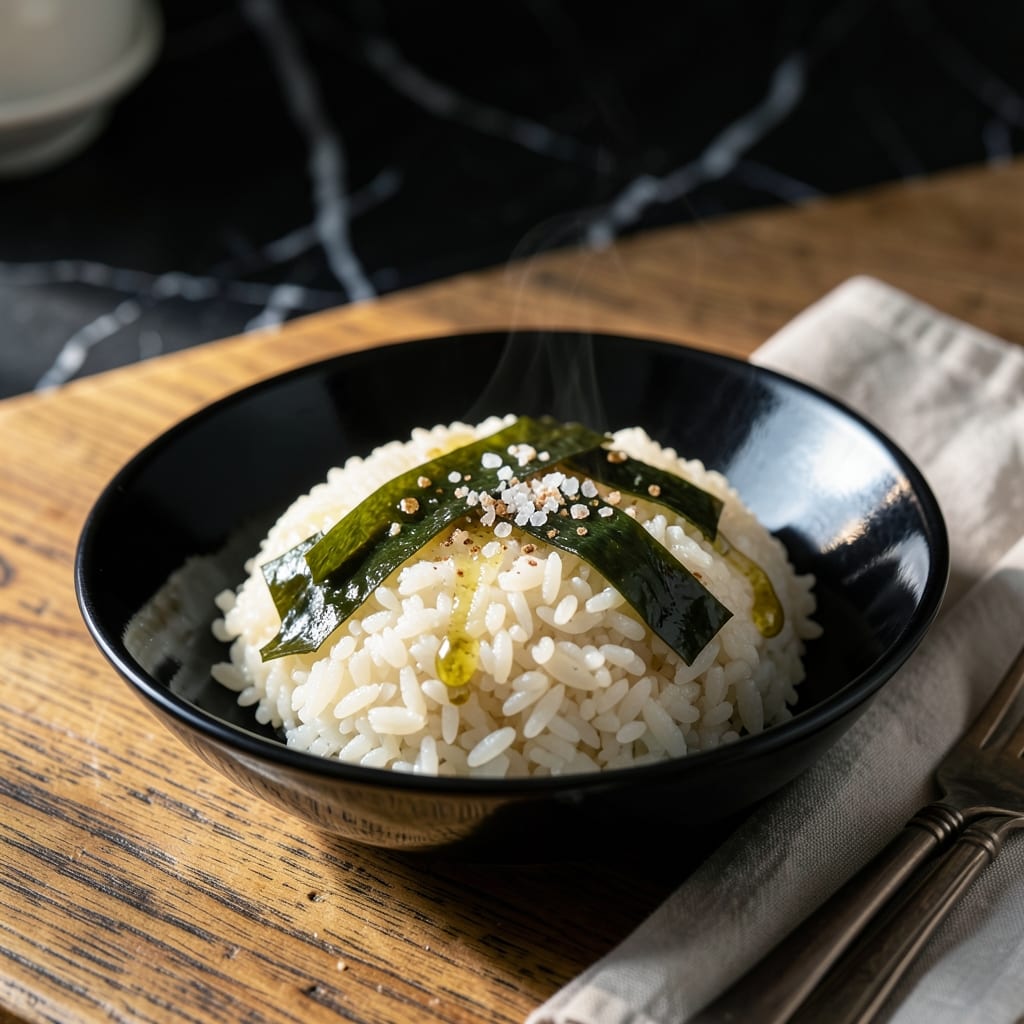
Japanese-style gohan rice achieves perfectly fluffy, slightly sticky grains every time through precise technique. This foundational dish forms the heart of countless Japanese meals, requiring only rice, water, and attention to detail.
The process involves thorough rinsing, exact water measurement, and gentle steaming. What emerges is a bowl of glistening, tender grains with the ideal texture for accompanying any protein or vegetable dish.
Ingredients for Gohan Rice
Minimal ingredients, maximum precision. This is Japanese cooking at its purest and most perfect.
| Ingredient | Amount | Notes |
|---|---|---|
| Japanese Short-Grain Rice 🍚 | 2 cups | Rinsed until water runs clear |
| Water 💧 | 2 ½ cups | Filtered for best results |
| Kombu 🌿 | 1 piece | 2-inch square, optional for depth |
| Rice Vinegar 🍶 | 1 tbsp | Adds subtle brightness |
| Sea Salt 🧂 | ½ tsp | Fine grain preferred |
| Sugar 🍬 | ½ tsp | Balances seasoning |
| Sake 🍶 | 1 tbsp | Optional for umami |
| Mirin 🍶 | 1 tsp | Optional for sweetness |
The rice is absolutely non-negotiable—Japanese short-grain (like Koshihikari or Nishiki) produces the signature sticky texture. Asian markets or the international aisle at Whole Foods are your best bets for authentic varieties. Avoid jasmine or long-grain; they lack the necessary starch content. The kombu (dried kelp) adds subtle oceanic depth without overpowering, and a small piece goes a long way.
No sake or mirin? Dry white wine at half the amount can stand in for sake, while a pinch of sugar plus a splash of water mimics mirin’s sweetness. The rice vinegar is optional but recommended—it brightens the flavor without making it sour. If using kombu, remove it after cooking to prevent bitterness. For strict traditionalists, skip all seasonings; the rice alone is perfection.
Uncooked rice keeps indefinitely in a cool, dry place. Once cooked, it stays fresh for 2-3 days in the fridge or freezes for 1 month. Reheat with a splash of water to restore moisture. Never store cooked rice at room temperature—it spoils quickly.
Why You’ll Love This Recipe
- One Pot Wonder: I just rinse the rice, add water and kombu, and let it simmer—no fancy steps.
- Umami Bomb: That first hit of kombu-infused rice with a tang of rice vinegar? Ridiculously good.
- Pairs With Everything: Honestly, it’s my base for bento boxes, soups, or just a simple dinner side.
- Next-Day Magic: Leftovers taste even better cold, and they keep well for days in the fridge.
Step-by-Step Instructions for Japanese-Style Steamed Rice
This method ensures perfectly cooked, fluffy grains with balanced flavor and texture every time.
Step 1: Rinse and Prepare the Japanese Short-Grain Rice
Place the 2 cups Japanese Short-Grain Rice in a fine-mesh strainer and rinse under cold running water. Agitate the grains with your hand, then drain. Repeat this process 4-5 times until the water runs completely clear. This removes excess starch that would otherwise make your creation gummy rather than fluffy.
After the final rinse, drain thoroughly and let the rice sit in the strainer for 5-10 minutes. I’ve found that this brief rest allows any excess water to drip off while the grains begin to absorb moisture evenly. You’ll notice the rice takes on a slightly transluscent appearance when properly hydrated.
Step 2: Infuse the Water with Kombu and Begin Cooking
In a medium saucepan or rice cooker, combine the 2.5 cups Water with the 1 piece Kombu. The kombu adds a subtle oceanic depth to the finished dish. Let this mixture sit for 10 minutes to allow the kombu to begin infusing the water with its natural glutamates.
Add the rinsed and drained Japanese Short-Grain Rice to the pot. Gently stir to distribute the grains evenly, then let the mixture soak for 20-30 minutes before cooking. This soaking period ensures the rice absorbs liquid uniformly, preventing uneven cooking. The water should come about ½ inch above the rice level.
Step 3: Cook and Season with Traditional Flavors
Cover the pot with a tight-fitting lid and cook over medium-high heat until the water comes to a boil. Once boiling, reduce the heat to low and maintain a gentle simmer for 12-15 minutes. Resist the urge to lift the lid during this time—steam is crucial for even cooking.
While the rice cooks, prepare the seasoning mixture. In a small bowl, combine the 1 tbsp Rice Vinegar, 0.5 tsp Sea Salt, 0.5 tsp Sugar, 1 tbsp Sake, and 1 tsp Mirin. This blend creates the characteristic balanced sweetness and acidity that defines properly seasoned Japanese rice.
Step 4: Rest and Incorporate the Seasonings
After the cooking time has elapsed, turn off the heat and let the rice rest, covered, for 10 minutes. This resting period allows the grains to absorb any remaining moisture and steam to finish the cooking process. The rice should be tender with no hard center when tested.
Remove the kombu piece and discard it. Transfer the rice to a large, shallow bowl. Drizzle the prepared seasoning mixture evenly over the hot rice. Using a rice paddle or spatula, gently fold the seasonings into the rice with a cutting and turning motion. Be careful not to overmix, as this can break the grains and release excess starch.
Let the seasoned rice sit for 2-3 minutes to allow the flavors to meld completely. The finished product should have a glossy appearance with grains that are distinct yet cohesive, and a perfect balance of sweet, salty, and umami notes in every bite.
Pro Tips For Making Gohan Rice
- Rinse Thoroughly: Wash the short-grain rice in 3-4 changes of cold water until it runs nearly clear—I learned this the hard way after my first few batches turned out gummy from excess starch.
- Soak the Rice: Let the rinsed rice soak in water for 20-30 minutes before cooking; it guarantees even absorption and that sticky, glossy texture gohan is known for.
- Skip the Peek: Resist the urge to lift the lid while cooking—steam escaping drops the temperature and can turn your rice unevenly cooked or mushy.
- Use Kombu Sparingly: One 4-inch strip of kombu in the cooking water is plenty; any more and the rice can taste overly oceanic instead of subtly infused.
Pro Cooking Tips for gohan rice
Rinsing Precision
I always rinse my rice 4-5 times until the water runs completely clear. Use cold water and agitate the grains with your hand to remove excess starch. This prevents gummy rice and ensures fluffy, separate grains. 💧
Water Measurement
For perfect texture, use a 1:1.25 ratio—2 cups rice to 2.5 cups water. I measure with the same cup for consistency. Filtered water tastes cleaner, but tap works in a pinch.
Soaking Time
After rinsing, let the rice soak in the cooking water for 20-30 minutes. This step ensures even hydration and prevents dry spots. I set a timer to avoid forgetting.
Heat Control
Bring to a boil over medium-high heat, then immediately reduce to low. Maintain a gentle simmer—no peeking! Lifting the lid releases steam and can lead to uneven cooking.
Resting Period
After cooking, turn off the heat and let it rest, covered, for 10 minutes. This allows the grains to finish steaming and absorb residual moisture. The result is tender, cohesive rice every time. 🌟
Seasoning Technique
Fold in seasonings gently with a rice paddle using a cutting motion. Overmixing breaks grains and releases excess starch. Let it sit for 2-3 minutes after seasoning for flavors to meld.
Nutrition Facts
Frequently Asked Questions
Why do I need to rinse the rice so many times?
Rinsing removes excess starch that would make the grains gummy. Aim for 4-5 rinses until the water runs completely clear. This ensures fluffy, separate grains with the right texture.
Can I use jasmine rice instead?
No, jasmine rice lacks the necessary starch content for authentic texture. Japanese short-grain (like Koshihikari) is essential for the sticky, cohesive result. Other varieties won’t deliver the same experience.
What if my rice turns out too dry?
Add a splash of water and let it steam, covered, for 5 minutes. To prevent this, always use the 1:1.25 rice-to-water ratio and let it soak before cooking.
How long can I store leftover rice?
Cooked rice stays fresh in the fridge for 2-3 days or freezes for up to 1 month. Reheat with a splash of water to restore moisture and fluffiness.

- Ground Beef Rice and Beans Recipe: Slow-Simmered Savory Harmony - October 17, 2026
- Guyanese Fried Rice Recipe: Caribbean Spice With Wok-Charred Aromatics - October 17, 2026
- Hakka Thunder Tea Rice Recipe: Wok-Charred Herbal Infusion - October 17, 2026