
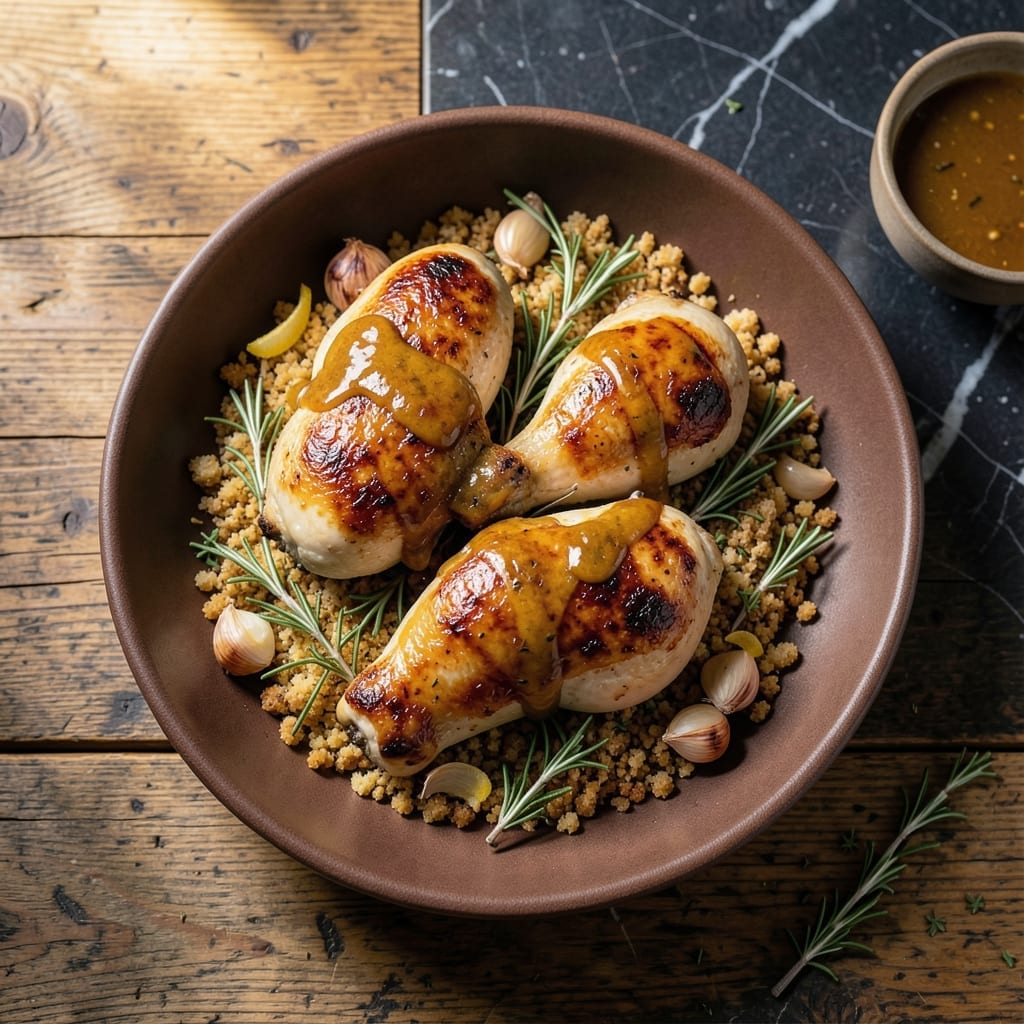
This Bavarian-inspired dish transforms ordinary chicken into a crispy masterpiece with an herb crust that’s both fragrant and deeply flavorful.
I developed this method after studying traditional German techniques, focusing on achieving perfectly golden skin without drying the meat. The herb blend is the key—simple yet authentic.
The result is juicy, tender chicken with a crispy, aromatic exterior that crackles with every bite. It’s a dish that feels special but comes together with straightforward steps.
Serve it with roasted potatoes or a fresh salad for a meal that’s hearty and satisfying. Here’s how to make it right every time.
Ingredients for German Chicken
These authentic Bavarian ingredients create a crisp, herb-crusted dish worth celebrating.
| Ingredient | Amount | Notes |
|---|---|---|
| Chicken Thighs 🍗 | 4 whole | Bone-in, skin-on for crispiness |
| Fresh Thyme 🌿 | 2 tbsp | Leaves stripped from stems |
| Fresh Rosemary 🍃 | 2 tbsp | Finely chopped for even distribution |
| Garlic Cloves 🧄 | 4 cloves | Minced for maximum flavor |
| Dijon Mustard 🟡 | 2 tbsp | For herb crust binding |
| Breadcrumbs 🍞 | 1 cup | Panko for extra crunch |
| Olive Oil 🫒 | 3 tbsp | Divided for cooking and crust |
| Butter 🧈 | 2 tbsp | Unsalted, melted for richness |
| Kosher Salt 🧂 | 1 ½ tsp | Diamond Crystal preferred |
| Black Pepper 🌶️ | 1 tsp | Freshly ground coarse |
| Paprika 🌶️ | 1 tsp | Sweet Hungarian for color |
| Lemon Zest 🍋 | 1 tsp | From one large lemon |
| Fresh Parsley 🌿 | 2 tbsp | Chopped for garnish |
The chicken skin is the foundation of that signature crisp. Bone-in, skin-on thighs from Whole Foods or your local butcher provide the best texture—avoid pre-cut pieces with tearing. For herbs, organic thyme and rosemary from the refrigerated section outperform dried every time. The Dijon mustard should be genuine French—Maille is the gold standard for that sharp, clean bite.
No fresh herbs? Dried at one-third the quantity works, but rehydrate in warm water first. For breadcrumbs, panko from Kikkoman gives superior crunch. If you can’t find skin-on thighs, bone-in breasts work but require more careful cooking. The butter can be swapped for ghee if you prefer a higher smoke point, though the flavor will be slightly different.
The herb crust mix can be prepped 1 day ahead and chilled. Cooked chicken stays crisp for 2-3 hours at room temperature or reheats well in a 400°F oven for 10 minutes. Always bring chicken to room temp before cooking for even doneness.
Why You’ll Love This Recipe
- One Pan Wonder: I toss everything on a single sheet pan—thighs, garlic, herbs—and let the oven do the work.
- Herb-Infused Magic: The thyme and rosemary with that Dijon mustard glaze? Ridiculously good, like a cozy German kitchen in every bite.
- Weeknight Hero: Honestly, it’s my go-to for busy evenings when I need something hearty but hands-off.
- Budget Stretcher: Chicken thighs stay juicy and cheap, and leftovers taste even better the next day in a sandwich.
Step-by-Step Instructions for Crispy Skin With Bavarian Herb Crust
Master this technique for perfectly crisp chicken skin with a fragrant herb crust every time.
Step 1: Prepare and Season the Chicken Thighs
Pat the 4 whole Chicken Thighs completely dry with paper towels, paying special attention to the skin side. Moisture prevents crispiness, so be thorough. Season both sides aggressively with the 1.5 tsp Kosher Salt and 1 tsp Black Pepper.
This step is non-negotiable for achieving that signature crisp texture. I use Diamond Crystal kosher salt because it adheres better to the skin and distributes evenly. Let the seasoned chicken thighs sit at room temperature for 15 minutes while you prepare the herb crust.
Step 2: Create the Bavarian Herb Crust Mixture
In a medium bowl, combine the 1 cup Breadcrumbs, 2 tbsp Fresh Thyme (leaves stripped from stems), 2 tbsp Fresh Rosemary (finely chopped), 1 tsp Paprika, and 1 tsp Lemon Zest. These herbs form the aromatic base of your German-inspired crust.
Add the 2 tbsp Dijon Mustard, 2 tbsp Butter (melted), and 1 tbsp Olive Oil from the 3 tbsp Olive Oil total. Mix until the breadcrumbs are evenly moistened and the mixture resembles wet sand. The mustard acts as a binder while adding tang.
Step 3: Sear the Chicken to Golden Perfection
Heat the remaining 2 tbsp Olive Oil in a large oven-safe skillet over medium-high heat until shimmering. Add the chicken thighs skin-side down and sear undisturbed for 6-8 minutes until the skin is deep golden brown and crispy.
This is where the magic happens. Resist the urge to move the thighs—you want that skin to develop a deep crust. You’ll know it’s ready to flip when the edges appear crispy and the skin releases easily from the pan. Flip and cook for 3-4 minutes on the other side.
Step 4: Apply Crust and Finish in Oven
Reduce heat to medium. Spoon the herb crust mixture evenly over each thigh, pressing gently to adhere. Add the 4 cloves Garlic Cloves (minced) around the chicken in the pan. The garlic will infuse the oil as it finishes cooking.
Transfer the skillet to a preheated 375°F oven and bake for 12-15 minutes until the chicken reaches 165°F internally and the crust is golden brown. The crust should be fragrant and firm to the touch.
Step 5: Rest and Garnish for Service
Remove from oven and let the chicken rest in the pan for 5 minutes. This allows the juices to redistribute while the crust sets. The internal temperature will rise to 170°F during this rest, ensuring perfect doneness.
Garnish with the 2 tbsp Fresh Parsley (chopped) just before serving. The parsley adds a fresh contrast to the rich, herby crust. Serve immediately while the skin remains at its crispiest.
Pro Tips For Making German Chicken
- Sear Skin Side First: Start the chicken thighs skin-side down in a hot pan—about 6-7 minutes without moving—to get that golden, crackling crust that locks in the juices.
- Crush the Garlic: Lightly crush the garlic cloves with the flat of your knife before adding them whole; it releases the flavor without burning, and you can remove the cloves before serving if you prefer.
- Don’t Crowd the Pan: I learned this the hard way—overcrowding steams the chicken instead of browning it, so cook in batches if needed for that perfect crispy edge.
- Brush with Mustard: After searing, brush the chicken with Dijon mustard before adding the thyme and rosemary; it helps the herbs stick and adds a tangy depth that soaks into the meat.
Wine and Beer Pairings for This Recipe
German White Wines
A crisp Riesling from the Mosel region cuts through the rich herb crust beautifully. The bright acidity and stone fruit notes balance the chicken’s savory depth. I prefer Dr. Loosen Blue Slate for its mineral complexity. 🍷
German Red Options
For red wine lovers, try a light-bodied Spätburgunder (Pinot Noir) from Ahr or Baden. These have earthy undertones that complement the rosemary and thyme without overpowering the dish.
German Beer Classics
A Helles lager like Weihenstephaner Original offers a clean, bready malt profile that pairs perfectly with the crispy skin. The subtle sweetness enhances the herb crust’s aromatic qualities. 🍺
Wheat Beer Choice
An unfiltered Hefeweizen such as Paulaner brings banana and clove esters that echo the dish’s German roots. The effervescence cleanses your palate between bites.
Non-Alcoholic Pairing
For a zero-proof option, Apfelschorle (apple juice mixed with sparkling water) provides refreshing acidity. Use a 1:1 ratio with cloudy apple juice for authentic German flavor.
Nutrition Facts
Frequently Asked Questions
Can I use chicken breasts instead of thighs?
Yes, but they require more care. Use bone-in, skin-on breasts and reduce oven time to 8-10 minutes to prevent drying out. Thighs stay juicier due to higher fat content.
Why is the skin not crisping up?
Pat the chicken completely dry before cooking and avoid moving it during searing. Use medium-high heat and ensure the pan isn’t crowded. The crust needs direct contact to crisp.
Can I make the herb crust ahead?
Prepare the mixture 1 day ahead and refrigerate. Press it onto the chicken just before baking for the best texture and flavor.
What sides pair best with this dish?
Traditional pairings include roasted potatoes, braised red cabbage, or a simple cucumber salad. A crisp Riesling or Helles lager enhances the flavors.

- Jollof Rice Sauce Recipe: West African Tomato and Spice Infusion - September 25, 2026
- Japanese Rice Soup Recipe: Umami-Rich Comfort in a Bowl - September 25, 2026
- Homemade Cream Of Rice Recipe: Silk-Smooth Breakfast in Minutes - September 25, 2026