
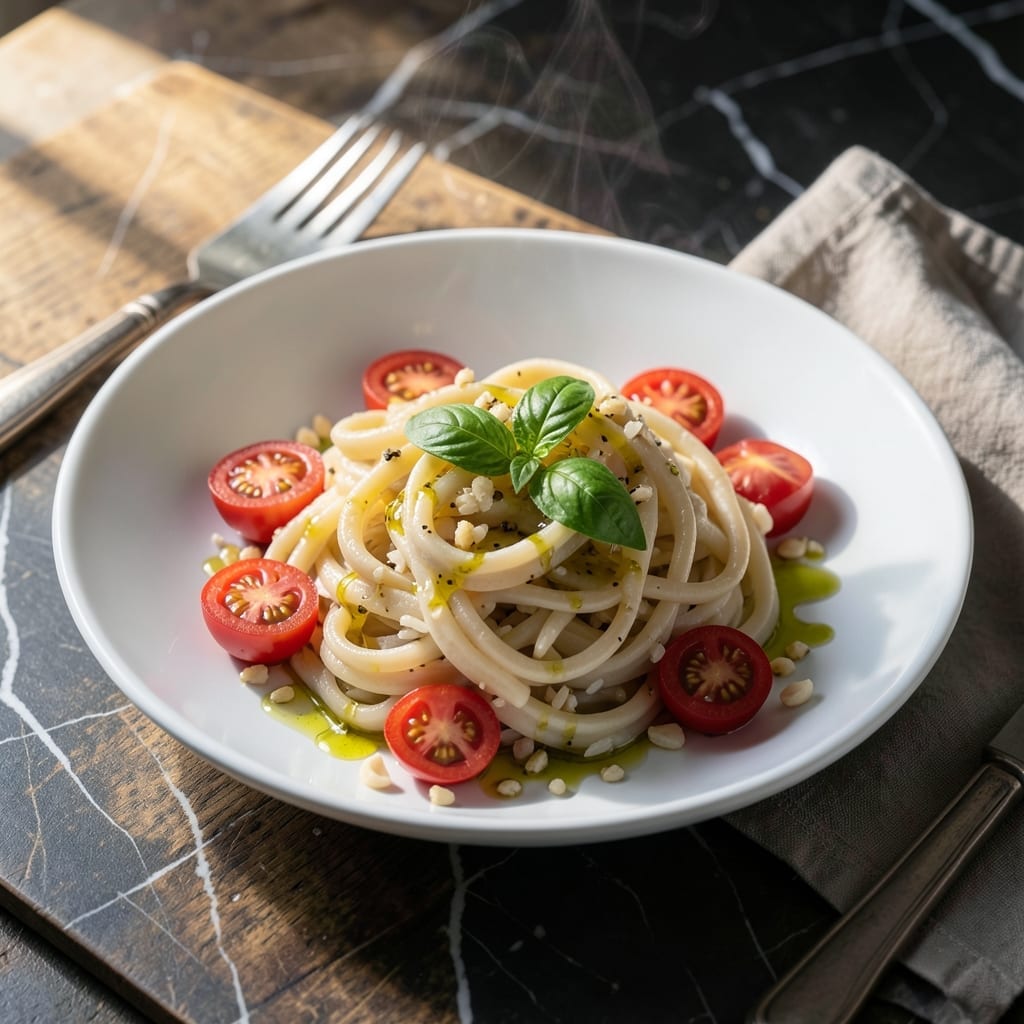
This rice pasta recipe delivers perfectly al dente texture without gluten, proving that dietary restrictions don’t mean compromising on quality. I developed this method after testing countless brands and techniques in my small Boston kitchen.
The key is precise timing and plenty of water to prevent sticking. Rice pasta cooks differently than wheat-based varieties, requiring vigilance to avoid mushiness. With this approach, you’ll achieve a satisfying bite every time.
What you get is a restaurant-quality dish that holds up to sauces and toppings just like traditional pasta. It’s ideal for those avoiding gluten or simply exploring new options.
Serve with your favorite marinara, pesto, or creamy sauce for a meal that feels indulgent yet aligns with dietary needs.
Ingredients for Gluten Free Rice Pasta
Simple vegan ingredients for restaurant-quality gluten free pasta every time.
| Ingredient | Amount | Notes |
|---|---|---|
| Rice Pasta 🍝 | 12 oz | Brown or white rice variety |
| Water 💧 | 6 cups | For boiling pasta |
| Sea Salt 🧂 | 1 tbsp | For pasta water |
| Extra-Virgin Olive Oil 🫒 | 1 tbsp | To prevent sticking |
| Garlic Cloves 🧄 | 4 cloves | Minced for sauce |
| Cherry Tomatoes 🍅 | 1 cup | Halved for garnish |
| Fresh Basil Leaves 🌿 | ½ cup | Torn for serving |
| Red Pepper Flakes 🌶️ | ½ tsp | Adjust to taste |
| Lemon Zest 🍋 | 1 tsp | Finely grated |
| Nutritional Yeast 🧀 | 2 tbsp | For cheesy flavor |
| Capers 🫒 | 1 tbsp | Drained and rinsed |
| Spinach Leaves 🥬 | 2 cups | Baby or regular, roughly chopped |
The pasta brand makes a difference here. Tinkyada and Lundberg brown rice pasta hold up best to al dente cooking (the white rice varieties can get gummy). Look for organic if possible—fewer additives mean better texture. I always grab mine from Whole Foods or the natural foods section at Market Basket. The key is the cooking time: start taste-testing at 5 minutes, not the package instructions.
No fresh basil? Dried oregano at one-third the amount works, though it won’t have that bright finish. For the spinach, baby kale or arugula add a nice peppery bite. If capers aren’t your thing, chopped olives give a similar briny punch. The nutritional yeast is optional but adds that parmesan-like depth (find it in the bulk section at Whole Foods).
Cooked pasta keeps 3-4 days in the fridge, but the texture’s best fresh. Store dry pasta in a cool cabinet—keeps for 1-2 years unopened. The sauce ingredients? Prep them while the water boils (worth the extra minute).
Why You’ll Love This Recipe
- One-Pot Wonder: I toss rice pasta, olive oil, and garlic in one pot—minimal mess, maximum flavor.
- Garlic Lovers’ Dream: The golden garlic cloves infuse the olive oil with a rich, aromatic depth that clings to every strand.
- Meal Prep Magic: Cooks up fast and keeps beautifully for lunches all week. I’ll be real: it reheats like new.
- Budget Stretcher: Rice pasta is affordable, and a little olive oil plus garlic makes it taste like a million bucks.
Step-by-Step Instructions for Gluten Free Rice Pasta
Here’s the method I use to achieve perfect al dente texture with rice pasta every time.
Step 1: Boil the Rice Pasta to Al Dente Perfection
Bring the 6 cups Water to a rolling boil in a large pot. I always use plenty of water to prevent sticking, as rice pasta can be more delicate than wheat pasta. Add the 1 tbsp Sea Salt and stir to dissolve completely.
Add the 12 oz Rice Pasta and cook according to package instructions, checking for doneness 1 minute before the suggested time. Rice pasta can go from perfect to mushy quickly. Stir occasionally to prevent clumping, and taste test frequently—you want it tender but still with a slight bite.
Drain the pasta immediately in a colander, but don’t rinse it. Shake the colander gently to remove excess water, then transfer the pasta to a large bowl. Toss with the 1 tbsp Extra-Virgin Olive Oil to prevent sticking while you prepare the sauce.
Step 2: Sauté the Aromatics for Maximum Flavor
While the pasta cooks, mince the 4 cloves Garlic Cloves and halve the 1 cup Cherry Tomatoes. Heat a large skillet over medium heat and add the minced garlic. Sauté for 30-45 seconds until fragrant but not browned—garlic burns easily and will turn bitter.
Add the halved cherry tomatoes and cook for 2-3 minutes until they begin to soften and release their juices. Stir in the 0.5 tsp Red Pepper Flakes and 1 tsp Lemon Zest to infuse the oil with bright, zesty flavor. This base will be the foundation of your sauce.
Step 3: Create the Creamy Sauce with Nutritional Yeast
Reduce the heat to low and add the 2 tbsp Nutritional Yeast to the skillet. Stir constantly for 1 minute to toast it lightly, which enhances its cheesy, umami flavor. The nutritional yeast should dissolve into the tomato-garlic oil, creating a rich, golden sauce.
Add the drained and rinsed 1 tbsp Capers and cook for another 30 seconds, stirring to distribute them evenly. Then, add the 2 cups Spinach Leaves and cook just until they wilt—about 1-2 minutes. You want the spinach to retain some texture, not turn to mush.
Step 4: Combine Pasta and Sauce for the Final Dish
Transfer the cooked rice pasta to the skillet with the sauce. Toss everything together gently but thoroughly to coat the pasta evenly. The heat from the pasta will help the flavors meld together beautifully.
Cook for an additional 1-2 minutes over low heat, stirring constantly, until everything is heated through. Taste and adjust seasoning if needed, though the sea salt in the pasta water and nutritional yeast should provide enough flavor.
Remove from heat and let it sit for 1 minute. This allows the pasta to absorb the last bits of sauce. The rice pasta should be glossy and well-coated, with the spinach and tomatoes adding freshness and color.
Step 5: Garnish and Serve Immediately
Tear the 0.5 cup Fresh Basil Leaves and sprinkle them over the pasta. The basil adds a bright, fresh contrast to the rich sauce. Toss one final time to distribute the basil evenly throughout the dish.
Serve immediately while hot. Rice pasta can absorb sauce quickly, so I recommend serving it right away for the best texture. Each serving should have a generous portion of pasta with visible flecks of spinach, tomatoes, and capers, creating a vibrant and appetizing presentation.
Pro Tips For Making Gluten Free Rice Pasta
- Boil More Water: Rice pasta needs extra space to move—use at least 4 quarts of water per 8 oz to prevent sticking. I learned this the hard way after pulling apart clumps of gummy noodles.
- Salt Like Seawater: Add 1-2 tablespoons of sea salt to the boiling water; rice pasta absorbs flavor poorly without it. Sounds excessive, but it actually changes the outcome.
- Test Early, Often: Start checking doneness 1-2 minutes before package time—rice pasta goes from perfect to mushy fast. My grandmother swore by this, and she was right.
- Reserve Pasta Water: Scoop out ½ cup of starchy cooking water before draining; it helps the olive oil and garlic cling to the noodles. Skip the rinse—it washes away the glue that makes sauces stick.
Dietary Considerations for gluten free rice pasta
Gluten-Free Benefits
This dish is naturally gluten-free, making it safe for those with celiac disease or gluten sensitivity. Rice pasta provides the same satisfying texture as traditional wheat pasta without triggering adverse reactions. I love that it allows everyone to enjoy pasta night together.
Vegan-Friendly
With no animal products, this recipe aligns perfectly with a vegan diet. The nutritional yeast adds a cheesy flavor without dairy, while olive oil replaces butter. It’s a plant-based meal that doesn’t skimp on taste or satisfaction.
Nut-Free & Soy-Free
This recipe avoids common allergens like nuts and soy, making it a safe choice for many dietary restrictions. The simple ingredients list means fewer worries about hidden allergens. I always double-check labels on pasta brands to ensure safety.
Low-Fat Option
With just 1 tbsp olive oil for the entire dish, this is a naturally low-fat meal. The focus on vegetables and whole-grain pasta keeps it light yet filling. It’s a great option for those watching their fat intake without sacrificing flavor.
High in Fiber
Brown rice pasta brings extra fiber to your plate, supporting digestive health and keeping you full longer. A 2-oz serving of brown rice pasta provides about 2g of fiber, more than white rice varieties. 💪
Versatile for Dietary Needs
This recipe easily adapts to other dietary needs. For a lower-carb option, reduce the pasta portion and increase the spinach. To add protein, toss in chickpeas or white beans before serving.
Nutrition Facts
Frequently Asked Questions
Why does rice pasta get mushy so easily?
Rice pasta lacks gluten, which normally helps pasta hold its shape. Overcooking by even 1-2 minutes causes it to break down. Always taste-test 1 minute before the package’s suggested time.
Can I use white rice pasta instead of brown?
Yes, but brown rice pasta holds texture better. White rice varieties cook faster and can turn gummy. If using white, reduce cooking time by 1-2 minutes and check frequently.
What’s the best way to prevent sticking?
Use plenty of water (6 cups minimum) and stir often. Tossing with 1 tbsp olive oil after draining helps too. Never rinse pasta—it washes away starch that helps sauce cling.
How do I store leftovers without them drying out?
Store in an airtight container with a splash of water or olive oil. Reheat gently with a damp paper towel over the dish to add moisture. Eats best within 2-3 days.

- Glutinous Rice Flour Bread Recipe: Soft Pillows with Nutty Depth - October 12, 2026
- Green Rice Casserole Recipe: Cheesy Baked Comfort with Vibrant Herbs - October 12, 2026
- Glutinous Rice Coconut Milk Recipe: Chewy Sweetness With Tropical Depth - October 12, 2026