
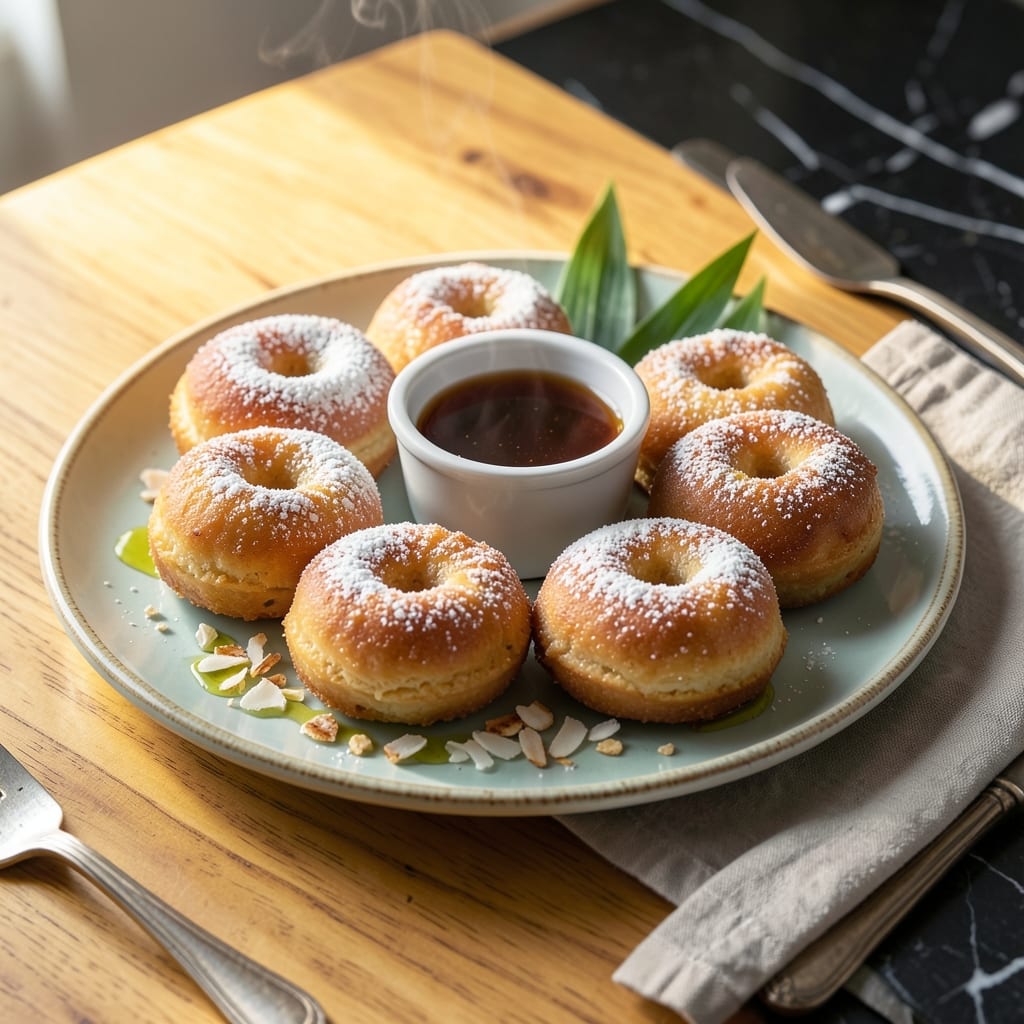
These donuts deliver the perfect balance of crispy exterior and pillowy, chewy interior that defines exceptional glutinous rice treats. The secret lies in proper hydration and precise frying temperatures.
Developed through careful testing, this method ensures consistent results every time. The dough comes together quickly with simple ingredients, and the frying process creates that coveted textural contrast.
Ingredients for Glutinous Rice Donut
Simple plant-based ingredients create these chewy, crispy glutinous rice treats with texture perfection.
| Ingredient | Amount | Notes |
|---|---|---|
| Glutinous Rice Flour 🌾 | 2 cups | Also known as sweet rice flour |
| Granulated Sugar 🍚 | ⅓ cup | Adjust to taste preference |
| Warm Water 💧 | ¾ cup | Approximately 110°F for activation |
| Coconut Milk 🥥 | ¼ cup | Full-fat for richness |
| Active Dry Yeast 🍞 | 1 tsp | Ensures proper rise |
| Salt 🧂 | ½ tsp | Balances sweetness |
| Vegetable Oil 🫒 | 4 cups | For deep frying, neutral flavor |
| Tapioca Starch 🌾 | 2 tbsp | Improves chewiness |
| Baking Powder 🍞 | ½ tsp | For slight lift |
| Vanilla Extract 🌿 | 1 tsp | Pure extract for best flavor |
| Sesame Seeds 🌰 | 2 tbsp | For topping, toasted |
The glutinous rice flour is non-negotiable—Bob’s Red Mill or Erawan brands are reliable. Look for fine, powdery texture without lumps. Warm water temperature is critical: too hot kills the yeast, too cold won’t activate it. A kitchen thermometer ensures precision. For the coconut milk, full-fat canned from Thai Kitchen or Native Forest provides the necessary richness for proper dough consistency.
No glutinous rice flour? Mochiko is the same thing—just check the label. Substituting regular rice flour ruins the texture. For the oil, any neutral-flavored vegetable oil works (soybean, canola). Skip the coconut oil for frying—low smoke point. The tapioca starch can be replaced with cornstarch at equal amounts, though texture may vary slightly. Fresh yeast can be used at one-third the amount of dry.
Store glutinous rice flour in an airtight container for up to 6 months. The dough can rest overnight in the fridge if needed. Fried donuts are best consumed same-day but keep 2-3 days in a sealed container. Reheat in a 350°F oven for 5 minutes to restore crispness.
Why You’ll Love This Recipe
- No-Fuss Mixing: I just stir glutinous rice flour, sugar, and coconut milk with yeast—no fancy equipment, no stress.
- Chewy Coconut Bliss: The coconut milk gives them this rich, slightly sweet flavor that’s impossible to resist.
- Breakfast to Dessert: Honestly, I’ve served these for breakfast, snacks, and even a quick dessert—so versatile.
- Budget-Friendly Batch: A bag of glutinous rice flour makes dozens, and they cost pennies compared to bakery donuts.
Step-by-Step Instructions for Glutinous Rice Donuts
Master the technique for achieving that perfect balance of chewy interior and crispy exterior.
Step 1: Activate the Yeast and Combine Dry Ingredients
Begin by activating the 1 tsp Active Dry Yeast in the 0.75 cup Warm Water—it should be approximately 110°F to wake the yeast without killing it. You’ll see it foam and bubble within 5-10 minutes, signaling it’s alive and ready to work.
In a large mixing bowl, whisk together the 2 cups Glutinous Rice Flour, 2 tbsp Tapioca Starch, 0.33 cup Granulated Sugar, 0.5 tsp Salt, and 0.5 tsp Baking Powder until fully combined. This blend of flours and starches ensures the signature chewy texture, while the baking powder provides just enough lift to keep the donuts light.
Step 2: Form the Dough and Let It Rise
Pour the activated yeast mixture and 0.25 cup Coconut Milk into the dry ingredients. Add the 1 tsp Vanilla Extract for depth of flavor. Mix with a wooden spoon until a shaggy dough forms, then switch to kneading by hand for 5-7 minutes until smooth and elastic.
The dough will be slightly sticky but should pull away from the bowl cleanly. Cover with a damp towel and let it rise in a warm place for 1-2 hours, or until doubled in size. This fermentation step is critical—it develops the structure and ensures the donuts fry up with that airy, pillowy interior.
Step 3: Shape the Donuts and Prepare for Frying
Once risen, punch down the dough to release excess air. Divide it into 12 equal portions and roll each into a smooth ball. Flatten slightly into a disc about ½ inch thick, then use your thumb to create a hole in the center, stretching gently to form a ring. Place the shaped donuts on a parchment-lined tray.
Cover them again and let rest for 15-20 minutes while you prepare the frying oil. This second rise relaxes the gluten, ensuring the donuts hold their shape and don’t shrink during frying. Meanwhile, pour the 4 cups Vegetable Oil into a deep, heavy-bottomed pot—it should be at least 2 inches deep to fully submerge the donuts.
Step 4: Fry to Golden Perfection
Heat the oil over medium heat until it reaches 350-375°F. To test, drop in a small piece of dough—if it sizzles and rises immediately, the oil is ready. Carefully slide in 2-3 donuts at a time, being careful not to overcrowd the pot. Fry for 2-3 minutes per side until deep golden brown.
Use a slotted spoon to transfer the fried donuts to a paper towel-lined plate to drain excess oil. The exterior should be crisp and crackly, while the inside remains soft and chewy. Work in batches to maintain the oil temperature—if it drops too low, the donuts will absorb oil and turn greasy.
Step 5: Finish with Toasted Sesame Seeds
While the donuts are still warm, roll them in the 2 tbsp Sesame Seeds to coat the tops. For extra flavor, lightly toast the sesame seeds in a dry pan for 1-2 minutes until fragrant before using. The warmth of the donuts will help the seeds adhere, adding a nutty crunch to every bite.
Serve immediately while crispy, or let cool on a wire rack if you prefer them at room temperature. The contrast between the slightly sweet, chewy dough and the crispy, toasted sesame coating is what makes these donuts irresistible. Enjoy within a few hours for the best texture.
Pro Tips For Making Glutinous Rice Donut
- Activate Yeast Properly: Proof your yeast in warm water (105-110°F) with a pinch of sugar first—I learned this the hard way after killing three batches by using water that was too hot.
- Use Room-Temp Coconut Milk: Cold coconut milk can shock the yeast and stall fermentation, so let it sit out for 30 minutes before mixing.
- Skip Overmixing: Stir just until combined—overworking the glutinous rice flour makes the donuts dense instead of light and chewy.
- Fry Low and Slow: Keep the oil at 325°F to cook the donuts through without burning the outside, which happens fast with their high sugar content.
Troubleshooting Great glutinous rice donut
Dough Too Sticky
If your dough clings to your hands, add 1-2 tbsp more glutinous rice flour while kneading. The dough should be tacky but not wet. I find that Bob’s Red Mill brand absorbs moisture differently than others, so adjust as needed. 💡
Dough Not Rising
Check your yeast first—if it didn’t foam in 5-10 minutes, it may be expired. Ensure your water is 110°F; too hot kills yeast, too cold won’t activate it. Also, place the bowl in a warm spot like an oven with the light on.
Donuts Absorb Oil
This happens when oil temperature drops below 350°F. Use a thermometer to maintain 350-375°F and fry in small batches. I recommend a heavy-bottomed pot to retain heat. Overcrowding the pot lowers the temperature quickly.
Donuts Collapse After Frying
Underproofed dough is the usual culprit. Let your shaped donuts rest for the full 15-20 minutes before frying. Also, ensure your yeast was active and the dough doubled in size during the first rise. This builds the structure needed to hold shape.
Not Chewy Enough
Glutinous rice flour is key—regular rice flour won’t work. If texture is still off, try adding 1 extra tbsp tapioca starch next time. Knead the dough for the full 5-7 minutes to develop elasticity. The dough should spring back slightly when poked.
Sesame Seeds Won’t Stick
Roll the donuts in seeds while they’re still warm from frying. For extra adhesion, brush them lightly with coconut milk before coating. Toasting the seeds for 1-2 minutes enhances flavor and helps them cling better. 🌟
Nutrition Facts
Frequently Asked Questions
Can I use regular rice flour instead?
No, regular rice flour won’t give the same chewy texture. Glutinous rice flour is essential for that signature pillowy interior. Brands like Bob’s Red Mill or Mochiko work perfectly.
Why did my donuts turn out dense?
This usually means the dough didn’t rise enough. Ensure your yeast is fresh and activated in 110°F water. Also, let the dough double in size before shaping.
How do I keep them crispy?
Serve immediately after frying for the best texture. If storing, reheat in a 350°F oven for 5 minutes to restore crispness. Avoid sealing them while warm to prevent sogginess.

- Cream of Wild Rice Soup Recipe: Earthy Grains in Silky Broth - October 9, 2026
- Filipino Garlic Rice Recipe: Crispy Fried Aroma With Every Bite - October 9, 2026
- Gobi Manchurian Rice Recipe: Indo-Chinese Fusion in One Bowl - October 9, 2026