
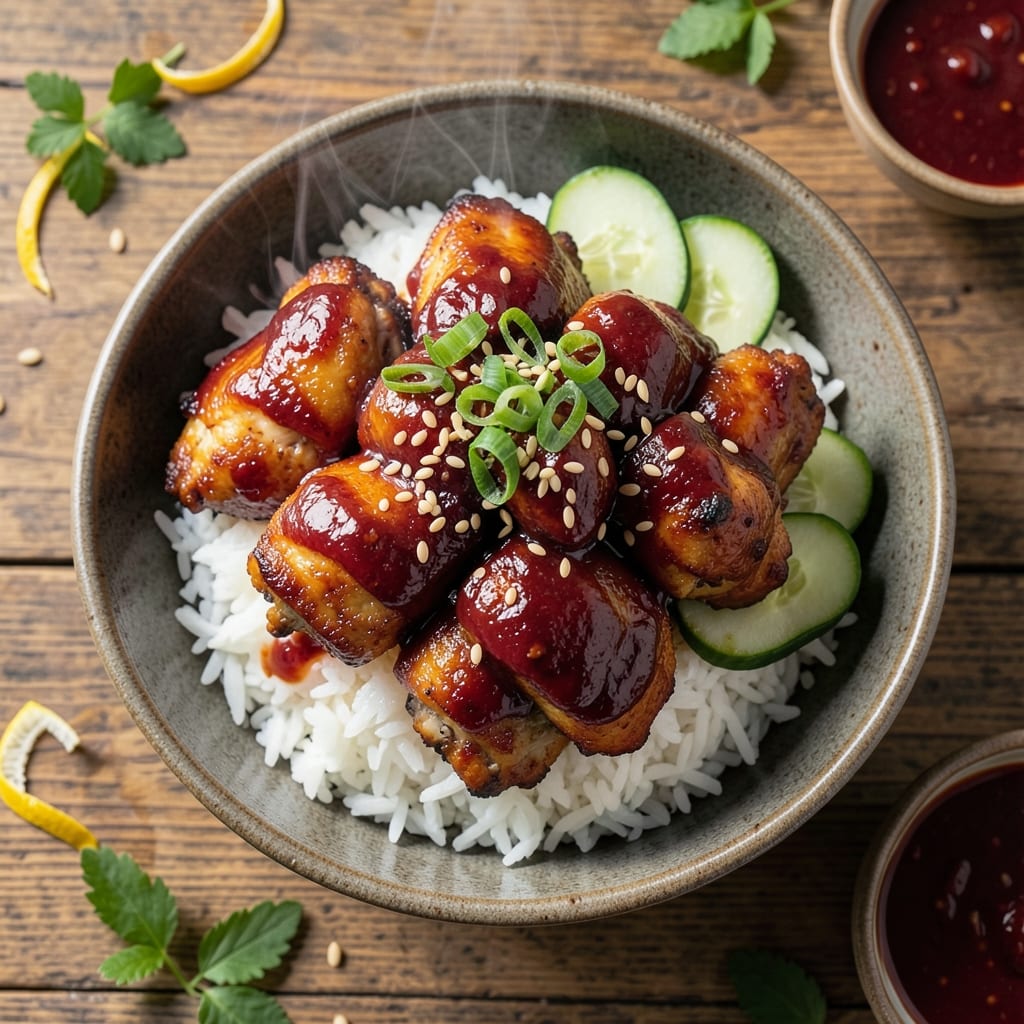
This Korean-inspired bowl brings bold flavors together in one satisfying meal. The spicy gochujang chicken pairs perfectly with fluffy rice and fresh vegetables for a balanced dish.
I’ve refined this method to ensure the chicken stays tender while the sauce delivers that signature sweet-heat kick. It’s a complete, well-rounded meal that’s as easy to make as it is delicious.
Ingredients for Gochujang Chicken Rice Bowl
Bold Korean flavors meet everyday ingredients for a satisfying one-bowl meal that delivers on taste and texture.
| Ingredient | Amount | Notes |
|---|---|---|
| Boneless Skinless Chicken Thighs 🍗 | 1 ½ lb | Trimmed of excess fat |
| Gochujang Paste 🌶️ | ½ cup | Korean red pepper paste |
| Soy Sauce 🫒 | 3 tbsp | Low-sodium preferred |
| Honey 🍯 | 2 tbsp | For balancing heat |
| Rice Vinegar 💧 | 1 tbsp | Adds necessary acidity |
| Sesame Oil 🫒 | 1 tbsp | Toasted variety preferred |
| Garlic Cloves 🧄 | 4 cloves | Minced finely |
| Fresh Ginger 🌿 | 1 tbsp | Grated or minced |
| Jasmine Rice 🍚 | 2 cups | Uncooked, rinsed well |
| Carrots 🥕 | 2 whole | Julienned or shredded |
| English Cucumber 🥒 | 1 whole | Thinly sliced |
| Scallions 🧅 | 4 whole | Thinly sliced for garnish |
| Sesame Seeds 🌰 | 1 tbsp | Toasted for garnish |
| Vegetable Oil 🫒 | 1 tbsp | For cooking chicken |
| Salt 🧂 | ½ tsp | To taste |
The gochujang is non-negotiable for authentic flavor—look for Sempio or Mother-in-Law’s brands at H Mart or Asian grocery stores. Chicken thighs stay juicier than breasts through cooking (trust me on this). For the rice, jasmine’s floral notes pair perfectly, but short-grain sushi rice works too. Always rinse until the water runs clear to avoid gummy texture.
Out of gochujang? Sriracha plus a spoon of miso paste gets you close but won’t have the same depth. Honey can be swapped for brown sugar at 1:1 ratio. No fresh ginger? Ground ginger at one-quarter the amount works. The vegetables are flexible—try shredded cabbage or bell peppers instead of carrots.
The chicken marinade can sit for up to 24 hours—flavor improves with time. Cooked chicken and rice keep for 4 days refrigerated. Store the sauce separately to prevent sogginess. Sesame seeds toast in 2 minutes in a dry pan (worth the extra effort).
Why You’ll Love This Recipe
- One Pan Wonder: I toss the chicken thighs with gochujang, soy sauce, and honey, then roast everything together—minimal dishes, maximum flavor.
- Sweet & Spicy Fix: The combination of gochujang’s heat with honey’s sweetness and rice vinegar’s tang hits all the right notes.
- Meal Prep MVP: I make a big batch on Sunday and it reheats beautifully for lunches all week.
- Budget Stretcher: Boneless chicken thighs are affordable, and a little gochujang paste goes a long way.
Step-by-Step Instructions for Gochujang Chicken Rice Bowl
This method ensures balanced flavors and perfect texture for a restaurant-quality dish at home.
Step 1: Marinate the Chicken Thighs
In a large bowl, whisk together the 0.5 cup gochujang paste, 3 tbsp soy sauce, 2 tbsp honey, 1 tbsp rice vinegar, and 1 tbsp sesame oil until smooth. The paste should be thick but pourable—this creates the signature spicy-sweet glaze.
Add the 1.5 lb boneless skinless chicken thighs to the marinade, ensuring each piece is fully coated. I like to use my hands for this step to work the marinade into all the nooks. Cover and refrigerate for at least 30 minutes, or up to 4 hours for deeper flavor penetration.
Step 2: Cook the Chicken and Prepare the Rice
Heat the 1 tbsp vegetable oil in a large skillet over medium-high heat. Remove the chicken from the marinade (reserve excess marinade) and cook for 5-6 minutes per side until deeply caramelized and the internal temperature reaches 165°F.
Pour in the reserved marinade and 1 tbsp fresh ginger, plus the 4 cloves garlic cloves. Simmer for 2-3 minutes until the sauce thickens and coats the chicken. Meanwhile, cook the 2 cups jasmine rice according to package instructions.
Step 3: Prepare the Vegetable Garnishes
While the chicken rests, julienne the 2 whole carrots and thinly slice the 1 whole English cucumber. Toss both with a pinch of the 0.5 tsp salt to enhance their natural sweetness. Thinly slice the 4 whole scallions and toast the 1 tbsp sesame seeds in a dry pan over medium heat for 1-2 minutes until golden and fragrant.
These fresh elements provide a cool, crisp contrast to the rich, spicy chicken and ensure each bite is balanced.
Step 4: Assemble the Rice Bowls
Divide the cooked jasmine rice among four bowls. Top each with the gochujang chicken, arranging it in the center. Spoon any remaining sauce from the skillet over the chicken to amplify the flavor.
Scatter the carrots, cucumber, and scallions around the chicken. Finish with a sprinkle of toasted sesame seeds for added texture and visual appeal. The vibrant colors and layers of flavor make this dish as beautiful as it is delicious.
Pro Tips For Making Gochujang Chicken Rice Bowl
- Sear Chicken First: Brown the chicken thighs in the pan for 3-4 minutes per side before adding the sauce—I learned this the hard way after my first batch turned out pale and watery.
- Thin the Gochujang: Mix the gochujang paste with the soy sauce and honey first to loosen it, or you’ll end up with stubborn clumps even after stirring for ages.
- Skip Overcrowding: Cook the chicken in batches if needed, because cramming it all in steams the meat instead of giving it that sticky, caramelized coating.
- Rest Before Serving: Let the chicken sit for 5 minutes after cooking so the juices redistribute—sounds weird, but it keeps the meat from drying out when you slice it for the rice bowls.
Essential Equipment for This Recipe
Non-Negotiable Tools
For marinated chicken, a large mixing bowl with lid is essential. I use a 4-quart Pyrex—it’s sturdy and won’t absorb odors. A whisk ensures the gochujang sauce emulsifies perfectly with the honey and soy.
Cooking Equipment
A large skillet with high sides prevents sauce splatters while cooking. I swear by my 12-inch Lodge cast iron for even heat distribution. For rice, a 2-quart saucepan with tight lid guarantees fluffy jasmine rice every time.
Cutting and Prep
A sharp chef’s knife makes quick work of the chicken and veggies. I use my 8-inch Wüsthof for precision. A mandoline slicer creates perfect cucumber and carrot julienne in seconds—OXO Good Grips is my go-to brand. 💡
Serving Essentials
Wide, shallow bowls showcase the vibrant layers of this dish beautifully. I love my stoneware bowls from Pottery Barn—they retain heat well. A rice paddle helps fluff the rice without crushing the grains.
Measuring Tools
Accurate measurements matter with bold flavors like gochujang. I keep a set of stainless steel measuring spoons and cups from Cuisinox in my drawer. A kitchen scale ensures perfect rice-to-water ratios for consistent results. 🔥
Extras for Success
A meat thermometer takes the guesswork out of chicken doneness—I use ThermoWorks Instant Read. Tongs help flip chicken without piercing it, preserving juices. A fine-mesh strainer rinses rice thoroughly to avoid gummy texture.
Nutrition Facts
Frequently Asked Questions
Can I use chicken breast instead of thighs?
Yes, but thighs stay juicier due to their higher fat content. If using breasts, reduce cooking time to 4-5 minutes per side to prevent dryness. The flavor will be milder but still delicious.
How spicy is this dish?
Gochujang brings moderate heat, balanced by honey’s sweetness. For less spice, reduce gochujang to 1/3 cup and add 1 tbsp extra honey. For more heat, add 1/2 tsp red pepper flakes.
Can I make this ahead of time?
Marinate the chicken up to 24 hours in advance. Cook the rice and chicken separately, then store in the fridge for up to 3 days. Assemble and reheat just before serving.
What are good side dishes?
Pair with kimchi for tangy crunch or a simple cucumber salad. Edamame or steamed broccoli add freshness. For extra protein, top with a soft-boiled egg.

- Jollof Rice Sauce Recipe: West African Tomato and Spice Infusion - September 25, 2026
- Japanese Rice Soup Recipe: Umami-Rich Comfort in a Bowl - September 25, 2026
- Homemade Cream Of Rice Recipe: Silk-Smooth Breakfast in Minutes - September 25, 2026