
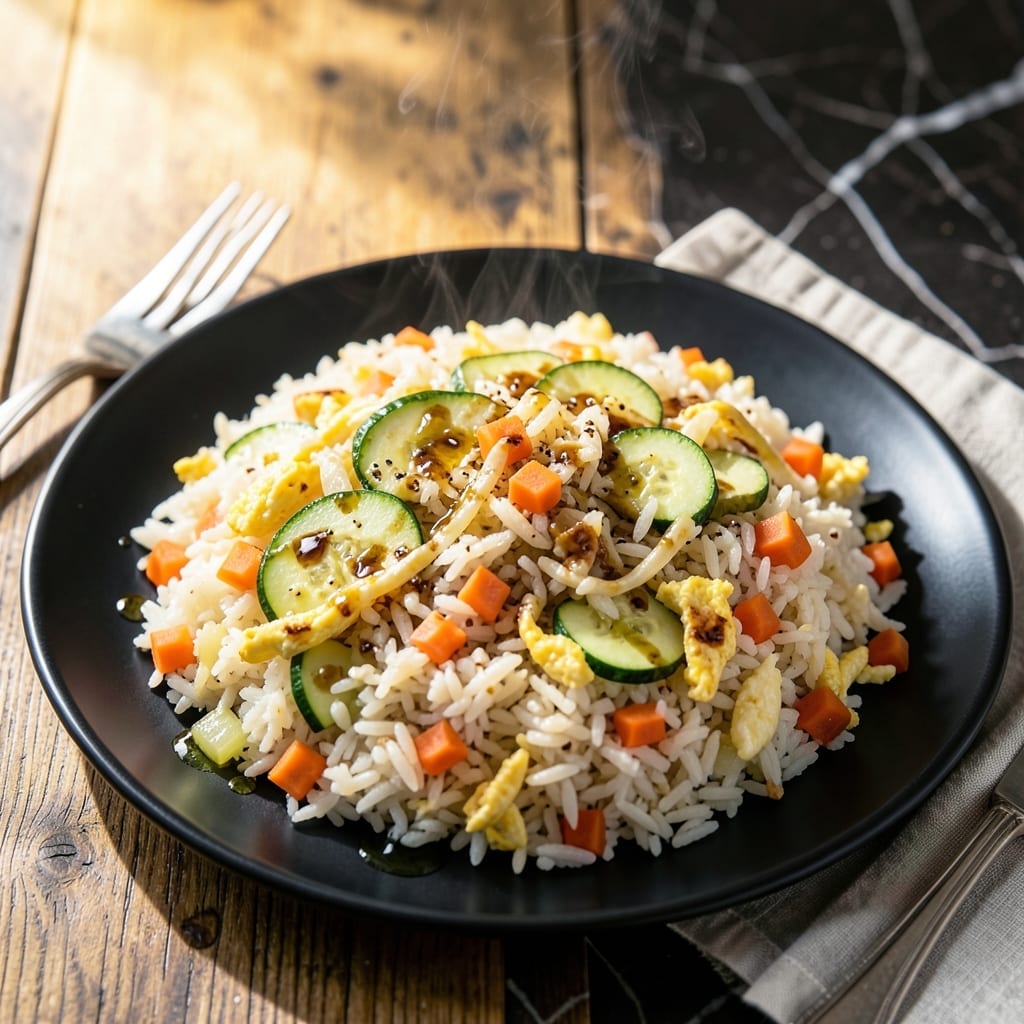
I’ve tested this hibachi-style dish in my tiny Boston kitchen more times than I can count, always chasing that restaurant-quality sear. The key is high heat and constant motion, which transforms simple ingredients into something extraordinary.
This version delivers the signature smoky flavor and tender texture you expect from a hibachi grill, all in your home kitchen. The scrambled eggs add richness while maintaining the lightness that makes this dish so addictive.
You’ll achieve perfectly seared rice with bits of egg and vegetables throughout, all tied together with that unmistakable umami depth. The result is a complete meal that’s as satisfying as it is impressive.
Serve it hot, straight from the wok, for the most authentic experience. Here’s how to make it.
Ingredients for Hibachi Egg Fried Rice
Cold rice, fresh veggies, and a hot wok are all you need for this restaurant-style dish.
| Ingredient | Amount | Notes |
|---|---|---|
| Day-Old Cooked White Rice 🍚 | 4 cups | Cold, dry, preferably leftover |
| Large Eggs 🥚 | 3 whole | Beaten until frothy |
| Soy Sauce 💧 | 3 tbsp | Low-sodium preferred for control |
| Sesame Oil 🫒 | 1 tbsp | Toasted for depth of flavor |
| Vegetable Oil 🫒 | 2 tbsp | High smoke point essential |
| Carrots 🥕 | 1 whole | Small diced for even cooking |
| Zucchini 🥒 | 1 whole | Small diced, seeds removed |
| Yellow Onion 🧅 | ½ whole | Finely diced for texture |
| Garlic Cloves 🧄 | 3 cloves | Minced for maximum flavor |
| Green Onions 🧅 | 3 whole | Thinly sliced, green parts only |
| Butter 🧈 | 2 tbsp | Unsalted for seasoning control |
| Salt 🧂 | ½ tsp | Kosher or sea salt preferred |
| Black Pepper 🌶️ | ¼ tsp | Freshly ground for best flavor |
The rice is everything here. Day-old, cold, and dry from the fridge is non-negotiable—fresh rice turns to mush. I grab mine from the local Asian market when I’m feeling lazy (they sell it pre-cooked and chilled). For veggies, Carrots and zucchini give that classic hibachi texture, but use what you’ve got. The soy sauce? I swear by Kikkoman low-sodium—consistent quality, every time.
No soy sauce? Coconut aminos work in a pinch (sweeter, but close). Out of sesame oil? Toasted peanut oil adds a similar depth. The butter might seem odd, but it’s the restaurant trick for that rich finish. Want extra umami? A dash of fish sauce (or vegan fish sauce) deepens the flavor. And if you’re missing green onions, chives work fine—just add them at the end.
Leftover rice keeps in the fridge for 3-4 days—perfect for this. The cooked dish holds for 2-3 days, but honestly, it’s best fresh. Reheat in the wok with a splash of water to bring it back to life. Don’t skip the high heat (it’s what gives you that signature sear).
Why You’ll Love This Recipe
- One-Pan Wonder: I toss everything in my wok and it’s done in 15 minutes—no extra bowls, no fuss.
- Umami Bomb: That hit of soy sauce and sesame oil with the eggs? Ridiculously good every time.
- Feeds the Crew: Honestly, it’s my go-to for weeknight dinners, lunches, or even a quick breakfast.
- Budget Hero: Day-old rice and a few eggs stretch into a meal that feels way fancier than it costs.
Step-by-Step Instructions for Hibachi Egg Fried Rice
Here’s my tested method for achieving that perfect wok-seared texture and rich umami flavor at home.
Step 1: Prep Vegetables and Rice for Optimal Texture
Small dice the Carrots, Zucchini, and 0.5 whole Yellow Onion into uniform pieces. This ensures even cooking and proper distribution throughout the dish. I remove the seeds from the Zucchini to prevent excess moisture from making the rice soggy.
Break up the 4 cups Day-Old Cooked White Rice with your hands, ensuring no clumps remain. Cold, dry rice is essential—it fries up fluffy and absorbs flavors better than fresh rice. Set this aside while you prep the remaining ingredients.
Step 2: Scramble Eggs and Aromatics for Rich Base
Whisk the 3 whole Large Eggs until frothy and season with a pinch of the 0.5 tsp Salt and 0.25 tsp Black Pepper. Heat 2 tbsp Vegetable Oil in a wok or large skillet over high heat until shimmering.
Pour in the eggs and scramble quickly until just set but still slightly soft—about 1 minute. Remove the eggs and set aside. In the same pan, add the 2 tbsp Butter, then sauté the 3 cloves Garlic Cloves and diced vegetables for 3-4 minutes until the Carrots soften slightly and the Onion turns translucent.
Step 3: Wok-Fry Rice with Umami Seasoning
Increase the heat to maximum and add the broken-up 4 cups Day-Old Cooked White Rice to the wok. Stir-fry aggressively for 2-3 minutes, pressing the rice against the hot surface to create those coveted crispy bits. The rice should start to sizzle and develop a light golden color.
Drizzle the 3 tbsp Soy Sauce and 1 tbsp Sesame Oil evenly over the rice. I use low-sodium soy sauce here to control the saltiness, as the sesame oil adds depth. Continue stir-frying for another 2 minutes until every grain is coated and the rice takes on a rich, caramelized appearance.
Step 4: Combine All Elements for Final Finish
Return the scrambled 3 whole Large Eggs to the wok and fold them gently into the rice. The eggs should break into soft, tender pieces that distribute evenly. Toss in the 3 whole Green Onions and stir for 30 seconds until they soften slightly but retain their bright green color.
Taste and adjust the seasoning with the remaining 0.5 tsp Salt and 0.25 tsp Black Pepper if needed. The final dish should have a balance of savory depth from the soy and sesame, with the sweetness of the vegetables and richness of the eggs shining through.
Pro Tips For Making Hibachi Egg Fried Rice
- Use Cold Rice: Day-old rice from the fridge works best—it’s drier and fries up fluffier instead of turning mushy like fresh rice.
- Scramble Eggs Separately: Cook the eggs first in a little vegetable oil, then set aside. This keeps them tender instead of rubbery when mixed with the rice.
- Crank the Heat: High heat is non-negotiable for that classic hibachi sear. I learned this the hard way—low heat just steams the rice.
- Finish with Sesame Oil: Drizzle the sesame oil at the very end, just before serving. Adding it earlier makes it bitter—sounds weird, but it works.
Common Mistakes When Making This Recipe
Using Fresh Rice
This is the cardinal sin of fried rice. Freshly cooked rice contains too much moisture, which turns your dish into a mushy, steamed mess instead of that coveted wok-seared texture. I learned this the hard way in my Boston kitchen. Stick to day-old, cold rice straight from the fridge. 💡
Skipping High Heat
Hibachi-style cooking demands high heat to achieve that signature sear and smoky flavor. If your pan isn’t hot enough, you’ll end up with pale, soggy rice. Use a wok or heavy skillet and let it get screaming hot before adding the Vegetable Oil.
Overcrowding the Pan
Trying to cook too much at once lowers the temperature and steams the ingredients instead of frying them. Work in batches if needed. I keep my portions to 2 cups rice at a time in my home setup. This ensures each grain gets that perfect golden sear.
Overcooking the Eggs
Scramble the 3 whole Large Eggs just until softly set—about 1 minute—then remove them. If you cook them fully in the pan, they’ll turn rubbery. The residual heat will finish them when you combine everything at the end.
Ignoring the Wok Toss
Constant motion is key to even cooking and preventing burning. Use a spatula to toss the rice continuously, pressing it against the hot surface. I find a quick wrist flick helps distribute the Soy Sauce and Sesame Oil evenly. 🔥
Adding Sauces Too Early
Pour the 3 tbsp Soy Sauce and 1 tbsp Sesame Oil only after the rice has had a chance to crisp up in the wok. Adding them too soon creates steam, which softens the rice. Patience here makes all the difference.
Nutrition Facts
Frequently Asked Questions
Can I use fresh rice instead of day-old?
No, fresh rice has too much moisture. It will turn mushy instead of searing properly. Always use cold, dry rice from the fridge for best texture.
What if I don’t have a wok?
A large, heavy skillet works fine. Just make sure it gets screaming hot before adding oil. Cast iron is ideal for even heat distribution.
How do I get that restaurant sear at home?
Use high heat and don’t overcrowd the pan. Press the rice against the surface and stir-fry constantly for 2-3 minutes to develop crispy bits.
Can I add other vegetables?
Try bell peppers, peas, or mushrooms. Just dice them small and cook until tender-crisp before adding the rice.

- Ground Beef Rice and Beans Recipe: Slow-Simmered Savory Harmony - October 17, 2026
- Guyanese Fried Rice Recipe: Caribbean Spice With Wok-Charred Aromatics - October 17, 2026
- Hakka Thunder Tea Rice Recipe: Wok-Charred Herbal Infusion - October 17, 2026