
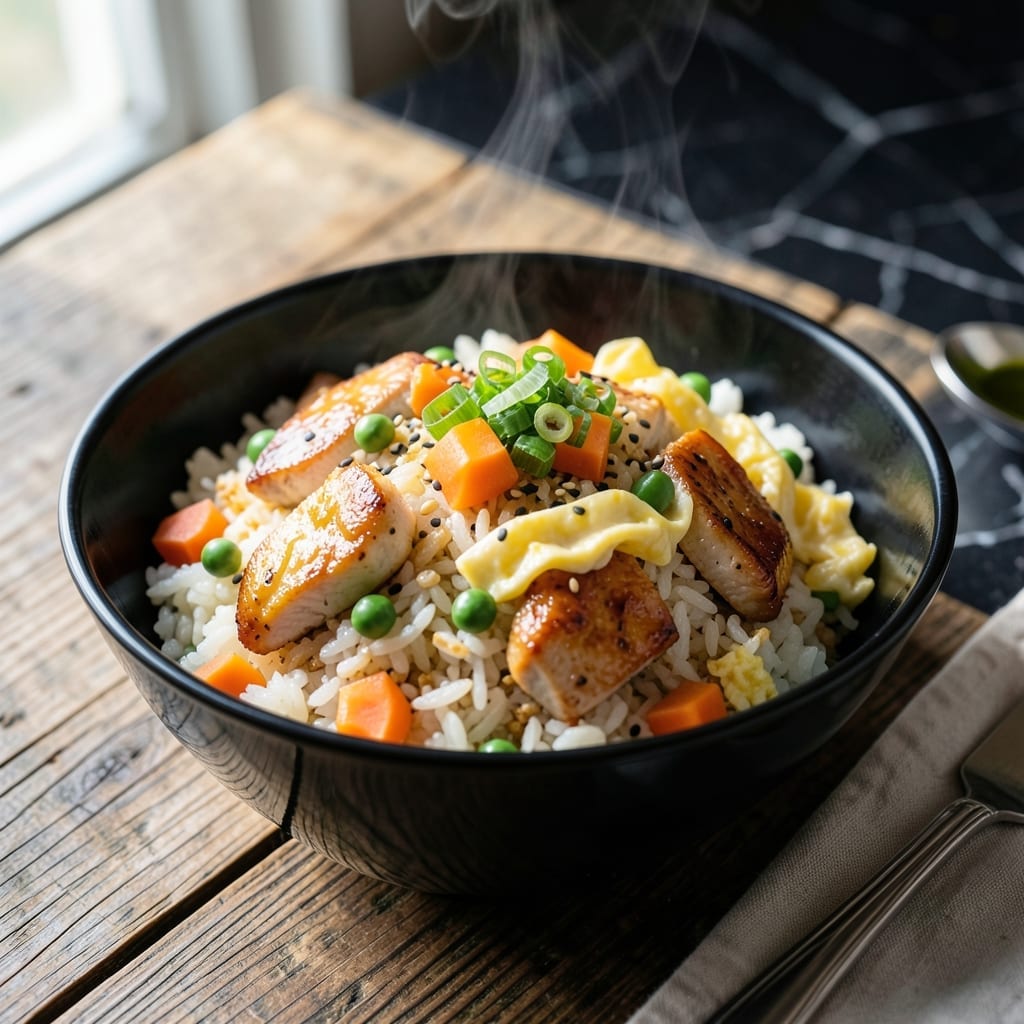
This recipe brings authentic Japanese street food flavor to your kitchen with a traditional technique that delivers perfect texture every time.
Using simple ingredients and precise timing, you’ll achieve that signature balance of savory, slightly sweet, and umami-rich taste that defines classic ichiban fried rice.
Ingredients for Ichiban Fried Rice
Traditional Japanese ingredients combine for authentic street food flavor with precise balance of savory and umami richness.
| Ingredient | Amount | Notes |
|---|---|---|
| Cooked White Rice 🍚 | 4 cups | Day-old, chilled for best texture |
| Boneless Chicken Thighs 🍗 | ¾ lb | Diced into small cubes |
| Large Eggs 🥚 | 2 whole | Lightly beaten for scrambling |
| Carrot 🥕 | 1 whole | Finely diced for even cooking |
| Green Onions 🧅 | 3 whole | Thinly sliced, whites and greens separated |
| Frozen Peas 🌱 | ½ cup | Thawed under running water |
| Soy Sauce 🫒 | 3 tbsp | Use low-sodium for control |
| Oyster Sauce 🫒 | 1 tbsp | Essential for authentic umami depth |
| Sesame Oil 🫒 | 1 tbsp | Toasted variety for aroma |
| Vegetable Oil 🫒 | 2 tbsp | High smoke point for stir-frying |
| Garlic Cloves 🧄 | 2 cloves | Minced finely for even distribution |
| Fresh Ginger Root 🌿 | 1 tbsp | Grated for maximum flavor extraction |
| White Pepper 🧂 | ½ tsp | Traditional choice for subtle heat |
| Salt 🧂 | ¼ tsp | Adjust to taste at finish |
| Benishoga 🌶️ | 2 tbsp | Red pickled ginger for garnish |
The rice is non-negotiable—day-old, chilled jasmine or short-grain gives you that perfect chewy texture. Koshihikari is the gold standard for authentic flavor, but any short-grain works. The chicken thighs should be boneless, skinless for quick cooking. Find these at any Asian market or well-stocked supermarket. Fresh ginger and garlic are essential; avoid the jarred stuff for this.
No oyster sauce? Vegetarian oyster sauce works in a pinch, though the flavor profile shifts slightly. Out of sesame oil? Toasted peanut oil offers a similar depth. The benishoga can be swapped with pickled red onions if unavailable. For extra authenticity, add a dash of MSG—it’s traditional in many Japanese kitchens and enhances umami without overpowering.
Fried rice tastes best fresh but keeps well. Store in an airtight container in the fridge for up to 3 days. Reheat in a skillet with a splash of water to revive the texture. Not ideal for freezing—the rice loses its signature chew. Always cook the chicken through before combining with rice for food safety.
Why You’ll Love This Recipe
- One Pan Wonder: I toss everything—rice, chicken, eggs, and veggies—in one skillet and it’s done in 15 minutes flat.
- Umami Bomb: The soy sauce and chicken thighs create this rich, savory depth that makes every bite crave-worthy.
- Meal Prep Hero: Honestly, this tastes even better the next day for lunch—if it lasts that long.
- Budget Stretcher: I use leftover rice and whatever veggies I have, so it’s cheap, filling, and never boring.
Step-by-Step Instructions for Japanese Fried Rice
Master the wok toss and layer flavors authentically for restaurant-quality results.
Step 1: Prepare and Velouté the Aromatics
Heat the 2 tbsp vegetable oil in a wok over high heat until shimmering. Add the minced garlic cloves and grated fresh ginger root, stirring constantly for 15-20 seconds until fragrant but not browned.
Immediately add the diced boneless chicken thighs and stir-fry for 3-4 minutes until the meat is no longer pink and begins to develop a light crust. This high-heat sear creates the fond that will deepen the dish’s umami profile.
Step 2: Incorporate Vegetables and Season
Add the finely diced carrot and cook for 2 minutes until slightly softened. Toss in the thawed frozen peas and the white portions of the green onions, stir-frying for an additional 1 minute until the vegetables are vibrant and just tender.
Drizzle the 3 tbsp soy sauce, 1 tbsp oyster sauce, and 0.5 tsp white pepper over the mixture. The soy sauce should sizzle on contact, signaling proper wok temperature. Stir to coat everything evenly, allowing the sauces to caramelize slightly at the edges.
Step 3: Scramble the Eggs and Combine
Push the chicken and vegetable mixture to one side of the wok. Pour the lightly beaten 2 whole large eggs into the cleared space, scrambling gently with a spatula until just set but still slightly runny, about 30-45 seconds.
Break the 4 cups cooked white rice into the wok, pressing down firmly with the spatula to separate any clumps. The chilled rice should sizzle audibly as it hits the hot surface. Toss everything together vigorously for 2-3 minutes until each grain is coated and the eggs are fully incorporated.
Step 4: Finish and Plate
Drizzle the 1 tbsp sesame oil around the edge of the wok and toss to distribute. Taste and adjust with the 0.25 tsp salt if needed. The final texture should be slightly crisp at the bottom with each grain distinct and glossy from the sauces.
Transfer to a serving platter and garnish with the green portions of the green onions and 2 tbsp benishoga. Serve immediately while the edges retain a subtle smokiness from the wok hei. The ideal presentation showcases the vibrant colors of each component against the golden rice.
Pro Tips For Making Ichiban Fried Rice
- Chill the Rice: Use day-old, refrigerated rice—it’s drier and fries up fluffier. I learned this the hard way after making mushy fried rice with fresh rice more times than I’d like to admit.
- Cut Chicken Small: Dice the boneless chicken thighs into ½-inch pieces so they cook through quickly and evenly in the hot pan. Sounds obvious, but I used to rush this and ended up with chewy bits.
- High Heat Only: Crank your wok or skillet to smoking hot before adding oil. After burning three batches, I finally figured out that lukewarm heat just steams the rice instead of frying it.
- Scramble Eggs First: Push the rice and veggies to one side, pour beaten eggs into the empty space, and scramble until just set before mixing everything together. It’s the easiest way to get those soft, distinct egg curds instead of a rubbery mess.
Storing and Reheating This Recipe
Refrigerator Storage
Let your fried rice cool completely before transferring to an airtight container. It will keep in the fridge at 40°F or below for up to 3 days. The flavors actually deepen as they meld together. ❄️
Freezing Not Recommended
I don’t recommend freezing this dish. The rice loses its signature chewy texture and becomes mushy when thawed. If you must freeze, use a flat freezer bag with all air pressed out, but expect quality loss after 1 month.
Skillet Reheating
For best results, reheat in a skillet over medium heat with 1-2 tbsp water. Cover and steam for 3-4 minutes, stirring occasionally. This method restores the rice’s texture beautifully.
Microwave Option
For quick meals, microwave covered portions on 70% power for 1-2 minutes. Stir and continue in 30-second intervals until reaching 165°F. Add a splash of water if it looks dry.
Freshness Tip
This dish tastes best when eaten fresh, as the wok hei (breath of the wok) is most pronounced immediately after cooking. The benishoga garnish also loses its crispness the longer it sits. 💡
Nutrition Facts
Frequently Asked Questions
Why use day-old rice for this?
Day-old, chilled rice has lower moisture content, preventing mushiness. It fries up fluffier with distinct grains that absorb flavors better than fresh rice.
Can I substitute chicken with another protein?
Try shrimp, pork, or tofu instead. Cook shrimp just until pink (2-3 minutes), and press tofu well to avoid excess moisture.
How do I get that smoky wok flavor at home?
Use high heat and let ingredients sear briefly between stirring. A well-seasoned cast iron skillet mimics wok hei if you lack a wok.
What if my rice turns out soggy?
Spread it in a single layer on a baking sheet and bake at 350°F for 5-7 minutes to evaporate excess moisture. Prevent this by using cold rice and hot oil.

- Jamaican Jollof Rice Recipe: Island Spice in Every Bite - October 18, 2026
- Hamburger Rice Hot Dish Recipe: Midwest Comfort in One Pan - October 18, 2026
- Iranian Cabbage Rice Recipe: Aromatic Herbs and Spiced Layers - October 18, 2026