
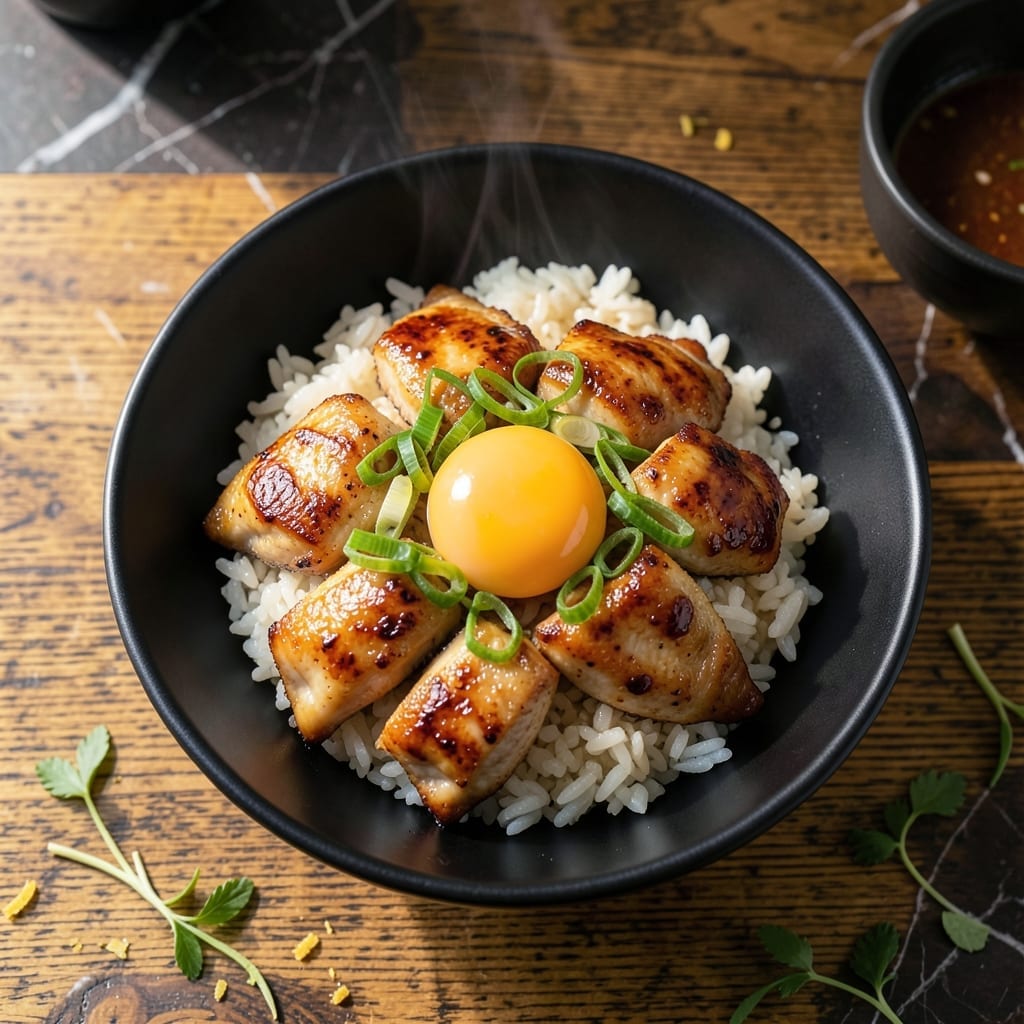
This donburi-style bowl delivers umami-rich comfort with tender chicken and silky eggs over steamed rice. I developed this method after years of perfecting the balance between savory sauce and fluffy eggs.
The chicken simmers in a dashi-based sauce with soy and mirin until fall-apart tender. Meanwhile, a quick egg mixture gets poured over hot rice to create that signature creamy texture.
What emerges is a restaurant-quality meal where every bite combines tender meat, velvety egg, and perfectly seasoned rice. The sauce soaks into each grain without making it soggy.
This dish proves that simple ingredients can create extraordinary flavor. Here’s how to make it at home.
Ingredients for Japanese Chicken and Egg Rice Bowl
Umami-packed ingredients create this Japanese comfort bowl with tender chicken and silky eggs over rice.
| Ingredient | Amount | Notes |
|---|---|---|
| Boneless Chicken Thighs 🍗 | 1 ½ lb | Skin-on or skinless, cut into bite-sized pieces |
| Dashi Stock 🍜 | 2 cups | Homemade or instant dashi granules |
| Soy Sauce 🫒 | ¼ cup | Japanese variety preferred |
| Mirin 🍶 | 2 tbsp | Sweet cooking rice wine |
| Sake 🍶 | 2 tbsp | Dry Japanese rice wine |
| Granulated Sugar 🍚 | 1 tbsp | Balances the sauce |
| Large Eggs 🥚 | 4 whole | Room temperature, beaten |
| Short-Grain White Rice 🍚 | 2 cups | Uncooked, rinsed until clear |
| Green Onions 🧅 | ½ cup | Thinly sliced for garnish |
| Fresh Ginger 🌿 | 1 tbsp | Peeled and grated |
| Garlic Cloves 🧄 | 2 cloves | Minced finely |
| Neutral Oil 🫒 | 1 tbsp | For cooking chicken |
The chicken thighs are non-negotiable here—boneless, skin-on gives the best texture. Japanese grocery stores or well-stocked Asian markets will have authentic dashi stock (look for Katsuo or Kombu on the label). For soy sauce, Kikkoman is widely available and reliable. The mirin and sake are essential for that classic donburi flavor profile; avoid cooking wine substitutes as they lack depth.
No dashi? Chicken or vegetable broth with a splash of soy sauce works in a pinch. Mirin can be replaced with 1 tbsp sugar + 1 tbsp water per tablespoon. For a gluten-free version, use tamari instead of soy sauce. The eggs must be fresh—older eggs spread more thinly. Short-grain rice is traditional, but jasmine rice works if that’s what you have.
Cooked chicken keeps in the fridge for up to 3 days, but the egg topping is best made fresh. The dashi-based sauce can be prepared 1 day ahead and reheated gently. Store uncooked rice in an airtight container for up to 6 months.
Why You’ll Love This Recipe
- One Pot Meal: I love that everything cooks together—chicken thighs simmering in dashi, soy, mirin, and sake right over the rice.
- Umami Bomb: The combination of soy sauce, mirin, and dashi creates this deep, savory-sweet flavor that soaks into every bite.
- Lunchbox Hero: Pack the leftovers for work or school—it tastes even better the next day, and the egg topping stays perfect.
- Budget Keeper: Chicken thighs are cheap, and a little dashi stock goes a long way to make this feel like a restaurant meal at home.
Step-by-Step Instructions for Japanese Chicken and Egg Rice Bowl
Follow this method precisely for a dish that delivers deep umami flavor and perfect texture every time.
Step 1: Prepare the Rice Foundation
Rinse the 2 cups short-grain white rice under cold water until the water runs clear—this removes excess starch and prevents gummy rice. I use a fine-mesh strainer for this step and typically rinse 4-5 times.
Combine the rinsed rice with 2 cups dashi stock in a rice cooker or heavy pot. The dashi infuses the grains with subtle oceanic depth as they cook. Bring to a boil, then reduce to low heat, cover, and cook for 15 minutes until all liquid is absorbed.
Remove from heat and let it steam, covered, for an additional 10 minutes. This resting period ensures each grain becomes plump and tender. Fluff gently with a fork before serving—this separates the grains without crushing them.
Step 2: Cook the Chicken with Aromatics
Cut the 1.5 lb boneless chicken thighs into bite-sized pieces. Heat 1 tbsp neutral oil in a large skillet over medium-high heat until it shimmers. Add the chicken and cook undisturbed for 3-4 minutes until the undersides develop a golden-brown crust.
Add the minced 2 cloves garlic cloves and 1 tbsp fresh ginger, stirring constantly for 30 seconds until fragrant. Be careful not to burn the aromatics—they should sizzle but not darken. This quick cook mellows their sharpness while preserving their vibrant character.
Step 3: Build the Umami-Rich Sauce
Pour in the 0.25 cup soy sauce, 2 tbsp mirin, 2 tbsp sake, and 1 tbsp granulated sugar. Stir to combine, then reduce heat to medium-low. Let the mixture simmer for 5-7 minutes until it thickens slightly and coats the back of a spoon.
The mirin adds sweetness that balances the soy’s saltiness, while the sake contributes depth. Taste and adjust seasoning if needed, though the proportions here are carefully calibrated. The sauce should glaze the chicken pieces with a glossy, sticky sheen.
Step 4: Prepare and Add the Eggs
Beat the 4 whole large eggs in a bowl until just combined—you want them uniform but not frothy. Push the chicken to one side of the skillet and pour the eggs into the empty space. Let them sit undisturbed for 30-45 seconds until the edges begin to set.
Gently scramble the eggs with a spatula, then fold them into the chicken mixture. Cook for another 1-2 minutes until the eggs are just set but still soft and slightly runny in spots. This creates that signature creamy texture that defines this dish.
Step 5: Assemble and Garnish
Divide the cooked rice among bowls. Top each serving with the chicken and egg mixture, spooning the sauce generously over the top. The residual heat from the rice will finish cooking the eggs slightly, creating a luxurious, custardy consistency.
Garnish with 0.5 cup green onions, thinly sliced. The sharp, fresh bite of the green onions cuts through the richness of the dish. Serve immediately while the eggs are still warm and slightly fluid—they’ll continue to set as they sit, so timing is everything.
Pro Tips For Making Japanese Chicken And Egg Rice Bowl
- Simmer the Chicken First: I learned this the hard way—poach the chicken thighs in the dashi, soy, mirin, and sake mixture for 8-10 minutes before slicing. It keeps them juicy and infuses flavor deep into the meat.
- Strain the Broth: After cooking the chicken, strain the broth to remove impurities. This gives your sauce a silky texture that clings perfectly to the rice and egg.
- Skip Raw Egg Yolk: Resist the urge to use a raw yolk—lightly cook the eggs in the broth for 3-4 minutes so they’re just set but still runny. Sounds weird, but it works and avoids any food safety worries.
- Use Warm Rice: Serve the rice hot or at least warm—cold rice soaks up the sauce unevenly and turns the dish into a mushy mess. My grandmother swore by this, and she was right.
Essential Equipment for Perfect Results
Rice Cooker
A reliable rice cooker is essential for perfect donburi rice. I use my Zojirushi 5.5-cup model—it consistently produces fluffy, even grains. The non-stick pot makes cleanup easy, and the keep-warm function is perfect for timing your toppings. 💡
Large Skillet
You’ll need a 12-inch skillet with high sides for cooking the chicken and eggs together. I prefer stainless steel for even heat distribution and better browning. A heavy-bottomed pan prevents hot spots that can burn your sauce.
Fine-Mesh Strainer
Rinsing rice properly requires a fine-mesh strainer to remove starch without losing grains. I use a OXO Good Grips strainer—it fits over most sinks and has a comfortable handle. This small tool makes a big difference in texture.
Wooden Spatula
A wooden spatula won’t scratch your cookware and is ideal for gently folding eggs into the chicken. The flat edge helps scramble eggs without breaking them into tiny pieces. I keep one dedicated to my donburi prep.
Measuring Cups
Precise measurements matter for the sauce balance. I use Pyrex glass measuring cups for liquids and a stainless steel set for dry ingredients. The sauce proportions here are carefully calibrated for that perfect umami-sweet balance. ✨
Sharp Chef’s Knife
Uniform chicken pieces cook evenly. I use my 8-inch Wüsthof chef’s knife for clean cuts. Keep it sharp—dull knives crush meat instead of slicing it, which affects texture and presentation.
Nutrition Facts
Frequently Asked Questions
Can I use chicken breast instead of thighs?
Thighs stay juicier, but breasts work if cooked carefully. Slice them thin and reduce cooking time to 2-3 minutes per side to prevent dryness. The texture won’t be as rich, but the flavor remains excellent.
Why does my egg turn rubbery?
Overcooking is the culprit. Remove from heat when eggs are still slightly runny—they’ll finish cooking in the hot bowl. Use low heat and stir gently for that creamy texture.
How do I store leftovers?
Store chicken and rice separately in airtight containers for up to 3 days. Reheat chicken gently in a pan with a splash of water. Make fresh eggs when serving for best texture.

- Jollof Rice Sauce Recipe: West African Tomato and Spice Infusion - September 25, 2026
- Japanese Rice Soup Recipe: Umami-Rich Comfort in a Bowl - September 25, 2026
- Homemade Cream Of Rice Recipe: Silk-Smooth Breakfast in Minutes - September 25, 2026