
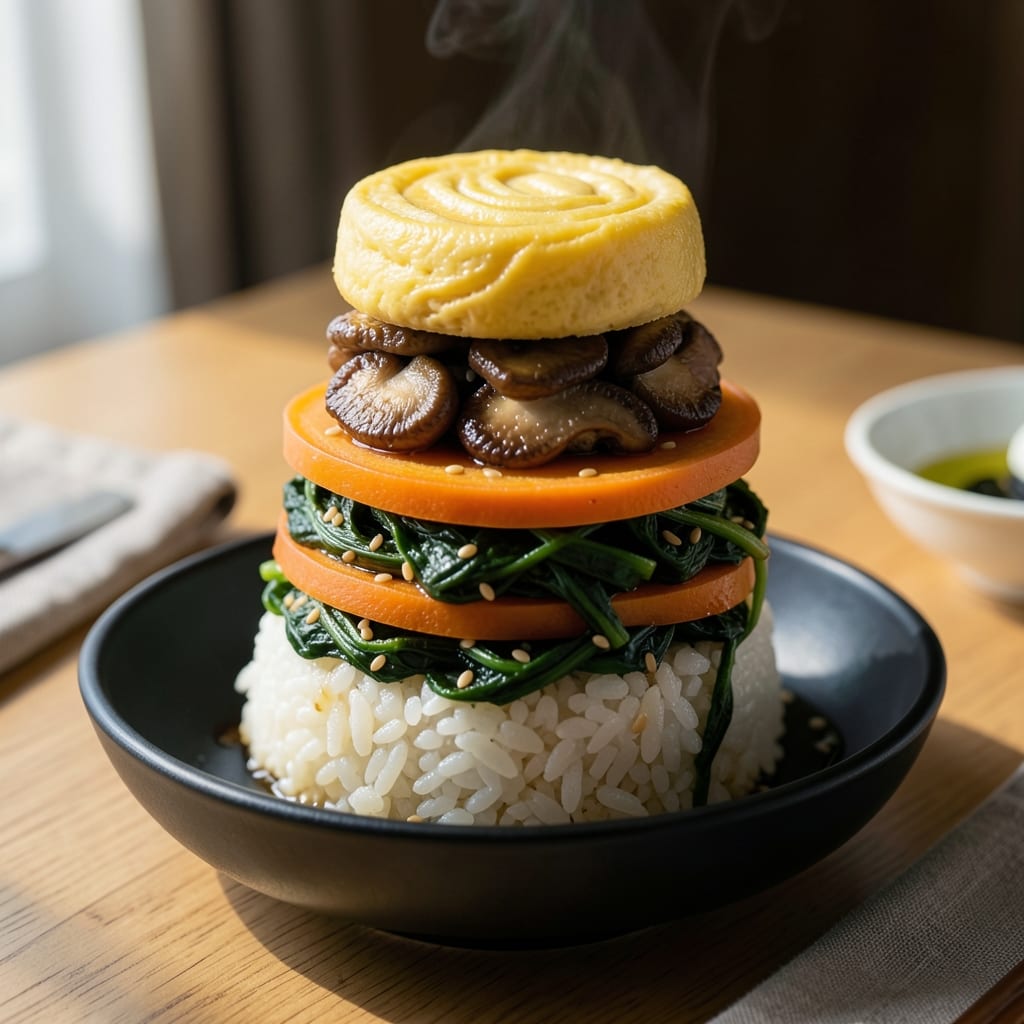
There’s an art to creating Japanese layered rice that transforms simple ingredients into a visually stunning meal. This traditional bento box favorite combines vibrant colors and distinct flavors in every bite.
The beauty lies in the contrast—sweet, savory, and umami elements stacked in perfect harmony. Each layer maintains its identity while contributing to the overall experience. The technique is straightforward but requires attention to detail.
What emerges is a dish that’s as pleasing to the eye as it is to the palate. The rice forms the foundation, while carefully prepared toppings create a mosaic of textures and tastes.
Perfect for lunchboxes or a light dinner, this creation brings Japanese culinary tradition to your table with minimal effort.
Ingredients for Japanese Layered Rice
Transform simple rice and vegetables into a vibrant, multi-layered bento masterpiece with these ingredients.
| Ingredient | Amount | Notes |
|---|---|---|
| Japanese Short-Grain Rice 🍚 | 2 cups | Rinsed until water runs clear |
| Carrots 🥕 | 2 whole | Julienned, lightly salted |
| Spinach 🍃 | 4 oz | Blanched and squeezed dry |
| Shiitake Mushrooms 🍄 | 4 whole | Thinly sliced, rehydrated if dried |
| Eggs 🥚 | 3 whole | Beaten for thin omelet layer |
| Soy Sauce 🫙 | 3 tbsp | Low-sodium preferred for balance |
| Mirin 🍶 | 2 tbsp | Sweet rice wine for glaze |
| Dashi Stock 🥣 | ½ cup | Or substitute with water plus dashi powder |
| Sugar 🍬 | 1 tbsp | Granulated, for caramelizing carrots |
| Neutral Oil 🫒 | 2 tbsp | For cooking eggs and mushrooms |
| Sesame Seeds 🌰 | 1 tbsp | Toasted, for garnish |
| Nori Sheets 🍱 | 2 sheets | Cut into thin strips for garnish |
| Rice Vinegar 🍚 | 1 tbsp | For seasoning rice |
| Salt 🧂 | ½ tsp | Divided for seasoning layers |
The rice is the foundation, so sushi rice or short-grain white rice is non-negotiable for proper stickiness and texture. Japanese markets or the international aisle at Whole Foods carry authentic varieties like Koshihikari. For dashi, instant dashi granules (Hondashi brand is reliable) dissolve easily if you’re short on time. The shiitake mushrooms should be fresh if possible, but dried work in a pinch (rehydrate and reserve the soaking liquid).
No mirin? Substitute with 1 tbsp sugar plus 1 tbsp water per tablespoon needed. Spinach can be swapped for bok choy or Swiss chard—just blanch and squeeze out excess water. For a vegetarian version, skip the dashi or use kombu dashi (seaweed-based). The eggs are optional too—replace with a thin layer of seasoned tofu scramble if preferred.
Layers keep 3-4 days refrigerated in an airtight container. Assemble just before serving to maintain crisp textures. The rice itself can be made a day ahead—cool completely before layering to prevent sogginess. Freezing isn’t recommended for this dish.
Why You’ll Love This Recipe
- One Pot Wonder: I love that everything cooks in one pot—rice, veggies, and eggs—so cleanup is a breeze.
- Umami Bomb: The shiitake mushrooms and eggs create this deep, savory richness that’s honestly addictive.
- Weeknight Hero: Between us, this is my go-to for busy evenings when I need something filling and fast.
- Budget Friendly: A handful of affordable ingredients stretches into multiple meals, and leftovers taste even better the next day.
Step-by-Step Instructions for Japanese Layered Rice
Master this traditional technique for a visually stunning dish with perfectly balanced flavors.
Step 1: Prepare and Cook the Rice Base
Rinse the 2 cups Japanese Short-Grain Rice under cold water until the water runs clear. This removes excess starch and ensures fluffy, separate grains. Drain thoroughly in a fine-mesh sieve for 10 minutes.
Combine the rice with 0.5 cup Dashi Stock, 1 tbsp Rice Vinegar, and 0.25 tsp Salt in a rice cooker or heavy pot. The vinegar adds subtle tang while the dashi infuses umami. Cook according to your rice cooker’s instructions or simmer covered for 15 minutes until tender.
Step 2: Cook the Vegetable Layers
Heat 1 tbsp Neutral Oil in a skillet over medium heat. Add the 2 whole Carrots (julienned) and 1 tbsp Sugar, cooking for 5-6 minutes until softened and just beginning to caramelize. The sugar enhances the carrots’ natural sweetness while creating a glossy finish.
In the same pan, add the remaining 1 tbsp Neutral Oil and sauté the 4 whole Shiitake Mushrooms (thinly sliced) for 4-5 minutes until golden brown. Season with 1 tbsp Soy Sauce and 1 tbsp Mirin, cooking until the liquid reduces to a glaze coating the mushrooms.
Step 3: Create the Egg Layer
Whisk the 3 whole Eggs with a pinch of the remaining salt until fully combined. Heat a nonstick skillet over medium-low heat with a thin layer of oil and pour in a third of the egg mixture, swirling to create a thin, even layer.
Cook undisturbed for 2-3 minutes until set but still slightly moist on top. Slide onto a plate and repeat with remaining egg, creating three thin omelet layers. Allow to cool slightly before cutting into strips.
Step 4: Assemble the Layers
Spread half the cooked rice in a rectangular dish or bento box, pressing lightly to create an even layer. Arrange the caramelized Carrots in a single layer across the center, followed by the Shiitake Mushrooms in a parallel line.
Add the 4 oz Spinach (blanched and squeezed dry) in a neat strip, then place the egg strips. Top with the remaining rice, pressing gently to secure the layers. The colors should remain distinct for visual appeal.
Step 5: Garnish and Serve
Sprinkle the top with 1 tbsp Sesame Seeds and the thinly cut 2 sheets Nori Sheets. Drizzle with the remaining 2 tbsp Soy Sauce and 1 tbsp Mirin for a glossy finish.
Let the dish rest for 10 minutes before slicing to reveal the clean layers. The final presentation should showcase the vibrant colors of each ingredient against the white rice background.
Pro Tips For Making Japanese Layered Rice
- Rinse the Rice: Wash the short-grain rice 3-4 times until the water runs clear—this removes excess starch so your layers stay distinct, not mushy.
- Slice Thin for Layers: Cut carrots and shiitake mushrooms into paper-thin slices (about 1/8 inch) so they cook evenly and sit flat in neat, uniform layers.
- Salt Each Layer: Lightly salt each vegetable layer as you build it—this seasons the whole dish, not just the surface.
- Press Down Gently: After adding each layer, press down lightly with a spatula to remove air gaps, but don’t compact it or the rice won’t steam properly.
Regional Styles of This japanese layered rice
Osaka-Style Chirashi
In Osaka, this dish transforms into chirashizushi, where sushi rice forms the base. The layers include sashimi-grade fish, pickled vegetables, and tamagoyaki (sweet rolled omelet). The fish is arranged artfully on top rather than mixed in, creating a luxurious presentation. 🗺️
Kyoto Vegetarian Tradition
Kyoto’s Buddhist temples serve shojin ryori versions using only vegetables. Layers might include lotus root, burdock, and shiitake mushrooms cooked in dashi. The dish emphasizes seasonal ingredients and minimal processing, reflecting the temple cuisine’s spiritual significance.
Hokkaido Seafood Focus
Hokkaido’s cold waters provide incredible seafood for layered rice. Here, you’ll find uni (sea urchin), ikura (salmon roe), and hotate (scallops) as toppings. The rice is often seasoned with a touch of yuzu zest for a bright citrus note that complements the seafood perfectly.
Tokyo Bento Artistry
Tokyo’s department store basements showcase elaborate kyaraben (character bento) versions. The layers are arranged to create faces or scenes using nori cutouts, colored eggs, and carefully shaped vegetables. It’s as much about visual art as it is about taste. ✨
Okinawa Tropical Twist
Okinawa incorporates tropical flavors like bitter melon (goya), tofu, and purple sweet potato. The rice might be mixed with turmeric for a golden hue. This version reflects the island’s unique culinary history and available ingredients.
Home Cook Adaptations
Many Japanese households simplify the dish for weeknight meals, using leftover proteins or vegetables. The key remains in the layering technique and maintaining the visual contrast between ingredients. I often use whatever I have on hand to create my own unique version.
Nutrition Facts
Frequently Asked Questions
Can I use long-grain rice instead of short-grain?
No, short-grain rice is essential for the sticky texture that holds the layers together. Long-grain varieties won’t bind properly and will create a crumbly mess.
How do I keep the layers from mixing?
Press each layer firmly and cool completely before adding the next. A sharp knife dipped in water helps create clean slices when serving.
Can I make this ahead of time?
Yes, but assemble just before serving. Cooked rice and toppings keep 3-4 days refrigerated separately.
What if my egg layer tears?
Cook eggs at medium-low heat and use a nonstick pan. If tearing happens, patch with small pieces—it’ll still taste great!

- Mujadara Rice and Lentils Recipe: Earthy Spiced Lentils With Caramelized Onions - November 1, 2026
- Naija Fried Rice Recipe: Street-Style Spice With Veggie Crunch - November 1, 2026
- Mushy Rice Recipe: Fluffy Grains Transformed in Minutes - November 1, 2026