
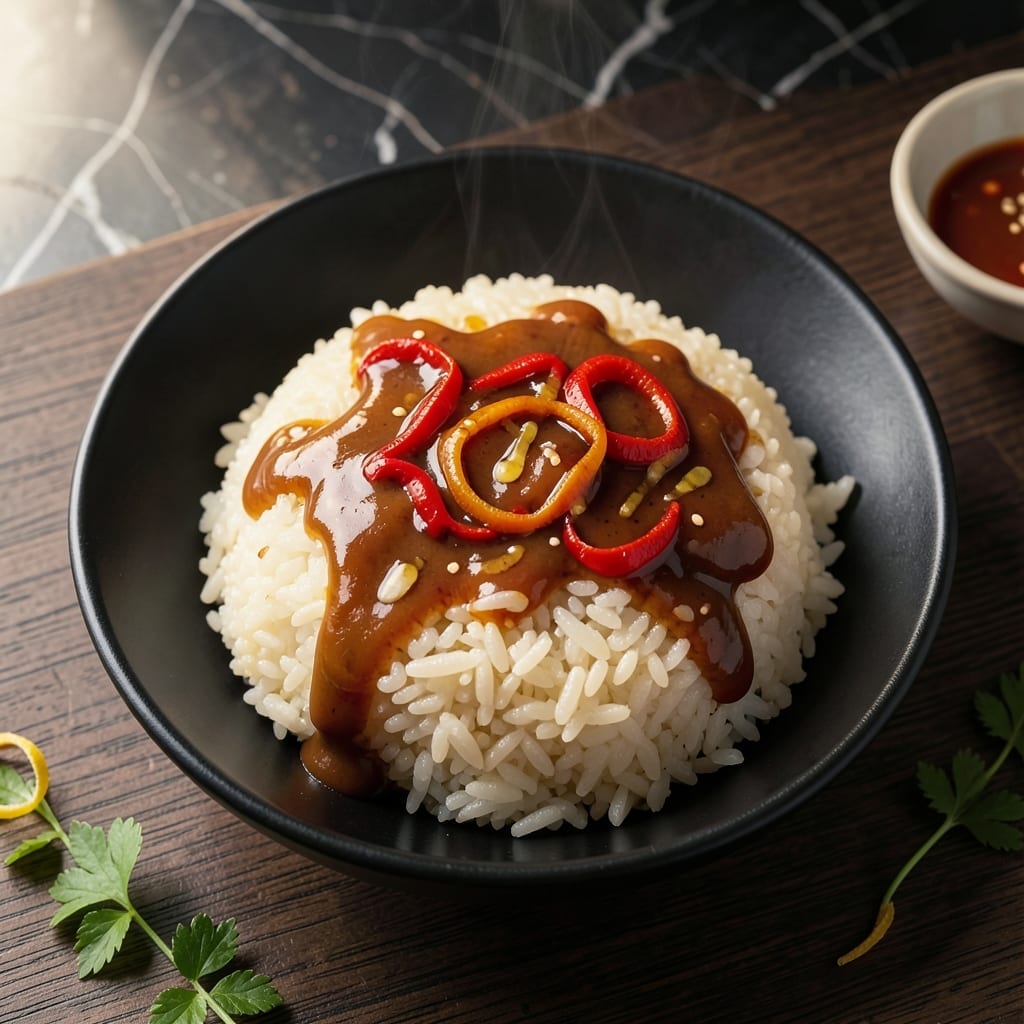
This Japanese spicy rice delivers a bold flavor experience with minimal effort. The dish combines simple ingredients to create a fiery yet balanced side that complements any meal.
The secret lies in the perfect ratio of heat and umami. A touch of soy sauce and mirin enhances the rice, while chili adds the signature kick. Every grain absorbs the spices, ensuring no bite is bland.
What sets this apart is its versatility. Serve it alongside grilled proteins or as a base for stir-fried vegetables. The heat level is customizable, making it suitable for all palates.
Ready in under 20 minutes, this dish proves that flavorful sides don’t require hours in the kitchen.
Ingredients for Japanese Spicy Rice
Simple pantry staples transform into a bold, fiery rice dish with deep umami flavor.
| Ingredient | Amount | Notes |
|---|---|---|
| Jasmine Rice 🍚 | 2 cups | Rinsed until water runs clear |
| Soy Sauce 🥢 | 3 tbsp | Low-sodium for balance |
| Mirin 🍶 | 2 tbsp | Sweet rice cooking wine |
| Go chujang 🌶️ | 2 tbsp | Korean chili paste for heat |
| Sriracha Sauce 🔥 | 1 tbsp | Adjust for extra spice |
| Sesame Oil 🫒 | 1 tbsp | Toasted for depth of flavor |
| Rice Vinegar 🍯 | 1 tbsp | Unseasoned variety preferred |
| Granulated Sugar 🍚 | 1 tsp | Balances the heat and salt |
| Garlic Cloves 🧄 | 2 cloves | Minced finely for even distribution |
| Fresh Ginger 🌿 | 1 tbsp | Grated for maximum flavor |
| Green Onions 🧅 | 3 whole | Thinly sliced for garnish |
| Sesame Seeds 🌰 | 1 tbsp | Toasted for garnish |
| Vegetable Oil 🫒 | 1 tbsp | Neutral flavor for cooking rice |
The rice quality matters here. Jasmine rice from Thai brands like Elephant or Three Ladies delivers the right texture and fragrance. For authentic flavor, seek out mirin labeled ‘hon-mirin’—it contains real fermented rice, unlike cheaper versions with added sugar. Go chujang is non-negotiable for that signature Korean-Japanese fusion heat; find it in the Asian aisle of H Mart or Whole Foods.
No go chujang? Sriracha plus a teaspoon of miso paste gets you close. Mirin can be replaced with 1 tbsp sugar dissolved in 1 tbsp water plus 1 tbsp rice vinegar. For a gluten-free version, tamari instead of soy sauce works perfectly. The sesame oil should be toasted dark—light sesame oil lacks the nutty depth this dish needs.
Cooked rice keeps 3-4 days refrigerated in an airtight container. The spice blend intensifies over time, so make extra. Freezes beautifully for up to 3 months. Always bring rice to room temperature before reheating for best texture.
Why You’ll Love This Recipe
- One Pot Wonder: I throw it all in together—jasmine rice soaking up that soy-mirin sauce while the gochujang and sriracha do their magic.
- Flavor Bomb: The sweet mirin balances the gochujang’s heat so well, I sometimes eat it straight from the pan.
- Meal Prep Hero: It reheats beautifully for lunch the next day, and the spice level mellows just enough.
- Budget Stretcher: Honestly, a pound of rice and a few pantry staples feed my family for two meals.
Step-by-Step Instructions for Japanese Spicy Rice
Master this technique and the balance of heat, sweetness, and umami will elevate every bite.
Step 1: Prepare and Cook the Jasmine Rice
Rinse the 2 cups Jasmine Rice under cold water until the water runs clear—this removes excess starch for fluffier grains. Use a 1:1.25 rice-to-water ratio and cook according to standard methods until tender.
I prefer a rice cooker for consistent results, but stovetop works equally well. Once cooked, fluff with a fork and spread the rice on a tray to cool slightly. This prevents mushiness when mixing with the spicy sauce later.
Step 2: Create the Spicy Sauce Base
In a small bowl, whisk together the 3 tbsp Soy Sauce, 2 tbsp Mirin, 2 tbsp Go chujang, 1 tbsp Sriracha Sauce, 1 tbsp Sesame Oil, 1 tbsp Rice Vinegar, and 1 tsp Granulated Sugar until smooth. The Go chujang provides deep, fermented heat while the mirin adds subtle sweetness.
Taste and adjust the balance—if it’s too intense, the rice will mellow it. The sauce should be glossy and thick enough to coat the back of a spoon. Set aside to let the flavors meld while you prepare the aromatics.
Step 3: Sauté the Aromatics
Heat the 1 tbsp Vegetable Oil in a large skillet over medium heat. Add the 2 cloves minced Garlic Cloves and 1 tbsp grated Fresh Ginger, stirring constantly for 45-60 seconds until fragrant but not browned.
This quick cook preserves their sharp, fresh flavors without bitterness. Remove from heat immediately once the aroma fills the kitchen—overcooking here will make the final dish bitter.
Step 4: Combine Rice and Sauce
Add the cooked rice to the skillet with the aromatics, breaking up any clumps with your hands or a spatula. Pour the spicy sauce evenly over the rice and fold gently with a spatula until every grain is coated. The rice should glisten with sauce, not swim in it.
Cook over low heat for 2-3 minutes, stirring occasionally, to let the rice absorb the flavors. The edges may crisp slightly—this adds texture. Watch for the sauce to tighten slightly around the grains.
Step 5: Garnish and Serve
Transfer the spicy rice to a serving dish and top with the 3 whole thinly sliced Green Onions and 1 tbsp toasted Sesame Seeds. The green onions add freshness to cut through the heat, while the sesame seeds provide a nutty crunch.
Serve immediately while warm. The dish should have a vibrant red hue from the Go chujang, with each bite delivering a complex layer of spicy, sweet, and umami flavors. The rice grains should remain distinct, not clumped together.
Pro Tips For Making Japanese Spicy Rice
- Rinse the Rice: Wash jasmine rice until the water runs clear to remove excess starch—this keeps the grains separate and prevents gummy spicy rice. I learned this the hard way after making a sticky mess my first few attempts.
- Bloom the Go chujang: Heat the Go chujang in a little oil for 30 seconds before mixing—it deepens the flavor and mellows the heat. Sounds weird, but it works every time.
- Balance the Heat: Start with half the Sriracha you think you need, then adjust. The Go chujang already brings serious spice, and I’ve ruined batches by overdoing it.
- Use Warm Rice: Mix the sauce into warm, just-cooked rice so it absorbs evenly. Cold rice just sits there, and you’ll end up with dry spots—I skip this when I’m lazy, but the dish is noticeably better when I don’t.
Essential Equipment for This Recipe
Rice Cooker
A reliable rice cooker is essential for perfect jasmine rice every time. I use a Zojirushi 5.5-cup model—it’s a game-changer with its fuzzy logic technology. The non-stick inner pot makes cleanup effortless, and the keep-warm function prevents overcooking. 💡
Large Skillet
For sautéing aromatics and combining everything, a 12-inch non-stick skillet gives you plenty of room to stir without spills. I prefer All-Clad for even heat distribution, but any heavy-bottomed skillet works. Avoid cast iron—it can react with the acidic rice vinegar.
Small Mixing Bowl
A 2-cup glass or stainless steel bowl is perfect for whisking the spicy sauce. I love Pyrex for its durability and easy pouring. The spout makes transferring the sauce to the skillet mess-free.
Microplane Grater
For the fresh ginger, a Microplane grater extracts maximum flavor with minimal effort. It creates a fine, almost paste-like consistency that blends seamlessly into the dish. I’ve tried others, but this brand’s razor-sharp blades are unmatched.
Wooden Spoon
A wooden spoon is ideal for folding the rice and sauce together without crushing the grains. It won’t scratch your skillet, and the flat edge helps coat every grain evenly. I keep one dedicated to Asian cooking to avoid flavor transfer. 🔥
Sharp Chef’s Knife
Precision matters for the garlic and green onions. A 8-inch chef’s knife from Wüsthof or Shun makes mincing garlic and thinly slicing onions effortless. Keep it sharp—dull knives bruise rather than cut, affecting flavor.
Nutrition Facts
Frequently Asked Questions
Can I use a different type of rice?
Sticky short-grain rice works well, but avoid basmati or long-grain as they won’t absorb the sauce as effectively. For best texture, stick to jasmine or Japanese short-grain.
How do I reduce the heat level?
Cut the go chujang to 1 tbsp and omit the sriracha. For milder flavor, add 1 extra tbsp mirin to balance the spice. Taste as you go and adjust.
Can I make this ahead of time?
Yes! The flavors deepen after 24 hours in the fridge. Store in an airtight container and reheat gently with a splash of water to restore moisture.
What can I serve with this rice?
Pair with grilled chicken, shrimp, or tofu. It also works as a base for stir-fried veggies or a side with teriyaki dishes. The possibilities are endless!

- Mujadara Rice and Lentils Recipe: Earthy Spiced Lentils With Caramelized Onions - November 1, 2026
- Naija Fried Rice Recipe: Street-Style Spice With Veggie Crunch - November 1, 2026
- Mushy Rice Recipe: Fluffy Grains Transformed in Minutes - November 1, 2026