
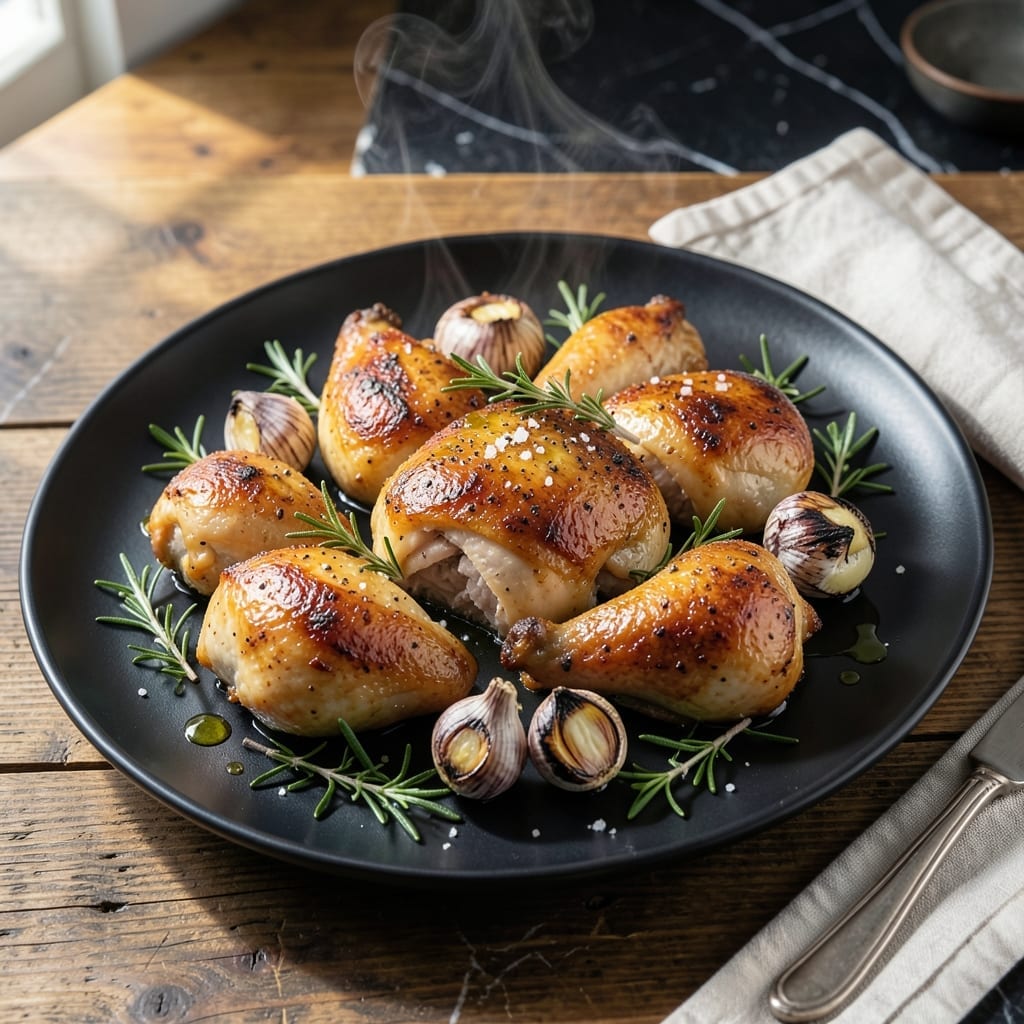
There’s a reason Jidori chicken is prized for its exceptional flavor and tenderness. This premium Japanese poultry elevates any dish with its rich, clean taste and juicy texture that sets it apart from standard chicken.
I’ve developed a straightforward method that honors this high-quality protein without complicated techniques. The key lies in simple preparation that allows the natural qualities of the meat to shine through.
With careful cooking at the right temperature, you’ll achieve perfectly cooked chicken every time. The meat stays moist while developing a golden exterior that locks in all the natural goodness.
This approach delivers restaurant-worthy results at home, making it ideal for special occasions or when you want to treat yourself to something extraordinary.
Ingredients for Jidori Chicken
Premium Japanese poultry meets simple, elegant ingredients for a restaurant-worthy dish at home.
| Ingredient | Amount | Notes |
|---|---|---|
| Jidori Chicken 🍗 | 4 whole | Bone-in, skin-on thighs and drumsticks |
| Kosher Salt 🧂 | 1 ½ tbsp | Diamond Crystal preferred for texture |
| Freshly Ground Black Pepper 🌶️ | 1 tsp | Coarse grind for best flavor |
| Garlic Cloves 🧄 | 6 cloves | Smashed, not minced |
| Fresh Thyme Sprigs 🌿 | 4 sprigs | Plus extra for garnish |
| Fresh Rosemary Sprigs 🌿 | 2 sprigs | Stems removed, roughly chopped |
| Lemon 🍋 | 1 whole | Zested and juiced |
| Extra-Virgin Olive Oil 🫒 | 3 tbsp | Divided for cooking and finishing |
| Unsalted Butter 🧈 | 2 tbsp | European-style preferred |
| Honey 🍯 | 1 tbsp | Optional for glaze |
| Dijon Mustard 🟡 | 1 tbsp | For basting mixture |
| Shallot 🧅 | 1 whole | Finely minced for pan sauce |
| Dry White Wine 🍷 | ½ cup | Such as Sauvignon Blanc |
Jidori chicken is the star—look for it at specialty butchers or Asian markets (I grab mine from Marukai Market when I’m in LA). The skin should be pale, almost translucent, and the meat will feel firmer than regular chicken. If you can’t find Jidori, organic, air-chilled chicken is your next best bet. Avoid pre-brined birds—they’ll mess with your seasoning balance.
No white wine? Chicken stock with a splash of rice vinegar works in a pinch. Shallots can be subbed with half a small onion, but the flavor won’t be as delicate. Fresh herbs are ideal, but dried at one-third the amount is fine—just add them earlier in the cooking. The honey in the glaze is optional, but it gives that sticky, caramelized finish (skip if you’re avoiding sugar).
Cook this the day you buy it if possible—Jidori’s flavor peaks within 2 days. Leftovers keep for 4 days in the fridge, but the skin loses its crispness. Reheat gently in a skillet to revive it (microwave is a crime here).
Why You’ll Love This Recipe
- One Pan Wonder: I love that this comes together in a single dish—just season, sear, and roast the jidori chicken with garlic and thyme.
- Garlic-Thyme Magic: The aroma of fresh thyme and roasted garlic filling the kitchen is reason enough to make this weekly.
- Weeknight Hero: It’s my go-to for busy evenings when I need something impressive but unfussy.
- Leftovers? Yes Please: The flavors deepen overnight, so I always make extra for next-day sandwiches.
Step-by-Step Instructions for Jidori Chicken
Here’s the method I use to get crispy skin and juicy meat with this premium poultry.
Step 1: Season and Rest the Chicken
Pat the jidori chicken pieces completely dry with paper towels—this is the secret to crispy skin. Season generously on all sides with the 1.5 tbsp Kosher Salt and 1 tsp Freshly Ground Black Pepper, pressing the seasoning into the skin so it adheres well.
Arrange the chicken skin-side up on a wire rack set over a baking sheet. Loosely cover with plastic wrap and refrigerate for at least 1 hour or up to 24 hours. This dry-brine process ensures deep seasoning and helps the skin crisp up beautifully when cooked.
Step 2: Sear the Chicken to Golden Perfection
Heat 2 tbsp of the 3 tbsp Extra-Virgin Olive Oil in a large skillet over medium-high heat until shimmering. Carefully place the chicken in the pan skin-side down, working in batches if needed to avoid crowding.
Cook undisturbed for 8-10 minutes until the skin is deep golden brown and crisp. Flip and cook for another 6-8 minutes until the thickest pieces register 165°F internally. Transfer to a plate and tent loosely with foil to keep warm.
Step 3: Build the Pan Sauce with Aromatics
Pour off all but 1 tbsp of the fat from the skillet. Return to medium heat and add the 2 tbsp Unsalted Butter. Once melted, add the 1 whole Shallot (finely minced), 6 cloves Garlic Cloves (smashed), 4 sprigs Fresh Thyme Sprigs, and 2 sprigs Fresh Rosemary Sprigs (roughly chopped).
Sauté for 1-2 minutes until fragrant, then pour in the 0.5 cup Dry White Wine. Use a wooden spoon to scrape up all the browned bits from the bottom of the pan. Simmer for 3-4 minutes until the liquid reduces by half.
Step 4: Finish with Citrus and Glaze
Stir in the 1 tbsp Dijon Mustard and 1 tbsp Honey into the pan sauce. Add the zest and juice from the 1 whole Lemon, then the remaining 1 tbsp Extra-Virgin Olive Oil for a glossy finish.
Return the chicken to the skillet, spooning the sauce over each piece. Simmer for 2-3 minutes to coat the chicken and allow the flavors to meld. The sauce should lightly cling to the chicken—thick enough to coat but not so heavy it masks the crispy skin.
Pro Tips For Making Jidori Chicken
- Dry the Skin: Pat the jidori chicken thoroughly with paper towels before seasoning—this guarantees a crispier skin, especially with its higher fat content.
- Rest Before Cooking: After seasoning with salt, pepper, garlic, and thyme, let the chicken sit uncovered in the fridge for at least 1 hour (or overnight); the salt penetrates better and the skin dries out just right.
- Skip the Overcrowding: I learned this the hard way—if searing the chicken, use a large enough pan so the pieces aren’t touching; otherwise, they’ll steam instead of brown.
- Use Room-Temp Chicken: Take the jidori chicken out of the fridge 30 minutes before cooking; it cooks more evenly and helps the herbs and garlic infuse better into the meat.
Pro Cooking Tips for This Dish
Temperature Control
Use a meat thermometer to monitor internal temperature—pull the chicken at 160°F since it will rise to 165°F while resting. I use a ThermoPro TP20 for accuracy. This prevents overcooking the premium meat. 🌡️
Dry Brine Secret
Don’t skip the dry-brine rest in the fridge. For Jidori, 12-24 hours is ideal to maximize seasoning penetration. The salt breaks down muscle proteins, making the meat more tender and juicy.
Pan Selection
Use a heavy-bottomed skillet like cast iron or stainless steel for even heat distribution. Nonstick pans won’t develop the same fond for your sauce. A 12-inch skillet gives enough space to avoid crowding.
Skin Crisping
Press the chicken skin-side down firmly into the pan at the start. This ensures maximum contact for even browning. Don’t move it for at least 8 minutes to develop that perfect golden crust.
Sauce Consistency
If your pan sauce reduces too much, add 2-3 tbsp of water or chicken stock. The sauce should coat the back of a spoon lightly. I often finish with an extra pat of cold butter for shine.
Resting Time
Let the chicken rest for 10 minutes before serving. This allows juices to redistribute. Tent loosely with foil to keep warm without making the skin soggy. 💫
Nutrition Facts
Frequently Asked Questions
Where can I buy jidori chicken?
Look for it at specialty butchers or Asian markets. In LA, I recommend Marukai Market. If unavailable, organic air-chilled chicken is a good substitute.
Can I use boneless pieces?
Yes, but bone-in yields more flavor and juicier results. Reduce cooking time by 2-3 minutes per side for boneless. The skin may crisp differently without the bone support.
What if my pan sauce is too thin?
Simmer longer to reduce, or add a cornstarch slurry. For extra richness, whisk in 1 tbsp cold butter at the end. Avoid overcrowding the pan.
How long can I store leftovers?
Keep in an airtight container for up to 4 days. Reheat in a skillet to revive the crispy skin. Microwaving makes the skin soggy.

- Jollof Rice Sauce Recipe: West African Tomato and Spice Infusion - September 25, 2026
- Japanese Rice Soup Recipe: Umami-Rich Comfort in a Bowl - September 25, 2026
- Homemade Cream Of Rice Recipe: Silk-Smooth Breakfast in Minutes - September 25, 2026