
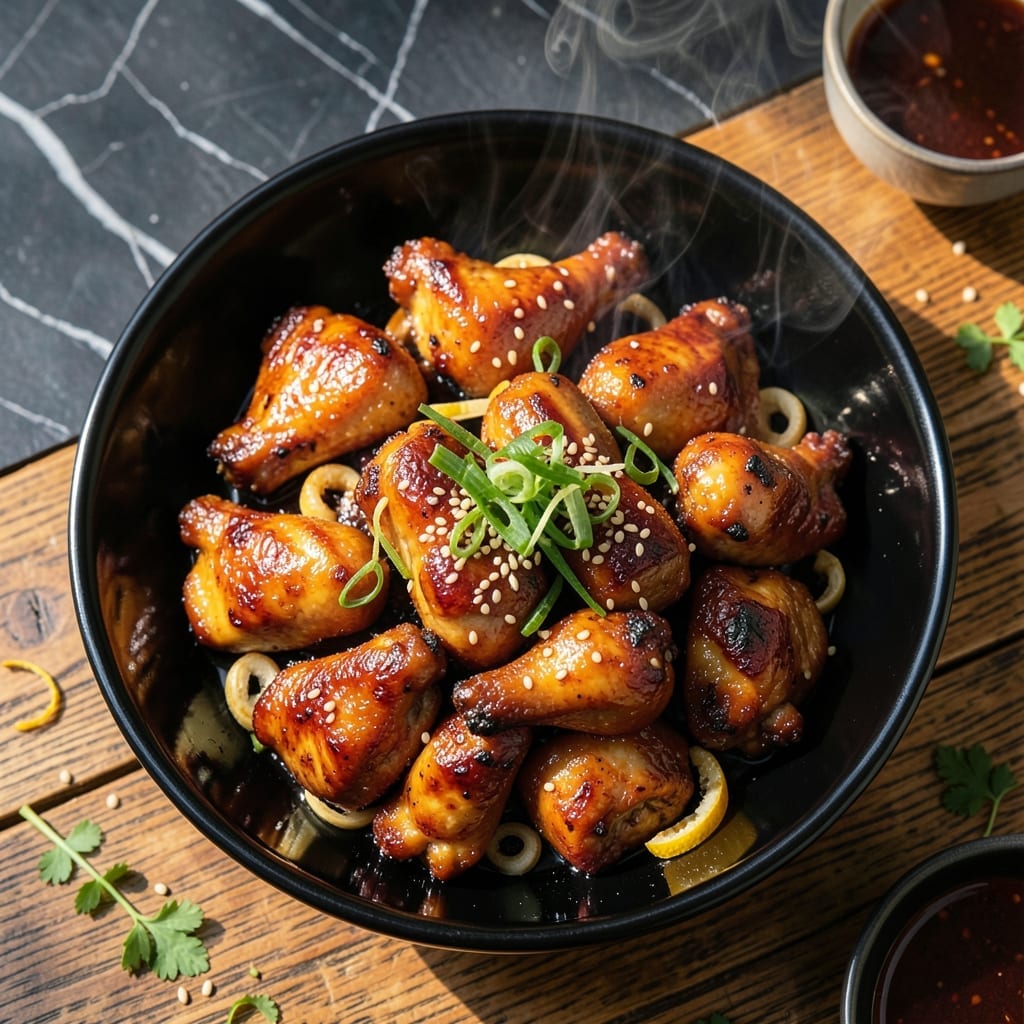
This recipe delivers authentic Korean barbecue flavors with a sticky-sweet glaze and perfectly charred edges. The marinade combines soy sauce, brown sugar, garlic, and sesame oil for depth that transforms ordinary chicken into something extraordinary.
I developed this method to replicate the smoky, caramelized results of traditional Korean grilling at home. The key is high heat to achieve those signature charred bits while keeping the meat juicy and tender throughout.
What you’ll get is chicken with a glossy, finger-licking sauce that clings to every bite. The edges crisp up beautifully, while the inside stays succulent and packed with umami-rich flavor.
Serve with steamed rice, pickled vegetables, or as the star of a Korean-inspired feast. Here’s how to make it.
Ingredients for Korean Barbeque Chicken
Transform ordinary chicken with this umami-packed marinade and sticky-sweet glaze for authentic Korean flavors.
| Ingredient | Amount | Notes |
|---|---|---|
| Boneless Skinless Chicken Thighs 🍗 | 2 lb | Cut into bite-sized pieces |
| Soy Sauce 🫙 | ½ cup | Low-sodium preferred for balance |
| Brown Sugar 🍚 | ½ cup | Light or dark both work |
| Garlic Cloves 🧄 | 6 cloves | Minced for maximum flavor infusion |
| Sesame Oil 🫒 | 2 tbsp | Toasted for authentic aroma |
| Rice Vinegar 🍯 | 2 tbsp | Adds essential tangy brightness |
| Gochujang 🌶️ | 2 tbsp | Korean chili paste for heat |
| Fresh Ginger 🌿 | 1 tbsp | Grated for zesty depth |
| Toasted Sesame Seeds 🍲 | 2 tbsp | For garnish and crunch |
| Green Onions 🧅 | 4 whole | Thinly sliced for fresh finish |
| Neutral Oil 🛢️ | 1 tbsp | For high-heat cooking |
| Black Pepper 🌶️ | ½ tsp | Freshly ground preferred |
| Cornstarch 🌾 | 1 tbsp | For thickening the glaze |
| Water 💧 | 2 tbsp | To adjust sauce consistency |
The chicken thighs are non-negotiable here—bone-in works too but boneless ensures even cooking and maximum sauce absorption. Source air-chilled thighs from Whole Foods or Korean markets for superior texture. For soy sauce, Kikkoman low-sodium is the professional standard, though any quality brand will do. The gochujang is key (Sempio or Chung Jung One are reliable brands).
No gochujang? Sriracha plus 1 tsp miso paste approximates the flavor. Brown sugar can be swapped for coconut sugar or honey (though honey alters the color slightly). For a gluten-free version, use tamari instead of soy sauce. The rice vinegar can be apple cider vinegar in a pinch, but it brings a different sharpness.
Marinate the chicken for at least 4 hours (overnight is ideal). Cooked chicken keeps for 3-4 days in the fridge, though it’s best fresh. The glaze thickens as it cools—reheat with a splash of water to loosen. Always store leftovers in an airtight container.
Why You’ll Love This Recipe
- One Pan Wonder: I toss everything in a bowl, let it marinate, and bake—no fancy techniques or piles of dishes.
- Sweet-Savory Magic: The brown sugar caramelizes with the soy sauce and garlic for that sticky, finger-licking glaze.
- Weeknight MVP: Between us, it’s my secret for quick dinners, lunch leftovers, or even a last-minute party dish.
- Budget Friendly: Chicken thighs stay juicy and cheap, and the sauce uses pantry staples I always have on hand.
Step-by-Step Instructions for Korean Barbecue Chicken
Master the technique for achieving that signature sticky glaze and charred finish.
Step 1: Prepare the Chicken and Make the Marinade
Cut the 2 lb Boneless Skinless Chicken Thighs into bite-sized pieces, trimming any excess fat. This uniform size ensures even cooking and maximum surface area for caramelization. Pat the pieces dry with paper towels to help them sear properly.
In a bowl, combine the 0.5 cup Soy Sauce, 0.5 cup Brown Sugar, 6 cloves minced Garlic Cloves, 2 tbsp Sesame Oil, 2 tbsp Rice Vinegar, 2 tbsp Gochujang, and 1 tbsp Fresh Ginger. Whisk until the brown sugar dissolves completely and the mixture is smooth and glossy.
Step 2: Marinate and Coat the Chicken
Place the chicken pieces in a large bowl and pour half of the marinade over them. Toss to coat evenly, ensuring every piece is thoroughly covered. Let it marinate at room temperature for 15 minutes while you prepare the remaining ingredients.
After marinating, transfer the chicken and all its marinade to a large skillet. The residual marinade will form the base of your glaze, so don’t discard it. This step builds layers of flavor as the chicken begins to cook and the sugars start to caramelize.
Step 3: Cook the Chicken Until Charred and Glazed
Heat 1 tbsp Neutral Oil in a large skillet over medium-high heat until it shimmers. Add the chicken in a single layer without crowding the pan. Cook undisturbed for 5-6 minutes until the edges turn deep golden brown and slightly charred.
Flip the pieces and cook for another 4-5 minutes. The marinade will begin to thicken and create that characteristic sticky glaze. Sprinkle the 0.5 tsp Black Pepper over the chicken during cooking to infuse it with a subtle heat.
Step 4: Thicken the Glaze and Finish
In a small bowl, mix the 1 tbsp Cornstarch with 2 tbsp Water to create a slurry. Pour this into the skillet with the chicken and stir to combine. Cook for an additional 2-3 minutes until the sauce thickens to a glossy, syrup-like consistency that clings to the chicken.
You’ll notice the sauce transforming from thin and liquid to thick and lacquered. This is your cue that it’s ready. Remove the skillet from heat to prevent over-thickening, as the sauce will continue to set slightly as it cools.
Step 5: Garnish and Serve Immediately
Transfer the glazed chicken to a serving platter. Drizzle any remaining sauce from the skillet over the top. Sprinkle with the 2 tbsp Toasted Sesame Seeds and the 4 whole thinly sliced Green Onions for a burst of color and texture.
Serve immediately while the glaze is still warm and sticky. The contrast of the crispy, charred edges with the tender, saucy chicken is what makes this dish irresistible. The toasted sesame seeds and green onions add the perfect finishing touch, balancing the rich, sweet, and spicy flavors.
Pro Tips For Making Korean Barbeque Chicken
- Sear First, Glaze Later: I learned this the hard way—brown the chicken thighs first in a hot pan before adding the soy sauce and sugar mix, or you’ll end up with steamed meat instead of that caramelized crust.
- Mince the Garlic Fine: After burning garlic chunks in my sauce too many times, I now mince the cloves to near-paste consistency so they dissolve into the marinade and don’t turn bitter.
- Skip the Skimping on Sugar: Brown sugar isn’t just for sweetness—it’s what gives that sticky, glossy finish, so use the full amount and resist cutting it down.
- Let It Rest: Give the glaze-coated chicken a solid 5 minutes off the heat before serving, or all those juices will spill onto the plate instead of staying in the meat.
Common Mistakes When Making Great korean barbeque chicken
Overcrowding the Pan
Always cook in batches if needed—crowding the pan steams the chicken instead of searing it. I use a 12-inch cast iron skillet to give each piece space. You want that direct contact with the hot surface for proper charring.
Skipping the Marinade Time
Don’t rush the 15-minute marinade—this is when the flavors start penetrating the meat. For even better results, marinate overnight. The brown sugar and soy sauce need time to work their magic. 💡
If you’re short on time, at least let it sit while you prep other ingredients.
Using the Wrong Heat
Medium-high heat is crucial for achieving those charred edges. Too low and the chicken will absorb the sauce without caramelizing. Too high and you risk burning the gochujang before the chicken cooks through.
Forgetting the Slurry
The cornstarch slurry is what transforms your marinade into that signature sticky glaze. Without it, you’ll have thin, watery sauce. Mix it with cold water first to prevent lumps.
Not Letting It Rest
After cooking, let the chicken rest for 2-3 minutes before serving. This allows the juices to redistribute. The glaze will also thicken slightly as it cools, clinging better to each piece.
Ignoring the Garnishes
The toasted sesame seeds and green onions aren’t just for looks—they add essential texture and freshness. I always have these prepped before I start cooking so I can garnish immediately. 🌟
Nutrition Facts
Frequently Asked Questions
Can I use chicken breast instead of thighs?
Thighs are ideal for their fat content and tenderness, but breasts work if cut into small pieces. Reduce cooking time to 3-4 minutes per side to prevent dryness.
How spicy is this dish?
The 2 tbsp gochujang adds mild heat. For less spice, reduce to 1 tbsp. For more, add extra or include 1 tsp of red pepper flakes.
Can I make this on a grill?
Grill over medium-high heat for 6-7 minutes per side. baste with extra marinade to build layers of flavor.
How do I store leftovers?
Keep in an airtight container in the fridge for up to 3-4 days. Reheat in a pan with a splash of water to restore the glaze.

- Jollof Rice Sauce Recipe: West African Tomato and Spice Infusion - September 25, 2026
- Japanese Rice Soup Recipe: Umami-Rich Comfort in a Bowl - September 25, 2026
- Homemade Cream Of Rice Recipe: Silk-Smooth Breakfast in Minutes - September 25, 2026