
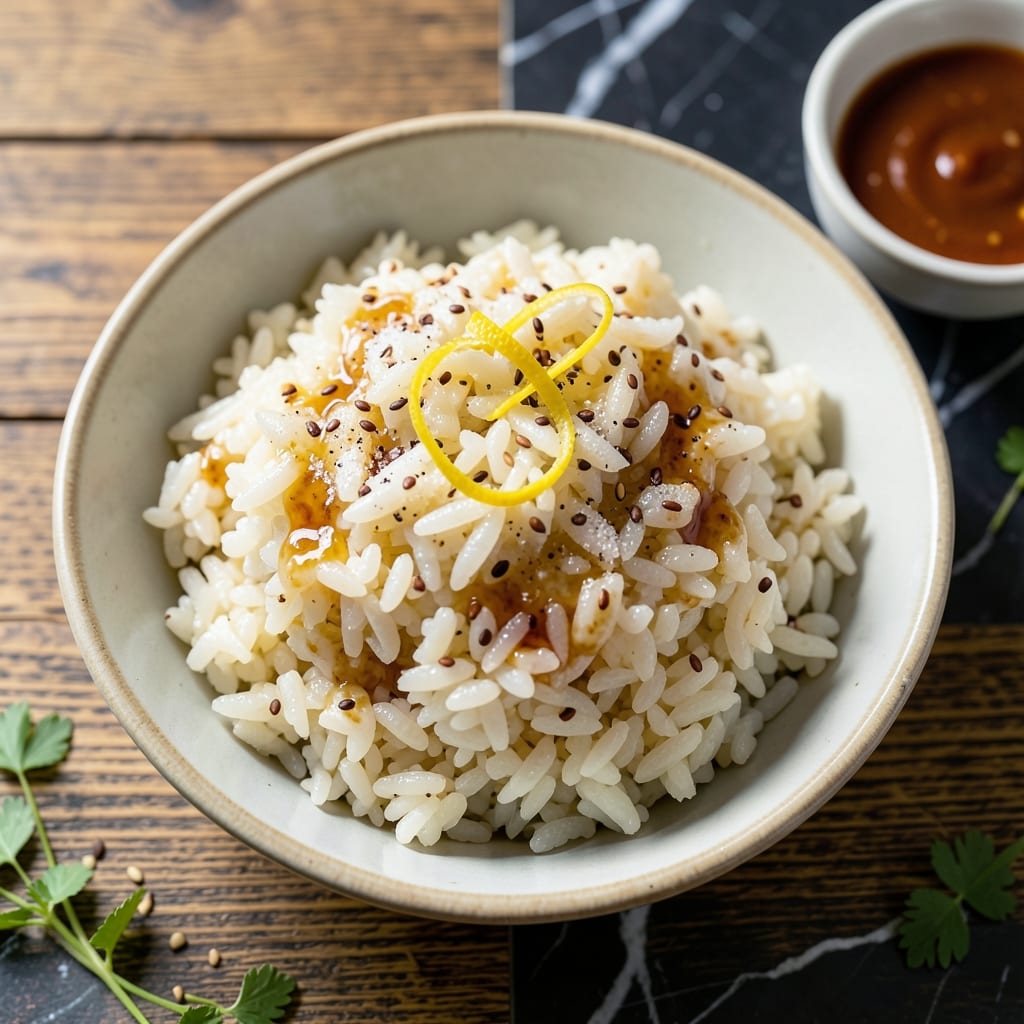
This kimbap rice forms the heart of authentic Korean rolls, delivering the perfect sticky texture with a nutty sesame aroma. The short-grain variety absorbs seasonings beautifully while maintaining its shape during rolling.
I’ve refined this method to ensure each grain stays separate yet clings together when sliced. The secret lies in the precise rice-to-water ratio and a resting period that allows the starches to set properly.
The seasoning blend of sesame oil, salt, and sugar enhances the natural sweetness of the rice without overpowering. This creates a neutral yet flavorful base that pairs perfectly with traditional fillings.
Once prepared, the rice holds up to rolling and slicing, making it ideal for both classic and creative kimbap variations. The foundation for perfect rolls starts right here.
Ingredients for Korean Kimbap Rice
Authentic short-grain rice plus a handful of fillings create this classic Korean dish foundation.
| Ingredient | Amount | Notes |
|---|---|---|
| Short-Grain White Rice 🍚 | 2 cups | Rinsed until water runs clear |
| Water 💧 | 2 ½ cups | For cooking rice |
| Sesame Oil 🫒 | 1 ½ tbsp | Toasted for nutty aroma |
| Kosher Salt 🧂 | ¾ tsp | Fine grain preferred |
| Granulated Sugar 🍚 | 1 tbsp | Balances seasoning blend |
| Toasted Sesame Seeds 🌰 | 1 tbsp | For garnish and texture |
| Rice Vinegar 🍶 | 1 tbsp | Adds subtle tang |
| Neutral Oil 🫒 | ½ tsp | For rice bowl prep |
| Seaweed Sheets 🌊 | 4 sheets | Nori for traditional rolls |
| Carrot 🥕 | 1 whole | Julienned for filling |
| English Cucumber 🥒 | ½ whole | Seeds removed, cut into strips |
| Eggs 🥚 | 2 whole | For egg ribbon filling |
| Pickled Radish 🥬 | ½ cup | Danmuji, sliced thin |
| Imitation Crab Sticks 🦀 | 4 pieces | Optional protein filling |
The rice is everything here. Short-grain white rice like Calrose or sushi rice gives you the sticky texture that holds fillings without falling apart. Look for brands like Nishiki or Kokuho at Asian markets or the international aisle. Rinse until the water runs completely clear—this removes excess starch that can make the rice mushy instead of perfectly clingy.
No short-grain rice? Medium-grain works in a pinch but avoid long-grain entirely. For the sesame oil, Kadoya or Ottogi brands are excellent. If you can’t find toasted sesame seeds, toast raw ones in a dry pan for 2-3 minutes until golden. The pickled radish is traditional but pickled daikon or even carrots can substitute.
Cooked rice stays fresh for 2-3 days in the fridge. Store in an airtight container with a damp paper towel on top to prevent drying. The seasoned rice is best used within 4 hours for rolling, but can be refrigerated overnight if needed. Sesame oil and seeds keep for 6-12 months in a cool, dark place.
Why You’ll Love This Recipe
- Sticky Success: Honestly, short-grain rice plus sesame oil does all the work—just rinse, cook, and season.
- Sweet-Savory Balance: That touch of sugar and salt makes the rice taste like it’s hugging every filling.
- Meal Prep MVP: I roll up a big batch Sunday and grab one daily for lunch all week.
- Penny-Wise Staple: A two-pound bag of rice plus pantry basics feeds four for less than a fiver.
Step-by-Step Instructions for Korean Kimbap Rice
Master the foundation of authentic kimbap with this precise, professional method.
Step 1: Rinse and Cook the Short-Grain White Rice
Rinse the 2 cups Short-Grain White Rice in a fine-mesh strainer under cold water until the water runs completely clear. This removes excess starch, preventing gummy rice. I typically rinse 4-5 times to ensure purity.
Combine the rinsed rice with the 2.5 cups Water in a rice cooker or heavy pot. Cook until the water is fully absorbed and the rice is tender—about 20-25 minutes in a rice cooker. The grains should be plump, sticky, and slightly translucent when done.
Step 2: Season the Rice with the Signature Blend
Transfer the warm rice to a large mixing bowl. Drizzle the 1.5 tbsp Sesame Oil evenly over the surface, followed by the 1 tbsp Rice Vinegar. The vinegar adds subtle tang while the sesame oil imparts its characteristic nutty aroma.
Sprinkle the 0.75 tsp Kosher Salt and 1 tbsp Granulated Sugar over the rice. Using a rice paddle or silicone spatula, gently fold the mixture with a cutting motion to distribute the seasonings evenly. Be thorough but delicate to avoid crushing the grains.
Step 3: Incorporate the Final Touches
Add the 1 tbsp Toasted Sesame Seeds to the rice and fold once more. The seeds should be visible throughout, adding texture and visual appeal. Taste and adjust seasoning if needed—proper kimbap rice should be slightly sweet with a hint of saltiness.
Allow the seasoned rice to cool to room temperature before using. This typically takes 15-20 minutes. The rice should be sticky enough to hold its shape when pressed but not so hot that it melts the Seaweed Sheets during assembly.
Step 4: Prepare the Fillings
While the rice cools, julienne the 1 whole Carrot into thin matchsticks. Cut the 0.5 whole English Cucumber into similar strips after removing the seeds. For the egg ribbon, beat the 2 whole Eggs with a pinch of salt, then cook in a thin layer in a non-stick pan with 0.5 tsp Neutral Oil until set.
Slice the 0.5 cup Pickled Radish into thin strips and the 4 pieces Imitation Crab Sticks lengthwise. All fillings should be cut to uniform thickness for even distribution and easy rolling.
Pro Tips For Making Korean Kimbap Rice
- Rinse the Rice: Wash the short-grain rice in 3-4 changes of cold water until the water runs clear—this removes excess starch so your kimbap rice stays sticky but not gummy.
- Season While Hot: Mix the sesame oil, salt, and sugar into the rice immediately after cooking, while it’s still steaming. The heat helps distribute the flavors evenly.
- Avoid Overcooking: Use a 1:1.1 rice-to-water ratio and let it sit covered for 10 minutes after cooking—I learned this the hard way after ending up with mushy rice more than once.
- Cool Before Rolling: Spread the seasoned rice on a tray and let it cool slightly before assembling kimbap. Warm rice sticks better, but scorching hot rice melts the nori and makes a mess.
Essential Equipment for This Recipe
Rice Cooker
A reliable rice cooker is essential for perfect kimbap rice. I use a Cuckoo 6-cup model with fuzzy logic technology that ensures even cooking. It automatically adjusts temperature and timing for consistent results every time. 💡
Bamboo Rolling Mat
For tight, even rolls, a bamboo rolling mat (makisu) is indispensable. Look for one that’s 10×10 inches with tight bamboo slats. I wrap mine in plastic wrap before use to prevent rice from sticking to the mat.
Sharp Chef’s Knife
A sharpened 8-inch chef’s knife makes clean cuts through the rolls without squishing them. I prefer Shun Premier for its razor-sharp edge and comfortable grip. Wipe the blade with a damp cloth between cuts for the cleanest slices.
Fine-Mesh Strainer
Rinsing the rice properly requires a fine-mesh strainer. The OXO Good Grips version has a non-slip base and durable construction. Rinse under cold water until it runs completely clear—this typically takes 4-5 rinses for kimbap rice.
Rice Paddle
A wooden rice paddle helps mix the seasonings without crushing the grains. The flat surface of a traditional hangiri paddle is ideal, but any wide, flat spatula works. Use a cutting motion to distribute the sesame oil and vinegar evenly.
Plastic Wrap
Keep plastic wrap on hand to cover the bamboo mat during rolling. This prevents sticking and makes cleanup easier. I also use it to cover the seasoned rice if I need to store it briefly before assembling the kimbap. ✨
Nutrition Facts
Frequently Asked Questions
Why rinse the rice so many times?
Rinsing removes excess starch that could make the rice mushy instead of perfectly sticky. 4-5 rinses ensure the grains stay separate yet cling together when rolled. This step is crucial for authentic texture.
Can I use a different type of rice?
Short-grain white rice is essential for kimbap. Medium-grain works in a pinch, but long-grain varieties won’t provide the right stickiness to hold fillings. Brands like Nishiki or Kokuho are ideal.
How do I prevent the rice from sticking to the rolling mat?
Cover your bamboo mat with plastic wrap before assembling. This creates a non-stick surface and makes cleanup easier. Keep a damp towel nearby to wipe your hands between rolls.
Can I prepare the rice ahead of time?
Seasoned rice is best used within 4 hours for rolling, but can be refrigerated overnight if needed. Store in an airtight container with a damp paper towel on top to prevent drying out.

- Mujadara Rice and Lentils Recipe: Earthy Spiced Lentils With Caramelized Onions - November 1, 2026
- Naija Fried Rice Recipe: Street-Style Spice With Veggie Crunch - November 1, 2026
- Mushy Rice Recipe: Fluffy Grains Transformed in Minutes - November 1, 2026