
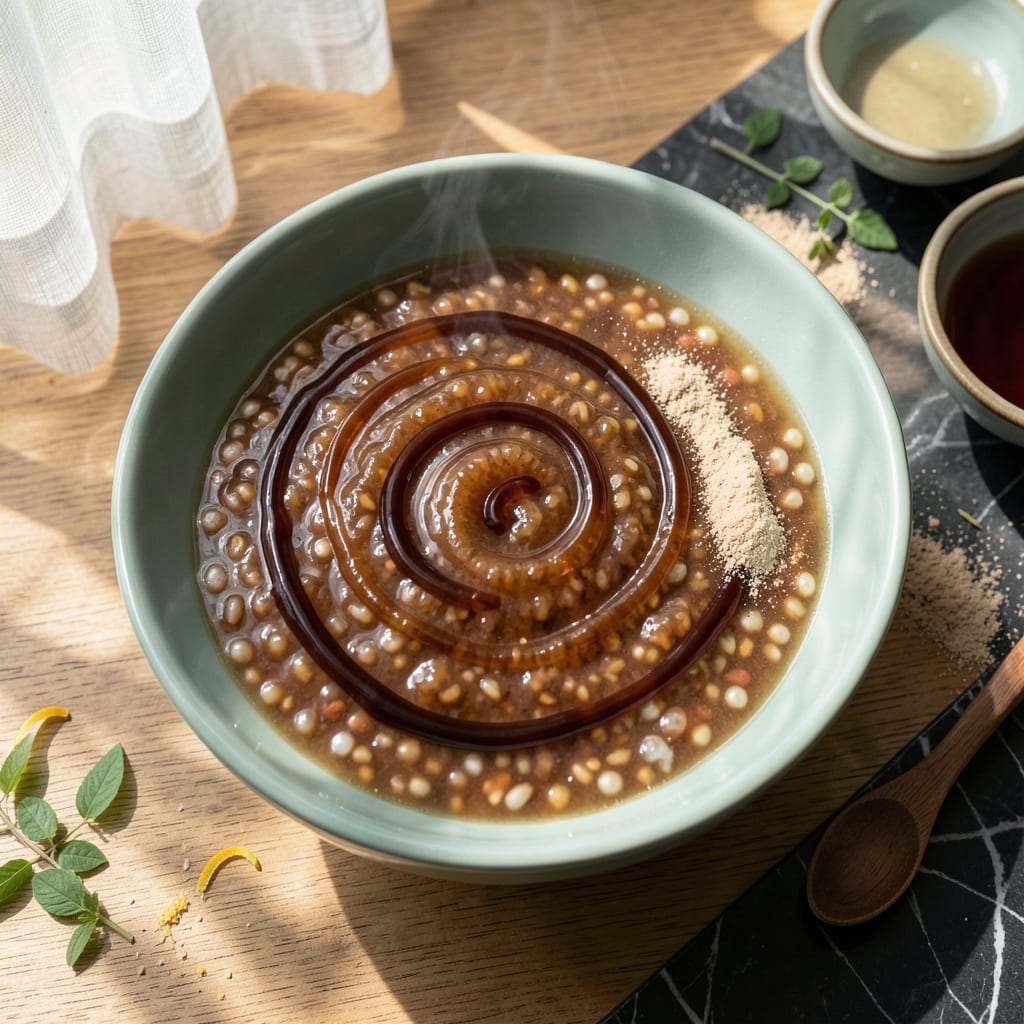
This traditional Korean syrup offers a unique sweetness that enhances both savory and sweet dishes with its mild, malty depth. I’ve refined this method to maintain authenticity while simplifying the process for home kitchens.
The key is slow-cooking rice starch until it transforms into a thick, golden liquid with a glossy finish. This syrup, known as ssal sirup or oligodang, adds a subtle complexity that store-bought sugars can’t match.
Its balanced sweetness makes it ideal for glazes, marinades, or drizzling over desserts. Unlike refined sugar, it carries a delicate grain flavor that elevates every dish it touches.
Make a batch and store it to use in place of honey or maple syrup for a distinctively Korean twist.
Ingredients for Korean Rice Syrup
Seven simple ingredients transform into this glossy, malty Korean syrup with authentic depth.
| Ingredient | Amount | Notes |
|---|---|---|
| Short-Grain White Rice 🍚 | 2 cups | Rinsed thoroughly until water runs clear |
| Water 💧 | 6 cups | Divided for cooking and reduction |
| Rice Malt Powder 🌾 | ½ cup | Korean ssalgaru preferred for authenticity |
| Brown Rice Syrup 🍯 | ¼ cup | Optional for deeper color and flavor |
| Granulated Sugar 🧂 | 2 tbsp | Optional for adjusted sweetness |
| Kosher Salt 🧂 | ¼ tsp | Diamond Crystal preferred for precision |
| Rice Vinegar 🍶 | 1 tsp | Balances sweetness with subtle acidity |
The rice is critical here—short-grain white rice yields the proper starch content for authentic texture. Korean ssalgaru (rice malt powder) is non-negotiable for traditional flavor, though some Asian markets label it as yeast powder. Avoid long-grain varieties; their starch profile won’t caramelize correctly. For the best results, rinsing until the water runs completely clear removes excess starch that could make the syrup cloudy.
No ssalgaru? Barley malt powder works in a pinch but alters the flavor profile slightly. The brown rice syrup is optional but adds depth—substitute with equal parts maple syrup if unavailable. Adjust sweetness with sugar only if needed; the natural maltiness should shine. For vinegar, apple cider vinegar can replace rice vinegar without issue.
This syrup keeps beautifully for 6 months at room temperature in a clean jar. The flavor actually improves with age as the malt develops. Refrigeration isn’t necessary but can extend shelf life to 1 year. Stir before each use as it may separate slightly over time.
Why You’ll Love This Recipe
- Five Ingredients: I love that this only needs rice, water, rice malt powder, brown rice syrup, and sugar—nothing fancy, just pantry staples.
- Rich Caramel Notes: The brown rice syrup gives it this deep, almost butterscotch sweetness that’s way more interesting than plain sugar.
- Endless Uses: Honestly, I drizzle it on pancakes, mix it into marinades, even stir it into tea—it’s my new kitchen multitasker.
- Stores Like a Dream: A batch lasts me weeks in the fridge, so I’m never scrambling for a last-minute sweetener.
Step-by-Step Instructions for Korean Rice Syrup
Follow this traditional method to create a perfectly balanced, glossy syrup with authentic flavor and texture.
Step 1: Prepare and Cook the Rice
Begin by rinsing the 2 cups Short-Grain White Rice thoroughly under cold water until the water runs completely clear. This removes excess starch that could make your syrup cloudy. Drain well and transfer to a large pot.
Add 4 cups Water and bring to a boil over high heat. Once boiling, reduce to low heat, cover, and simmer for 20 minutes until the rice is fully cooked and tender with no chalky center. The grains should be plump and the water mostly absorbed.
Step 2: Convert Rice to Malted Base
While the rice is still hot, transfer it to a large glass or ceramic bowl. Sprinkle the 0.5 cup Rice Malt Powder evenly over the surface. Using a wooden spoon, gently fold the powder into the rice until completely incorporated. The mixture will be thick and sticky.
Cover the bowl with a clean kitchen towel and let it sit at room temperature for 6-8 hours or overnight. This resting period allows the enzymes in the malt powder to break down the rice starches into fermentable sugars, developing the characteristic sweetness and complexity of traditional Korean syrup.
Step 3: Strain and Reduce the Liquid
After resting, transfer the rice mixture to a fine-mesh sieve set over a large pot. Add the remaining 2 cups Water to the rice and gently press with a wooden spoon to extract all the liquid. You should yield about 3 cups of milky, sweet liquid.
Discard the rice solids. Place the pot with the strained liquid over medium-high heat and bring to a boil. Immediately reduce to medium-low heat and simmer for 45-60 minutes, stirring occasionally, until the liquid reduces by half and thickens to a syrupy consistency that coats the back of a spoon.
Step 4: Finish and Balance the Syrup
Once the syrup has thickened, stir in the 0.25 cup Brown Rice Syrup, 2 tbsp Granulated Sugar, 0.25 tsp Kosher Salt, and 1 tsp Rice Vinegar. These additions enhance the depth of flavor and create the perfect balance of sweet, salty, and tangy notes.
Simmer for an additional 5-7 minutes, stirring frequently to prevent scorching. The syrup should develop a glossy sheen and a deep amber color. Taste and adjust sweetness or acidity if needed, though the traditional proportions should yield a perfectly balanced result.
Step 5: Cool and Store
Remove the pot from heat and let the syrup cool to room temperature. As it cools, it will thicken slightly more. The finished syrup should have a smooth, pourable consistency similar to honey but with a more complex, malty flavor profile.
Transfer to a clean glass jar or bottle and store in the refrigerator for up to 2 months. The syrup may crystallize slightly over time—simply warm it gently in a double boiler or microwave to restore its liquid state before use. This traditional preparation yields about 1½ cups of authentic Korean rice syrup.
Pro Tips For Making Korean Rice Syrup
- Use Short-Grain Rice: Sounds obvious, but long-grain rice won’t give you that sticky, smooth texture. Short-grain breaks down better and creates the right consistency for authentic Korean rice syrup.
- Monitor the Heat: Keep it at a steady medium-low—too high and the sugar will caramelize too fast, too low and you’ll be stirring for hours. I learned this the hard way after scorching my first two batches.
- Strain the Mixture: After cooking, strain through a fine-mesh sieve to remove any leftover rice bits. Skipping this leaves your syrup gritty, and nobody wants that in their desserts.
- Add Rice Malt Last: Mix in the rice malt powder only after the rice has fully softened. Adding it too early can make the syrup overly thick or clumpy—my grandmother swore by this timing.
Dietary Considerations for These Flavors
Vegan-Friendly Sweetener
This syrup is naturally 100% plant-based, making it perfect for vegan diets. Unlike honey, it contains no animal products while delivering a similar viscosity and sweetness. I love using it as a honey substitute in baking and glazes. 🌱
Gluten-Free Naturally
Made from short-grain white rice and rice malt powder, this syrup is inherently gluten-free. It’s safe for those with celiac disease or gluten sensitivity, provided you use certified gluten-free ingredients and avoid cross-contamination.
Low Glycemic Option
The malted rice base gives this syrup a lower glycemic index than refined sugar. While it’s still a sweetener, its complex carbs provide a slower, steadier energy release. I find it’s a better choice than corn syrup for blood sugar management.
Allergen Considerations
This syrup is free from common allergens like nuts, dairy, and eggs. However, always check your rice malt powder label, as some brands may process their products in facilities that handle allergens. When in doubt, opt for certified allergen-free products.
Sugar-Controlled Adaptations
For those monitoring sugar intake, you can reduce the granulated sugar by half or omit it entirely. The natural sweetness from the malted rice will still shine. I often skip the sugar and rely on the rice’s inherent flavors. ✨
Long Shelf Life
Thanks to its high sugar content and acidity from the rice vinegar, this syrup resists spoilage. Stored properly in a clean, sealed jar, it stays fresh at room temperature for 6 months without refrigeration.
Nutrition Facts
Frequently Asked Questions
What can I use if I don’t have rice malt powder?
Barley malt powder works as a substitute, though it changes the flavor slightly. For a closer match, try mixing 1 part barley malt with 1 part rice flour to better mimic traditional taste.
Why does my syrup crystallize after storage?
Natural sugars in the syrup can crystallize over time, especially if stored in a cool place. Simply warm the jar in a bowl of hot water or microwave in 10-second bursts to restore its smooth texture.
Can I use this in place of honey?
It has a similar viscosity and sweetness level. Use a 1:1 ratio in recipes, but reduce other liquids slightly since it’s thinner than honey when warm.
How do I know when it’s reduced enough?
Test by dipping a spoon in the syrup. It should coat the back thickly and drip slowly. If it runs off quickly, simmer for 5-10 more minutes and retest.

- Mujadara Rice and Lentils Recipe: Earthy Spiced Lentils With Caramelized Onions - November 1, 2026
- Naija Fried Rice Recipe: Street-Style Spice With Veggie Crunch - November 1, 2026
- Mushy Rice Recipe: Fluffy Grains Transformed in Minutes - November 1, 2026