
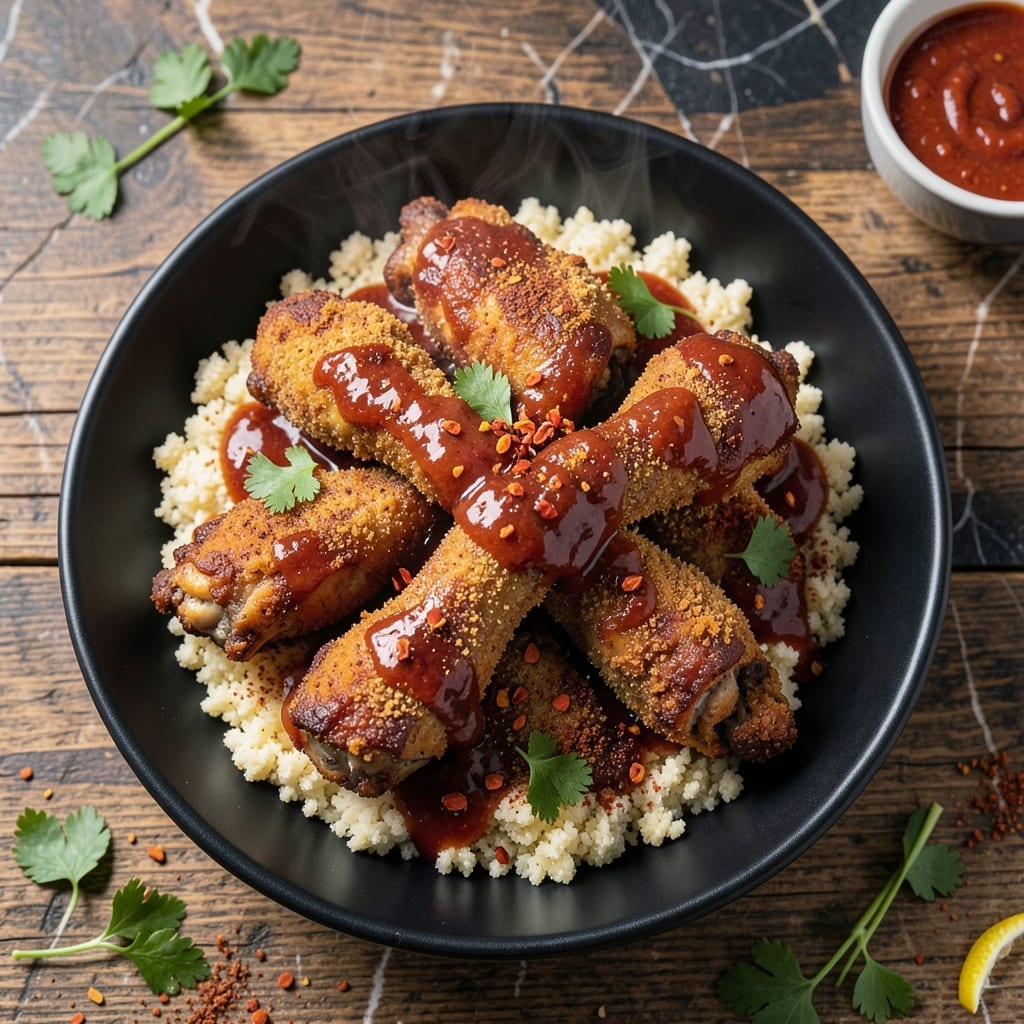
I’ve perfected the art of making crispy Louisiana-style hot chicken that delivers bold, spicy flavor with every bite. This recipe transforms simple ingredients into a showstopping dish that’s impossible to resist.
The secret lies in a well-balanced spice rub and a two-step frying process for maximum crunch. I developed this method to ensure the coating stays crispy while locking in juicy, tender meat.
What you’ll get is golden, fiery chicken with a satisfying crunch and layers of heat that build with each bite. The spice blend is carefully calibrated to deliver authentic Louisiana flavor without overwhelming the palate.
Serve it with pickles and bread for the full experience. Here’s how to make it at home.
Ingredients for Louisiana Hot Chicken
A bold spice blend and crispy coating transform chicken into this fiery Louisiana classic.
| Ingredient | Amount | Notes |
|---|---|---|
| Chicken Thighs 🍗 | 3 lb | Boneless, skin-on for crispiness |
| Buttermilk 🥛 | 2 cups | Full-fat for tenderness |
| All-Purpose Flour 🌾 | 2 ½ cups | For crispy coating |
| Cornstarch 🌽 | ½ cup | Enhances crunch texture |
| Cayenne Pepper 🌶️ | 2 tbsp | Adjust for heat preference |
| Smoked Paprika 🌶️ | 1 tbsp | Deep smoky flavor |
| Garlic Powder 🧄 | 1 tbsp | Uniform flavor distribution |
| Onion Powder 🧅 | 1 tbsp | Complements spice blend |
| Dried Thyme 🍃 | 1 tsp | Earthy Louisiana note |
| Dried Oregano 🍃 | 1 tsp | Classic Cajun herb |
| Salt 🧂 | 1 tbsp | Diamond Crystal preferred |
| Black Pepper 🌶️ | 1 tbsp | Freshly ground for intensity |
| Vegetable Oil 🫒 | 4 cups | High smoke point essential |
| Hot Sauce 🔥 | ¼ cup | Louisiana-style preferred |
The chicken thighs are non-negotiable for optimal texture—skin-on, bone-in delivers maximum crunch and juiciness. Source from Whole Foods or a trusted butcher for consistent quality. The buttermilk should be full-fat (the lower-fat versions don’t tenderize as effectively). For the flour, standard all-purpose works, but White Lily is the Southern gold standard for extra crispiness.
Need to adjust the heat? Reduce cayenne to 1 tbsp for milder flavor or add 1 tsp sugar to balance spice. No buttermilk? Whole milk with 1 tbsp vinegar per cup works in a pinch. The hot sauce can be Crystal or Tabasco—both deliver authentic Louisiana heat. For gluten-free, swap the all-purpose flour for rice flour.
The spice rub keeps in an airtight container for 3 months. Marinated chicken can rest overnight for deeper flavor. Fry in batches and keep warm on a rack (not paper towels) to maintain crispiness. Leftovers reheat best in an air fryer for 2-3 minutes.
Why You’ll Love This Recipe
- I’ll be real: these thighs disappear faster than I can fry them.
- One Pan Magic: So easy. Buttermilk soak while I prep the dry mix—then straight to the pan.
- Crave-Worthy Crisp: That cayenne kick with the buttermilk’s cool tang? Ridiculously good.
- Feeds a Crowd: I’ll be real: these thighs disappear faster than I can fry them.
Step-by-Step Instructions for Louisiana Hot Chicken
This method ensures maximum crispiness and balanced heat in every bite of your creation.
Step 1: Marinate the Chicken in Buttermilk and Hot Sauce
Combine the 2 cups Buttermilk and 0.25 cup Hot Sauce in a large bowl, whisking until fully incorporated. The buttermilk’s acidity tenderizes the meat while the hot sauce begins building the signature Louisiana heat profile.
Add the 3 lb Chicken Thighs to the mixture, ensuring each piece is fully coated. I prefer using boneless, skin-on thighs for optimal crispiness. Cover and refrigerate for at least 4 hours, or overnight for maximum flavor penetration. The longer it marinates, the more pronounced the spice and tenderness will be.
Step 2: Prepare the Spiced Dredging Mixture
In a large shallow dish, whisk together the 2.5 cups All-Purpose Flour, 0.5 cup Cornstarch, 2 tbsp Cayenne Pepper, 1 tbsp Smoked Paprika, 1 tbsp Garlic Powder, 1 tbsp Onion Powder, 1 tsp Dried Thyme, 1 tsp Dried Oregano, 1 tbsp Salt, and 1 tbsp Black Pepper.
The cornstarch is crucial—it creates micro-crispy edges that flour alone can’t achieve. Press the mixture through a fine-mesh sieve if you notice any lumps. This ensures an even coating that adheres properly to the chicken, preventing bare spots that would compromise the final texture.
Step 3: Dredge and Rest the Chicken
Remove each chicken thigh from the buttermilk mixture, allowing excess to drip off for 5 seconds. Dredge through the spice mixture, pressing firmly to adhere the coating to all surfaces. Shake off any loose flour—excess will burn in the oil and create bitter bits.
Place the dredged chicken on a wire rack set over a baking sheet. This resting period of 10-15 minutes allows the coating to hydrate slightly, creating a better bond that won’t flake off during frying. You’ll notice the surface changes from powdery to slightly tacky—this is your visual cue it’s ready.
Step 4: Fry to Golden Perfection
Heat the 4 cups Vegetable Oil in a deep, heavy pot or Dutch oven over medium-high heat to 350°F. Use a deep-fry thermometer for accuracy—oil temperature is critical. Too cool and the chicken will absorb oil; too hot and the outside will burn before the inside cooks.
Carefully lower 2-3 thighs into the oil at a time, avoiding overcrowding. Fry for 8-10 minutes until the coating is deep golden brown and the internal temperature reaches 165°F. The coating should audibly sizzle throughout cooking, indicating proper oil temperature. Drain on a wire rack to maintain crispiness.
Step 5: Rest and Serve
Let the fried chicken rest for 5 minutes before serving. This allows the juices to redistribute and the coating to set fully. The skin should crack audibly when you cut into it, revealing juicy meat beneath a shatteringly crisp exterior.
Serve immediately while hot—the contrast between the fiery coating and tender interior is most pronounced right out of the fryer. Any leftover pieces can be kept warm in a 200°F oven for up to 30 minutes, though the texture is best when freshly fried.
Pro Tips For Making Louisiana Hot Chicken
- Brine the Chicken: Soak the thighs in buttermilk for at least 4 hours—overnight if you can. I learned this the hard way after my first batch came out dry and bland.
- Double Dredge: Dip the chicken in the flour-cornstarch mix, back into buttermilk, then back into the flour. The extra layer makes a real difference in that crispy crunch.
- Rest After Frying: Let the chicken rest on a wire rack for 5-10 minutes after frying. This keeps it crispy instead of soggy from trapped steam.
- Adjust the Cayenne: Start with 1 tablespoon of cayenne in your flour mix, then taste before frying. You can always add more heat, but you can’t take it out.
Pro Cooking Tips for louisiana hot chicken
Double-Fry Technique
For restaurant-quality crispiness, I fry the chicken twice. First fry at 325°F for 6-7 minutes to cook through, then rest for 5 minutes. Second fry at 375°F for 2-3 minutes for maximum crunch. This creates layers of texture that single frying can’t achieve. 🔥
Spice Blooming
Toast your spice blend in a dry skillet over medium heat for 1-2 minutes before mixing with flour. This wakes up the cayenne and smoked paprika, intensifying their flavors. Let it cool completely before dredging to prevent clumping.
Buttermilk Boost
Add 1 tbsp hot sauce per cup of buttermilk for extra tang and heat. I also whisk in 1 tsp baking powder to the dry mix—this creates tiny bubbles in the coating for an airier crunch. The difference is noticeable in every bite.
Oil Temperature Control
Use a deep-fry thermometer and adjust heat between batches. Oil temp drops when adding chicken—maintain between 340-360°F. I prefer peanut oil for its high smoke point, but your vegetable oil works perfectly too.
Resting Rack Trick
Always drain fried chicken on a wire rack, never paper towels. The rack allows air circulation, preventing steam from making the coating soggy. I place mine over a sheet pan to catch drips. This keeps your creation crispy for longer.
Final Heat Check
Test one piece first—if it browns too quickly, lower the heat. If it’s pale, increase slightly. The perfect piece has a deep mahogany color with visible spice speckles. Serve immediately for peak texture and heat. 💡
Nutrition Facts
Frequently Asked Questions
What type of chicken works best?
Use boneless, skin-on thighs for maximum crispiness and juiciness. The skin creates that signature crunch while the dark meat stays tender. Avoid breast meat—it dries out too easily.
Can I bake instead of frying?
Yes, but the texture won’t be as crispy. Bake at 400°F for 25-30 minutes on a wire rack. For better results, spray with oil and broil for 2-3 minutes at the end.
How do I adjust the heat level?
Reduce cayenne to 1 tbsp for milder flavor or add 1 tsp sugar to balance the spice. For extra heat, increase cayenne to 3 tbsp or add 1/2 tsp chili flakes.
What’s the best way to reheat?
Use an air fryer at 375°F for 2-3 minutes to restore crispiness. A 200°F oven works too but takes 10-12 minutes. Avoid microwaving—it makes the coating soggy.

- Jollof Rice Sauce Recipe: West African Tomato and Spice Infusion - September 25, 2026
- Japanese Rice Soup Recipe: Umami-Rich Comfort in a Bowl - September 25, 2026
- Homemade Cream Of Rice Recipe: Silk-Smooth Breakfast in Minutes - September 25, 2026