
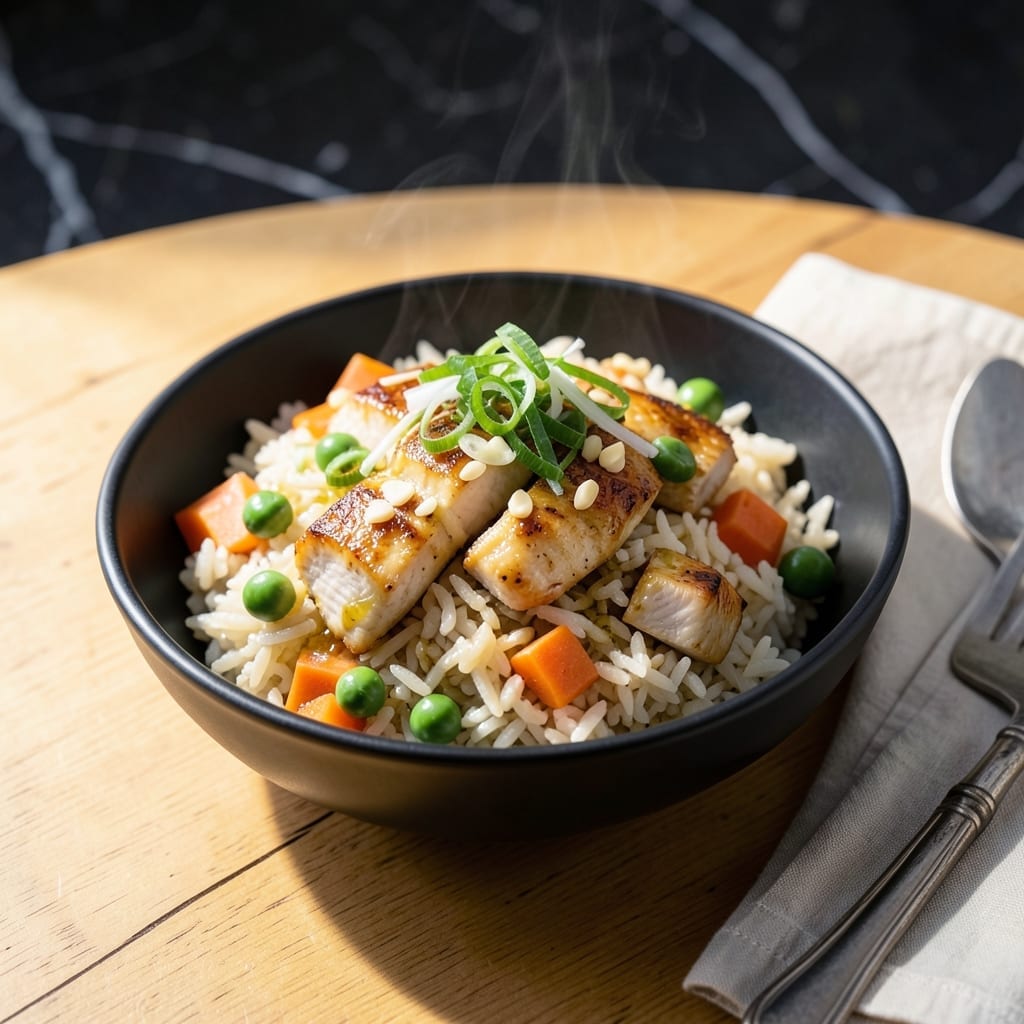
This lightened version of fried rice proves you don’t need excess oil to pack in flavor. I’ve refined the technique to use minimal fat while keeping every bite savory and satisfying.
The secret lies in pre-cooked, chilled rice and a hot wok. This combination prevents sticking and allows vegetables to caramelize without added oil. Lean proteins like shrimp or chicken breast add substance without the fat.
You’ll end up with a dish that’s colorful, aromatic, and just as delicious as takeout. The rice stays separate and fluffy, while the vegetables retain their crunch and natural sweetness.
Ready in under 20 minutes, it’s a quick, guilt-free meal that doesn’t skimp on taste.
Ingredients for Low Fat Fried Rice
Chilled rice, lean protein, and fresh veggies make this wok masterpiece possible with minimal oil.
| Ingredient | Amount | Notes |
|---|---|---|
| Day-Old Cooked White Rice 🍚 | 4 cups | Chilled overnight for best texture |
| Large Eggs 🥚 | 2 whole | Lightly beaten |
| Boneless Skinless Chicken Breast 🍗 | ¾ lb | Diced into small cubes |
| Frozen Peas and Carrots Mix 🥕 | 1 cup | Thawed and drained |
| Green Onions 🧅 | 4 whole | Thinly sliced, whites and greens separated |
| Garlic Cloves 🧄 | 3 cloves | Minced finely |
| Low-Sodium Soy Sauce 🫒 | 3 tbsp | Or tamari for gluten-free |
| Sesame Oil 🫒 | 1 tsp | Toasted variety for depth |
| Rice Vinegar 💧 | 1 tbsp | Adds bright acidity |
| Fresh Ginger Root 🌿 | 1 tbsp | Peeled and grated |
| Red Bell Pepper 🌶️ | 1 whole | Diced into small pieces |
| Neutral Cooking Spray 🫒 | 1 can | For wok coating |
| Kosher Salt 🧂 | ½ tsp | Adjust to taste |
| Black Pepper 🌶️ | ¼ tsp | Freshly ground preferred |
The rice is non-negotiable—day-old, chilled white rice is what gives you those separate, fluffy grains. Most grocery stores sell it pre-cooked in the refrigerated section if you’re in a pinch (just chill it first). For the chicken, Costco’s boneless, skinless breasts are consistently tender and affordable. The veggies? Trader Joe’s frozen peas and carrots save time without sacrificing texture.
No chicken? Shrimp or tofu work great—just adjust cooking time. Out of sesame oil? Skip it entirely (it’s just for aroma). Fresh ginger not on hand? Ground ginger at one-third the amount gets you close. The soy sauce can be regular if you’re not watching sodium—just reduce to 2 tablespoons. And yes, the cooking spray is key (don’t sub oil here).
Fried rice actually reheats beautifully—it’ll keep in the fridge for 3-4 days. Store leftovers in airtight containers. The ginger and garlic can be prepped ahead and kept in the fridge for 1 week (or freeze for 3 months).
Why You’ll Love This Recipe
- One Pan Meal: I toss everything into a single skillet—rice, chicken, veggies—and it’s done in 15 minutes flat.
- Umami Punch: The soy sauce and green onions hit that savory-sweet spot every time, no heavy sauces needed.
- Meal Prep Star: Honestly, it reheats like a dream for lunches all week without getting soggy.
- Budget Stretcher: A pound of chicken breast and frozen veggies feed four of us for under ten bucks.
Step-by-Step Instructions for Low Fat Fried Rice
Here’s the method I use for a perfect, light take on this classic dish every time.
Step 1: Prep and Cook the Protein
Spray a wok or large skillet with the neutral cooking spray and heat over medium-high heat. Add the 0.75 lb diced boneless skinless chicken breast and cook for 5-6 minutes, stirring occasionally, until the pieces are opaque throughout and just beginning to brown.
Season lightly with 0.5 tsp kosher salt and 0.25 tsp black pepper as it cooks. Transfer the chicken to a plate and set aside. The residual heat will keep it warm while you build the rest of the dish. This step ensures lean protein without excess oil.
Step 2: Scramble the Eggs and Sauté Aromatics
In the same wok, add the 2 whole lightly beaten large eggs and scramble quickly with a spatula. Cook for 1-2 minutes until the eggs are just set but still slightly soft—this prevents them from becoming rubbery when mixed with the other ingredients later.
Push the eggs to one side of the wok and add the 3 cloves minced garlic cloves, 1 tbsp grated fresh ginger root, and the white parts of the 4 whole thinly sliced green onions. Sauté for 30-45 seconds until fragrant but not browned—burnt garlic turns bitter instantly.
Step 3: Combine Rice and Vegetables
Add the 4 cups day-old cooked white rice to the wok, breaking up any clumps with your spatula. Stir-fry for 2-3 minutes until the rice is heated through and begins to pick up the aromatics. The chilled rice prevents mushiness while absorbing flavors perfectly.
Incorporate the 1 cup thawed and drained frozen peas and carrots mix, 1 whole diced red bell pepper, and the cooked chicken. Toss everything together and cook for another 2 minutes until the vegetables are tender-crisp and evenly distributed.
Step 4: Finish with Sauce and Garnish
Drizzle the 3 tbsp low-sodium soy sauce, 1 tsp toasted sesame oil, and 1 tbsp rice vinegar over the mixture. Stir-fry for 1-2 minutes until everything is uniformly coated and the flavors meld together. The vinegar adds a bright note that balances the richness.
Remove from heat and stir in the green parts of the green onions. Let it sit for 1 minute to allow the residual heat to soften the greens slightly. Serve immediately while hot, with the green onion tops adding a fresh, vibrant finish to each bite.
Pro Tips For Making Low Fat Fried Rice
- Chill the Rice: Use day-old rice straight from the fridge—it’s drier and fries up fluffier instead of mushy. I learned this the hard way after making soggy fried rice more times than I’d like to admit.
- Pre-Cook the Chicken: Dice the chicken breast small (½-inch pieces) and cook it first in a nonstick pan with just a teaspoon of oil, then set aside. This keeps it tender and prevents overcooking when you toss it back in with the rice.
- Skip the Thaw: Toss the frozen peas and carrots directly into the hot pan—they’ll warm through quickly without turning to mush. After burning a batch by microwaving them first, I finally figured out this saves time and texture.
- Eggs Last: Push the rice to one side of the pan, add a little oil, then scramble the eggs in the empty space before mixing everything together. Sounds weird, but it works: you get distinct egg bits instead of a rubbery, overmixed mess.
Pro Cooking Tips for low fat fried rice
Wok Temperature Control
Keep your wok at medium-high heat throughout cooking. I use a 14-inch carbon steel wok from Made In, which heats evenly. If your wok starts smoking excessively, reduce heat slightly—this prevents bitter flavors from developing. 🌡️
Rice Prep Secret
Use day-old rice straight from the fridge—it’s drier and fries better. Spread it on a baking sheet and break up clumps before adding to the wok. This ensures each grain stays separate and absorbs flavors without turning mushy.
Egg Timing
Scramble the eggs just until they’re soft-set (about 1-2 minutes). They’ll finish cooking when mixed with the hot rice and veggies. Overcooked eggs become rubbery and ruin the dish’s texture.
Sauce Distribution
Pour the soy sauce and rice vinegar around the edges of the wok, not directly on the rice. This lets the sauce heat and reduce slightly before mixing in. I also add the sesame oil last to preserve its aroma.
Veggie Order
Add the red bell pepper before the frozen veggies—it needs more time to soften. The frozen mix only needs 2 minutes to heat through. This sequence ensures all vegetables finish cooking at the same time. 💡
Final Texture Check
Your fried rice is done when the grains are hot throughout and slightly toasted. If it looks dry, add 1-2 tbsp water and toss for 30 seconds. The rice should glisten slightly from the sauce.
Nutrition Facts
Frequently Asked Questions
Why use day-old rice?
Fresh rice is too moist and will turn mushy when stir-fried. Day-old rice is drier and holds its shape better, giving you that perfect separate-grain texture. Spread it on a tray to dry out even more before cooking.
Can I make this vegetarian?
Swap the chicken for extra-firm tofu or add more veggies like mushrooms or broccoli. Press the tofu first to remove excess water for better browning.
What if my rice sticks to the wok?
Ensure your wok is properly preheated and use cooking spray as directed. If sticking occurs, add 1-2 tbsp water and scrape the bottom with a wooden spatula.

- Rice Pudding Recipe With Eggs and Milk: Old-Fashioned Custard-Style Comfort - September 30, 2026
- Rice Noodle Sauce Recipe: Bold Umami Depth for Authentic Stir-Fry - September 30, 2026
- Rice Pilaf Recipe: Fragrant Basmati With Toasted Vermicelli - September 30, 2026