
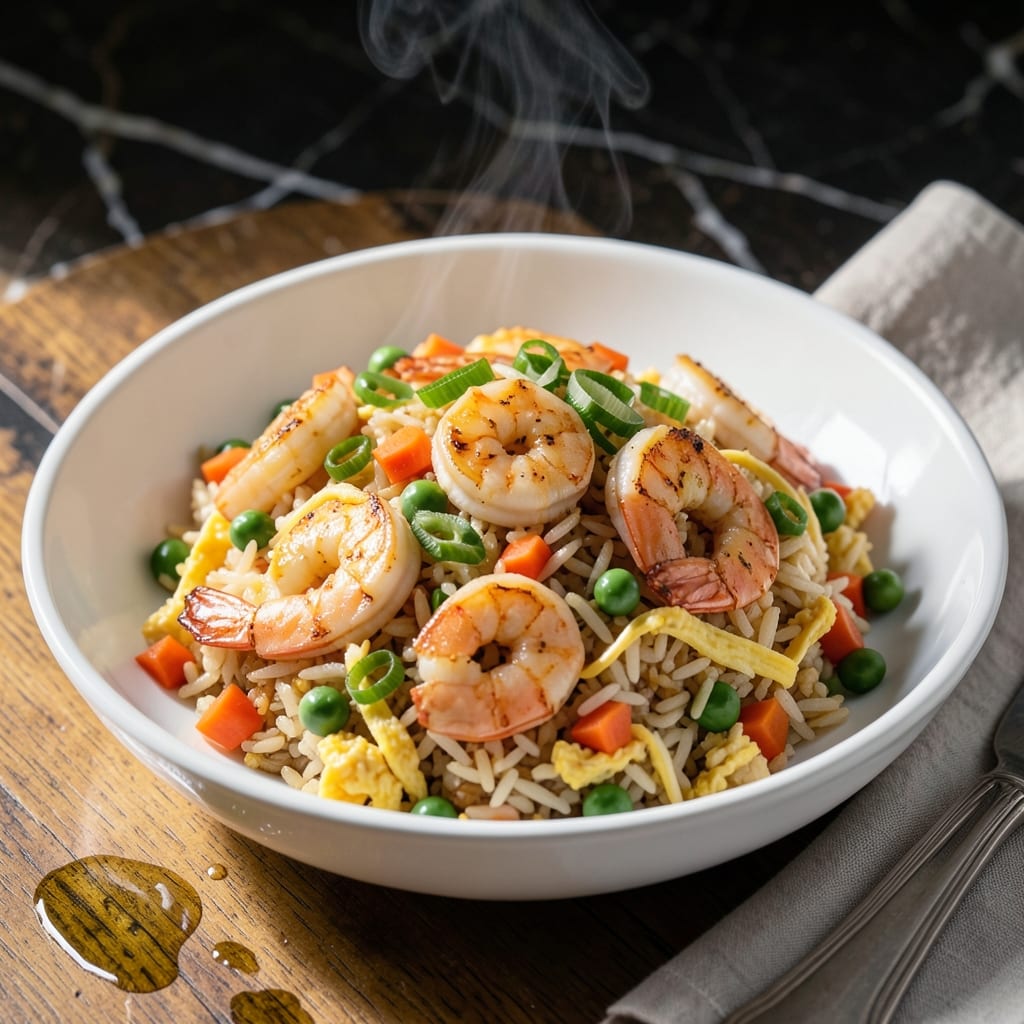
Achieving authentic Chinese-style shrimp fried rice at home requires mastering two key elements: proper wok technique and ingredient preparation. This isn’t just stir-frying—it’s about building layers of flavor through precise timing and high heat.
The foundation lies in using day-old rice, which maintains its texture better than fresh. Each grain should remain separate, coated in a light sheen of egg and soy sauce. The shrimp must be cooked just until opaque to preserve their tender bite.
What emerges is a dish with distinct wok hei—that coveted smoky aroma from high-heat cooking. The shrimp stay plump and juicy, the vegetables retain their crispness, and every bite delivers the balanced savory-sweet profile of traditional Chinese takeout.
This method delivers restaurant-quality results through careful attention to detail and technique.
Ingredients for Recipe for Shrimp Fried Rice Chinese Style
Day-old rice and fresh shrimp form the base of this authentic wok-tossed classic with bold flavors.
| Ingredient | Amount | Notes |
|---|---|---|
| Jasmine Rice 🍚 | 3 cups | Day-old, cooked and chilled |
| Large Shrimp 🍤 | 1 lb | Peeled, deveined, tails off |
| Large Eggs 🥚 | 3 whole | Lightly beaten |
| Green Onions 🧅 | 4 whole | Thinly sliced, white and green parts separated |
| Carrots 🥕 | 1 whole | Medium, finely diced |
| Frozen Peas 🌱 | ¾ cup | Thawed, rinsed |
| Soy Sauce 🥢 | 3 tbsp | Light or all-purpose |
| Oyster Sauce 🫒 | 1 tbsp | Vegan oyster sauce if preferred |
| Shaoxing Wine 🍶 | 2 tbsp | Dry sherry as substitute |
| Sesame Oil 🫒 | 1 tsp | Toasted, for finishing |
| Garlic Cloves 🧄 | 3 cloves | Minced finely |
| Ginger Root 🌿 | 1 tbsp | Fresh, grated |
| Neutral Cooking Oil 🫒 | 3 tbsp | High smoke point, divided |
| White Pepper 🌶️ | ½ tsp | Freshly ground |
| Salt 🧂 | ½ tsp | Adjust to taste |
The rice is critical—day-old jasmine rice from your pantry works perfectly, as freshly cooked rice will turn mushy. For shrimp, wild-caught or sustainably farmed from seafood markets like Whole Foods or Trader Joe’s ensures quality. The carrots and green onions should be crisp and vibrant. Shaoxing wine is available at Asian grocery stores, but dry sherry from any supermarket is a suitable alternative.
No Shaoxing wine? Dry sherry works just as well. For a vegetarian twist, mushroom sauce replaces oyster sauce. Fresh ginger is ideal, but ground ginger at half the amount can substitute in a pinch. The peas can be swapped with diced bell peppers for added color. If you’re avoiding eggs, extra shrimp or tofu maintains the protein balance.
Store shrimp in the coldest part of the fridge and use within 2 days. Cooked rice keeps for 3-4 days refrigerated. Leftovers stay fresh for 3 days in the fridge—reheat quickly over high heat to preserve texture.
Why You’ll Love This Recipe
- One Pan Meal: I toss everything in my wok and it’s done in 15 minutes—no extra pots, no fuss.
- Umami Bomb: The shrimp soaks up the soy and garlic, while the eggs add that rich, creamy bite I crave.
- Lunchbox Hero: I pack leftovers for work and they reheat like a dream—still tender, never mushy.
- Budget Stretcher: A pound of shrimp and a handful of veggies feed my whole family without breaking the bank.
Step-by-Step Instructions for Chinese-Style Shrimp Fried Rice
Authentic wok technique delivers restaurant-quality texture and flavor in your home kitchen.
Step 1: Prepare and Veloute the Aromatics
Heat 1 tablespoon neutral cooking oil in a wok over high heat until shimmering. Add the minced garlic cloves and grated ginger root, stirring constantly for 15-20 seconds until fragrant but not browned. The moment you smell their aroma, add the finely diced carrots and cook for 1 minute to soften slightly.
This initial step builds the flavor foundation. The high heat ensures the aromatics bloom quickly without burning, while the carrots begin to release their natural sweetness into the oil. Keep the ingredients moving to prevent hot spots.
Step 2: Cook the Shrimp and Eggs Separately
Increase heat to maximum and add 1 tablespoon neutral cooking oil. Add the 1 lb large shrimp in a single layer and cook undisturbed for 45 seconds per side until just opaque and pink. Remove immediately to a plate—they’ll finish cooking later.
In the same wok, add the remaining 1 tablespoon neutral cooking oil. Pour in the lightly beaten large eggs and scramble quickly with a spatula until just set but still slightly runny, about 30-45 seconds. Transfer to the plate with the shrimp. This two-stage cooking prevents overcooking.
Step 3: Combine Rice and Vegetables
Add the thawed frozen peas and the white parts of the thinly sliced green onions to the wok. Stir-fry for 1 minute until the peas turn bright green. Add the 3 cups day-old jasmine rice, breaking up any clumps with your spatula. The rice should be dry and separate easily—this is why chilled rice works best.
Drizzle the 2 tbsp Shaoxing wine around the edges of the wok and stir to combine. The wine deglazes the pan and adds depth. Cook for 2 minutes, allowing the rice to absorb the flavors and heat through completely.
Step 4: Finish with Sauces and Final Touches
Return the shrimp and eggs to the wok. Drizzle the 3 tbsp soy sauce and 1 tbsp oyster sauce evenly over the mixture. Add the 0.5 tsp salt and 0.5 tsp white pepper. Stir-fry everything together for 2-3 minutes until all components are uniformly coated and heated through.
The soy sauce provides salinity and umami, while the oyster sauce adds a velvety richness. Taste and adjust seasoning if needed. The rice grains should be distinct, slightly glossy, and infused with the wok hei (breath of the wok) aroma.
Step 5: Garnish and Serve Immediately
Remove from heat and stir in the green parts of the green onions and the 1 tsp sesame oil. The sesame oil adds a nutty finish and should not be heated to preserve its delicate flavor. Transfer to a serving dish while hot.
Serve immediately while the rice is at its peak texture. Each bite should deliver tender shrimp, fluffy eggs, sweet peas, and fragrant rice with a balanced savory-sweet flavor profile characteristic of authentic Chinese-style fried rice.
Pro Tips For Making Recipe For Shrimp Fried Rice Chinese Style
- Use Day-Old Rice: Fresh rice turns mushy in the wok—spread leftover jasmine rice on a tray and refrigerate it overnight to dry out. I learned this the hard way after making soggy fried rice more times than I’d like to admit.
- Dry Your Shrimp: Pat the shrimp very dry with paper towels before cooking, or they’ll steam instead of sear. About 2 minutes of blotting makes a real difference in getting that perfect bite.
- Scramble Eggs First: Push the scrambled eggs to one side of the wok before adding the shrimp and veggies—this keeps them soft and distinct instead of disappearing into the rice. Sounds weird, but it works.
- High Heat Only: Crank the burner to max and work in small batches if needed. After burning three batches, I finally figured out that anything less than screaming hot just won’t give you that classic wok hei flavor.
Common Mistakes When Making Perfect Results
Overcooking the Shrimp
Shrimp cook incredibly fast—just 45 seconds per side over high heat. Leaving them in the wok too long turns them rubbery. Remove them as soon as they turn opaque and pink, even if they seem underdone. They’ll finish cooking when added back later.
Using Fresh Rice
This is the most common mistake I see. Fresh rice is too moist and will turn mushy. Always use day-old jasmine rice that’s been chilled in the fridge. Spread it on a tray to dry slightly before cooking for perfect separation. 💡
Low Heat Cooking
Chinese fried rice requires high heat to achieve that signature wok hei. If your stove isn’t powerful enough, cook in small batches. A wok on a gas burner works best, but a large skillet on maximum heat can work too.
Overcrowding the Wok
Too many ingredients at once lowers the temperature and steams rather than stir-fries. Cook the shrimp and eggs separately, then combine everything at the end. This ensures each component gets proper heat exposure.
Skipping the Shaoxing Wine
This step deglazes the wok and adds essential depth. Don’t skip it! If you can’t find Shaoxing wine, use dry sherry as a substitute. Pour it around the edges of the wok for maximum effect.
Adding Sesame Oil Too Early
Sesame oil’s delicate flavor burns easily. Always add it at the very end, off the heat. Drizzle the 1 tsp sesame oil and toss gently to preserve its aromatic qualities. This final touch makes all the difference.
Nutrition Facts
Frequently Asked Questions
Can I use fresh rice instead of day-old?
Never use fresh rice—it will turn mushy. Always use day-old jasmine rice that’s been chilled. Spread it on a tray to dry slightly before cooking for perfect separation.
What can I substitute for Shaoxing wine?
Use dry sherry as a substitute for Shaoxing wine. Pour it around the edges of the wok for maximum effect. This step deglazes the wok and adds essential depth.
How do I know when the shrimp are done?
Cook shrimp just until they turn opaque and pink—about 45 seconds per side. Remove them immediately to prevent rubbery texture. They’ll finish cooking when added back later.
Can I make this dish without a wok?
A large skillet on maximum heat works as a substitute. Cook in small batches to maintain high heat and avoid steaming the ingredients.

- Rice Pudding Recipe With Eggs and Milk: Old-Fashioned Custard-Style Comfort - September 30, 2026
- Rice Noodle Sauce Recipe: Bold Umami Depth for Authentic Stir-Fry - September 30, 2026
- Rice Pilaf Recipe: Fragrant Basmati With Toasted Vermicelli - September 30, 2026