
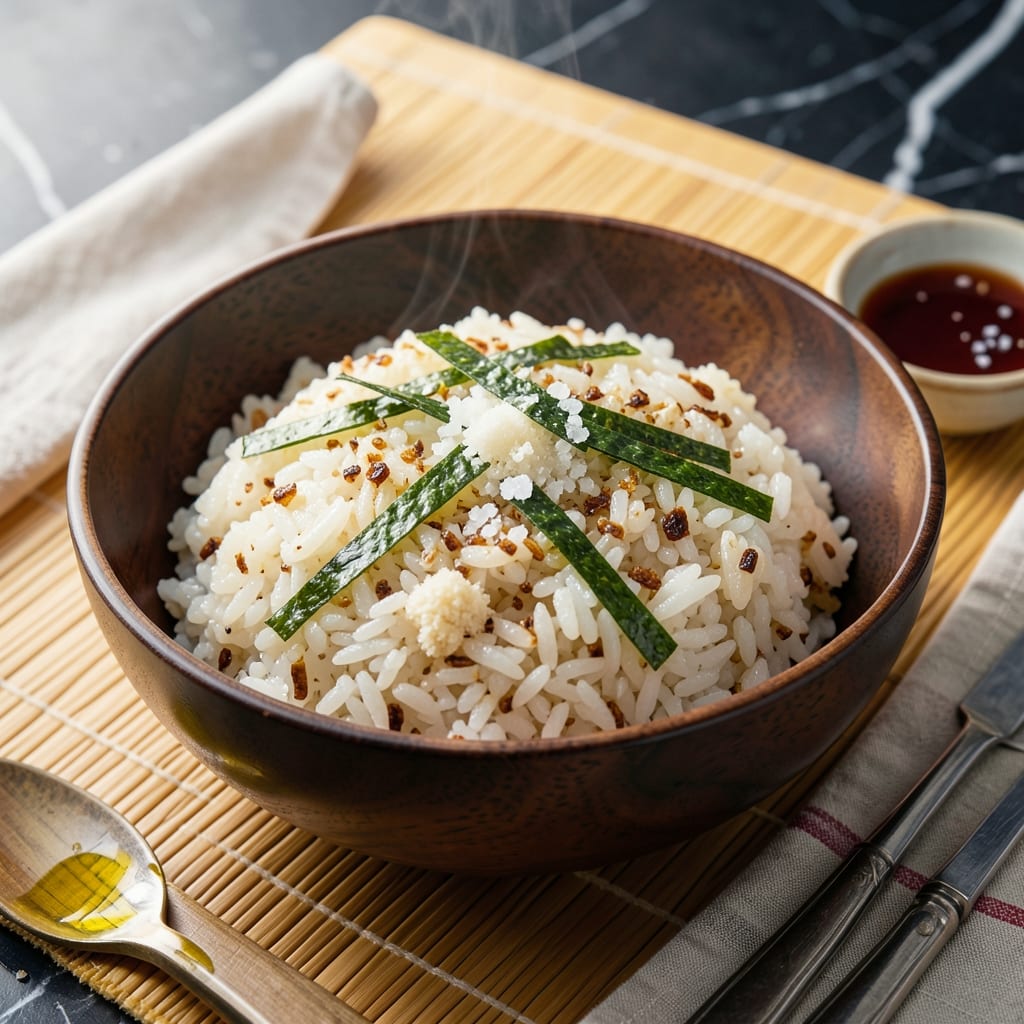
Mastering sushi rice begins with the right technique and quality ingredients. This method transforms basic rice into perfectly sticky grains that hold together beautifully for rolls.
Rinsing the rice thoroughly removes excess starch, preventing a gummy texture. Soaking for 30 minutes ensures even cooking, while the precise rice-to-water ratio guarantees fluffy, distinct grains.
The seasoning step is crucial—a delicate balance of rice vinegar, sugar, and salt creates that signature sushi flavor. Gently folding the mixture preserves the rice’s texture.
With this approach, you’ll achieve professional results every time. The rice stays tender yet firm, ideal for any sushi creation you have in mind.
Ingredients for Mahatma Sushi Rice
Quality short-grain rice plus a few pantry staples create the perfect base for sushi.
| Ingredient | Amount | Notes |
|---|---|---|
| Mahatma Sushi Rice 🍚 | 2 cups | Short-grain white rice, uncooked |
| Water 💧 | 2 ½ cups | Filtered or spring for best results |
| Rice Vinegar 🍶 | ½ cup | Seasoned or unseasoned, not apple cider |
| Granulated Sugar 🍚 | 2 tbsp | Dissolved in vinegar mixture |
| Sea Salt 🧂 | 1 tsp | Fine grain for even distribution |
| Kombu 🌿 | 1 piece | 4-inch square, optional for depth |
| Sake 🍶 | 1 tbsp | Traditional addition, optional |
| Mirin 🍶 | 1 tbsp | Sweet rice wine, optional |
The rice quality is non-negotiable here. Mahatma sushi rice delivers consistent short-grain texture crucial for that signature stickiness. Japanese markets carry premium brands like Koshihikari if you want to upgrade. Look for fresh crop dates on packaging—older rice loses moisture and absorbs water unevenly. The kombu, while optional, adds subtle umami depth that elevates the final product significantly.
No rice vinegar? White wine vinegar plus 1 tsp sugar per tbsp gets you close. Mirin can be replaced with 1 tsp sugar dissolved in 1 tbsp water. Sake omission is fine, but don’t skip the sugar entirely—it balances the vinegar’s acidity. For strict vegan purity, verify Mirin isn’t fermented with fish (some brands use bonito). The water-to-rice ratio must stay precise for proper texture.
Uncooked rice stores indefinitely in a cool, dark pantry. Cooked sushi rice is best used immediately but can be held at room temperature for 2 hours (covered with damp cloth). Never refrigerate cooked rice for sushi—it dries out and loses stickiness. The seasoning mixture can be prepped 1 day ahead and stored in the fridge.
Why You’ll Love This Recipe
- One Pot Wonder: I just dump the rice in with water, let it simmer, and the Mahatma brand cooks up perfectly every time—no babysitting required.
- Sweet-Tangy Magic: That rice vinegar, sugar, and salt mix? It gives the rice the exact sticky-sweet balance I crave for sushi or bowls.
- Meal Prep MVP: I make a big batch on Sunday and it stays fresh for days—great for bento boxes, burrito bowls, or even a quick fried rice.
- Budget Stretch: A 2-pound bag of Mahatma sushi rice costs pennies per serving, and honestly, it tastes better than takeout.
Step-by-Step Instructions for Mahatma Sushi Rice
Master the technique for consistently perfect sticky rice with these precise steps.
Step 1: Rinse and Soak the Mahatma Sushi Rice
Place the 2 cups Mahatma Sushi Rice in a fine-mesh strainer and rinse under cold running water. I swirl the rice with my hand, changing the water until it runs completely clear—this removes excess starch that could make the rice gummy rather than perfectly sticky.
Once rinsed, transfer the rice to a bowl and cover with cool water. Let it soak for 30 minutes. This essential step allows the grains to absorb moisture evenly, preventing uneven cooking and ensuring that uniform texture every sushi chef demands.
Step 2: Cook the Rice with Kombu for Depth
Drain the soaked rice thoroughly, then combine it with the 2.5 cups Water in a heavy-bottomed pot. Add the 1 piece Kombu to the water—this optional but recommended addition infuses subtle umami depth into every grain as it cooks.
Bring to a boil over medium-high heat, then immediately reduce to low heat, cover, and simmer for 15 minutes. Resist the urge to lift the lid; the trapped steam is crucial for even cooking. After 15 minutes, remove from heat and let it steam, covered, for another 10 minutes.
Step 3: Prepare the Seasoning Mixture
While the rice cooks, combine the 0.5 cup Rice Vinegar, 2 tbsp Granulated Sugar, 1 tsp Sea Salt, 1 tbsp Sake, and 1 tbsp Mirin in a small saucepan. Heat over low heat just until the sugar and salt dissolve completely—this should take 2-3 minutes.
Don’t let the mixture boil; you want to preserve the bright, balanced flavors. Once dissolved, remove from heat and let it cool slightly. This seasoning is what transforms plain rice into authentic sushi rice with that characteristic glossy sheen.
Step 4: Fold the Seasoning into the Cooked Rice
Transfer the cooked rice to a large, non-reactive bowl—wooden or glass works best. I always use a rice paddle or silicone spatula for this next step. Pour the prepared seasoning mixture evenly over the hot rice while gently folding with a cutting motion rather than stirring.
Continue folding for 2-3 minutes until the rice is evenly coated and has cooled to room temperature. You’ll know it’s ready when the grains glisten and cling together slightly. Be gentle—overworking the rice can crush the grains and make it pasty rather than perfectly tender.
Step 5: Rest and Use Immediately
Cover the seasoned rice with a damp kitchen towel and let it rest for 10 minutes. This final step allows the flavors to meld completely and the texture to stabilize. The rice should be tacky enough to hold together for sushi rolls but not mushy.
Use the rice immediately for the best results—it’s at its peak texture and flavor when fresh. If you must store it, keep it covered at room temperature for up to 4 hours, but avoid refrigeration as it hardens the grains. Keep a bowl of water nearby to wet your hands when shaping sushi to prevent sticking.
Pro Tips For Making Mahatma Sushi Rice
- Rinse Thoroughly: Wash the Mahatma sushi rice in 3-4 changes of cold water until it runs clear—this removes excess starch so your grains stay separate and sticky in all the right ways.
- Use Lukewarm Water: Dissolve the sugar and sea salt in the rice vinegar with lukewarm water first; it blends smoother and coats the rice more evenly than cold.
- Skip Over-Stirring: After adding the vinegar mixture, fold gently with a wooden spoon—over-stirring crushes the grains and turns your rice mushy instead of light and fluffy.
- Let It Steam: Once cooked, let the rice sit covered for 10 minutes off the heat; this final steam step makes the texture just right for rolling or shaping.
Regional Styles of This mahatma sushi rice
Traditional Japanese Style
For an authentic approach, I use Koshihikari rice—the gold standard in Japan—though Mahatma sushi rice works beautifully too. The key is the 1:1.25 rice-to-water ratio and precise 30-minute soak before cooking.
California Adaptation
In California, sushi chefs often add 1 tsp toasted sesame seeds to the seasoning mix for nutty depth. I also incorporate 1 tbsp furikake for extra umami. This West Coast twist enhances the rice without overpowering the fish.
Hawaiian Plate Lunch
Hawaiian-style sushi rice is slightly sweeter. I increase the sugar to 3 tbsp and add 1 tsp aloha shoyu to the seasoning. This pairs perfectly with Spam musubi or poke bowls, a local favorite.
Korean Kimbap
For kimbap, I use short-grain rice but season with 1 tbsp toasted sesame oil and 1 tsp roasted seaweed flakes instead of vinegar. The rice is less sticky but holds its shape beautifully for rolled kimbap. 🌟
Vegan Fusion
I replace traditional sake with 1 tbsp dry sherry and mirin with 1 tbsp agave syrup for a plant-based version. The rice maintains its glossy sheen and balanced sweet-tangy flavor, perfect for vegan sushi creations.
Quick Weeknight
Short on time? I skip the soak and use a rice cooker with a 1:1 rice-to-water ratio. While not traditional, it produces decent results for quick meals. Just add the seasoning while the rice is still hot. 💡
Nutrition Facts
Frequently Asked Questions
Why is rinsing the rice so important?
Rinsing removes excess starch that could make the rice gummy. 3-4 washes until water runs clear ensures the perfect sticky texture sushi requires.
Can I use a rice cooker instead?
Yes! Use the same 1:1.25 rice-to-water ratio and follow your cooker’s instructions. The soaking step remains crucial for even texture.
How do I fix rice that’s too dry?
Sprinkle 1-2 tsp of warm water over the rice and fold gently. Cover with a damp towel for 5 minutes to restore moisture.
Can I make this ahead of time?
Cooked sushi rice is best used immediately but can be held at room temperature for 2 hours. Avoid refrigeration as it hardens the grains.

- Mujadara Rice and Lentils Recipe: Earthy Spiced Lentils With Caramelized Onions - November 1, 2026
- Naija Fried Rice Recipe: Street-Style Spice With Veggie Crunch - November 1, 2026
- Mushy Rice Recipe: Fluffy Grains Transformed in Minutes - November 1, 2026