
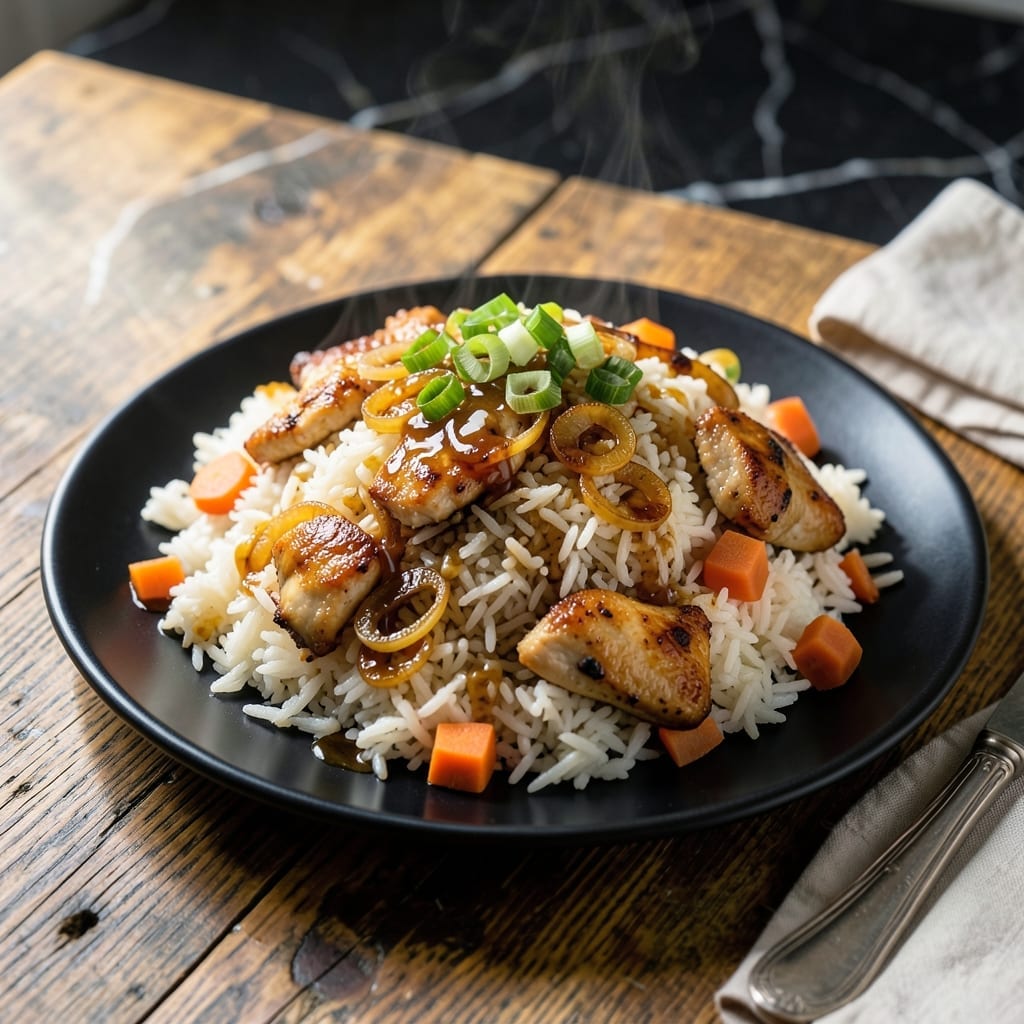
This one-pan dish brings the vibrant flavors of Malaysian street food to your kitchen. I developed this version after tasting authentic chicken fried rice in Kuala Lumpur, determined to recreate its complex balance of sweet, savory, and umami at home.
The secret lies in using day-old rice and building layers of flavor through traditional ingredients like kecap manis and shrimp paste. Each bite delivers tender chicken, crisp vegetables, and that signature wok hei aroma that defines great fried rice.
What emerges is a dish with perfectly caramelized edges, moist grains, and a rich sauce that coats every ingredient. The chicken stays juicy while the vegetables retain their bite, creating a texture that’s both hearty and satisfying.
Ready in under 30 minutes, this recipe proves you don’t need a street food cart to achieve authentic Malaysian taste. The technique is simple but the results are anything but ordinary.
Ingredients for Malaysian Chicken Fried Rice
Day-old rice and bold Malaysian flavors come together for this aromatic one-pan dish.
| Ingredient | Amount | Notes |
|---|---|---|
| Day-Old Cooked White Rice 🍚 | 4 cups | Chilled overnight, broken up |
| Boneless Chicken Thighs 🍗 | 1 lb | Cut into small pieces |
| Kecap Manis 🫕 | 2 tbsp | Indonesian sweet soy sauce |
| Shrimp Paste 🦐 | 1 tsp | Belacan or terasi preferred |
| Garlic Cloves 🧄 | 4 cloves | Minced finely |
| Shallots 🧅 | 2 whole | Thinly sliced |
| Carrots 🥕 | 1 whole | Diced small |
| Green Onions 🧅 | 3 whole | Sliced, whites and greens separated |
| Peas 🌱 | ½ cup | Fresh or frozen |
| Large Eggs 🥚 | 2 whole | Lightly beaten |
| Light Soy Sauce 🫕 | 2 tbsp | Low-sodium preferred |
| Dark Soy Sauce 🫕 | 1 tbsp | For color and depth |
| Sesame Oil 🫒 | 1 tsp | Toasted variety |
| Vegetable Oil 🫒 | 3 tbsp | High smoke point for frying |
| Ground White Pepper 🌶️ | ½ tsp | Authentic Malaysian flavor |
The shrimp paste is non-negotiable for authentic flavor. Look for belacan or terasi at Asian markets—it’s the umami backbone of this dish. Kecap manis is equally essential; ABC or Bango brands are widely available and reliable. Day-old rice is critical (fresh rice turns mushy)—use jasmine or long-grain. Chicken thighs stay juicier than breasts during high-heat frying.
No shrimp paste? Fish sauce at half the amount works in a pinch, though the flavor profile shifts slightly. Swap chicken for tofu or shrimp if preferred. Fresh peas can be replaced with snap peas or corn kernels. For extra depth, add a splash of oyster sauce (vegetarian oyster sauce for plant-based versions). The green onions add freshness—don’t skip them.
This tastes best served immediately while the edges are crisp. Leftovers keep in the fridge for 3-4 days but lose texture. Reheat quickly in a hot pan with a splash of water to revive. For meal prep, store rice and toppings separately and combine when reheating.
Why You’ll Love This Recipe
- One Pan Meal: I love that this comes together in a single wok—no extra dishes, just quick stir-frying with day-old rice and chicken thighs.
- Umami Bomb: The kecap manis and shrimp paste create this deep, sweet-savory flavor that’s honestly addictive. I’ll be real: I could eat this every week.
- Weeknight Hero: It’s my go-to for busy evenings—ready in 20 minutes and even better the next day for lunch.
- Budget Friendly: Boneless chicken thighs and leftover rice keep costs low. Between us, it tastes like takeout but for half the price.
Step-by-Step Instructions for Malaysian Chicken Fried Rice
Master the wok technique and timing that defines authentic street food flavor.
Step 1: Prep Ingredients and Heat the Wok
Break up the 4 cups Day-Old Cooked White Rice with your hands to prevent clumping. Have all ingredients measured and within reach—this dish comes together quickly once you start cooking. Thinly slice the 2 whole Shallots and dice the 1 whole Carrots into small, even pieces.
Place a wok or large skillet over high heat until it begins to smoke slightly. Add 2 tablespoons of the 3 tbsp Vegetable Oil. The oil should shimmer immediately when added to the properly heated pan. This high heat is crucial for achieving that signature wok hei flavor.
Step 2: Cook Chicken and Aromatics
Add the 1 lb Boneless Chicken Thighs to the hot oil and cook for 3-4 minutes, stirring constantly, until the pieces are lightly browned and cooked through. The chicken will release its juices and then reabsorb them as it finishes cooking.
Push the chicken to one side of the wok and add the sliced shallots, 4 cloves Garlic Cloves, and 1 tsp Shrimp Paste. Stir-fry for 30-45 seconds until the aromatics become fragrant. The shrimp paste should sizzle and mingle with the other ingredients, creating the base flavor profile.
Step 3: Combine Rice and Vegetables
Add the 4 cups Day-Old Cooked White Rice to the wok, breaking up any remaining clumps with your spatula. Pour in the 2 tbsp Light Soy Sauce, 1 tbsp Dark Soy Sauce, and 1 tsp Sesame Oil. Stir-fry for 2-3 minutes until the rice is evenly coated and begins to look slightly toasted.
Incorporate the diced carrots, 0.5 cup Peas, and the white parts of the 3 whole Green Onions. Continue stir-frying for another 2 minutes until the vegetables soften slightly. The rice should be hot throughout and starting to develop a light crust on some grains.
Step 4: Finish with Eggs and Final Seasoning
Push all ingredients to one side of the wok and add the remaining 1 tablespoon Vegetable Oil. Pour in the 2 whole Large Eggs and scramble quickly until just set, about 45-60 seconds. The eggs should be soft and slightly runny when you begin to mix them into the rice.
Combine everything in the wok and add the 2 tbsp Kecap Manis and 0.5 tsp Ground White Pepper. Toss everything together for 1-2 minutes until the rice takes on a beautiful caramel color and all ingredients are evenly distributed. Taste and adjust seasoning if needed.
Step 5: Garnish and Serve Immediately
Remove from heat and stir in the green parts of the green onions. The residual heat will slightly wilt them while maintaining their bright color. Serve immediately while hot, with each serving showcasing the varied textures and colors of the ingredients.
The final dish should have a glossy sheen from the sauces, with each grain of rice distinct yet coated with flavor. The chicken should be tender, the vegetables crisp-tender, and the eggs softly scrambled throughout.
Pro Tips For Making Malaysian Chicken Fried Rice
- Chill the Rice: Day-old rice is non-negotiable—spread it on a tray and refrigerate uncovered for 4-6 hours so it dries out completely. I learned this the hard way after my first three batches turned to mush.
- Small Chicken Pieces: Cut the boneless thighs into ½-inch cubes so they cook through in 2-3 minutes without overcooking. Sounds tedious, but it actually changes the outcome when you’re stir-frying fast.
- Bloom the Shrimp Paste: Fry the shrimp paste in oil for 30-45 seconds before adding garlic—this mellows the funk and builds a deeper base flavor. My grandmother swore by this, and she was right.
- Kecap Last: Stir in the kecap manis at the very end, just before serving, to keep its caramelized sweetness from burning. I was skeptical until I tried it, and now I never skip this step.
Health Benefits of malaysian chicken fried rice
Protein Powerhouse
The 1 lb Boneless Chicken Thighs in this dish provide about 50 grams of protein per serving, supporting muscle repair and growth. Chicken thighs are richer in iron and zinc than breasts, making them a more nutrient-dense choice for this meal.
Complex Carbohydrates
The 4 cups Day-Old Cooked White Rice offers sustained energy through complex carbs. Jasmine rice, commonly used in Malaysian cooking, has a lower glycemic index than many other white rice varieties, helping maintain steady blood sugar levels.
Vitamin Rich Vegetables
With 1 whole Carrots and 0.5 cup Peas, you get a boost of vitamin A and vitamin C. Carrots provide beta-carotene for eye health, while peas add fiber that aids digestion. I always notice how these veggies keep their vibrant color when cooked properly. 💪
Healthy Fats Balance
The combination of 3 tbsp Vegetable Oil and 1 tsp Sesame Oil provides essential fatty acids. Sesame oil contains sesamol, an antioxidant that may help lower cholesterol. The oils used in stir-frying also help your body absorb fat-soluble vitamins from the vegetables.
Umami Boost
Ingredients like 1 tsp Shrimp Paste and 2 tbsp Kecap Manis deliver umami flavors that can stimulate appetite and improve nutrient absorption. The fermented nature of these ingredients also adds beneficial probiotics to your meal. 💡
Low Sodium Option
Using low-sodium Light Soy Sauce helps control salt intake while maintaining flavor. This allows you to adjust seasoning to your preference, making the dish suitable for those monitoring their sodium consumption without sacrificing taste.
Nutrition Facts
Frequently Asked Questions
Why use day-old rice for this dish?
Day-old rice has less moisture, preventing a mushy texture during frying. Fresh rice steams instead of frying, losing that signature wok hei flavor. Break it up with your hands before cooking for best results.
Can I substitute shrimp paste if I can’t find it?
Use fish sauce at half the amount in a pinch, though the flavor will differ slightly. Shrimp paste adds unique umami depth, so try Asian markets for authentic belacan or terasi.
What’s the best way to reheat leftovers?
Revive in a hot pan with a splash of water for 2-3 minutes. Microwaving works but may soften the texture. Leftovers keep for 3-4 days in the fridge.

- Jollof Rice Sauce Recipe: West African Tomato and Spice Infusion - September 25, 2026
- Japanese Rice Soup Recipe: Umami-Rich Comfort in a Bowl - September 25, 2026
- Homemade Cream Of Rice Recipe: Silk-Smooth Breakfast in Minutes - September 25, 2026