
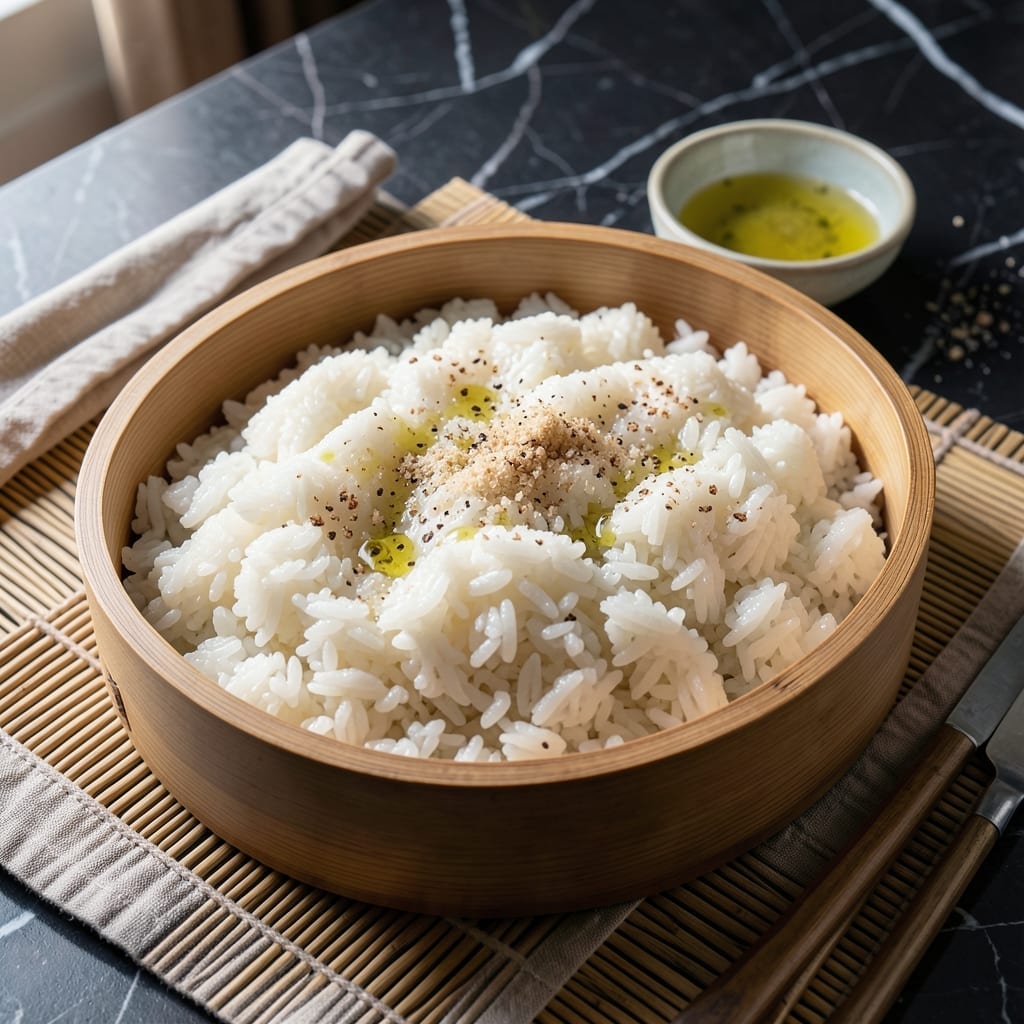
Achieving perfectly glossy Japanese-style sushi rice at home is simpler than you think. This method delivers consistent results with a precise rice-to-water ratio and careful vinegar seasoning.
The secret lies in the vinegar mixture—Marukan rice vinegar combined with sugar and salt creates that signature sweet-tangy balance. I’ve tested this ratio repeatedly to ensure it complements raw fish or vegetarian toppings equally well.
Once cooked, the rice must be gently folded with the vinegar while still warm. This step is crucial for even coating and that characteristic sticky yet separate grain texture.
Serve immediately for the best texture, or cover with a damp cloth to keep it fresh for rolling or shaping.
Ingredients for Marukan Sushi Rice
Short list of precise ingredients delivers that signature glossy, sticky texture every time.
| Ingredient | Amount | Notes |
|---|---|---|
| Sushi Rice 🍚 | 2 cups | Short-grain Japanese variety |
| Water 💧 | 2 ½ cups | Filtered or spring preferred |
| Marukan Rice Vinegar 🍶 | ½ cup | Do not substitute other vinegars |
| Granulated Sugar 🍚 | 2 tbsp | Dissolves completely in vinegar |
| Sea Salt 🧂 | 1 tsp | Fine grain for even distribution |
| Rice Vinegar 🍶 | 2 tbsp | For additional tang if desired |
| Sake 🍶 | 1 tbsp | Optional for depth of flavor |
| Mirrorin 🍶 | 1 tbsp | Optional sweet rice wine |
| Kombu 🌿 | 1 piece | 2-inch square for cooking rice |
| White Sesame Seeds 🌰 | 1 tbsp | Toasted for garnish |
| Nori Sheets 🌿 | 4 sheets | For serving or rolling |
| Pickled Ginger 🌸 | ¼ cup | For serving alongside |
The rice itself must be short-grain Japanese sushi rice—Koshihikari or Nishiki brands are ideal and widely available at Asian markets or the international aisle. Marukan rice vinegar is non-negotiable for authentic flavor; its mild acidity and subtle sweetness are balanced perfectly for sushi. Avoid seasoned rice vinegar as it contains added sugar and salt that will throw off your ratios.
No Marukan vinegar? Mitsukan rice vinegar is the closest substitute, but adjust sugar down by half a teaspoon as it’s slightly sweeter. Kombu is optional but adds umami depth—remove it after cooking. For a vegetarian version, skip the fish-based toppings. The rice-to-water ratio must stay exact; even small variations affect texture dramatically.
Cooked rice holds at room temperature for 2 hours before the texture degrades. Store leftover rice in an airtight container in the fridge for up to 3 days, though it’s best used fresh. Reheat by sprinkling a little water and microwaving covered for 30-second intervals.
Why You’ll Love This Recipe
- 5-Minute Mix: I dump everything in the rice cooker, walk away, and come back to perfect sushi rice every time.
- Sweet-Tangy Balance: The Marukan vinegar with just a touch of sugar gives that authentic sushi-shop flavor without overpowering.
- Meal Prep MVP: I make a big batch Sunday night and use it for rolls, bowls, and even fried rice all week.
- Penny-Pincher’s Dream: Sushi rice and vinegar stretch further than takeout ever could, and leftovers taste just as good cold.
Step-by-Step Instructions for Sushi Rice
Master the technique for perfectly seasoned rice with a glossy finish and balanced flavor.
Step 1: Rinse and Soak the Sushi Rice
Place the 2 cups Sushi Rice in a fine-mesh strainer and rinse under cold running water, gently swirling with your hand. The water will appear cloudy at first—keep rinsing until it runs nearly clear, about 4-5 washes. This removes excess starch that could make your rice gummy.
Transfer the rinsed rice to a bowl and cover with the 2.5 cups Water. Let it soak for 30 minutes to ensure even cooking and proper hydration. The grains should appear plump and slightly translucent when ready.
Step 2: Cook the Rice with Kombu
Drain the soaked rice thoroughly, then transfer it to your rice cooker or heavy pot. Add the 2.5 cups Water and place the 1 piece Kombu on top of the rice. This seaweed adds subtle umami depth during cooking without overpowering the flavor.
Cook according to your rice cooker’s standard setting or, for stovetop, bring to a boil over medium-high heat, then reduce to low, cover, and simmer for 15 minutes. Remove from heat and let it steam, covered, for an additional 10 minutes. The rice is done when all water is absorbed and the grains are tender.
Step 3: Prepare the Seasoning Mixture
While the rice cooks, combine the 0.5 cup Marukan Rice Vinegar, 2 tbsp Granulated Sugar, and 1 tsp Sea Salt in a small saucepan. Warm over low heat just until the sugar and salt dissolve completely, stirring occasionally. Do not let it boil—this preserves the delicate balance of flavors.
For additional depth, stir in the optional 2 tbsp Rice Vinegar, 1 tbsp Sake, and 1 tbsp Mirrorin if using. The sake and mirrorin add a subtle sweetness and complexity that enhances the traditional sushi rice profile.
Step 4: Season and Fan the Rice
Transfer the cooked rice to a large, non-reactive bowl—preferably wooden. Immediately pour the vinegar mixture evenly over the hot rice. Using a rice paddle or silicone spatula, gently fold the seasoning into the rice with a cutting motion to avoid crushing the grains.
As you fold, fan the rice vigorously with a hand fan or a piece of cardboard for 2-3 minutes. This cools the rice quickly and gives it that signature glossy sheen. The rice should be sticky but not mushy, with each grain distinct and coated in the seasoning.
Step 5: Finish and Serve
Cover the bowl with a damp kitchen towel to keep the rice moist until ready to use. Sprinkle the 1 tbsp White Sesame Seeds over the rice just before serving for a nutty garnish and subtle texture contrast.
Serve the rice warm or at room temperature with the 4 sheets Nori Sheets and 0.25 cup Pickled Ginger on the side for an authentic sushi experience. The rice should hold its shape when pressed but remain tender and slightly sticky.
Pro Tips For Making Marukan Sushi Rice
- Rinse Thoroughly: Wash the sushi rice in 3-4 changes of cold water until it runs nearly clear—I learned this the hard way after my first batch turned out gummy from excess starch.
- Warm the Vinegar: Gently heat the Marukan rice vinegar with sugar and salt until dissolved (about 30 seconds in the microwave) so it incorporates evenly into the rice without leaving gritty bits.
- Fan While Mixing: Use a hand fan or a piece of cardboard to fan the rice while folding in the vinegar mixture—sounds old-school, but it cools the rice to body temperature and gives it that glossy sushi-restaurant finish.
- Cover with Damp Cloth: After seasoning, cover the rice with a damp kitchen towel for 10 minutes to keep it moist but not soggy—my grandmother swore by this, and she was right.
Troubleshooting This Recipe
Rice Too Dry
If your rice feels dry, it likely didn’t absorb enough water during cooking. Try adding an extra ¼ cup water next time, or let it steam covered for an additional 5 minutes after cooking. The grains should be plump and slightly sticky, not crumbly. 💡
Rice Too Wet
Overly wet rice usually means too much water or insufficient rinsing. Reduce water by ¼ cup and ensure you rinse until the water runs nearly clear. After cooking, leave it uncovered for 2-3 minutes to let excess moisture evaporate.
Rice Too Gummy
Gummy rice often results from over-stirring or not rinsing enough. Rinse thoroughly to remove excess starch, and fold the seasoning in gently with a cutting motion. Avoid mashing the grains—this breaks them down and releases more starch.
Vinegar Too Strong
If the vinegar flavor overpowers, you may have used too much or didn’t balance it properly. Stick to ½ cup Marukan Rice Vinegar for 2 cups rice, and ensure the sugar and salt are fully dissolved. Taste the mixture before adding it to the rice. ✨
Rice Not Glossy
For that signature shine, fanning is key. Use a hand fan or cardboard to cool the rice while folding in the vinegar mixture. This process, done for 2-3 minutes, creates the glossy finish. Without fanning, the rice will look dull.
Rice Too Salty
If your rice tastes salty, you likely added too much salt to the vinegar mixture. Use exactly 1 tsp sea salt for the recipe as written. If you prefer less salt, reduce it by ¼ tsp and adjust to taste next time.
Nutrition Facts
Frequently Asked Questions
Can I use a different vinegar if I don’t have Marukan?
Mitsukan rice vinegar is the closest substitute. Reduce sugar by ½ tsp as it’s slightly sweeter. Avoid regular vinegars—they lack the mild acidity needed for sushi rice.
Why do I need to fan the rice?
Fanning cools the rice quickly and creates a glossy sheen. It also helps the vinegar mixture coat each grain evenly for that signature sticky-yet-separate texture.
How long can I keep leftover sushi rice?
Store in an airtight container in the fridge for up to 3 days. Reheat by sprinkling water and microwaving in 30-second intervals.
What if my rice turns out gummy?
Over-stirring or insufficient rinsing causes gumminess. Rinse until water runs clear and fold gently with a cutting motion to avoid crushing grains.

- Laos Sticky Rice Recipe: Traditional Steamed Perfection - November 4, 2026
- Magic Rice Recipe: One-Pot Aromatic Wonder - November 4, 2026
- Mushroom Fried Rice Indian Recipe: Spiced Wok-Tossed Comfort with Basmati - November 4, 2026