
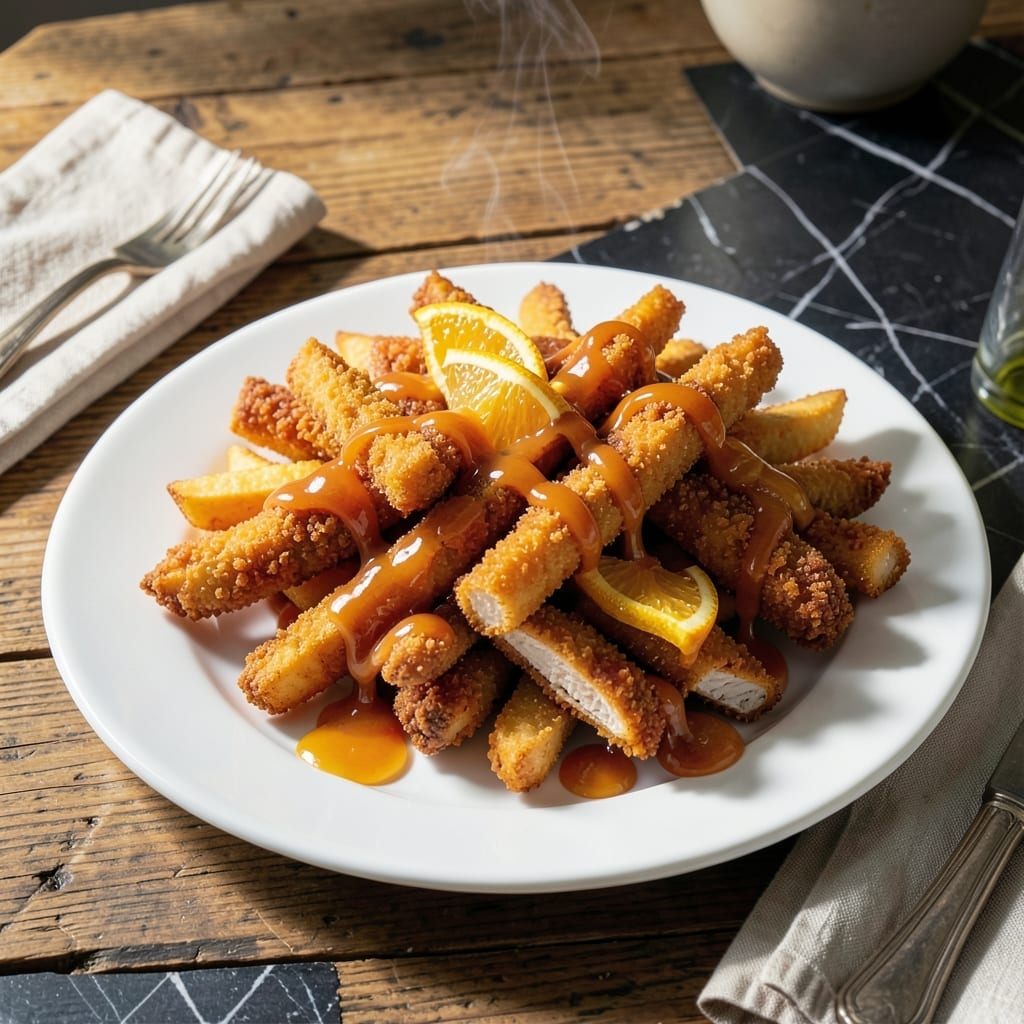
This recipe transforms ordinary chicken into an irresistible dish with a crispy coating and vibrant citrus glaze.
I developed this method to achieve maximum crunch while keeping the chicken tender inside. The orange sauce strikes the perfect balance between sweet and tangy, clinging beautifully to each bite.
The key is double-frying the chicken for that crispy texture, then tossing it in the warm glaze right before serving. Every piece delivers satisfying crunch with each bite.
Serve immediately for the best texture and flavor. The combination of textures and flavors makes this dish unforgettable.
Ingredients for Orange Chicken Fries
Pantry staples plus fresh citrus transform this dish into a crispy, tangy masterpiece.
| Ingredient | Amount | Notes |
|---|---|---|
| Boneless Skinless Chicken Thighs 🍗 | 1 ½ lb | Cut into 1-inch strips |
| All-Purpose Flour 🌾 | 1 cup | For initial dredging |
| Large Eggs 🥚 | 2 whole | Beaten for egg wash |
| Panko Breadcrumbs 🍞 | 1 ½ cups | For extra crispy coating |
| Cornstarch 🌾 | ¼ cup | Mixed with flour for crunch |
| Orange Juice 🍊 | ¾ cup | Freshly squeezed preferred |
| Orange Zest 🍊 | 1 tbsp | Finely grated for brightness |
| Soy Sauce 🫒 | 3 tbsp | Low-sodium for balance |
| Honey 🍯 | ¼ cup | For glaze sweetness |
| Rice Vinegar 💧 | 1 tbsp | Adds tang to the glaze |
| Garlic Cloves 🧄 | 3 cloves | Minced for glaze depth |
| Fresh Ginger 🌿 | 1 tbsp | Grated for warmth |
| Vegetable Oil 🫒 | 4 cups | For deep frying |
| Green Onions 🧅 | ¼ cup | Thinly sliced for garnish |
| Kosher Salt 🧂 | 1 tsp | Plus more to taste |
The chicken thighs are non-negotiable for juiciness—boneless, skinless from Whole Foods or your local butcher ensures quality. Panko breadcrumbs (found in the Asian aisle at most supermarkets) deliver that restaurant-style crunch. For the orange juice, freshly squeezed from navel oranges makes a noticeable difference, but bottled works in a pinch.
No Panko? Crushed cornflakes or regular breadcrumbs at a 1:1 ratio. Substitute agave or maple syrup for honey if needed. For a gluten-free version, cornstarch and almond flour replace the all-purpose flour. The soy sauce can be swapped for tamari or coconut aminos without sacrificing depth.
Fry in batches to avoid crowding—keeps the oil temp steady for maximum crispiness. Leftover glaze stores in the fridge for 3 days. Best served immediately, but reheats well in the air fryer at 375°F for 4 minutes.
Why You’ll Love This Recipe
- One Pan Wonder: I just coat, dip, and bake—no deep frying, no messy splatters, just crispy panko-cornstarch magic.
- Sticky Sweet Heat: That orange glaze clings to every ridge of the chicken fries, giving you crunch and a tangy-sweet kick in every bite.
- Party or Lunchbox: I serve these as appetizers for game night or pack the leftovers for my kid’s lunch—they never complain.
- Budget Stretcher: Boneless thighs stay juicy and cost less than breasts, and a little panko goes a long way for that extra crunch.
Step-by-Step Instructions for Orange Chicken Fries
Achieve perfect crispiness and vibrant citrus flavor with this tested method.
Step 1: Prepare and Coat the Chicken
Begin by cutting the 1.5 lb Boneless Skinless Chicken Thighs into 1-inch strips. This uniform size ensures even cooking. Pat them dry thoroughly with paper towels—moisture prevents the coating from adhering properly.
Season the chicken with 1 tsp Kosher Salt. In a shallow dish, combine the 1 cup All-Purpose Flour and 0.25 cup Cornstarch. Dredge each piece in this mixture, pressing gently to ensure full coverage. Shake off any excess flour mixture.
Step 2: Apply the Egg Wash and Panko Coating
In a separate shallow dish, beat the 2 whole Large Eggs until smooth. Dip each floured chicken piece into the egg wash, allowing any excess to drip off. This creates a sticky surface for the final coating to cling to.
Place the 1.5 cups Panko Breadcrumbs in a third dish. Press each egg-washed chicken piece firmly into the panko, turning to coat completely. The pressure helps the breadcrumbs adhere tightly, which creates that ultra-crispy texture. Arrange the coated pieces on a wire rack set over a baking sheet.
Step 3: Deep-Fry to Golden Perfection
Heat the 4 cups Vegetable Oil in a deep, heavy-bottomed pot to 350°F. Use a deep-fry or candy thermometer to monitor the temperature accurately. The oil must be hot enough to create an immediate sizzle when the chicken is added, but not so hot it burns the exterior before the interior cooks.
Working in batches to avoid crowding the pot, carefully lower the coated chicken into the hot oil. Fry for 4-5 minutes per side until the coating is deep golden brown and the internal temperature reaches 165°F. Drain on a wire rack or paper towels to maintain crispiness.
Step 4: Prepare the Orange Glaze
In a small saucepan, combine the 0.75 cup Orange Juice, 1 tbsp Orange Zest, 3 tbsp Soy Sauce, 0.25 cup Honey, 1 tbsp Rice Vinegar, 3 cloves minced Garlic Cloves, and 1 tbsp grated Fresh Ginger. Bring to a simmer over medium heat.
Cook for 5-7 minutes, stirring frequently, until the glaze thickens enough to coat the back of a spoon. The mixture should reduce by about one-third. Remove from heat and let cool slightly—it will thicken further as it cools.
Step 5: Glaze and Garnish
Place the fried chicken on a serving platter. Drizzle the warm orange glaze evenly over the pieces, using a spoon to ensure complete coverage. The glaze should cling to the crispy coating, creating a glossy finish.
Sprinkle with the 0.25 cup thinly sliced Green Onions for a fresh, colorful garnish. Serve immediately while the chicken is still hot and crispy. The contrast of the sweet, tangy glaze with the crunchy exterior and tender interior makes every bite irresistible.
Pro Tips For Making Orange Chicken Fries
- Double Dredge Chicken: Toss the chicken thighs in cornstarch first, then dip in beaten egg, and finally coat in panko—this triple layer locks in moisture and gives that shatteringly crisp texture.
- Fry in Batches: Crowding the pan drops the oil temp fast, so fry the chicken in small batches to keep it hot enough for even browning. I learned this the hard way after pulling out soggy fries the first time.
- Rest the Coated Chicken: Let the breaded thighs sit for 10 minutes before frying—this helps the coating adhere and prevents it from sliding off mid-cook.
- Use Thighs, Not Breasts: Boneless skinless thighs stay juicy even when fully cooked, while breasts tend to dry out. Sounds obvious, but I used to substitute until I tasted the difference.
Common Mistakes When Making This Dish
Overcrowding the Fryer
Frying too many pieces at once drops the oil temperature, resulting in soggy, greasy chicken. I fry in batches of 4-5 pieces at a time to maintain 350°F. Use a thermometer to monitor—this is non-negotiable for crispiness. 🌡️
Skipping the Drying Step
Wet chicken causes the coating to slide right off. Pat each piece completely dry with paper towels before dredging. I press extra hard on thicker pieces to remove all moisture.
Inconsistent Cutting
Uneven pieces cook at different rates. Cut all chicken into 1-inch strips for uniform cooking. This ensures every bite has the same perfect texture and doneness.
Rushing the Glaze
Under-reduced glaze will be thin and runny. Simmer the mixture for the full 5-7 minutes until it coats the back of a spoon. I test mine by dragging a finger through—it should leave a clean trail.
Premature Glazing
Adding glaze to hot chicken too soon makes it soggy. Let the chicken drain for 2-3 minutes after frying, then toss in warm glaze right before serving. This preserves that coveted crunch.
Serve immediately—the glaze thickens as it cools, so timing matters.
Nutrition Facts
Frequently Asked Questions
Can I bake instead of deep-frying?
Yes, bake at 400°F for 20-25 minutes, flipping halfway. Use a wire rack for air circulation to achieve crispiness. The texture won’t be identical but still delicious.
How do I make the glaze thicker?
Simmer it longer until it coats a spoon. For quicker thickening, mix 1 tsp cornstarch with 1 tbsp water, then stir into the glaze. Cook for 1-2 minutes more.
What’s the best oil for frying?
Use oils with a high smoke point like vegetable, peanut, or canola. Avoid olive oil as it burns at lower temperatures. Maintain 350°F for perfect results.
Can I use chicken breast instead?
Yes, but thighs stay juicier. If using breast, brine it first in saltwater for 30 minutes to prevent dryness. Cut into uniform pieces for even cooking.

- Jollof Rice Sauce Recipe: West African Tomato and Spice Infusion - September 25, 2026
- Japanese Rice Soup Recipe: Umami-Rich Comfort in a Bowl - September 25, 2026
- Homemade Cream Of Rice Recipe: Silk-Smooth Breakfast in Minutes - September 25, 2026